Apr 21, 2025

Top 10 Technology Tools for Elementary Students in 2025
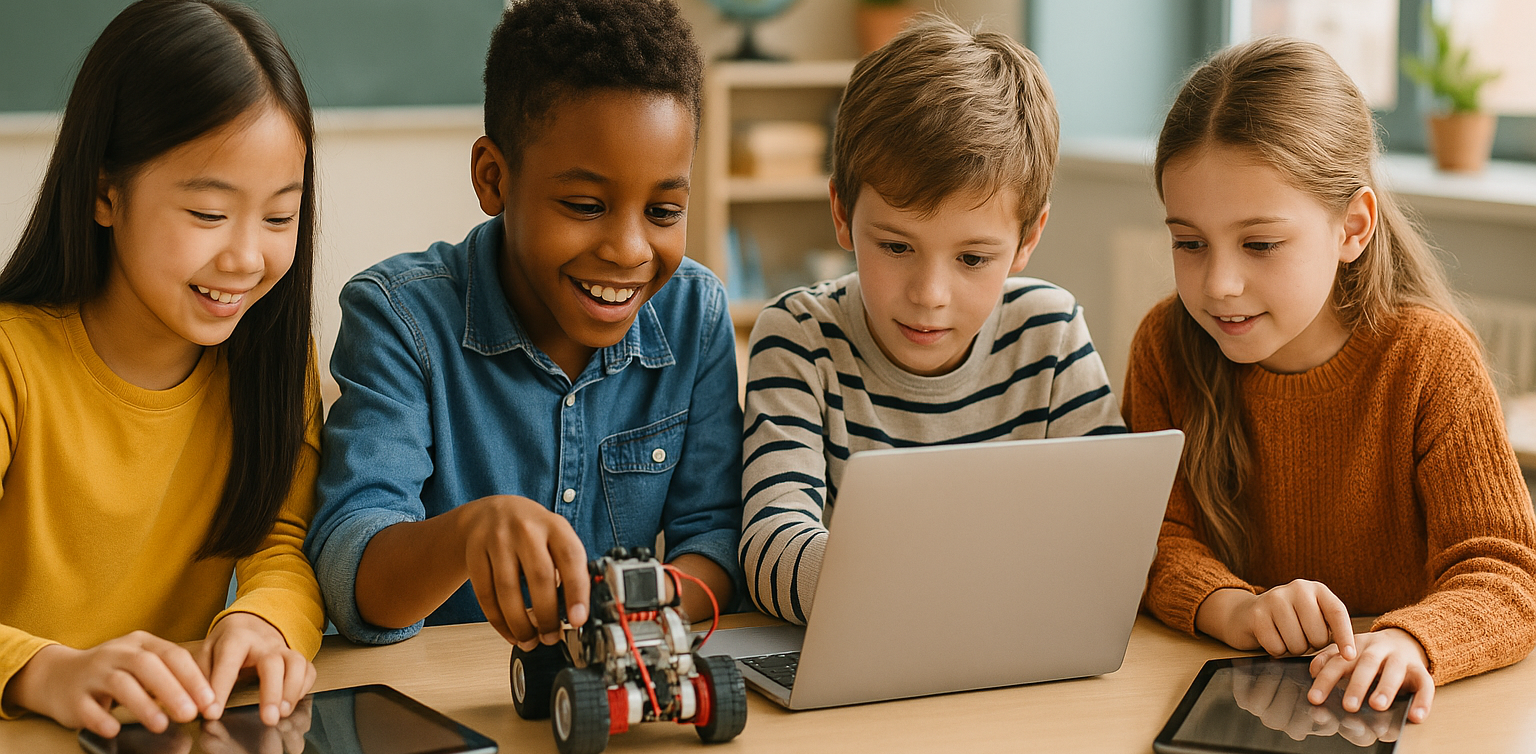
Top 10 Technology Tools for Elementary Students in 2025 image

As we step into 2025, technology tools for elementary students are more important than ever. These tools enhance creativity, improve learning outcomes, and foster engagement both inside and outside the classroom. With the help of these technology tools for elementary students, children can develop essential skills that will serve them throughout their academic careers and beyond. Here’s a list of 10 essential technology tools for elementary students to boost their educational experience in 2025.

Top 10 Technology Tools for Elementary Students in 2025

1. Kahoot!
Technology Tools for Elementary Students

Focus: Interactive learning and quizzes

Kahoot! remains one of the most popular technology tools for elementary students because it turns learning into a fun and competitive experience. Teachers and students can create customized quizzes on subjects like math, science, and language arts, fostering active participation.

How to Use It: By incorporating Kahoot! in lessons, educators can make learning feel like a game. Students can play individually or in teams, which makes learning not only engaging but also interactive. With real-time feedback, teachers can adjust their lessons based on students’ performance, ensuring that every child stays on track.

2. Seesaw

Focus: Digital portfolio and communication

Seesaw is another fantastic example of technology tools for elementary students that focuses on student documentation and communication. It allows students to create digital portfolios where they can showcase their work through photos, videos, and drawings. This tool strengthens the bond between teachers and parents, as they can track the progress of the students in real-time.

How to Use It: With Seesaw, students can upload images of their assignments or record their thoughts on projects. Teachers can provide feedback and conduct virtual lessons or activities, keeping students and parents connected in an efficient, digital space.

3. Google Classroom

Focus: Classroom management and assignment tracking

Google Classroom is essential for managing assignments, tracking progress, and organizing classroom materials. As one of the top technology tools for elementary students, it helps both teachers and students streamline their work. Teachers can assign tasks, grade assignments, and provide real-time feedback, while students can easily access learning materials and submit work in one centralized platform.

How to Use It: Teachers can post assignments and resources to Google Classroom, making it easy for students to stay organized. Additionally, it integrates with Google Drive, enabling students to collaborate on documents and presentations. This makes it easier to stay on top of deadlines and receive instant feedback.

4. Scratch

Focus: Coding and creativity

Scratch is one of the most popular technology tools for elementary students when it comes to learning programming. Through visual coding, students can create interactive stories, games, and animations, sparking creativity while teaching them important skills in computational thinking.

How to Use It: Scratch is beginner-friendly and offers a drag-and-drop interface for students to build their own projects. Teachers can incorporate Scratch into STEM lessons, teaching logic, sequencing, and problem-solving through interactive coding challenges. This tool is a great starting point for young learners to get familiar with coding and digital creation.

5. Epic!
Focus: Digital library for young readers

For young readers, Epic! is an invaluable tool in the world of technology tools for elementary students. Epic! offers access to thousands of books, audiobooks, and educational videos. Its interactive features like read-aloud and quizzes make reading more engaging for children.

How to Use It: Teachers can assign reading materials directly from Epic! to keep students engaged with books that suit their level. Students can explore a vast library of e-books or listen to audiobooks that cater to their individual reading preferences. Epic! fosters a love for reading by offering a fun and interactive approach to literature.

6. ClassDojo

Focus: Classroom behavior and communication

ClassDojo is one of the best technology tools for elementary students when it comes to fostering positive behavior and classroom culture. It allows teachers to reward students for good behavior, accomplishments, and teamwork.

How to Use It: Teachers can assign points to students based on specific behaviors, such as being on task, helping others, or staying focused. These points can be exchanged for rewards like extra break time or special privileges. ClassDojo is an excellent tool for teaching students about responsibility and positive reinforcement.

7. TinkerCAD
Focus: 3D design and engineering
For students interested in design and engineering, TinkerCAD is one of the leading technology tools for elementary students. This user-friendly 3D design platform allows children to create their own digital models.

How to Use It: Students can start by designing simple objects like keychains or toys and gradually work their way up to more complex 3D projects. Teachers can use TinkerCAD to introduce students to engineering and design concepts, making it easier for them to visualize their ideas and understand the basics of 3D modeling and printing.

8. Google Earth

Focus: Geography and exploration

Google Earth opens up the world to elementary students by allowing them to explore every corner of the globe. Whether for geography lessons or environmental studies, this tool is an essential part of technology tools for elementary students.

How to Use It: Teachers can use Google Earth to give virtual tours of countries, cities, landmarks, and natural wonders. Students can explore geographical features and learn about different cultures and ecosystems. This immersive tool makes learning about the world fun and interactive.

9. Duolingo

Focus: Language learning

As one of the leading technology tools for elementary students, Duolingo helps young learners acquire new languages in a fun, gamified format. This app is perfect for introducing kids to a new language, including popular languages like Spanish, French, and German.

How to Use It: Duolingo presents lessons in bite-sized segments that are both fun and educational. Students can practice daily and track their progress. This tool offers rewards and challenges, motivating students to keep learning new words and phrases while building language proficiency.

10. BrainPOP

Focus: Educational videos and quizzes

BrainPOP is a popular educational platform that offers animated videos and interactive quizzes. It covers a wide range of subjects, including science, math, and social studies, making it one of the best technology tools for elementary students to enhance their learning.

How to Use It: Teachers can use BrainPOP to introduce new concepts in a fun and visual way. After watching the videos, students can complete quizzes and discuss the material in class. This helps reinforce key ideas and assess student understanding in an engaging, interactive manner.

Why Technology Tools Matter for Elementary Students

In 2025, technology tools for elementary students are not just an enhancement to traditional learning; they are essential to developing digital literacy and critical thinking skills. These tools help provide personalized learning experiences that adapt to the needs of each student, whether they need extra support or more challenging material. By incorporating technology tools for elementary students into the classroom, teachers can create an environment that promotes engagement, creativity, and collaboration, preparing students for future success in an increasingly digital world.

Start Your Digital Learning Journey Today!

 Image

Want to make learning even more engaging for your child? Explore Timedoor Academy and try free trial class today and discover how our digital learning platform can support your child’s educational growth with interactive lessons and expert-curated content.


Keep Reading

<strong>Building Positive Habits in Children on National Children’s Day</strong>
Building Positive Habits in Children on National Children’s Day
Every year on July 23rd, Indonesia celebrates National Children’s Day to show appreciation for the next generation. It is a moment of reflection for parents, educators, and communities to prioritize the needs, safety, and development of children. One of the most impactful ways to invest in a child’s future is by building positive habits in children from an early age. Habits are behaviors formed through repetition, and they often last a lifetime. Childhood is a critical phase in which values and patterns take root. That is why building positive habits in children during these formative years is so important. Why Early Habits Matter Simple routines like tidying up toys, saying “thank you,” or putting trash in the bin may seem minor. However, they lay the foundation for greater life skills such as responsibility, discipline, and empathy. On a broader level, building positive habits in children involves nurturing a mindset of honesty, teamwork, curiosity, and respect for learning. Children who are raised with consistent, positive habits are more likely to grow into responsible, independent individuals with strong character. On the other hand, children who lack structure or guidance during their early years may adopt unhealthy behaviors that are difficult to change later. The Role of Parents and the Environment Parents play the central role in building positive habits in children. Kids learn more from what they see than from what they are told. That means parents must model the values they wish to pass on. Showing punctuality, gratitude, patience, and balanced screen time will speak louder than any instruction. Beyond the home, children are shaped by their surroundings schools, peers, and community influences all matter. A supportive environment with positive reinforcement, teamwork, and structured activities helps strengthen the values instilled at home. Practical Ways to Start Building Positive Habits in Children Be Consistent Change doesn’t happen overnight. Whether it’s encouraging your child to read each night or tidy up after playing, repetition is key. Even ten minutes of daily practice can make a long-term difference. Lead by Example Children mimic behavior. If you want your child to manage time well, show them how you do it. Let them see you following schedules, keeping promises, and avoiding distractions. Use Encouragement and Praise A simple “Great job!” or “Thank you for helping” goes a long way. Positive reinforcement helps motivate kids to repeat good behaviors. Allow Room for Mistakes When building positive habits in children, understand that mistakes are part of the learning process. Patience and guidance are more effective than punishment. Involve Children in Decision-Making Let your child help plan their daily routine or choose their afternoon activity. When they feel a sense of ownership, they are more likely to stick to their responsibilities. Integrate Technology Wisely In today’s world, technology cannot be separated from childhood. Instead of avoiding it, guide your child to use it for learning. Educational apps, coding platforms, and creative tools can help turn screen time into productive time. National Children’s Day as a Moment for Reflection and Action National Children’s Day is not just a celebration, but an opportunity for reflection. As a society, have we done enough to support and protect children? As parents, have we been present enough in guiding their development? And most importantly, are we truly committed to building positive habits in children that will prepare them for the future? Positive habits are not built in a day. They take consistency, collaboration, and encouragement. Families, schools, and communities must work hand in hand to create environments that nurture growth and character. Try a Free Coding Class at Timedoor Academy The journey of parenting is filled with joy, challenge, and responsibility. National Children’s Day reminds us that every child deserves support, attention, and guidance. And one of the most meaningful forms of guidance we can offer is by consistently building positive habits in children. At Timedoor Academy, we believe that technology and character education go hand in hand. Our online coding and digital literacy programs are designed not only to build skills, but also to nurture self-discipline, curiosity, and confidence. Register your child for a free trial class today and take the first step in building habits that last a lifetime. Let’s shape a brighter future together one child at a time.
Importance of Learning English for Elementary School Children
Importance of learning English is a doorway to understanding the world. In today’s era of globalization, mastering more than one language is no longer just an advantage but a necessity. One of the most essential languages to learn is English. Encouraging children at the elementary school level to start learning English brings countless benefits that will shape their future. In this article, we will explore the importance of learning English for young learners and how it supports their academic and social growth. Why Should Children Learn English Early? Children in elementary school are at the perfect age to absorb new knowledge quickly. Their brains are still very flexible, making it easier for them to pick up vocabulary, pronunciation, and grammar structures. By starting early, children build a strong foundation that will benefit their language development in the long term. This is one of the clearest reasons behind the importance of learning English for young learners. Access to a Wider World of Knowledge A significant portion of educational resources, such as textbooks, videos, and online materials, are available in English. When children are comfortable with English, they can access these resources more easily. They can read articles, watch educational videos, or participate in international programs that expand their horizons. This highlights the importance of learning English in broadening children’s access to knowledge. Building Self-Confidence Being able to communicate in English can boost a child’s confidence. For example, when they meet tourists or join competitions involving participants from different countries, their ability to speak English becomes a valuable skill. They feel more prepared and assured in international settings. This again demonstrates the importance of learning English in nurturing confident and independent individuals. Supporting Academic Success English proficiency is increasingly required in schools and universities, whether for exams, entrance tests, or scholarship opportunities. Children who start learning English in elementary school are better prepared to face these challenges. Furthermore, their performance in other subjects can also improve since many scientific and technical terms are presented in English. This proves the importance of learning English in supporting academic achievements. Preparing for Future Careers The job market is becoming more competitive, and many employers look for individuals who are fluent in English. Children who have learned English from an early age will stand out when they grow up. Whether applying to international companies or pursuing education abroad, strong English skills open countless doors. Here, the importance of learning English extends beyond school years to long-term career opportunities. Developing a Global Mindset Children who learn English are better able to connect with peers from diverse cultural backgrounds. This encourages them to respect differences and think with a global perspective. In today’s interconnected world, such an outlook is invaluable. Once again, we see the importance of learning English in helping children grow into globally minded citizens. How Can Parents Encourage English Learning? Parents play a key role in supporting children’s English learning journey. Some simple yet effective steps include: Watching movies or listening to songs in English together. Reading English storybooks before bedtime. Using interactive apps or online courses. Enrolling children in fun and engaging English classes. Consistency is key. With regular practice and encouragement, children will become more comfortable with English. These daily efforts make the importance of learning English more visible in their everyday lives. Building a Future-Ready Generation Learning English from a young age gives children lifelong benefits, from academic success and confidence to future career readiness. As parents, guiding children to start early is a wise investment in their future. By recognizing the importance of learning English, we are equipping them with the best tools to thrive in an ever-changing world. Would you like your child to become more confident and skilled in English? Enroll them in Timedoor Academy, where classes are designed to be interactive, fun, and effective. Sign up for a free trial today and see your child grow with Timedoor Academy!
21st Century Skills for Children: Preparing the Next Generation
In today’s fast-paced world, the demands for relevant skills are constantly evolving. For parents, ensuring that children acquire 21st century skills for children is essential so they can adapt, compete, and thrive in the future. This article will explore what these skills are and how parents can actively support their children in developing them effectively. What Are 21st Century Skills? 21st century skills refer to abilities that children need to face global challenges and technological advancement. These skills include critical thinking, creativity, communication, collaboration, digital literacy, and self-management. By mastering these competencies, children are not only able to learn efficiently but also solve problems creatively and innovate in various aspects of life. It is crucial for parents to understand that 21st century skills for children extend beyond academics. For example, the ability to collaborate and communicate effectively helps children form strong relationships, while creativity and critical thinking equip them to tackle complex problems. These skills lay the foundation for lifelong learning and resilience. Why Are 21st Century Skills Important for Children? In an increasingly digital world, children face different opportunities and challenges compared to previous generations. They require more than basic knowledge—they need the ability to navigate information wisely, adapt to change, and work effectively with others. Therefore, 21st century skills for children are vital in establishing a strong foundation for future success. Moreover, these skills foster lifelong learning. Critical and creative thinking enable children to explore their surroundings, generate innovative ideas, and develop solutions to emerging problems. Digital literacy is also a key component, as technology continues to play a central role in everyday life and the workforce. Core 21st Century Skills for Children Here are some essential competencies included in 21st century skills for children: 1. Critical Thinking and Problem Solving The ability to analyze information, evaluate solutions, and make informed decisions is crucial. Children trained in critical thinking can approach challenges calmly and wisely. 2. Creativity and Innovation Creativity allows children to generate new ideas and innovate. Through art, science experiments, and technology, parents can nurture creativity in their children. This aspect of 21st century skills for children is closely linked to innovation. 3. Communication and Collaboration Effectively expressing ideas and working within a team are key for success. Children accustomed to group work are more capable of sharing ideas and learning from others. 4. Digital Literacy Children must understand how to use technology effectively and safely. Digital literacy helps them access information responsibly, create positive content, and avoid risks online. Digital competence is an essential component of 21st century skills for children. 5. Self-Management Time management, emotional regulation, and goal setting are parts of self-management. Children who develop these skills become more disciplined and confident in facing challenges. Parents’ Role in Developing 21st Century Skills Parents play a critical role in supporting the development of 21st century skills for children. Some steps include: Providing opportunities for children to experiment and explore their interests. Facilitating safe access to technology and educational resources. Encouraging teamwork and participation in creative projects. Modeling self-management and effective communication. With proper guidance, children will naturally develop skills that are beneficial not only academically but also in daily life and future careers. Developing 21st Century Skills at Timedoor Academy Timedoor Academy offers programs designed to help children master 21st century skills for children through engaging and interactive methods. By combining technology, coding, and creative activities, children can learn while playing, developing creativity, critical thinking, and teamwork abilities. These programs ensure every child has the opportunity to explore their talents, innovate, and build confidence. With parental support and the right learning environment, children will be well-prepared to face the challenges of a modern world. Preparing Children for the Future Developing 21st century skills for children is not optional—it is essential. Equipping children with critical thinking, creativity, communication, collaboration, digital literacy, and self-management prepares them to succeed in a global environment.If you want your child to learn 21st century skills in an engaging and effective way, sign up for a free trial at Timedoor Academy today and let them start exploring, creating, and growing for a bright future.
float button