Jun 05, 2025

5 Easy Ways in Teaching Kids to Save Money from an Early Age
5 Easy Ways in Teaching Kids to Save Money from an Early Age image

Teaching kids to save money is one of the most important lessons parents can give. While many focus on academic learning, financial literacy is a life skill that is just as crucial. Instilling habits like saving and managing money early on helps children grow into responsible and independent adults.

However, teaching kids how to save is not always easy. It requires fun, age-appropriate methods and plenty of patience. In this article, we’ll explore five practical ways to teach kids to save money in their daily lives.

1. Explain the Value of Money in Simple Terms

teaching kids to save money

The first step in teaching kids to save money is helping them understand what money is and how it works. You can start by showing them the difference between coins and bills, and explaining how money is used to buy things and pay for services.

Use real-life situations, like shopping, to provide context. For example, tell your child that one ice cream costs around $2, but if they want a toy, they need to save up. Children between the ages of 4 and 7 can begin to understand these concepts better with visual aids or through role-playing games.

2. Teach the Difference Between Needs and Wants

Another key lesson in teaching kids to save money is helping them recognize the difference between needs and wants. Needs include essentials like food, clothing, and school supplies. Wants are things like new toys or extra snacks that can be delayed or skipped.

When your child asks for something, use the opportunity to talk. Ask them, “Do you need this, or do you just want it?” Over time, kids will learn to think before making purchases and develop a sense of mindful spending.

3. Give Them a Piggy Bank or Open a Savings Account

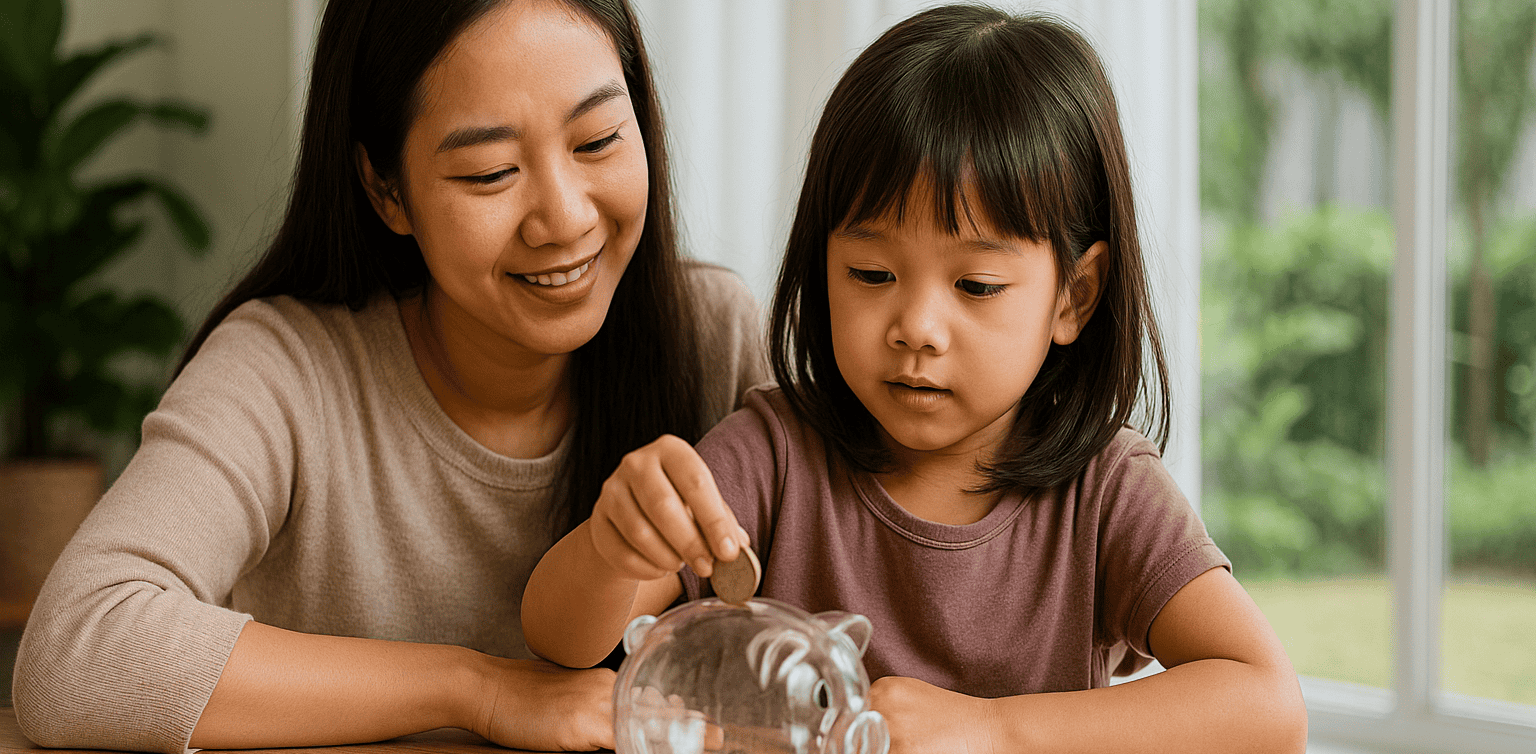
One great way to introduce saving habits is by giving your child a piggy bank or setting up a dedicated children’s savings account. You can encourage them to save part of their pocket money or birthday gifts regularly.

For older kids, set simple goals together. If they want a $20 toy, show them how to save $5 per week until they reach it. This approach not only teaches kids to save money but also introduces the idea of goal-setting and planning.

4. Be a Role Model with Your Own Saving Habits
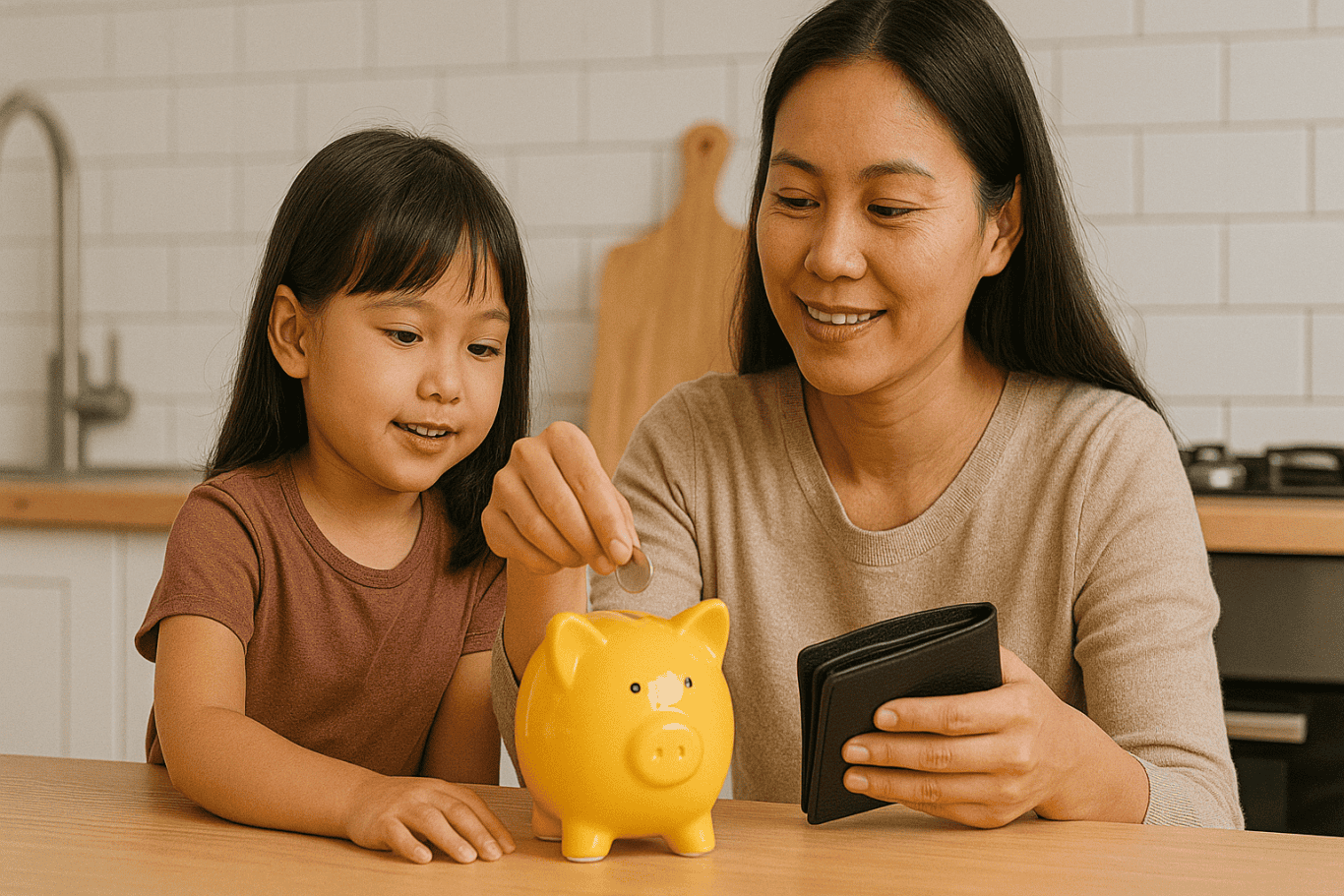
Children are natural imitators. They often learn more from what their parents do than what they say. That’s why one of the most effective ways to teach kids to save money is to show them your own responsible habits.

Let them see you making a shopping list, comparing prices, or choosing not to buy something that is not necessary. When kids watch their parents make smart financial decisions, they are more likely to adopt the same mindset.

5. Involve Kids in Simple Financial Decisions

Including your child in small financial choices at home can help them understand the reasoning behind spending and saving. Let them help you plan meals on a budget or choose between two similar items while grocery shopping.

These hands-on experiences not only teach kids how to save money, but also help them build confidence and a sense of responsibility. As they grow older, they’ll be better prepared to handle money independently.

Why Saving Habits Matter for Your Child’s Future

Teaching children to save is more than just helping them stash away a few coins. It builds character, discipline, and long-term thinking. Kids who learn to delay gratification, set priorities, and understand the value of money early on are more prepared to manage their finances later in life.

Saving also teaches children that they cannot always have everything instantly, which is an important life lesson. They learn that effort and planning are key to achieving their goals, whether financial or personal.

Saving Is Important, but So Are Digital Skills

 Image

While saving money is a valuable habit, introducing children to digital skills is also essential. Learning things like coding from a young age helps kids develop logical thinking, creativity, and problem-solving abilities.

Timedoor Academy offers fun, interactive online coding classes for kids, making it easy to explore the world of programming in a child-friendly way. Try a free class today at Timedoor Academy!

Keep Reading

Fun Science Experiments For Kids You Can Try at Home in 2025
Children are naturally curious. Unfortunately, that curiosity can fade when learning feels limited to books or school assignments. In reality, learning can be a fun activity you enjoy together at home. One of the best ways to keep your child engaged is through fun science experiments for kids. These experiments are not just for fun. They are also a simple and effective way to introduce basic concepts of logic, cause and effect, and help children develop structured thinking. Plus, they offer valuable quality time for parents and children to bond. Why Should You Try Science Experiments at Home? Before we dive into the examples, it is worth understanding why fun science experiments for kids are so beneficial. First, kids learn better when they can see and experience things directly, rather than just reading about them. Second, it shows children that learning is not always about sitting still at a desk. Third, it creates opportunities for meaningful parent-child interaction through shared learning moments. Simple and Fun Science Experiments For Kids No need for complicated tools. Most of these activities use everyday items you probably already have at home. 1. Baking Soda and Vinegar Volcano A timeless experiment that never fails to impress. Build a small “volcano” from clay or playdough around a container, add baking soda, then pour vinegar mixed with food coloring. The result is a small lava-like eruption that kids will love. 2. Walking Water Rainbow Line up cups filled with colored water, placing empty cups in between. Connect them with folded paper towels. Over time, the water will "walk" through the towels and mix colors, creating a rainbow effect. This is a fantastic visual example of capillary action and a perfect fun science experiment for kids. 3. DIY Lava Lamp Using a plastic bottle, add vegetable oil, water, food coloring, and an effervescent tablet. Watch as colorful bubbles rise and fall, mimicking a lava lamp. This teaches kids about density and simple chemical reactions. 4. Magic Milk Pour milk into a shallow dish, add drops of food coloring, then touch the surface with a cotton swab dipped in dish soap. The colors will swirl and move due to changes in surface tension. This fun experiment also sparks curiosity about how molecules interact. 5. Static Electricity Butterfly Cut a butterfly shape from tissue paper, rub a balloon on your hair, then bring it close to the paper. The butterfly wings will "lift" due to static electricity. This simple and entertaining activity helps children understand basic physics concepts. From Science to Coding: Training a Child’s Logical Thinking At first glance, these fun science experiments for kids might seem simple. However, they actually help develop logical thinking, patience, and step-by-step problem-solving. These are the same foundational skills used in coding. Coding teaches children to break down complex problems into smaller tasks, much like the scientific process in experiments. Both require focus, precision, and persistence. If children become familiar with structured thinking through simple science activities, transitioning to coding will feel like a natural and enjoyable next step. Tips to Keep Home Experiments Fun and Stress-Free To make sure your experiments go smoothly and your child stays excited, keep these tips in mind: Safety first. Always supervise, even when using everyday materials. Get your child involved from the start. Let them help prepare and take ownership. Do not fear failure. Mistakes are valuable learning opportunities. Relate experiments to everyday life. Show how science is all around them. Learning Can Be Fun and Practical By doing fun science experiments for kids, parents can make learning more enjoyable and hands-on. It allows children to experience cause and effect directly, beyond memorizing facts from a textbook. If you want to take it a step further, introducing your child to coding is another great way to develop structured thinking. Coding helps children stay focused, think logically, and persevere through challenges. Try a Free Coding Class with Timedoor Academy If you are looking for a way to combine fun and learning, Timedoor Academy offers free coding classes for kids. The lessons are interactive, engaging, and designed to match your child’s age and learning pace. Sign up today and help your child sharpen their logical thinking skills from an early age: Join Timedoor Academy's Free Coding Trial Class
Cheap Laptops For Kids
10 Best Cheap Laptops for Kids in 2025: Specs and Prices
As digital learning becomes more integrated into daily education, laptops have become an essential tool for kids. From joining online classes to completing homework and exploring creative projects like coding or animation, a laptop can be a child’s gateway to limitless learning. In this article, we’ll share 10 best cheap laptops for kids in 2025 that strike the perfect balance between affordability, durability, and performance. Whether your child is in elementary or junior high school, these devices can support their learning journey without breaking your budget.   What to Look for in Cheap Laptops for Kids Before buying a laptop for your child, make sure you check the essentials: 1. Budget-friendly price Look for options ranging from $150 to $400 that still offer smooth performance for daily school needs. 2. RAM and Storage A minimum of 4 GB RAM and at least 64 GB storage is ideal for online learning, browsing, and video conferencing. 3. Battery Life Long battery life (6 to 10 hours) ensures your child can use the laptop for long school sessions without constantly needing to recharge. 4. Screen Size and Portability Laptops with 11 to 14 inch screens are the best for kids, offering a balance between portability and screen real estate for learning. 5. Operating System Windows 10 or 11 or ChromeOS laptops tend to support the widest range of educational apps and tools.   10 Best Cheap Laptops for Kids in 2025 Here are 10 cheap laptops for kids that are recommended based on their specifications and friendly prices as of April 2025:   1. ASUS Chromebook C204 Price: Around $220Display: 11.6-inch HDProcessor: Intel Celeron N4000RAM & Storage: 4 GB RAM, 32 GB eMMCBattery: Up to 10 hours This laptop is durable and perfect for younger kids who need something that can withstand a little rough handling. 2. Lenovo IdeaPad Slim 1 Price: Around $280Display: 14-inch HDProcessor: AMD 3020eRAM & Storage: 4 GB RAM, 64 GB eMMCBattery: Up to 8 hours An affordable laptop that packs just enough power for everyday school activities. 3. Acer Aspire 3 Slim A314 Price: Around $300Display: 14-inch HDProcessor: Intel Celeron N4500RAM & Storage: 4 GB RAM, 256 GB SSDBattery: Up to 9 hours This budget-friendly model is suitable for kids starting to experiment with design and coding. 4. HP Chromebook 11A G8 Price: Around $230Display: 11.6-inch HDProcessor: AMD A4RAM & Storage: 4 GB RAM, 32 GB eMMCBattery: Up to 10 hours Great for younger kids thanks to its simple design and intuitive ChromeOS. 5. Zyrex Sky 232 S2 Price: Around $210Display: 14-inch Full HDProcessor: Intel Celeron N3350RAM & Storage: 4 GB RAM, 128 GB SSDBattery: Up to 7 hours A local option that combines affordability with decent performance for online school activities. 6. Axioo MyBook 14E Price: Around $250Display: 14-inch HDProcessor: Intel Celeron N4020RAM & Storage: 4 GB RAM, 128 GB SSDBattery: Up to 8 hours This lightweight laptop is perfect for active kids who need to take their learning on the go. 7. Samsung Chromebook 4 Price: Around $240Display: 11.6-inch HDProcessor: Intel Celeron N4000RAM & Storage: 4 GB RAM, 32 GB eMMCBattery: Up to 12.5 hours A highly affordable energy-efficient device with an easy-to-use interface. 8. Dell Inspiron 11 3180 Price: Around $280Display: 11.6-inch HDProcessor: AMD A9RAM & Storage: 4 GB RAM, 64 GB eMMCBattery: Up to 9 hours Compact and sleek this laptop is perfect for light schoolwork and web browsing. 9. Lenovo Chromebook 3 14 Price: Around $300Display: 14-inch HDProcessor: MediaTek MT8183RAM & Storage: 4 GB RAM, 64 GB eMMCBattery: Up to 10 hours Perfect for kids using Google Classroom and other school apps. 10. HP Stream 11 Price: Around $260Display: 11.6-inch HDProcessor: Intel Celeron N4020RAM & Storage: 4 GB RAM, 64 GB eMMCBattery: Up to 10 hours Affordable portable and designed for basic school tasks and entertainment.   Cheap Laptops For Kids as Kids Learning Journey Support Giving laptops for kids is not just a financial decision. It’s an investment in their confidence independence and future potential. These cheap laptops for kids and affordable laptops for kids are not just tools. They’re a stepping stone into digital exploration. But to truly make the most of these tools your child also needs the right guidance. At Timedoor Academy we offer online classes in coding animation game development and more tailored for kids ages 7 to 18. Let your child explore the tech world with the support of expert mentors and interactive learning methods. Best of all you can try it out first. Sign up now for a free trial class and take the first step toward your child’s digital future.
<strong>5 Best Kids Playgrounds in Bali for a Fun Family Day Out</strong>
5 Best Kids Playgrounds in Bali for a Fun Family Day Out
Bali is famous not only for its stunning beaches and vibrant culture, but also for its growing number of modern, family-friendly playgrounds. If you’re looking to spend quality holiday time with your loved ones, visiting a kids playgrounds in Bali is a fantastic choice. Today, you’ll find a wide range of playgrounds in Bali—indoor, outdoor, and even those combined with cafes and educational activities. Playing at a kids playgrounds in Bali is not only fun, but also incredibly beneficial for children’s physical, social, and emotional development. Kids have the freedom to move, make new friends, and spark their creativity through all kinds of play experiences. Here are five recommended kids playgrounds in Bali that are open and ready to welcome your family in 2025! 1. Mai Main Playground Canggu Located on Jl. Padang Linjong No.8, Canggu, Mai Main Playground is one of the largest and most modern kids playgrounds in Bali, offering both indoor and outdoor play spaces that are safe and comfortable. Children can enjoy everything from giant slides and ball pits to trampolines and mini climbing walls. What makes Mai Main special is its range of classes—ballet, art, and even animal interactions. It’s not just about play, but also learning, with activities designed to support motor skills, creativity, and social development. This playground is perfect for families wanting to spend meaningful time together. 2. Mookiland Family Park Bali Situated on Jl. Raya Kedampang, Kerobokan, Mookiland Family Park Bali is a must-visit for outdoor fun. With over 5,000 square meters of space, children can run free on trampolines, zip lines, swings, and inflatable castles. There’s even a mini water park and an educational garden. Parents can relax at the on-site restaurant, which serves healthy, kid-friendly meals. Surrounded by lush rice fields, the park feels fresh and peaceful—a perfect escape from the city. Mookiland also frequently holds exciting events like family runs, creative bazaars, and workshops. 3. Parklife Bali Parklife Bali brings the “green park” concept to life with a full range of family facilities. Located at Jl. Raya Uma Buluh No.15, Canggu, Parklife features extensive outdoor play areas, a kids club, art classes, and even simple coding and science rooms. Every weekend, Parklife hosts family events like picnics, children’s performances, and cooking classes. Kids can build forts, explore water games, and learn about nature as they play. There’s also a family-friendly restaurant with healthy menu options for all ages. 4. Peek A Boo Reborn Located at Jl. Buana Raya No.22 C, Denpasar, Peek A Boo Reborn is a well-equipped kids playground in Bali with themed play areas, ball pits, trampolines, and tech-based educational games. It’s known as a pioneer in using AI to spark children’s creativity through interactive play. Peek A Boo Reborn is open from 10 a.m. to 10 p.m., making it a flexible option for families. With a wide variety of play choices and attentive supervision, parents can relax knowing their children are safe and having fun. 5. Gurita Playground Found at Jl. Tukad Batanghari No.69, Denpasar, Gurita Playground offers an indoor play experience with cheerful pastel colors. Kids can enjoy mini climbing walls, treehouses, ball pits, and a dedicated art room. There’s also a child-friendly café, allowing parents to unwind while keeping an eye on their little ones. Gurita Playground is great for playdates, birthday parties, or just a fun weekend outing. Tips for a Safe & Enjoyable Visit to Kids Playgrounds in Bali To make the most of your visit to any kids playground in Bali, here are a few tips for parents: Check opening hours and playground policies before visiting. Pay attention to safety rules, like wearing grip socks and supervising children. Bring extra supplies like a change of clothes, wet wipes, and a water bottle. Talk to your child about playground rules, sharing, and cleanliness. Use playtime as a chance to teach social skills, discipline, and creativity. Playgrounds, Coding & Preparing Kids for the Future Besides exploring kids playgrounds in Bali, the holidays are a perfect opportunity to try out educational activities like coding. Coding helps develop logic, problem-solving skills, creativity, and teamwork—just like playing at a playground! With Timedoor Academy, learning coding is now fun and accessible. Children can discover coding in an interactive way, with hands-on projects tailored to their age and skill level. Timedoor Academy’s coding classes are designed to nurture not just digital skills, but also confidence and innovative thinking. Make Your Bali Holiday Fun & Educational—Try a Free Coding Class at Timedoor Academy! Ready to make your family holiday in Bali both fun and enriching? Plan a trip to a kids playground in Bali and don’t forget to add a coding class with Timedoor Academy to your itinerary! Sign up your child for a free trial class at Timedoor Academy and let them experience the excitement of learning coding in a playful, confidence-building way. A holiday in Bali is about more than just play—it’s about preparing a creative, brave, and tech-savvy next generation. Happy holidays and enjoy every moment with your family!
float button