May 05, 2025

How to Introduce AI to Kids: Tips and Trick 2025
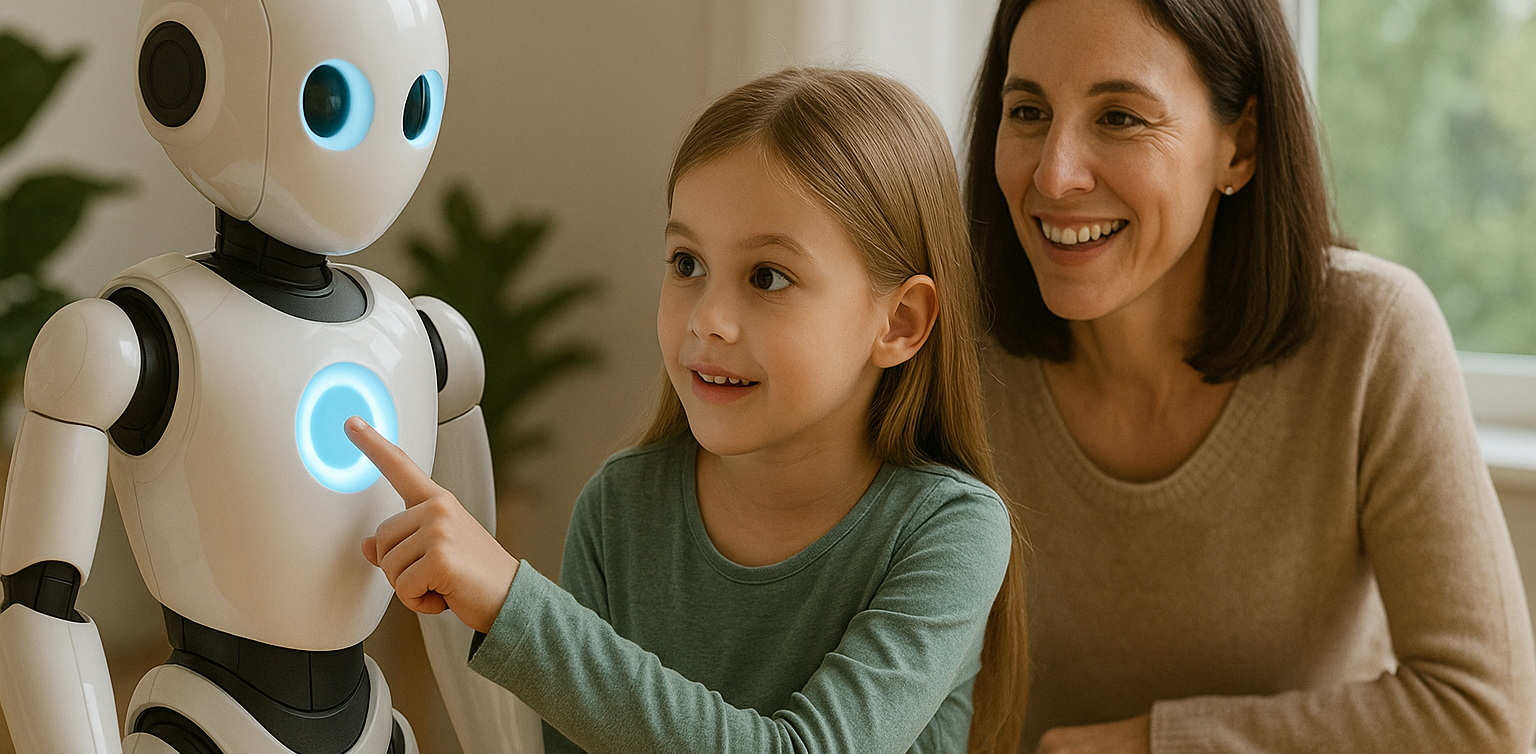
How to Introduce AI to Kids: Tips and Trick 2025 image

Artificial Intelligence, or AI, is no longer just a concept of the future. From voice assistants on smartphones to video recommendations on YouTube, AI is part of our everyday lives. That’s why learning how to introduce AI to kids is so important. When kids understand the basics, they can grow from passive users into confident, curious thinkers in a tech-driven world.

Many parents worry that AI sounds too complicated for young minds. In reality, it can be introduced in very simple and engaging ways. Using relatable examples and interactive methods helps children understand how this powerful technology works.

Use Everyday Examples

how to introduce ai to kids

The easiest way to begin is by pointing out how AI already exists around your child. When they ask questions to Google Assistant or talk to Siri, explain that they are interacting with AI systems that are designed to understand and respond to human language.

You can also show them how platforms like YouTube suggest videos based on what they usually watch. This helps children understand that AI can observe patterns and make decisions, which is a great starting point in how to introduce AI to kids.

Turn Learning into Stories

Kids naturally connect with stories. You can create short tales about friendly robots that learn from their experiences, or animated characters who grow smarter over time. These narratives make AI feel more familiar and less abstract.

Use simple examples in the story to show that AI learns just like people do. For instance, a robot might recognize faces after seeing them many times, just like children learn to recognize their classmates. Storytelling makes it easier to introduce complex ideas in a way kids enjoy.

Play and Learn Together

Play is one of the most effective learning tools for children. There are many apps and games that teach the building blocks of AI in fun ways. Look for games that involve logic puzzles, matching patterns, or choosing the best action based on different situations.

These playful tools help children learn without even realizing it. Exploring AI through games is a great strategy if you are wondering how to introduce AI to kids without making it feel like a formal lesson.

Explain According to Their Age

Every child learns at a different pace. Younger children might only need to know that some technology can learn and help people. Older kids can begin to understand that AI works by using information and following rules to make decisions.

There is no need to dive into technical terms. The goal is to help kids understand that AI is something people design and control. How to introduce AI to kids should match their age and curiosity level so the process feels natural.

Show Real-Life Uses

Kids become more interested when they understand why something matters. You can show them how AI is used to help doctors read x-rays, how it guides self-driving cars, or how it supports students with personalized learning tools.

Understanding how AI helps people in real situations helps children see its value. This makes the topic more meaningful and gives you a strong foundation for how to introduce AI to kids in a way they’ll appreciate.

Support Curiosity and Exploration

After learning the basics, kids will often ask more questions. Use this moment to explore together. Look up short videos, create small projects, or just have simple discussions based on their questions.

Encouraging exploration builds problem-solving skills and confidence. One of the best parts of how to introduce AI to kids is helping them grow more independent in how they think and learn.

Teach Responsible Use

Understanding AI should go hand in hand with learning digital responsibility. Talk to your child about online safety, the importance of privacy, and how to treat others kindly in digital spaces.

Teaching children how to use technology thoughtfully is just as important as showing them how it works. A full approach to how to introduce AI to kids includes values and habits that prepare them for real life.

Learn with Timedoor Academy

If you want to support your child’s learning journey in technology, Timedoor Academy offers online interactive classes that are perfect for kids. With fun and age-appropriate lessons in coding, logic, and digital creativity, your child can explore AI concepts in a way that’s engaging and easy to understand.

Ingin tahu detail program? Image

Ingin tahu detail program?

Timedoor Academy helps children build strong foundations in tech while having fun. Join a free trial class today and start discovering how to introduce AI to kids with the support of experienced mentors and exciting hands-on projects

Keep Reading

Positive Impact of Multimedia Training for Teenagers Every Parent Must Know
In today’s digital era, teenagers are not only using technology for entertainment but also for learning and creating. One of the most effective ways to help them grow is through multimedia training for teenagers. This program allows young learners to understand creative content production while developing skills that are highly relevant to their future. What Is Multimedia Training? Multimedia training is a learning program that covers a wide range of creative skills such as graphic design, photo editing, video production, animation, and interactive presentations. By joining multimedia training for teenagers, students gain fundamental knowledge of creative technology while also learning how to apply it to produce real projects. Key Benefits of Multimedia Training There are many reasons why parents choose multimedia training for teenagers for their children. Some of the main benefits include: Boosting Creativity Teenagers learn how to express their ideas through visual and audio works. Improving Technical Skills They are introduced to design and editing software widely used in the creative industry. Encouraging Critical Thinking In the process of creating content, they learn to plan, evaluate, and refine their work. Preparing for Future Careers With these skills, teenagers are better equipped for opportunities in design, communication, and technology. Relevance of Multimedia Training in the Digital Age Digital content is now an essential part of everyday life. Social media, YouTube, and other online platforms rely on engaging and high-quality content. Through multimedia training for teenagers, young people are not only consumers but also creators who can produce positive and valuable works. Enhancing Communication Skills Another important aspect is how multimedia training helps improve communication skills. In multimedia training for teenagers, students learn to deliver messages effectively through images, videos, or audio. This ability is useful not only for academic purposes but also for building strong social interactions. Building Confidence Through Achievement When teenagers successfully complete a multimedia project, such as a poster, a short video, or an animation, they experience a sense of accomplishment. This process naturally boosts their self-confidence. Therefore, multimedia training for teenagers contributes to positive character development as well. The Role of Parents in Supporting the Process Parental involvement plays a big role in the success of this journey. Supporting them with time, a comfortable learning environment, and appreciation for their creations will keep them motivated. With this encouragement, multimedia training for teenagers becomes an enjoyable and rewarding experience. Why Choose Timedoor Academy? Timedoor Academy provides multimedia training for teenagers designed to meet today’s learning needs. The curriculum emphasizes practical experience, ensuring that students not only understand theory but also produce real projects. With guidance from experienced mentors, every class is engaging, challenging, and inspiring for teenagers. Support Children’s Creativity with Multimedia Training As a parent, you surely want your child to gain skills that will benefit their future. Giving them the opportunity to join multimedia training is a wise decision. Enroll your child in a Free Trial at Timedoor Academy and see how their creativity grows into real abilities.
Why Scratch Games for Kids Are the Best Educational Tool
In today’s world, where digital technologies play a massive role, it’s important for children to develop the skills needed to thrive in an ever-evolving environment. One of the best ways to do this is through engaging, educational tools like Scratch games for kids. Scratch, a visual programming language, has become a go-to platform for introducing kids to the world of coding and game development. It offers a hands-on approach that encourages creativity, logical thinking, and problem-solving. Here’s why Scratch games for kids should be an essential part of your child’s learning journey.   1. Scratch Games for Kids Foster Creativity and Imagination One of the standout benefits of Scratch games for kids is their ability to spark creativity and imagination. Scratch allows children to design their own interactive stories, animations, and games. This creative freedom encourages kids to think beyond the box and develop their original ideas. With Scratch games for kids, your child can experiment with character designs, develop storylines, and even create custom sounds for their games. This is not only fun but also promotes a creative mindset that benefits them in other aspects of learning and life. By using Scratch games for kids, children can learn how to blend technology with creativity. Instead of simply consuming content, they actively engage with it, learning the process of making something unique. This helps them build a strong foundation for their future creative endeavors in digital media, game design, and beyond.   2. Scratch Games for Kids Boost Problem-Solving Skills Problem-solving is one of the key skills children can develop through Scratch games for kids. As children create their own games, they are often faced with challenges that require logical thinking. For instance, when designing a game, kids need to figure out how to make a character move, respond to certain actions, or interact with other game elements. These tasks require them to apply problem-solving strategies, breaking down complex tasks into smaller, manageable steps. The beauty of Scratch games for kids is that they provide a safe environment for children to experiment with different solutions, test their ideas, and make mistakes. This trial-and-error process not only improves problem-solving skills but also teaches kids how to approach challenges from various angles. By engaging with Scratch games for kids, children learn that failure is part of the learning process and develop resilience to overcome obstacles.   3. Scratch Games for Kids Teach Coding Fundamentals One of the most important reasons to incorporate Scratch games for kids into their learning routine is that they provide an accessible introduction to coding. Unlike traditional programming languages that might be too complex for beginners, Scratch uses a block-based visual interface, making it easy for kids to grasp coding concepts. By dragging and dropping blocks to create actions, children are learning the fundamentals of programming, such as loops, conditionals, events, and variables. With Scratch games for kids, children get to explore the basics of coding in a hands-on, interactive manner. These foundational skills will prepare them for more advanced programming languages as they grow older. Whether they choose to pursue Python, Java, or C++ in the future, the logical thinking and problem-solving skills learned from Scratch games for kids will provide a solid foundation for their programming journey.   4. Scratch Games for Kids Develop Logical Thinking At the heart of Scratch games for kids lies logical thinking. When creating a game, children need to structure their actions and events logically. For example, if a child wants their character to jump when a certain key is pressed, they must figure out how to implement that action through the right sequence of events. By working through this logical process, kids develop stronger critical thinking and reasoning skills. Engaging with Scratch games for kids encourages children to think step by step and organize their thoughts in a systematic way. These skills translate into better performance in subjects such as math, science, and even everyday problem-solving. By practicing logical thinking through Scratch games for kids, children will be more adept at making decisions and solving problems efficiently in the future.   5. Scratch Games for Kids Teach Persistence and Patience Creating Scratch games for kids can be challenging at times. Children might encounter bugs or unexpected behavior in their game, requiring them to troubleshoot and make adjustments. This process of debugging teaches kids the value of persistence and patience. Instead of getting frustrated or giving up when things don’t go as planned, children learn to approach the problem from different angles and keep trying until they find a solution. By working through these challenges, children develop a growth mindset, understanding that success often comes through perseverance. The ability to stick with a problem and find solutions is an invaluable skill that will serve kids well in all areas of life, from school projects to personal goals.   6. Scratch Games for Kids Foster Teamwork and Collaboration While Scratch games for kids can certainly be enjoyed individually, they also provide excellent opportunities for collaboration. In many cases, kids work together to share ideas, divide tasks, and support each other in game development. This teamwork aspect teaches kids how to communicate effectively, cooperate with others, and work towards a shared goal. When children collaborate on Scratch games for kids, they learn the importance of listening to others, respecting different viewpoints, and combining their strengths. These skills are vital for success in both academic and social settings, making Scratch games for kids a great way to promote collaboration and social learning.   7. Scratch Games for Kids Provide Real-World Skills One of the most significant benefits of Scratch games for kids is that they offer real-world skills that can translate into future careers. The coding concepts learned through Scratch are the same building blocks used in professional software development, game design, and digital content creation. By learning to create games and interactive projects, children gain practical skills that can open doors to future opportunities in the tech world. The skills developed through Scratch games for kids, such as coding, problem-solving, and logical thinking, are highly transferable and can be applied in various fields, including web development, app creation, and robotics. Early exposure to these skills will give children a head start in an increasingly digital world.   8. Scratch Games for Kids Make Learning Fun Above all, Scratch games for kids make learning enjoyable. Kids are naturally drawn to games, and by combining fun with education, Scratch turns learning into an engaging experience. As children create and play their own games, they get immediate feedback on their progress, which motivates them to continue exploring and learning. By integrating play with learning, Scratch games for kids foster a love for technology and education. This positive experience with coding can inspire children to explore other areas of technology, helping them become lifelong learners.   Start Your Child's Coding Journey with Timedoor Academy! If you're ready to introduce your child to the exciting world of Scratch games for kids, Timedoor Academy is here to help. Our interactive, beginner-friendly courses are designed to make coding fun and engaging. With a focus on creativity, problem-solving, and logical thinking, our classes ensure your child develops a strong foundation in programming. Join our free trial class today and see how much fun learning to code can be! Visit our website now to enroll!
What Is Doxing on Children and How to Prevent It in 2025
In today’s digital age, children are not only using the internet for play and learning but are also actively engaging with social media and online platforms. While the internet provides many benefits, it also presents serious threats, one of which is doxing on children. Doxing on children refers to the act of gathering and sharing a child’s personal information online without permission. This can include their full name, home address, school name, phone number, photos, or even their current location. This kind of exposure is highly dangerous because it can be used to intimidate, harass, or exploit the child.   How Doxing on Children Happens Many parents may not realize that their child’s private data can be easily exposed through seemingly harmless online activities. For example, when a child creates a social media account without strict privacy settings, or when parents themselves share too much about their kids online — a behavior often referred to as “sharenting.” Doxing on children can also occur through gaming forums, group chats, or video comment sections. Children often lack the awareness to differentiate between public and private information, and may unknowingly share details that bad actors can take advantage of.   The Psychological Impact of Doxing on Children Doxing on children can lead to severe psychological effects. Victims may experience stress, fear, anxiety, and even social trauma. Some children may become reluctant to use the internet again, while others might withdraw from their parents out of fear of being scolded. In more serious cases, doxing can lead to prolonged cyberbullying. It’s important for parents to understand that doxing is not just a technical issue. It also affects a child’s sense of safety and confidence. Recognizing behavioral changes — such as sudden mood shifts, isolation, or fear of using gadgets around adults — can help detect if a child is in distress due to online threats.   How to Prevent Doxing on Children Here are some important steps parents can take to prevent doxing on children: Educate EarlyTeach children what personal information is and why it should be protected online. Use real-life examples to help them understand the risks. Use Strong Privacy SettingsMake sure all of your child’s social media accounts have maximum privacy. Do not allow them to accept requests or follow people they do not know. Monitor Online Activity WiselyWithout invading their privacy, it’s still essential for parents to be aware of what platforms their children are using and who they’re interacting with. Consider using parental control tools to enhance digital safety. Be Mindful When Posting About Your ChildParents also need to be careful when sharing their child’s photos, locations, or personal stories online. Build Open CommunicationCreate a safe space where your child feels comfortable sharing if something online makes them uncomfortable. A child who trusts their parent is more likely to ask for help when needed.   The Role of Schools and Teachers Schools play a vital role in preventing doxing on children. Teachers can incorporate digital ethics and online safety lessons into the school curriculum. Schools can also host open discussions about students' online experiences and how to deal with digital threats. With strong collaboration between parents, teachers, and educational institutions, the effort to prevent doxing on children can be more effective and long-lasting. Doxing on children is a serious threat that cannot be ignored. As technology becomes more embedded in daily life, protecting a child’s digital identity must be a shared responsibility. Through education, active guidance, and honest communication, we can help children navigate the online world safely and responsibly.   Start Building Your Child’s Digital Awareness with Timedoor If you want your child to be better prepared for the digital world while learning important skills like online ethics and internet safety, Timedoor Academy offers kid-friendly coding and digital literacy classes. You can also try our free trial class today and see how fun and meaningful digital learning can begin from home.
float button