Sep 26, 2024

How to Keep Children Safe Online? – Internet Usage Guideline

How to Keep Children Safe Online? – Internet Usage Guideline image

Have you ever been concerned about your child’s safety online? and how to keep children safe online.

In today’s age, children are growing up with unprecedented access to the internet and various online platforms. Just like other people, children are getting more comfortable and used to doing things through the internet. 

While this internet connectivity offers incredible opportunities for learning and social interaction, the digital world can be a maze of challenges for an individual who lacks awareness of its potential dangers. From cyberbullying, inappropriate content, online predators, scammers, and many more. Thus, ensuring our children’s online safety has become a crucial aspect of modern parenting.

This guide aims to provide you with practical strategies and insights to help keep your child safe in the digital landscape, allowing them to enjoy the positives of the online world while minimizing potential dangers.

Keep Children Safe Online Guideline

Set Clear Boundaries and Rules

In the modern age, everyone can access the Internet including people with good and bad intentions. Establishing clear guidelines for internet use is fundamental to keeping your child safe online. These rules should be age-appropriate and evolve as your child grows and becomes more tech-savvy. The guidelines serve multiple purposes including providing a framework for healthy internet habits and content consumption.

Ethical Online Behavior 

Teaching your child about ethical online behavior is essential for digital citizenship. The main highlight is the need to teach them to be a responsible user. As parents, we need to help them either in real life or online where children also need to be respectful, supportive, and kind because this will maintain or create a positive habit user.

Appropriate Use

Every website and application has its own set of rules that users must follow, typically two types including Privacy Policy and Terms and Conditions (T&Cs). These are like house rules for each online platform. It is crucial for children and adults to be aware of these guidelines before using any online services.

One of these is age restrictions because many platforms for users with the purpose of protecting children from content not suitable for their age group. This is also to ensure compliance with data protection laws for minors and safeguard children from potential online risks. Also, ensure age-appropriate experiences and maintain the intended purpose of the platform. These rules also serve as behavioral guidelines to outline expected user conduct on the platform. It aims to maintain a safe and positive environment for all users. 

The consequence of violating the rules can lead to warnings, temporary restrictions, or even permanent bans. However, it is crucial to understand the rules for personal safety, digital citizenship, and legal compliance. Thus, it is important for both children and parents to be aware of the app’s policies that are being used by the children to protect them from exposure to inappropriate content or dangerous situations.

Read Our Other Articles:

Can Screen Time be Educational Learning for Kids? Coding Course Could Be The Answer

Freelance or Agency? Cost or Quality? Check Pros and Cons Before Ordering Website Development

Educate About Online Risks and Safety

Unfortunately, the digital landscape can be a complex and sometimes dangerous territory, especially for young people with a higher chance of being inexperienced users. The widespread function of the internet comes with numerous and ever-evolving threats. This is where education about online risks and safety becomes crucial. By equipping children, teenagers, and even adults with the knowledge of digital can ensure that everyone can reap the benefits of the internet while minimizing its potential harms. It is also to empower them with the tools that they need to make informed decisions, protect themselves, and contribute positively to the online community. \

The Permanence of Online Actions

Unlike spoken words that fade away, or physical documents that can be destroyed, digital information can persist indefinitely. It is called a digital footprint which refers to the trail of data that the user created while using the internet. Several footprints including posts, comments, photos, browsing history, and even IP addresses. 

Children need to know the basic concept of the internet, where any information that is online can be copied, accessed, and stored on multiple servers. It means truly erasing online information is challenging even information posted years ago could resurface. This digital footprint is easily accessible data to anyone and might be used maliciously in the future. Thus, it could affect their online safety and future well-being.

Responsible Information Sharing

The Internet was created to share information. However, with the ease of sharing information nowadays comes the responsibility to share information wisely and ethically. Responsible information sharing involves understanding the potential impacts of what we share, respecting others’ privacy, and contributing positively to the online community. 

Children already need to know how to be cautious about sharing personally identifiable information, location data, sensitive personal information, and even other people’s information. Encourage them to always have discussions with parents or reliable family members before sharing those types of information either online or in real life. It can be done by making children mindful of what to share, which can enhance safer online usage. 

Use Parental Controls or Monitoring Tools

parental guidance, internet usage guide for children, family spending time together

While setting clear boundaries, education about online risks, and promoting responsible behavior are essential strategies, sometimes additional measures are necessary to protect our children from potential online dangers. Having an extra layer of protection and oversight to ensure the safety of children online is also crucial. 

Safe Search Settings 

Safe search settings are features or tools that are filters designed to block potentially harmful material from search results. When being turned on, it can ensure that explicit, violent, and inappropriate content is not displayed on the page. They are particularly useful for preventing accidental exposure to mature content. 

These settings can be found in several search engines such as Google, Bing, and YouTube, including other platforms that can hide sensitive content like Instagram, X, Facebook, and others. When children search for information or images, safe search features ensure that the displayed results are also suitable for their age group while also reducing the risk of exposure to disturbing content. Other than that, there are also third-party applications other than built-in settings that allow parents to monitor online activity. 

Screen Time Management

Through this method, parents need to control the amount of time their children can spend interacting with screens including smartphones, tablets, and computers. Excessive screen time can have detrimental effects on children’s physical, mental, and emotional well-being. They can disrupt sleep quality, limit social interaction, and health problems like obesity and eye strain. 

Fortunately, several devices offer features that allow parents to set daily limits for app or device usage and usually this feature is attributed to activity reports that can be used to track usage patterns. Examples of these are Apple’s screen time, Google’s family link, and Microsoft’s family safety. These screen time management tools help balance a child’s online and offline activities with the hope of promoting healthier digital habit activities.

Introduce Them to Educational and Creative Online Spaces

Keep children safe online, safe online environment for children

After all, the internet offers a wealth of opportunities for children to learn, create, and grow and that is the reason it needed to introduce children to educational and creative online spaces. Parents can harness the power of technology for positive development while simultaneously promoting safer internet usage. 

Educational and Creative online spaces can provide children with access to a vast array of knowledge and skills, often in engaging and interactive formats. These spaces can supplement traditional education, introduce children to a more relevant modern environment, and foster adaptability.

Coding and Technology Skills

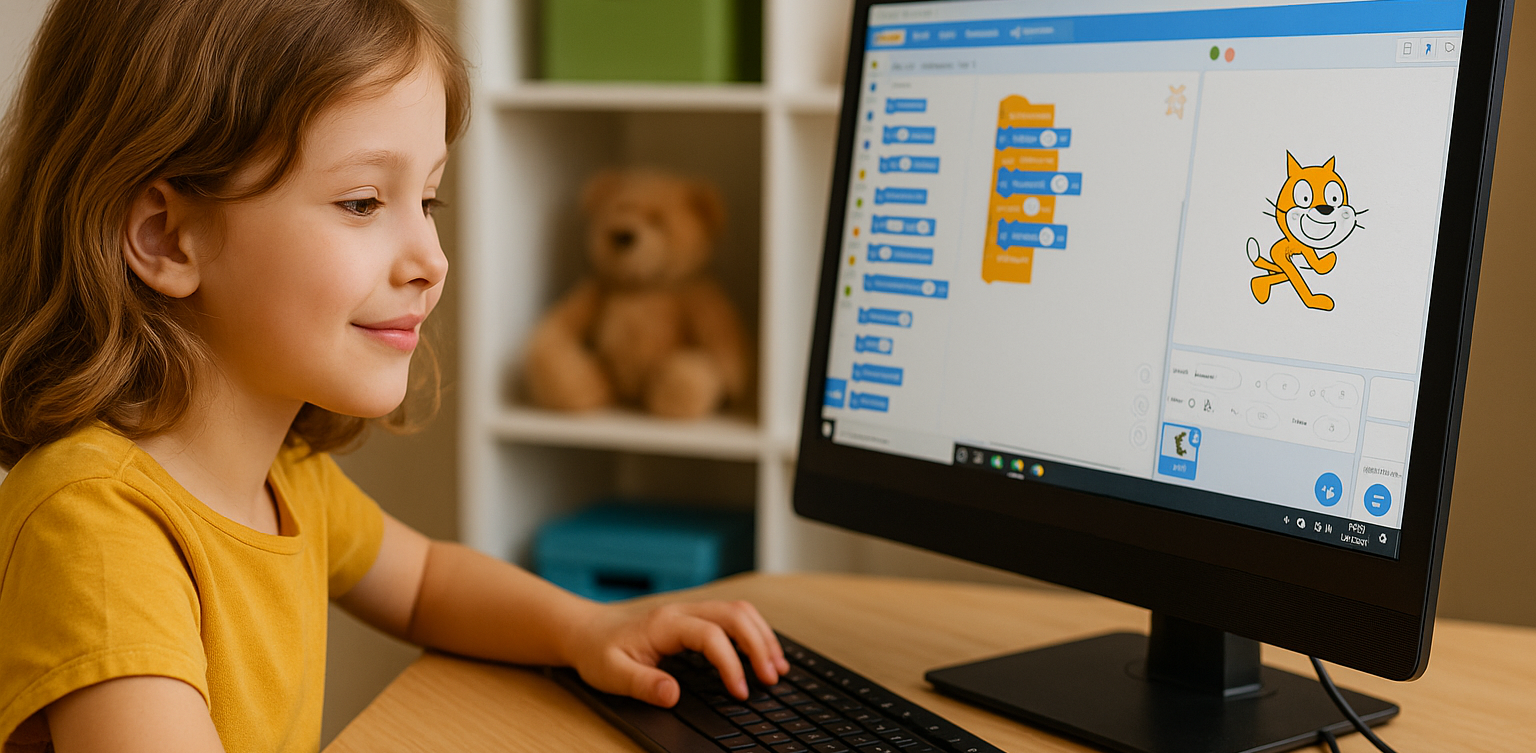
One particularly valuable area for children to be more aware of internet safety is through educational material about technology skills and coding. In our increasingly digital world, these skills are becoming as important as reading and writing, coding is the modern language, and useful skills in the future.

Benefits of Coding for Children

  • Problem-Solving Skills, there will always be mistakes that make errors in the journey of coding and it teaches children how to break down complex problems into smaller and manageable parts. 
  • Thinking Logically, the errors in their code are needed to be found and solved. When children have seen the code result and there are errors, they need to think logically and systematically about what made the errors, where is the mistake code, and how to solve it.
  • Creativity, coding can also allow children to think creatively and bring those ideas to life through coding. Examples would be making animation, designing the web, or even creating artificial intelligence, where coding skills are needed.
  • Future Career Preparation, technology skills like coding are in high demand across various industries because of the digital transformation that is ongoing and it will always be needed in the future modern era.

Guide Children

Timedoor Academy

Imagine a place where your young minds flourish, where curiosity is nurtured, and where the digital landscape becomes a safe playground for learning. Embark your child on a transformative journey with Timedoor Academy, where we’re revolutionizing the way children interact with technology. In today’s digital landscape, it’s crucial to introduce young minds to educational and creative online spaces that nurture growth and foster innovation. We’ve crafted an environment that harnesses the internet’s vast potential to create a safe, engaging, and enriching experience for your child. At Timedoor, we understand that the future speaks the language of code, and we’re here to ensure your child is fluent in it.

Join our free trial class and witness your child’s thrill with future technology innovation.

Check out Timedoor Academy‘s site for further information.

Keep Reading

<strong>10 Best! Math Courses for Kids from Elementary to High School with Prices</strong>
10 Best! Math Courses for Kids from Elementary to High School with Prices
Finding the right math courses for kids is essential for helping students thrive in school and beyond. With so many available options, parents now have the flexibility to choose a program based on teaching style, accessibility, and affordability. Here are ten recommended places that offer math courses for kids, along with their benefits and pricing information. Matching Math Lessons to Every Stage of Learning Before choosing a course, it's important for parents to recognize that the learning needs of an elementary student differ greatly from those in middle or high school. Younger children benefit more from playful and visual learning methods, while older students need deeper explanations and more focus on solving problems. That’s why the list below includes a variety of math courses for kids that cater to different ages and academic goals. 1. h!sensei Price: Starting from IDR 130,000hisensei offers personalized, interactive math classes online for students from elementary to high school. The curriculum is tailored to each student’s pace and includes progress tracking and regular updates for parents.Try the free trial class here! 2. Brain Academy Price: Starting from IDR 1,200,000This hybrid learning center offers both online and offline classes, led by certified instructors. With branches across the country, Brain Academy is a reliable choice for accessible math courses for kids. 3. Zenius Price: Starting from IDR 150,000Zenius provides video-based lessons, interactive practice questions, and teacher consultations. The platform also partners with local learning centers, making it easier to find nearby math courses for kids. 4. Ganesha Operation Price: Starting from IDR 900,000With a long-standing reputation and widespread locations, Ganesha Operation is a top pick for families looking for a solid academic foundation through structured math courses for kids. 5. Ruangguru Premium Price: Starting from IDR 200,000This online platform offers live classes, recorded lessons, and teacher support. For families seeking flexible math courses for kids, Ruangguru is an accessible and affordable option. 6. Eduspace Price: Starting from IDR 300,000Focused on conceptual understanding and practice, Eduspace has conveniently located branches and offers courses tailored to students’ levels. 7. Kampung Inggris Math Price: Starting from IDR 500,000Known for intensive learning, this program offers daily math sessions with focused strategies. It’s available in several cities and suitable for children who thrive in immersive learning environments. 8. MathClub Kids Price: Starting from IDR 250,000Specifically designed for elementary students, MathClub Kids uses games and visuals to build math skills. It’s perfect for young learners in need of engaging math courses for kids. 9. Tryout Center Plus Price: Starting from IDR 600,000This center specializes in exam preparation and academic success. With several branches nationwide, it’s a reliable choice for structured math support. 10. Homeschooling Math Lab Price: Starting from IDR 350,000Offers thematic and hybrid learning in small groups. Students can attend in person or online depending on their location and needs. The Benefits of Learning Math from an Early Age Learning math early helps children develop logical thinking, problem-solving skills, and structured ways of approaching challenges. These skills don’t just help with academic success but are also useful in everyday life and future careers. Why Not Try Coding Too? If your child enjoys logic and structured thinking, coding can be a great next step. At Timedoor Academy, kids aged 5 to 18 can learn programming in a fun, project-based environment. Coding helps strengthen the same problem-solving mindset that math builds. Want to explore it? Try a free coding class today at Timedoor Academy.
Jumbo 2025 Movie Poster
Jumbo and Kids: 3 Inspiring Lessons on Imagination & Technology
As parents, we want to understand the world of children that often seems “absurd”-full of fantasy, but also full of potential. In today's digital era, that world of imagination can be realized not only through drawings or handwriting, but also through digital media such as coding, animation, and game development. So, what can we learn from Jumbo's story about children and technology? 1. Children's Imagination Is Their Greatest Asset Jo, the main character of Jumbo didn't create Jumbo because she was told to, but because she felt alone and wanted a friend. Children have a rich inner world, and imagination is often the bridge to expressing emotions or exploring new ideas. Unfortunately, in an education system that focuses too much on academics, children's imaginations can be forgotten. In fact, in the world of technology, creativity is a major force. Many great innovations were born not from knowledge, but from the courage to imagine things that do not yet exist. As parents, we can start by asking: “If you could make a robot like Jumbo, what would it be like? Can it do anything?” From there, children learn to think creatively and express ideas concretely. 2. Technology: Not an Enemy, But a Tool of Expression In the movie Jumbo, technology serves as a medium of expression-not just an entertainment tool. Just like Jo who built Jumbo from scrap, kids today can also create something from what they have: laptops, tablets, and internet connections. However, the use of technology must be directed. Gadgets are not always bad. If used with a clear purpose, they can be a means for children to learn to think logically, innovate, and even convey their feelings. Instead of forbidding children from playing with gadgets, we can ask: “What can you make with it?” “Do you want to try making your own game or animation?” This is where technology changes function: from passive consumption to active creation. 3. Every Child Can Be a Creator, Not Just a User The movie Jumbo gives us one important message: children have the capacity to create something extraordinary, as long as they are given the opportunity. Not every child has to be a scientist or engineer, but every child can be a creator-they just need the right platform. Nowadays, learning technology such as coding or animation can start as early as elementary school. Children don't need to build robots right away, but they can start by creating characters, organizing storylines, or creating small games. This process trains many things: from systematic thinking, problem solving, to cooperation. And most importantly? They learn to believe in their own ideas. Are we ready to give children the space to create? As parents, we have an important role to play in assisting and facilitating our children's explorations - not rigidly directing them. Children's imagination, like Jo in the movie Jumbo, is often the early foundation of 21st century skills: creativity, empathy, technological literacy and innovation. Giving space to play and imagine with technology could be the first step towards a brighter future for our children. Help Your Child Bring Their Wild Ideas to Life with Timedoor Academy At Timedoor Academy, we believe that every child has tremendous potential to create and not just follow. Through programs such as coding, animation, and digital design, children are encouraged to hone their imagination and put it into tangible form: from interactive games, animated characters, to personal digital projects that reflect their ideas and feelings. With a fun and structured approach, we help children understand that technology is not just consumption, but also a space for exploration. Our classes are online and interactive, guided by professional mentors from Indonesia and Japan, and designed for children aged 5 to 18 from various backgrounds. So if your child has an imaginary world as big as a Jumbo robot, maybe they just need one thing: the right environment to make it happen. Timedoor is here to be the bridge between a child's idea-rich world, and a bright future!
How to Introduce AI to Kids: Tips and Trick 2025
Artificial Intelligence, or AI, is no longer just a concept of the future. From voice assistants on smartphones to video recommendations on YouTube, AI is part of our everyday lives. That’s why learning how to introduce AI to kids is so important. When kids understand the basics, they can grow from passive users into confident, curious thinkers in a tech-driven world. Many parents worry that AI sounds too complicated for young minds. In reality, it can be introduced in very simple and engaging ways. Using relatable examples and interactive methods helps children understand how this powerful technology works. Use Everyday Examples The easiest way to begin is by pointing out how AI already exists around your child. When they ask questions to Google Assistant or talk to Siri, explain that they are interacting with AI systems that are designed to understand and respond to human language. You can also show them how platforms like YouTube suggest videos based on what they usually watch. This helps children understand that AI can observe patterns and make decisions, which is a great starting point in how to introduce AI to kids. Turn Learning into Stories Kids naturally connect with stories. You can create short tales about friendly robots that learn from their experiences, or animated characters who grow smarter over time. These narratives make AI feel more familiar and less abstract. Use simple examples in the story to show that AI learns just like people do. For instance, a robot might recognize faces after seeing them many times, just like children learn to recognize their classmates. Storytelling makes it easier to introduce complex ideas in a way kids enjoy. Play and Learn Together Play is one of the most effective learning tools for children. There are many apps and games that teach the building blocks of AI in fun ways. Look for games that involve logic puzzles, matching patterns, or choosing the best action based on different situations. These playful tools help children learn without even realizing it. Exploring AI through games is a great strategy if you are wondering how to introduce AI to kids without making it feel like a formal lesson. Explain According to Their Age Every child learns at a different pace. Younger children might only need to know that some technology can learn and help people. Older kids can begin to understand that AI works by using information and following rules to make decisions. There is no need to dive into technical terms. The goal is to help kids understand that AI is something people design and control. How to introduce AI to kids should match their age and curiosity level so the process feels natural. Show Real-Life Uses Kids become more interested when they understand why something matters. You can show them how AI is used to help doctors read x-rays, how it guides self-driving cars, or how it supports students with personalized learning tools. Understanding how AI helps people in real situations helps children see its value. This makes the topic more meaningful and gives you a strong foundation for how to introduce AI to kids in a way they’ll appreciate. Support Curiosity and Exploration After learning the basics, kids will often ask more questions. Use this moment to explore together. Look up short videos, create small projects, or just have simple discussions based on their questions. Encouraging exploration builds problem-solving skills and confidence. One of the best parts of how to introduce AI to kids is helping them grow more independent in how they think and learn. Teach Responsible Use Understanding AI should go hand in hand with learning digital responsibility. Talk to your child about online safety, the importance of privacy, and how to treat others kindly in digital spaces. Teaching children how to use technology thoughtfully is just as important as showing them how it works. A full approach to how to introduce AI to kids includes values and habits that prepare them for real life. Learn with Timedoor Academy If you want to support your child’s learning journey in technology, Timedoor Academy offers online interactive classes that are perfect for kids. With fun and age-appropriate lessons in coding, logic, and digital creativity, your child can explore AI concepts in a way that’s engaging and easy to understand. Timedoor Academy helps children build strong foundations in tech while having fun. Join a free trial class today and start discovering how to introduce AI to kids with the support of experienced mentors and exciting hands-on projects
float button