Sep 12, 2025

Importance of Learning English for Elementary School Children

Importance of Learning English for Elementary School Children image

Importance of learning English is a doorway to understanding the world. In today’s era of globalization, mastering more than one language is no longer just an advantage but a necessity. One of the most essential languages to learn is English. Encouraging children at the elementary school level to start learning English brings countless benefits that will shape their future. In this article, we will explore the importance of learning English for young learners and how it supports their academic and social growth.

Why Should Children Learn English Early?

Children in elementary school are at the perfect age to absorb new knowledge quickly. Their brains are still very flexible, making it easier for them to pick up vocabulary, pronunciation, and grammar structures. By starting early, children build a strong foundation that will benefit their language development in the long term. This is one of the clearest reasons behind the importance of learning English for young learners.

Access to a Wider World of Knowledge

importance of learning English

A significant portion of educational resources, such as textbooks, videos, and online materials, are available in English. When children are comfortable with English, they can access these resources more easily. They can read articles, watch educational videos, or participate in international programs that expand their horizons. This highlights the importance of learning English in broadening children’s access to knowledge.

Building Self-Confidence

Being able to communicate in English can boost a child’s confidence. For example, when they meet tourists or join competitions involving participants from different countries, their ability to speak English becomes a valuable skill. They feel more prepared and assured in international settings. This again demonstrates the importance of learning English in nurturing confident and independent individuals.

Supporting Academic Success
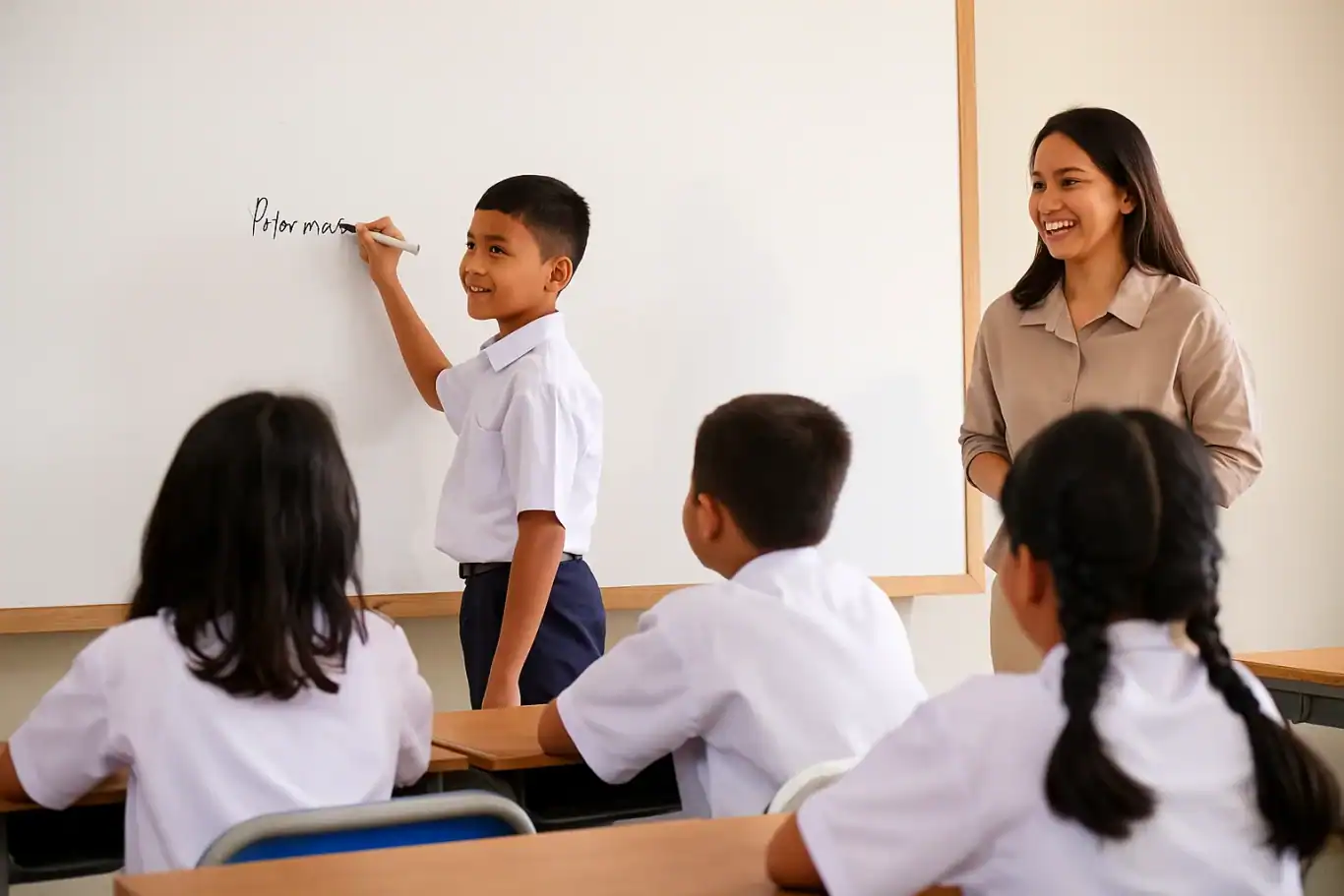
importance of learning English

English proficiency is increasingly required in schools and universities, whether for exams, entrance tests, or scholarship opportunities. Children who start learning English in elementary school are better prepared to face these challenges. Furthermore, their performance in other subjects can also improve since many scientific and technical terms are presented in English. This proves the importance of learning English in supporting academic achievements.

Preparing for Future Careers

The job market is becoming more competitive, and many employers look for individuals who are fluent in English. Children who have learned English from an early age will stand out when they grow up. Whether applying to international companies or pursuing education abroad, strong English skills open countless doors. Here, the importance of learning English extends beyond school years to long-term career opportunities.

Developing a Global Mindset

Children who learn English are better able to connect with peers from diverse cultural backgrounds. This encourages them to respect differences and think with a global perspective. In today’s interconnected world, such an outlook is invaluable. Once again, we see the importance of learning English in helping children grow into globally minded citizens.

How Can Parents Encourage English Learning?

importance of learning English

Parents play a key role in supporting children’s English learning journey. Some simple yet effective steps include:

  • Watching movies or listening to songs in English together.
  • Reading English storybooks before bedtime.
  • Using interactive apps or online courses.
  • Enrolling children in fun and engaging English classes.

Consistency is key. With regular practice and encouragement, children will become more comfortable with English. These daily efforts make the importance of learning English more visible in their everyday lives.

Building a Future-Ready Generation

Ingin tahu detail program? Image

Ingin tahu detail program?

Learning English from a young age gives children lifelong benefits, from academic success and confidence to future career readiness. As parents, guiding children to start early is a wise investment in their future. By recognizing the importance of learning English, we are equipping them with the best tools to thrive in an ever-changing world.

Would you like your child to become more confident and skilled in English? Enroll them in Timedoor Academy, where classes are designed to be interactive, fun, and effective. Sign up for a free trial today and see your child grow with Timedoor Academy!


Keep Reading

<strong>Is Coding Necessary for Kids? Let’s Find Out in 2025!</strong>
Is Coding Necessary for Kids? Let’s Find Out in 2025!
In today’s rapidly evolving digital era, many parents are asking, is coding necessary for kids to learn from an early age? Coding or programming is one of the skills increasingly in demand, but is it really necessary for children to learn coding? This article will explore whether coding is necessary for kids, its benefits, challenges, and how parents can start their children on the right path, especially through coding programs like those offered by Timedoor Academy. Is Coding Necessary for Kids? The question is coding necessary for kids has become more common, especially with advances in technology and digital education. Formally, coding is not yet a mandatory subject in all schools, but today’s job market and digital industries highly value tech and coding skills. Coding is the language behind almost every digital device we use today. Teaching coding early helps prepare children for future challenges that rely heavily on technology and digital innovation. So, while it may not be mandatory by regulation yet, coding is a crucial skill that should be introduced early. Benefits of Coding for Kids When considering is coding necessary for kids, it is important to understand the benefits of learning coding. Coding helps children develop logical and systematic thinking. They learn to break down big problems into smaller parts and solve them step by step. Coding also boosts creativity because children get to create digital projects such as games, animations, and apps. This makes learning coding fun and builds their confidence. Additionally, coding develops problem-solving skills and perseverance. Children need to be patient and precise to ensure their programs work correctly. These skills are valuable not only in tech but in many areas of life. Challenges in Learning Coding for Kids Even though there are many benefits, some challenges come with learning coding. This often leads parents to ask again, is coding necessary for kids, considering the learning process can be tough. Kids may struggle with abstract concepts or complex logic. Parents need to provide extra support and choose fun, age-appropriate methods so children stay engaged and don’t get frustrated. Programs like those at Timedoor Academy are designed to make coding interactive and enjoyable for kids. With the right approach, these challenges can be overcome, and children become more interested in technology. How to Start Learning Coding for Kids? If you still wonder is coding necessary for kids, the key is starting the right way. Begin with simple basics like visual block coding that’s easy to understand. Timedoor Academy offers coding classes tailored to kids’ age and skill level, from beginner to advanced. Children learn through fun projects that deepen their understanding. Timedoor Academy also provides free trial classes. These allow parents and kids to experience the learning method before fully committing. The Role of Parents in Supporting Coding Learning Parents play a crucial role in helping kids succeed in coding. They can set aside dedicated time for learning and accompany children while they work on assignments or projects. Discussing what children learn helps them feel supported and motivated. Good parent-child communication strengthens the learning process and helps kids overcome difficulties. Parents should also remind kids to balance study and rest to avoid fatigue and burnout. Conclusion: Is Coding Necessary for Kids? So, is coding necessary for kids? While coding isn’t mandatory in many schools yet, it is vital for children’s futures. Teaching coding early prepares kids for a digital workforce and develops critical thinking, creativity, and problem-solving skills. Timedoor Academy supports this by offering child-friendly, interactive, and accessible coding classes. With free trial classes available, parents and kids can try a free trial class before fully joining. Don’t wait! Register your child at Timedoor Academy and give them the chance to learn coding in a fun and effective way. With coding skills, your child will be ready to thrive in an advancing digital world full of opportunities.
7 Important Reasons Why Understanding the Function of VR in the Future Will Change How Children Learn
Technology is advancing rapidly, and one of the most fascinating innovations shaping the future is Virtual Reality (VR). In the past, VR might have sounded like a concept from a science fiction movie, but today, this technology has become a real part of education, entertainment, and even professional training. With its ability to create deep and immersive experiences, the function of VR in the future is predicted to become one of the most important elements in the ever-evolving digital world. Virtual Reality allows users to interact with an artificial environment that feels realistic through headsets and sensors. In the context of education, this technology is not just a form of entertainment but also a bridge to deeper and more interactive learning. Children can explore outer space, study human anatomy, or even conduct scientific experiments virtually without any real-world risks. But how important is the function of VR in the future, and how can this technology shape the way our children learn and grow? Here are seven strong reasons why every parent needs to understand the great potential of this technology 1. Providing a More Realistic Learning Experience One of the most promising functions of VR in the future is its ability to provide immersive and realistic learning experiences. Instead of only reading books or watching videos, children can “enter” directly into the learning material. For example, when studying history, they can explore the Egyptian pyramids or witness historical events as if they were truly there. This experience-based learning improves children’s understanding of concepts and memory retention. With more sensory engagement, their brains process information in a more meaningful way. 2. Increasing Children’s Engagement and Motivation Learning is often a challenge for children, especially when teaching methods feel monotonous. Through the function of VR in the future, learning activities can turn into something exciting and full of adventure. Imagine children learning coding, physics, or biology in a virtual world where every lesson becomes an interactive game. VR provides a sense of exploration and discovery that keeps children more motivated to learn. Additionally, this technology helps children with visual or kinesthetic learning styles better understand material in ways that suit their strengths. 3. Developing Empathy and Social Awareness Beyond formal education, the function of VR in the future also plays an important role in developing empathy and social understanding. With VR, children can experience what it feels like to be in someone else’s situation, such as living in another country or understanding the challenges faced by individuals with physical limitations. These experiences broaden their perspectives and nurture values such as compassion, empathy, and respect for diversity. In an era of globalization, these abilities are invaluable in shaping a more inclusive and open-minded generation. 4. Supporting the Learning of Technical and Practical Skills In the future job market, many professions will use VR for training and simulation. Therefore, understanding the function of VR in the future becomes important from an early age. For example, in the medical field, students can use VR to practice surgery without any risk to real patients. In the aviation industry, trainee pilots can learn to control aircraft through realistic simulations. Even in design, architects can create and “walk through” virtual buildings before actual construction begins. Thus, children who are familiar with VR from an early age will have a competitive advantage in the future because they understand how this technology works and how to apply it in practical ways. 5. Encouraging Creativity and Innovation VR is not just about experiencing artificial worlds but also about creating them. One of the most powerful functions of VR in the future is its ability to nurture children’s creativity. Through VR platforms, children can design their own virtual worlds, create characters, or even program interactions within them. This offers great opportunities to combine imagination, art, and technology. Beyond being fun, the process also trains critical thinking and problem-solving skills that are essential for the future. 6. Providing a Safe Environment for Experimentation and Mistakes One of the greatest advantages of the function of VR in the future is its ability to create a safe environment for learning through trial and error. In a virtual world, children can experiment freely without fear of failure or causing real-world harm. This is especially useful in science, engineering, and programming education, where making mistakes is an important part of the learning process. Children can repeat simulations until they truly understand the concept, building confidence and healthy curiosity. 7. Opening New Opportunities in Education and Careers VR technology paves new paths in global education. With the function of VR in the future, children from different parts of the world can learn together in virtual classrooms, interact with teachers from other countries, and access high-quality educational resources without geographical limits. In addition, VR-based industries such as game design, app development, digital training, and entertainment will continue to grow rapidly. Children who understand and can adapt to this technology will have broader and more exciting career opportunities in the future. How Timedoor Academy Equips Children with Future Technology Understanding Timedoor Academy believes that the future of children is not only determined by academic ability but also by their understanding of technology. Through interactive and enjoyable learning, students are introduced to the world of coding, digital design, and innovative technology relevant to today’s advancements, including the function of VR in the future. Under the guidance of professional mentors, every child is encouraged to explore technology with curiosity, responsibility, and creativity. The goal is to help children become not just technology users, but innovative and forward-thinking creators. Start Your Child’s Technology Journey Today Technologies like VR are not just temporary trends but vital parts of children’s educational and career futures. If you want your child to be ready for the future with strong digital skills and a deep understanding of the function of VR in the future, now is the time to take the first step. Register your child for a free trial class at Timedoor Academy today and discover how digital learning can be fun, safe, and inspiring for their future.
<strong>5 Top Recommendations for Child Psychologists and How to Choose the Right One</strong>
5 Top Recommendations for Child Psychologists and How to Choose the Right One
Supporting a child’s mental health is one of the most important responsibilities of modern parents. Children do not only grow physically. They also need emotional development to help them deal with challenges in school, social environments, and family life. One effective way to support their emotional growth is by consulting with a child psychologist when needed. A child psychologist is a professional trained to address emotional, behavioral, and developmental issues in children from toddlers to teenagers. Some parents may still feel hesitant to take their children to a psychologist due to social stigma. However, early consultation can actually prevent bigger problems and provide helpful strategies for long-term well-being. Here are five trusted services that offer quality support from child psychologists. These include in-person sessions and online consultations for more flexible access. 1. Child Development Clinic at RSAB Harapan Kita This clinic is part of the Harapan Kita Women and Children's Hospital. It is known for its experienced child psychologists who help children with speech delays, behavioral disorders, and learning difficulties. Services: Observation and therapy sessions Developmental psychological testing Parent counseling Price: Starting from IDR 300,000 per sessionLocation: West JakartaAvailability: Monday to Saturday 2. UI Center for Applied Psychology (LPT UI) LPT UI is operated by the Faculty of Psychology at Universitas Indonesia. It offers professional child psychology services at affordable rates. Children with academic, emotional, or social issues can get personalized support here. Services: IQ and emotional intelligence testing Play therapy sessions Family and parental consultations Price: Starting from IDR 200,000Location: Depok (online sessions available)Availability: Monday to Friday 3. Personal Growth Personal Growth is a psychological clinic that offers child therapy services with a focus on emotional recovery and safe communication. Their psychologists take a warm and structured approach that makes children feel more at ease. Services: Cognitive behavioral therapy for children Talent and interest assessments Support sessions for parents Price: Starting from IDR 500,000 per sessionLocation: South JakartaAvailability: Flexible by appointment 4. TigaGenerasi TigaGenerasi is known for its family-oriented services and offers a wide range of psychology support for children. They use storytelling, art, and play-based methods to help children express their thoughts and feelings. Services: Play and art therapy Educational support for parents Parenting webinars and group programs Price: Starting from IDR 450,000 per sessionLocation: Jakarta (also offers online sessions)Availability: Monday to Saturday 5. Riliv for Kids Riliv is a well-known online mental health platform that also offers psychological services for children. It is ideal for families who prefer flexible access from home. Children can talk to certified psychologists using video or chat features. Services: Virtual therapy via video call In-app chat with professional psychologists Mental wellness programs for kids Price: Starting from IDR 150,000 per sessionPlatform: Riliv appAvailability: Schedule-based, flexible options How to Choose the Right Child Psychologist Choosing a psychologist for your child requires attention to a few important factors: Professional qualifications and experience: Make sure the psychologist has the proper license and is trained in child development. Comfort and trust: Your child should feel safe and able to communicate with the psychologist. Observe how they respond during the first session. Access and schedule: Choose a service that is easy to reach and can accommodate your preferred times. Online options can help if travel is difficult. Boosting Emotional Growth with Positive Learning Aside from professional help, children can benefit from positive activities that improve focus, confidence, and problem-solving skills. One example is learning to code. Coding helps children develop logical thinking while having fun through creative projects. Timedoor Academy offers engaging online coding courses designed for kids between the ages of 5 and 18. The programs are project-based and suitable for beginners. Try a free trial class at Timedoor Academy today!
float button