Sep 09, 2025

Future-Ready Skills: Coding Education for Elementary School Students
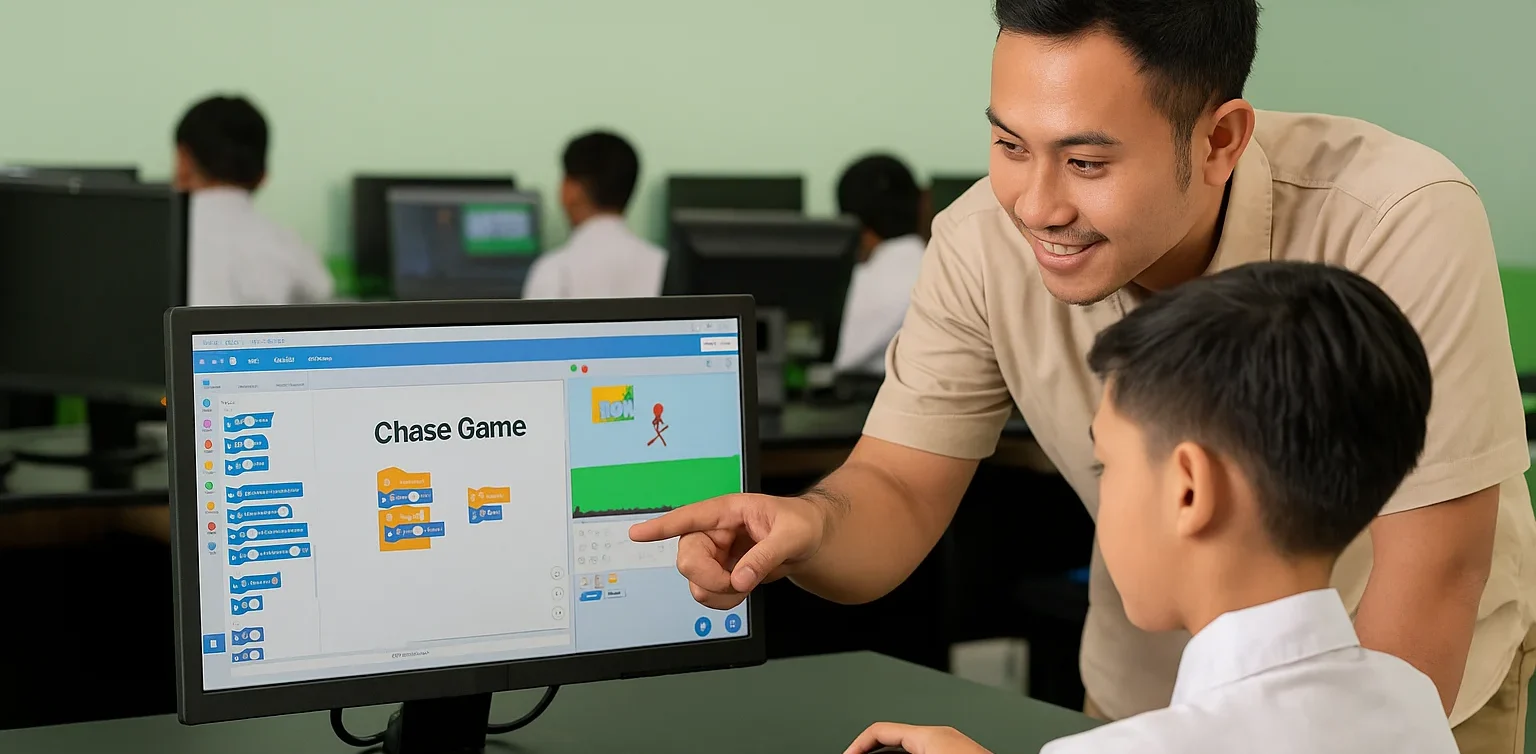
Future-Ready Skills: Coding Education for Elementary School Students image

In today’s digital era, technology skills are no longer optional but have become essential for the younger generation. Wise parents understand the importance of preparing their children for the future by equipping them with the right knowledge and mindset. One valuable skill to introduce early is coding. Through Coding Education for Elementary School Students, children not only learn how to use technology but also how it truly works.

Many parents might wonder if coding is too complicated for young learners. In fact, when taught through interactive and enjoyable methods, children adapt quickly. Coding can be presented like solving puzzles, stacking blocks, or building a story. With the right approach, Coding Education for Elementary School Students becomes accessible and engaging for kids.

Why Start Early?

Coding Education for Elementary School Students

Introducing coding at an early age brings multiple benefits. First, children develop logical and structured thinking. When writing code, they learn to arrange steps in order and understand cause-and-effect relationships. Second, coding sparks creativity. Children can design simple games, animations, or applications that reflect their imagination. Third, it fosters persistence. When their programs do not run smoothly, they practice finding solutions until they succeed.

Therefore, Coding Education for Elementary School Students is not just about computer knowledge, but also about shaping resilient, creative, and critical thinkers.

The Connection Between Coding and Daily Life

Coding is not a separate or abstract concept. Children encounter it daily through apps, digital games, and smart devices. By learning coding, they can understand the logic behind these technologies. For example, when playing a game, they can imagine how a character moves because of certain instructions happening in the background.

This transforms children from passive consumers into future creators of technology. That is the true value of Coding Education for Elementary School Students compared to simply using gadgets.

Challenges and the Role of Parents

Coding Education for Elementary School Students

Of course, introducing coding to children comes with challenges. One of the biggest is keeping the learning process enjoyable. Children can lose focus if the lessons are too complicated or monotonous. This is why teaching methods must be designed specifically for their age group.

Parents play a crucial role by providing encouragement and consistent support. Setting aside time, motivating children when they face difficulties, and choosing a trusted learning program are key to success. With proper guidance, Coding Education for Elementary School Students can be a meaningful and sustainable journey.

Effective Learning Methods

To ensure effective learning, methods must be child-friendly. One popular approach is visual programming, where children use drag-and-drop blocks to create instructions. This helps them grasp the basics without being overwhelmed by complex syntax.

Another method is integrating hobbies into coding. A child who enjoys drawing can learn to create simple animations, while a child who loves games can experiment with building their own mini-games. Through these approaches, Coding Education for Elementary School Students feels natural and relevant to their daily experiences.

Long-Term Impact

Coding Education for Elementary School Students

The benefits of coding extend far beyond the present. Children who start coding early often perform better in subjects involving logic, such as mathematics and science. Moreover, they will be more competitive in the future as technology continues to shape industries worldwide.

In this sense, Coding Education for Elementary School Students is a long-term investment. It nurtures innovative thinking, problem-solving abilities, and adaptability, all of which are essential for thriving in a globalized world.

Fun and Safe Coding for Elementary School Kids

Ingin tahu detail program? Image

Ingin tahu detail program?

For parents, introducing coding during the elementary school years is a forward-looking decision. With the right teaching methods, coding can be both fun and educational. Timedoor Academy offers a structured curriculum and experienced tutors to guide children in learning coding interactively and safely.

If you want your child to be future-ready with strong digital skills, consider signing them up for a free trial at Timedoor Academy. With creative and enjoyable learning experiences, your child will discover the exciting world of coding while preparing for a brighter future.


Keep Reading

How to Choose a College Major: Why IT Major Is One of the Best Options in 2025
Deciding on how to choose a college major is one of the most important decisions for any student. The major you pick can shape your future career, skills, and opportunities. With so many options available, it can feel overwhelming to decide which path to take. Among the many fields, an IT major (Information Technology) stands out as a strong choice for students looking to enter a fast-growing, dynamic industry with global opportunities. This article will help you understand why an IT major could be the right fit and offer tips on how to choose a college major wisely. Why Choosing the Right College Major Matters Deciding on how to choose a college major is more than just picking a subject to study. It determines the skills you will develop, the network you build, and the kind of career path you might follow. A well-chosen major aligns with your interests and the demands of the job market, giving you a better chance at success after graduation. Many students struggle with this choice because they want to balance passion with practicality. You want to enjoy what you study but also ensure that your skills will be valuable in the real world. Understanding the current and future job market trends can guide you to make an informed decision. Why Consider an IT Major? High Demand and Job SecurityThe IT industry is growing rapidly worldwide. Businesses, governments, and organizations of all sizes rely on IT professionals to maintain systems, secure data, and develop new technologies. Roles like software developer, network administrator, cybersecurity analyst, and data scientist are in high demand and expected to grow for years to come. Versatile Skills Applicable Across IndustriesAn IT major equips you with technical skills that apply in various sectors such as healthcare, finance, education, entertainment, and more. Whether you want to build apps, manage cloud infrastructure, or analyze big data, the skills from an IT major open doors in many fields. Attractive Salaries and Career GrowthBecause of the specialized skills required, IT careers often come with competitive salaries. Plus, the tech industry is known for offering career advancement opportunities, certifications, and the chance to work in innovative environments. Continuous Learning and InnovationIT is an ever-evolving field. If you enjoy learning new technologies and solving problems creatively, an IT major offers a dynamic and stimulating career path. Tips for How to Choose a College Major Assess Your Interests and StrengthsThink about what subjects excite you and where your skills lie. Passion combined with aptitude often leads to success. Research Job Market TrendsLook into which majors have strong job prospects both locally and globally. The IT field, for example, shows consistent growth worldwide. Consider Your Long-Term GoalsWhere do you see yourself in 5 or 10 years? Choose a major that aligns with your vision. Talk to Professionals and AlumniConnect with people who have studied or work in your fields of interest to get real-world insights. Explore Related Courses or WorkshopsTry online courses, coding bootcamps, or workshops in IT or other areas you’re curious about. This can help you get a feel for what you like. How Online Learning Can Boost Your IT Journey Choosing an IT major doesn’t mean you only learn in classrooms. Many successful IT professionals supplement their studies with online courses and coding bootcamps. Platforms like Timedoor Academy offer interactive and beginner-friendly coding classes that can help you build practical skills alongside your college education. Timedoor also provides free trial classes, so you can explore if coding and IT are right for you before fully committing. This kind of hands-on experience can give you an edge when entering the job market. Making an Informed Choice How to choose a college major is a question many students face. By reflecting on your interests, researching industries, and exploring fields like IT major, you can make a choice that benefits both your passion and career prospects. If you’re leaning towards technology and innovation, an IT major is definitely worth considering. And remember, learning doesn’t stop with your degree. Using resources like Timedoor Academy to build real skills can set you up for success in the competitive global job market. Start your learning journey today with a free trial class and see where IT can take you!
Introducing AI Coding for Elementary School Kids: A Vital Skill in the Digital Age
In today’s digital era, children are growing up surrounded by technology. From smartphones and social media to online games, technology has become an inseparable part of daily life. As parents, it is important to ensure that our children are not just passive users but also understand how technology actually works. One of the best ways to achieve this is by introducing AI Coding for Elementary School Kids. Some parents may wonder whether concepts like artificial intelligence are too complex for children in elementary school. The truth is, they are not. Children have strong curiosity and quick learning abilities. With fun and age-appropriate teaching methods, AI coding can be introduced early, helping them develop logical and creative thinking skills. Why AI Coding for Elementary School Kids Matters Artificial intelligence is no longer just a trend but a cornerstone of the future workforce. Almost every industry, from healthcare and education to transportation and entertainment, is already leveraging AI. By introducing AI Coding for Elementary School Kids, parents are providing opportunities for their children to acquire skills that will be highly valuable in the years to come. Moreover, learning AI coding trains children to think systematically. They gain insight into how computer programs operate, how data is processed, and how machines can “learn” from patterns. These skills are not only relevant in the technology sector but also useful in solving everyday challenges. The Benefits of Learning AI Coding from a Young Age Boosting critical thinking skills Children learn to analyze problems and come up with effective solutions. Encouraging creativity Through AI Coding for Elementary School Kids, they can create simple projects such as a chatbot or an interactive game. Preparing for the future The future job market requires individuals who can innovate and create technology, not just use it. Building confidence When children successfully complete a coding project, they feel proud of their achievement and gain confidence to take on new challenges. How to Teach AI Coding for Elementary School Kids Teaching AI does not mean diving straight into complex theories. There are many fun and practical ways to introduce the subject: Using educational apps and platforms Many platforms are designed to introduce AI concepts through play. Children can learn while enjoying engaging activities. Relating projects to everyday life Kids can create simple programs such as color-picking tools or guessing games. This makes AI Coding for Elementary School Kids feel relevant to their world. Visual-based learning Since young children understand better through visuals, using block-based coding helps them grasp abstract concepts more easily. The Role of Parents in Supporting Their Children Parents play an essential role in guiding children through this journey. Spending time together, offering encouragement, and showing genuine interest in what they are learning can make a big difference. You do not need to be a tech expert to support your child. What matters most is giving them opportunities to explore and try new things. It is also important for parents to ensure balance. While AI Coding for Elementary School Kids can be exciting, children should still have plenty of time to play outdoors, socialize, and pursue other hobbies. A well-rounded approach supports both intellectual growth and emotional well-being. Timedoor Academy: The Right Place to Learn AI Coding For parents who want to provide the best learning environment, Timedoor Academy is a trusted choice. With interactive teaching methods designed specifically for children, Timedoor Academy makes coding fun and accessible, including lessons related to AI. Programs at Timedoor Academy are tailored for elementary school students, ensuring that AI coding is introduced in ways that are easy to understand. Experienced instructors guide children step by step, so they not only learn theory but also create enjoyable real-world projects. Register Now! Introducing AI Coding for Elementary School Kids is not as daunting as it may seem. In fact, the earlier children are introduced to these concepts, the more prepared they will be to face the future. With the right approach, AI coding can become an enjoyable and rewarding activity that supports both learning and creativity. If you want your child to experience the joy of learning coding in a fun, interactive, and future-oriented way, now is the perfect time to start. Sign up your child for a free trial at Timedoor Academy today and let them experience the excitement of learning AI coding from an early age!
How to Choose Coding Course for Kids: A Step-by-Step Guide In 2025
In today’s digital era, coding is becoming a vital skill for children to learn early. Whether they are interested in games, animation, or just curious about how technology works, finding the right course can shape their learning journey. If you are wondering how to choose coding course for kids, this guide will walk you through the essential steps every parent should know. It covers what to consider, how to evaluate a course, and how platforms like Timedoor Academy make it easier than ever to get started. 1. Understand Your Child's Interests and Learning Style The first step in how to choose coding course for kids is to understand what motivates your child. Do they enjoy building things, telling stories, or playing logic games? A child who loves art might enjoy animation-focused coding, while one interested in tech may love learning how apps work. Choosing a course that connects to their personal interests makes it easier to keep them engaged and excited about learning. 2. Match the Course to Their Age and Skill Level Another important step in how to choose coding course for kids is making sure the difficulty fits your child’s current level. Younger children do better with visual tools like Scratch or Blockly, which help them understand basic logic without typing code. Older kids or those with some experience may benefit more from Python or JavaScript. Timedoor Academy provides coding programs grouped by age and ability, so children can learn comfortably at their own pace. 3. Look for Strong Curriculum and Project-Based Learning When exploring how to choose coding course for kids, the course structure matters. A good program should combine clear explanations with plenty of opportunities to build projects. Kids learn best by doing, so check if they’ll be creating apps, games, or animations. Timedoor Academy follows a project-based approach where each lesson builds toward a hands-on goal, helping children stay focused and feel proud of their work. 4. Decide Between Online or In-Person Formats Your child’s learning environment can impact their progress. As you consider how to choose coding course for kids, think about whether online or in-person learning works better for your family. Online courses are flexible and accessible from anywhere, while in-person classes may provide more direct support. Timedoor Academy offers live online sessions with real instructors and small class sizes, blending structure with flexibility. 5. Evaluate the Teachers and Student Support One of the key factors in how to choose coding course for kids is the quality of the teaching staff. Great instructors are not just skilled in programming—they also know how to communicate with children. Look for teachers who are patient, encouraging, and responsive. At Timedoor Academy, instructors are carefully trained to work with young learners and guide them with a friendly, easy-to-follow approach. 6. Try a Free Trial to See What Works Before making a commitment, it is helpful to try a class. This is one of the smartest ways in how to choose coding course for kids. A trial session lets your child experience the lesson format, meet the teacher, and decide if they enjoy it. Timedoor Academy offers free trial classes where children can explore coding firsthand, ask questions, and complete a mini project. This can be the difference between guessing and choosing a course with confidence. Ready to Begin Your Child’s Coding Journey? If you’re still wondering how to choose coding course for kids, the best way is to let them experience it. Timedoor Academy offers interactive and engaging online coding classes made for kids of all ages. With expert instructors, hands-on projects, and a flexible schedule, your child will not only learn coding but also grow in confidence and creativity. Sign up for a free class today and see how fun learning to code can be.
float button