May 22, 2025

How to Perform Eid al-Adha Prayer 2025: Steps, Meaning, and Inspiring Activities for Children

<strong>How to Perform Eid al-Adha Prayer 2025: Steps, Meaning, and Inspiring Activities for Children</strong> image

How to perform Eid al-Adha prayer is one of the most common questions for Muslim families as Eid al-Adha approaches. Understanding how to perform Eid al-Adha prayer correctly is essential to ensure your worship is meaningful and in accordance with the sunnah. In this article, we’ll guide you through how to perform Eid al-Adha prayer in 2025, the recommended intentions in Arabic and English, the official prayer schedule, and positive activities for your children during the Eid holiday—including gently introducing them to coding with Timedoor Academy.

How to Perform Eid al-Adha Prayer 2025: Intention (Niyyah), Meaning, and Pronunciation

Before performing the prayer, it’s important to know how to perform Eid al-Adha prayer with the proper intention (niyyah), whether as an imam (leader) or as a follower (makmum). The intention is made in your heart at the moment you begin with the opening takbir (takbiratul ihram). Below are the intentions for both roles, with the Arabic text, transliteration, and meaning:

Intention as a Follower (Makmum):
Arabic:
اُصَلِّي سُنَّةً لِعِيْدِ الأَضْحَى رَكْعَتَيْنِ مَأْمُوْمًا ِللهِ تَعَالَى
Transliteration:
Ushalli sunnatan li ‘iidil adha rak‘ataini ma’muuman lillaahi ta‘aalaa
Meaning:
“I intend to perform two units of Eid al-Adha sunnah prayer as a follower, for the sake of Allah Ta’ala.”

Intention as an Imam (Leader):
Arabic:
اُصَلِّي سُنَّةً لِعِيْدِ الأَضْحَى رَكْعَتَيْنِ إِمَامًا ِللهِ تَعَالَى
Transliteration:
Ushalli sunnatan li ‘iidil adha rak‘ataini imaaman lillaahi ta‘aalaa
Meaning:
“I intend to perform two units of Eid al-Adha sunnah prayer as a leader, for the sake of Allah Ta’ala.”

Teaching your children how to perform Eid al-Adha prayer, including how to recite the intention in Arabic, is a great way to build good prayer habits from an early age.

Step-by-Step: How to Perform Eid al-Adha Prayer

Once you have learned the intention, the next step in how to perform Eid al-Adha prayer is understanding the movements and recitations. Here’s a simple step-by-step guide:

  1. Silently recite the intention for Eid al-Adha prayer in your heart at the same time as you begin the opening takbir.
  2. In the first unit (rak’ah), after the opening takbir, perform seven additional takbirs.
  3. Recite Al-Fatihah and a short surah (such as Surah Qaf or Surah Al-A’la).
  4. Continue with bowing (rukuk), standing (i’tidal), and prostrating (sujud) as in regular prayer.
  5. In the second unit, after standing up, perform five additional takbirs.
  6. Recite Al-Fatihah and another short surah (such as Surah Al-Ghashiyah).
  7. Complete the prayer as usual and finish with salam.
  8. After the prayer, it is recommended to listen to the Eid sermon (khutbah).

Knowing how to perform Eid al-Adha prayer ensures your worship is in line with the prophetic tradition and brings deeper meaning to your Eid celebration.

Eid al-Adha Prayer Schedule 2025

Eid al-Adha in 2025 is expected to fall on Friday, June 6, 2025. The prayer is usually held in the morning, between 6:00 and 7:00 a.m. local time, but always confirm with your local mosque or Islamic authority for the exact timing in your area.

The Eid holiday is a wonderful opportunity for families to grow closer and help children experience the values and beauty of Eid.

The Meaning of Eid al-Adha for Families and Children

how to perform eid al-adha prayer

Eid al-Adha is more than just a ritual of sacrifice—it is also a time to strengthen family bonds and teach the spirit of worship. Demonstrate to your children how to perform Eid al-Adha prayer and involve them in meaningful holiday activities, such as distributing qurban meat or joining community events.

Positive Activities During the Eid al-Adha Holiday

To make Eid al-Adha 2025 even more memorable, here are a few positive activity ideas for your children:

  1. Learning How to Perform Eid al-Adha Prayer Together
    Practice the intention and steps at home before going to the mosque, so your child feels confident and included in the communal prayer.
  2. Teaching the Value of Sharing and Cooperation
    Invite children to help distribute qurban meat or participate in community clean-up activities.
  3. Filling the Holiday with Educational Activities
    Besides worship, use this time to introduce children to new skills such as coding.

Coding: A Positive Holiday Activity for Your Child’s Future

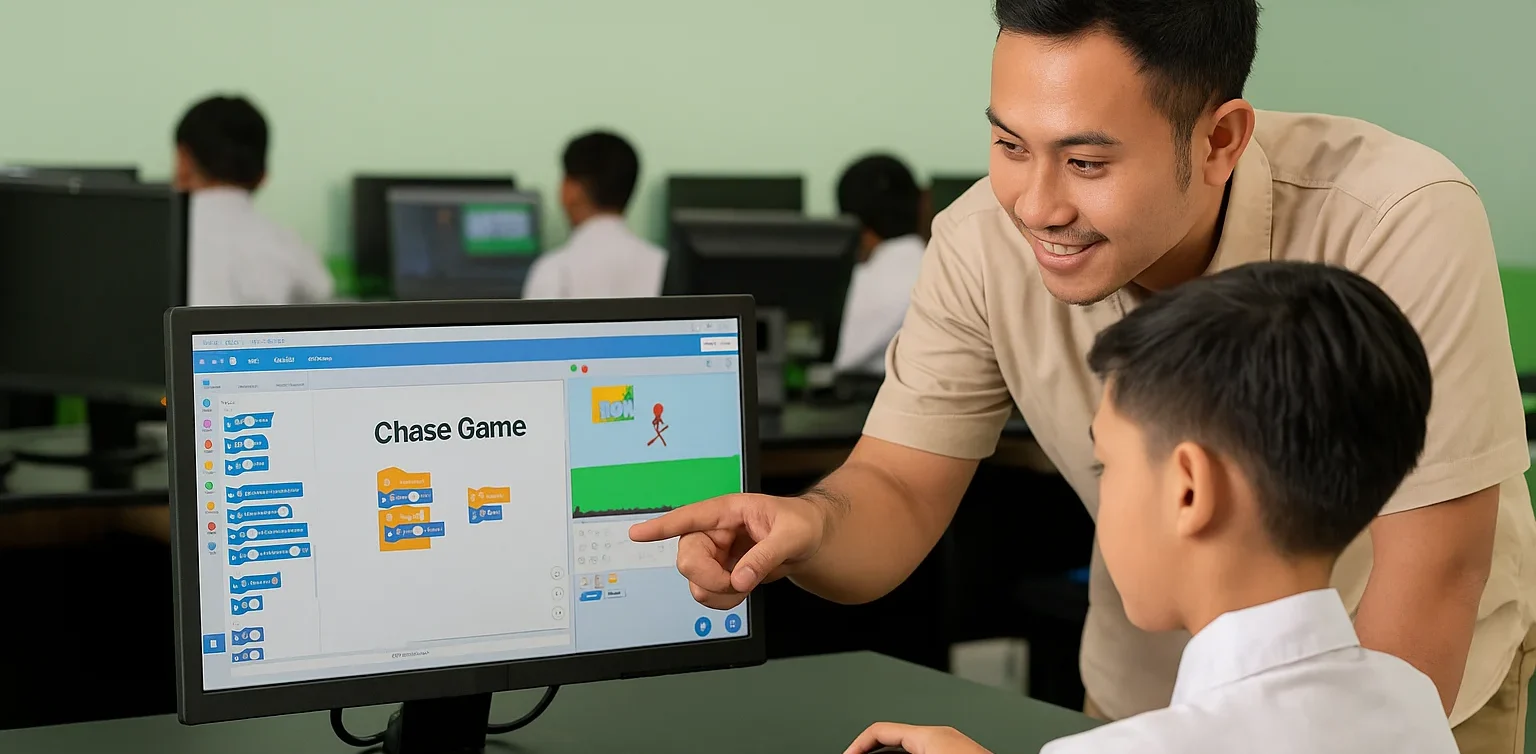
In addition to learning how to perform Eid al-Adha prayer, spending time on fun, educational activities like coding helps children develop critical thinking, creativity, and problem-solving skills. Timedoor Academy offers interactive online coding classes that children can join from home during the Eid holiday. The lessons are designed for all age levels, with practical projects that make learning enjoyable.

There is also a free trial class available, so your child can experience coding first-hand—no commitment required—making the most of the Eid al-Adha break.

Tips to Maximize the Eid al-Adha Holiday for Children

  • Create a balanced daily schedule including prayer, play, learning, and rest.
  • Support children to try new things, such as coding, in addition to practicing how to perform Eid al-Adha prayer.
  • Join your child in activities to help them feel more confident and motivated.

Eid al-Adha Holiday, a Precious Moment for Family and Learning

 Image

Understanding how to perform Eid al-Adha prayer is a meaningful first step in preparing your child for worship. The 2025 Eid al-Adha holiday is also the perfect chance to teach both spiritual values and important future skills, like coding. Strengthen your family bond, help your child learn how to perform Eid al-Adha prayer, and explore educational activities together with Timedoor Academy.

Don’t miss this chance to make Eid al-Adha 2025 a memorable, positive experience for your children and family!


Keep Reading

<strong>The Best Sports for Children Ages 3–17</strong>
The Best Sports for Children Ages 3–17
In today’s modern era, one of the biggest challenges for parents is making sure their children stay physically active amid the dominance of gadgets and digital activities. Many children prefer playing games at home rather than running or playing outdoors. In reality, choosing the best sports for children is very important to support their growth, health, and happiness. Through the right physical activities, children can develop healthy habits that last into adulthood. Every child has different interests and abilities. That’s why it is important for parents to understand what types of sports are best for their child, based on age, interest, and health conditions. By introducing physical activity from an early age, children will get to know their bodies, learn teamwork, and build self-confidence. Recommended Sports for Children by Age To maximize the benefits, here are some recommendations for the best sports for children, grouped by age: Ages 3–6:At this stage, children need simple and fun physical activities. Some of the best sports for young children include playing ball, riding a tricycle, swimming, gymnastics, and dancing. Games like hide and seek or jumping rope are also great for developing gross motor skills. Ages 7–12:Children can start joining more structured and competitive sports. Recommended sports for this age group include soccer, basketball, badminton, athletics, martial arts, and swimming. At this age, children also begin to learn teamwork and sportsmanship. Teenagers:As they enter their teenage years, children can choose sports that match their interests and talents, whether in teams or individually. They can also try more specific sports such as volleyball, table tennis, pencak silat, or archery. Teenagers are usually more motivated if sports are done together with friends. Tips to Keep Children Excited About Sports To help children stay enthusiastic and consistent about sports, parents can try these tips: Make sports a family routine, such as exercising together every weekend. Give children the opportunity to try various types of sports until they find what they enjoy most. Avoid comparing your child’s abilities with others; focus on their progress and efforts. Offer praise and support for every effort and achievement. Keep the sports environment fun, so that sports never feel like a burden or punishment. Balancing Sports and Digital Activities Besides introducing the best sports for children, it is also important to teach children how to manage their time between physical and digital activities. In the technology era, it’s true that children need to become familiar with the digital world, but physical health should always be a priority. Parents can create a daily schedule that balances study time, screen time, and physical exercise. This will help build healthy habits and prevent children from becoming too attached to their devices. Developing Children’s Potential Through Sports and Coding Nurturing a child’s potential goes beyond just finding the best sports for children. It also involves introducing them to 21st-century skills such as coding. Balancing a healthy body with an active mind is essential in this digital age. Coding trains children to think logically, creatively, and to solve problems, while sports help them develop discipline and self-confidence. Parents can blend physical and digital activities so that children can grow optimally, both physically and mentally. Try a Free Trial Coding Class at Timedoor Academy To help your child be even more prepared for future challenges, encourage them to join a free trial coding class at Timedoor Academy. In this class, children learn coding in an interactive and creative way, guided by professional mentors. Make your child’s screen time more meaningful with educational digital activities, without neglecting the importance of finding the best sports for children. Visit our website or social media pages, Timedoor Academy, to register for a free trial coding class that can be attended online from home. Finding the best sports for children does take time, but the benefits are enormous for their future. Active support and involvement from parents is essential so children can grow up healthy, happy, and confident to face the modern world.
The Importance of Soft Skills for Elementary School Kids
In today’s digital era, academic intelligence is no longer the only key to success. Soft skills are increasingly recognized as essential in building confidence, shaping character, and preparing children for global challenges. Among the many valuable soft skills to develop early on, one stands out as especially impactful: Skill Public Speaking. As parents, we naturally want our children to grow into confident individuals who can express themselves clearly. Public speaking is not just about standing on a stage and speaking to an audience. It is about communicating ideas with clarity, conviction, and confidence. This ability becomes a strong foundation for children in both their academic and social lives. Why Soft Skills Matter for Elementary School Kids During the elementary school years, children are at a stage of rapid cognitive and emotional development. They are learning to understand themselves, relate to others, and form habits that will carry into adulthood. Soft skills such as communication, empathy, leadership, and teamwork help children adapt more effectively to various situations. Among these, Skill Public Speaking plays a crucial role. The ability to speak clearly and confidently can help children in school presentations, competitions, and even everyday interactions with peers. More importantly, it trains them to listen to their audience, manage nervousness, and deliver messages in a structured way. Benefits of Developing Skill Public Speaking Early Boosting Confidence Children who regularly practice speaking in front of others gain more confidence in expressing their opinions. This confidence benefits them not only in school but also in everyday life. Encouraging Structured Thinking When preparing a presentation, children learn to organize their ideas systematically. This process sharpens their critical and analytical thinking skills. Improving Social Abilities Skill Public Speaking teaches children to maintain eye contact, observe audience reactions, and engage effectively with others. These habits strengthen their empathy and social connections. Preparing for the Future Strong communication skills are highly valued in higher education and the professional world. By learning public speaking in elementary school, children gain a long-lasting competitive advantage. The Role of Parents in Supporting Their Children Parents play a significant role in encouraging children to practice speaking confidently. Supportive gestures such as giving praise, providing opportunities to perform, and creating a safe environment free from harsh criticism help children feel more comfortable. Simple activities, like letting a child tell stories to the family, read aloud, or present a project, are excellent starting points. Parents can also guide their children toward structured learning programs. These programs not only teach techniques for effective Skill Public Speaking, but also help children manage nervousness, choose their words carefully, and engage with different audiences. How Timedoor Academy Supports Children Timedoor Academy recognizes the importance of developing soft skills at an early age. Through a well-designed curriculum, children can learn Skill Public Speaking in a fun and interactive environment. Experienced tutors provide guidance that helps students improve their speaking ability while also building self-confidence. Each session is designed to actively involve students, ensuring they not only learn the theory but also practice directly. Whether through presentations, role-plays, or group discussions, children gain valuable experience that prepares them for both academic and real-life situations. By practicing regularly in a safe and supportive environment, children gradually overcome their fears and discover the joy of expressing themselves clearly. This approach builds resilience and prepares them for greater challenges ahead. Building a Future-Ready Generation Soft skills are as important as academic abilities in preparing children for success. With Skill Public Speaking, children become more confident, thoughtful, and ready to engage in today’s dynamic world. The earlier they begin practicing these skills, the greater the positive impact on their development. For parents, investing in their child’s soft skills is a meaningful step toward long-term growth. With the right encouragement and proper guidance, children can grow not only academically strong but also emotionally resilient and socially capable. Ready to Support Your Child? If you want your child to grow into a confident individual who is ready to face future challenges, Timedoor Academy is here to help. Enroll them in a free trial program and let them experience the excitement of learning Skill Public Speaking in a fun, interactive, and supportive environment. Through this program, your child will discover new ways to express themselves while preparing to become part of a strong and capable future generation.
Future Trends in STEM Education: What Parents Need to Know In 2025
STEM education, which stands for science, technology, engineering, and mathematics, has long been recognized as a critical foundation for preparing children to thrive in a technology-driven world. However, it is no longer just about learning formulas or solving problems. The landscape of learning is changing quickly, and parents need to stay informed about where education is headed. This article explores the future trends in STEM education that are shaping how children learn and develop key skills. From coding in early grades to interdisciplinary learning, parents today play a bigger role than ever in guiding and supporting their child’s STEM journey. Personalized and Adaptive Learning One of the most significant future trends in STEM education is the use of personalized learning platforms. These platforms adjust the pace and content based on the learner's needs. Instead of using a one-size-fits-all approach, students receive lessons that match their ability level and learning style. This makes STEM subjects more accessible for children who may struggle in a traditional classroom. With adaptive tools, children can explore challenging topics like algebra or coding in ways that feel engaging rather than overwhelming. Emphasis on Real-World Problem Solving STEM education is moving beyond theory to practice. Schools are encouraging students to solve real-world problems, whether it's designing a water filtration system or programming a simple app. This trend helps children see the connection between what they learn in class and how it applies to the world around them. By focusing on real-life applications, children develop a deeper understanding of STEM concepts. They also build critical thinking, teamwork, and communication skills, which are just as important as technical knowledge. Coding as a Core Skill Coding is no longer seen as an optional extracurricular activity. It is becoming a core part of the curriculum in many schools around the world. Understanding the basics of coding helps children become not just consumers of technology but also creators. Among the future trends in STEM education, coding stands out because it blends creativity with logic. From block-based languages like Scratch to more advanced tools like Python, students are learning how to build games, automate tasks, and solve digital challenges. Integration of AI and Emerging Technologies Artificial intelligence is also making its way into STEM classrooms. AI-powered platforms can offer instant feedback, personalize learning paths, and even simulate experiments in virtual labs. Students are also being introduced to how AI works, not just how to use it. This exposure prepares children for a future where technology will continue to evolve rapidly. Understanding emerging technologies is becoming as important as understanding basic math or science. Focus on Interdisciplinary Learning In the future, STEM will not be taught in isolation. Interdisciplinary learning, often referred to as STEAM when incorporating the arts, is gaining popularity. Projects may combine coding with storytelling or physics with design. This shift reflects how the real world works, where innovation often happens at the intersection of multiple disciplines. For parents, encouraging children to explore connections between subjects helps them develop more holistic thinking. More Hands-On, Project-Based Learning Another one of the key future trends in STEM education is project-based learning. Children are no longer just reading textbooks or memorizing facts. They are building, testing, and iterating on their own designs. From robotics kits to 3D printing, students now learn through experimentation. Hands-on learning encourages trial and error and allows children to develop resilience. When a project fails, they learn to adapt and try new solutions, which is a critical skill in any STEM career path. Increased Access Through Online Platforms Online learning has become more refined and accessible. High-quality STEM content is now available to students from various backgrounds, often at low or no cost. This trend is helping to reduce gaps in education and allow more children to engage with STEM early on. Parents can use these resources to support their child’s learning from home. Platforms like Timedoor Academy offer structured online courses in coding, robotics, and math that are designed for children and flexible for families. Equity and Inclusion in STEM There is growing awareness about the need for more diverse representation in STEM fields. Future trends in STEM education will continue to emphasize equity by making sure girls, underrepresented groups, and students with different learning needs have equal opportunities to thrive. This includes inclusive teaching materials, diverse role models, and support systems that encourage every child to explore their interests in STEM regardless of background. What This Means for Parents Staying informed about the future trends in STEM education helps parents make better decisions about their child’s learning path. Whether through after-school programs, online courses, or simple encouragement at home, parents play a crucial role in nurturing a STEM mindset. Understanding these trends also helps parents advocate for improved STEM education at school. By recognizing the direction education is heading, families can help children develop both the curiosity and confidence needed to succeed. Explore STEM Learning at Home with Timedoor Academy If you want your child to experience hands-on, future-ready STEM learning, Timedoor Academy offers interactive online courses in coding, robotics, and digital skills. Designed with young learners in mind, these programs build creativity, logic, and confidence. Try a free class today and help your child stay ahead of the curve by exploring the future trends in STEM education in a fun and engaging way.
float button