Jul 25, 2025

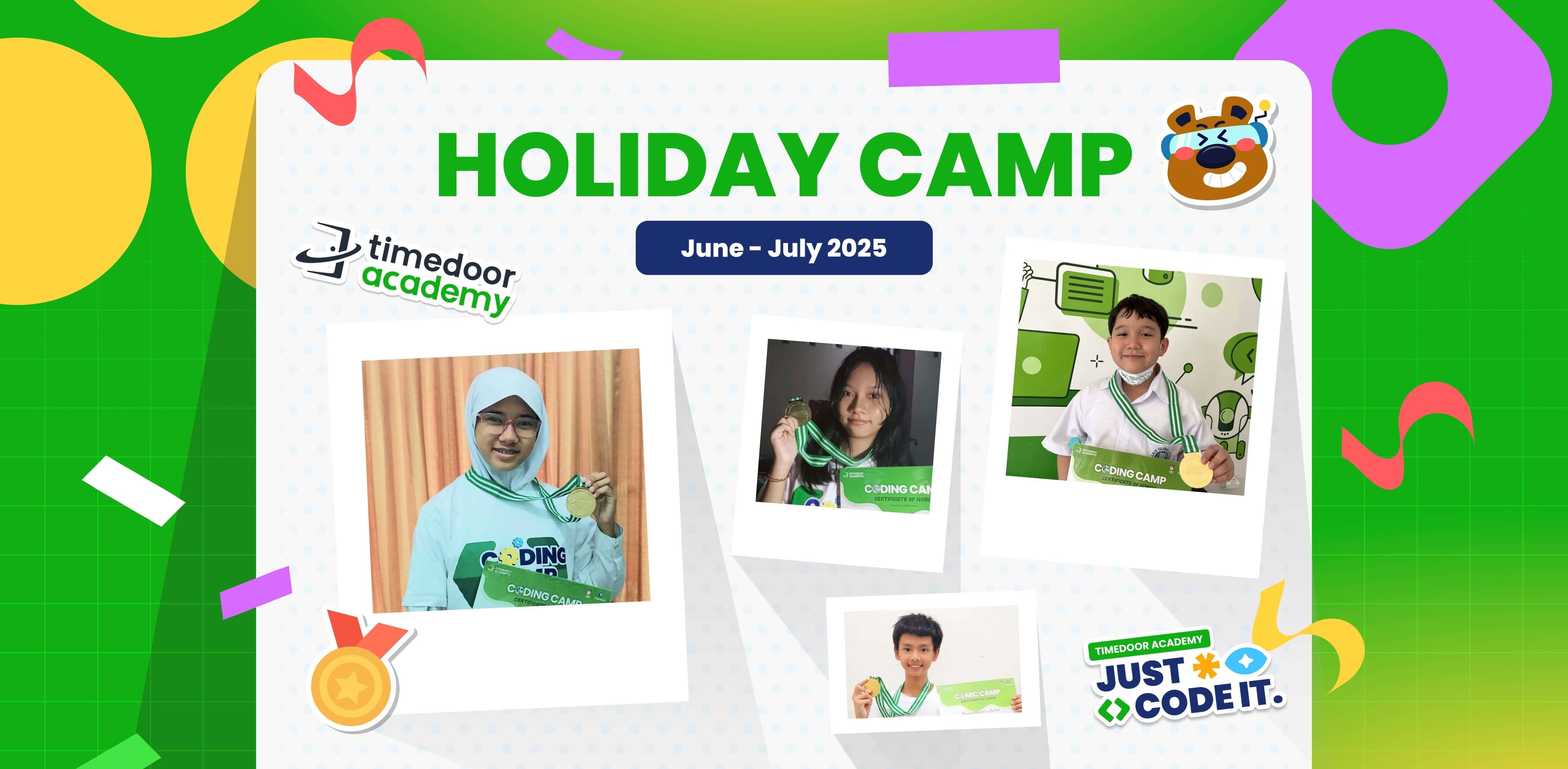
Official Announcement of Holiday Camp Awards June to July 2025

Official Announcement of Holiday Camp Awards June to July 2025 image

Holiday Camp 2025 was successfully held from June 9 to July 11, 2025, with over 500 participants from all over Indonesia!
This year was even more special with the launch of a new program: English Camp, which made the learning experience even more fun and comprehensive.

The 5-day Holiday Camp at Timedoor Academy was designed for students who wanted to learn coding or design based on their interests. Various programs were available, such as Python Development, Roblox Development, Artificial Intelligence, UI/UX Design, and Comic Making. With guidance from professional instructors and exciting, challenging projects, participants were able to improve their digital skills according to the subject they chose.

Today, we are proud to announce the participants who are entitled to receive awards for Best Project and Best Participant.
Please see the list of winners below:

JUNIOR ANIMATOR
CATEGORY PARTICIPANT’S NAME BRANCH
Best Project Rafie Dhanapati Tang Jambi
Best Participant Adifa Khairisa Hamdel Pekanbaru
JUNIOR 3D GAME
CATEGORY PARTICIPANT’S NAME BRANCH
Best Project Albercio Javier Zafran Green Lake City
Best Participant Feni Chandra Kirana Cikarang
JUNIOR CONSTRUCT
CATEGORY PARTICIPANT’S NAME BRANCH
Best Project Aira Meta Letisha Jambi
Best Participant Raditya Alvarendra Ramadhan Cikarang
KIDS CONSTRUCT BEGINNER + WEBSITE
CATEGORY PARTICIPANT’S NAME BRANCH
Best Project Komang Tribuana Devi Danu Asri Gatsu Bali
Best Participant Nyoman Ngurah Reyndra Devananta Gatsu Bali
KIDS MACHINE LEARNING
CATEGORY PARTICIPANT’S NAME BRANCH
Best Project Altair Jordan Wiryadhika Palembang
Best Participant Nathanael Gusti Ngurah Gyanendra Raditya Cikarang
KIDS ANDROID APP DEVELOPER
CATEGORY PARTICIPANT’S NAME BRANCH
Best Project Andi Kayla Fatmah Jambi
Best Participant Marvella Alexa Jambi
KIDS ROBLOX FIND THE PIZZA (V1 & V2)
CATEGORY PARTICIPANT’S NAME BRANCH
Best Project Joanna Glory Celia Tampubolon Pontianak
Best Participant Mikaela Larasatiningrum Widharto Cikarang
KIDS PYTHON
CATEGORY PARTICIPANT’S NAME BRANCH
Best Project Muhammad Nabhan Rinaldi Makassar
Best Participant Dhiyo Lucas Iswantoro Manado
KIDS AI DEVELOPER
CATEGORY PARTICIPANT’S NAME BRANCH
Best Project Rafael Lorenzo Citraland
Best Participant Felix Parulian Kurniawan Online ID
TEENS PHASER
CATEGORY PARTICIPANT’S NAME BRANCH
Best Project I Putu Abyakta Dhika Kurniawan Renon
Best Participant Addo Darian Peejaya Renon
TEENS WEB DEVELOPER
CATEGORY PARTICIPANT’S NAME BRANCH
Best Project Quraisy Aqila Rafif Cikarang
Best Participant Awwalun Tangguh Firjatullah Citraland
TEENS ROBLOX NEVERLAND SURVIVAL (V1 & V2)
CATEGORY PARTICIPANT’S NAME BRANCH
Best Project Rafael Geovanni Kelapa Gading
Best Participant Ignasius Tristan Widharto Cikarang
TEENS PYTHON
CATEGORY PARTICIPANT’S NAME BRANCH
Best Project Arkaan Fatih Safaraz Pekanbaru
Best Participant M. Izyan Adly A Gayungan
TEENS APP DEV
CATEGORY PARTICIPANT’S NAME BRANCH
Best Project Vannesa Feryan William Medan Maimun
Best Participant
TEENS AI DEV
CATEGORY PARTICIPANT’S NAME BRANCH
Best Project Udara Alouin Arauna Situngkir Kelapa Gading
Best Participant Callie Angeline Sutanto Online ID
 TEENS IoT
CATEGORY PARTICIPANT’S NAME BRANCH
Best Project Darren Hanzel Kelapa Gading
Best Participant Jonathan Isaac Santoso Citraland
 COMIC KIDS
CATEGORY PARTICIPANT’S NAME BRANCH
Best Project Alyaa Kunaziza Werdaya Online ID
Best Participant Malika Della Sachanda Online ID
 COMIC TEENS
CATEGORY PARTICIPANT’S NAME BRANCH
Best Project Arisha Qurrotua’yunina Online ID
Best Participant Raphaella Generosa Simanjuntak Gatsu Bali
 DESIGN ANIMATION
CATEGORY PARTICIPANT’S NAME BRANCH
Best Project Amos Gracio Immanuel Harapan Indah Bekasi
Best Participant Regina Sayo Harapan Indah Bekasi
 UI/UX APPS
CATEGORY PARTICIPANT’S NAME BRANCH
Best Project Sherin Magdalena langelo Cikarang
Best Participant Daffa Muhammad Cikarang
ENGLISH CAMP
CATEGORY PARTICIPANT’S NAME BRANCH
Best Participant I Gede Bagus Aksara Abinaya Gatsu Bali

Keep Reading

<strong>Technology Literacy for Children: Preparing a Digital-Savvy Generation</strong>
Technology Literacy for Children: Preparing a Digital-Savvy Generation
In today's digital age, technological skills are no longer optional but essential for every child. Technology Literacy for Children is not only about knowing how to operate devices, but also understanding how to use technology wisely, creatively, and productively. By equipping children with these skills from an early age, parents help them navigate the digital world safely and effectively. Benefits of Technology Literacy for Children Children with strong Technology Literacy for Children can critically evaluate information, understand basic technological concepts, and use digital tools for learning and creativity. These skills prepare them to face academic challenges as well as future career demands. Additionally, children can develop creativity, logical thinking, and problem-solving abilities through engaging technology-based activities. How to Develop Technology Literacy in Children Parents can start fostering Technology Literacy for Children by introducing age-appropriate digital devices and educational applications. Activities such as simple digital projects, educational games, or basic coding lessons can help children understand technology concepts while enhancing critical thinking skills. Proper guidance ensures that children are not just consumers of technology but also creative and productive users. The Role of Schools and Educational Institutions Schools and educational institutions play a crucial role in supporting Technology Literacy for Children. Structured learning programs such as coding classes, robotics workshops, and interactive educational apps provide hands-on experience that makes learning technology fun and meaningful. Timedoor Academy offers various classes that emphasize digital literacy through practical and interactive approaches, allowing children to learn while enjoying the process. Digital Skills as Preparation for the Future Having Technology Literacy for Children is not only beneficial now but also an essential foundation for the future. Children who are accustomed to using technology productively will find it easier to adapt to the demands of a digital workforce. Furthermore, technology literacy enhances communication, collaboration, and innovation skills, which are crucial in both social and professional environments. Tips for Parents to Support Technology Literacy Parents can support Technology Literacy for Children through several simple strategies. First, set limits on screen time to ensure a healthy balance between online and offline activities. Second, select age-appropriate content and educational apps. Third, participate in children’s digital activities, such as guiding them in coding projects or creative applications. This involvement encourages children and motivates them to use technology positively. Combining Hobbies with Technology Learning A highly effective approach to developing Technology Literacy for Children is integrating a child’s hobbies with digital learning. For example, children who enjoy gaming can be guided to learn coding or create their own simple games. This not only channels their interests productively but also teaches logical thinking, creativity, and teamwork skills that are applicable in various aspects of life. Technology Literacy as a Key to Child Development Technology Literacy for Children is a key factor in nurturing children to become intelligent, creative, and adaptable in a rapidly changing digital world. With appropriate guidance from parents and educational institutions, children not only gain proficiency in technology but also learn to use it responsibly and productively. Investing in digital literacy provides long-term benefits for education and personal growth.If you want your child to start developing digital skills in a fun and interactive way, sign up for a free trial at Timedoor Academy today. Here, children learn technology in practical and creative ways, guided by professional tutors who understand the needs of modern learners.
<strong>Authoritarian Parenting vs Gentle Parenting: Weighing Parenting Styles for Children in 2025</strong>
Authoritarian Parenting vs Gentle Parenting: Weighing Parenting Styles for Children in 2025
As society evolves, so do parenting trends both in Indonesia and worldwide. While authoritarian parenting was once the standard, gentle parenting is now gaining popularity among many modern families. The debate about authoritarian parenting vs gentle parenting raises an important question: which approach is more effective for shaping a child's character in today’s digital age? This article explores the core differences between authoritarian parenting and gentle parenting, discusses the strengths and weaknesses of each, and offers guidance on how parents can choose or even blend these approaches to best suit their children and family needs. What is Authoritarian Parenting? Authoritarian parenting is rooted in traditional values where discipline, obedience, and clear hierarchy are emphasized within the family. Parents take on a leadership role that is to be respected, while children are expected to follow rules and instructions with minimal negotiation. This style is characterized by strict rules, consequences for disobedience, and one-way communication, where the child’s opinion often holds little weight. Key features include: Non-negotiable rules set by parents Punishments or consequences for breaking rules Limited space for children to express their opinions A strong focus on achievement, independence, and resilience Gentle Parenting: A Contrasting Approach On the other hand, gentle parenting centers on empathy, open communication, and emotional support. Parents act as guides and companions rather than strict authority figures. Gentle parenting encourages children to be confident, expressive, and emotionally intelligent. This approach still involves boundaries, but they are established through understanding and dialogue rather than rigid control. Consistency, emotional validation, and positive reinforcement are the pillars of gentle parenting. Strengths and Weaknesses of Authoritarian Parenting As a classic style, authoritarian parenting is still used by many because it is believed to foster discipline and independence. Children raised with this approach often adapt well to rules and cope under pressure. However, there are risks: this method can make children afraid to make their own decisions, less self-confident, and reluctant to express their feelings or opinions. Gentle parenting, meanwhile, is often seen as more suitable for today’s tech-savvy generation. However, if not balanced with clear boundaries, it can leave children uncertain about rules and appropriate behavior. Authoritarian Parenting in the Digital Age: Challenges and Adaptation In this era of instant information, social media, and rapid cultural shifts, authoritarian parenting faces new challenges. Today’s children are exposed to more ideas and influences than ever before. While discipline and boundaries remain essential, parents also need to update their communication style so that children feel heard and understood. A blended approach—combining the structure of authoritarian parenting with the empathy and communication of gentle parenting—can help children become both resilient and emotionally healthy. Tips for Balancing Parenting Styles Here are some tips for keeping parenting effective in the modern age: Create Rules Together: Involve your child in setting family rules and explain the reasons behind them. Be Consistent but Open: Stick to important rules but be willing to adapt as your child grows. Validate Emotions: Listen to your child’s feelings and help them understand their emotions, even when maintaining discipline. Encourage Two-Way Dialogue: Give space for your child to share thoughts and concerns, not just receive instructions. Lead by Example: Show discipline, honesty, and responsibility in your own actions. Preparing Children for the Future When adapted thoughtfully, authoritarian parenting can help children develop the discipline, responsibility, and independence they’ll need for success in school, friendships, and future careers. However, don’t forget to also nurture their emotional and creative sides for a well-rounded upbringing. Nurture Future Skills with Timedoor Academy No matter which parenting style you choose, giving your child valuable skills for the future is essential. Coding, for example, is now a foundation for many modern professions. At Timedoor Academy, children can learn coding in a fun and interactive way, building logic, creativity, and problem-solving skills. Timedoor Academy offers a free trial class so your child can experience coding before joining the regular program. With expert teachers and a child-friendly curriculum, your child will be ready to adapt and thrive in the world ahead. Start a new adventure with Timedoor Academy today—sign up your child and help open the door to a brighter, opportunity-filled future.!
7 Powerful Benefits of Digital Security Literacy Training for Students in the Modern Era
In today’s fast-paced digital era, children’s ability to use technology must be balanced with an understanding of online safety. Many children are skilled at using gadgets, yet they often lack awareness of the potential risks they may face on the internet. This is why digital security literacy for students has become an essential skill to teach from an early age, helping them explore the digital world safely, wisely, and responsibly. Timedoor Academy understands how important this is. Through interactive learning programs, students not only learn about technology but also understand how to protect themselves online. Therefore, digital security literacy for students is not just theoretical knowledge but also a practical skill they can apply in their everyday lives. What Is Digital Security Literacy for Students? Digital security literacy for students is the ability to understand, identify, and manage risks in the digital world. It includes knowing how to protect personal data, avoid online scams, and communicate ethically on the internet. In education, this literacy goes beyond how to use technology. It also involves developing critical thinking skills about online information. For example, recognizing fake news, understanding data privacy, and using social media wisely. Training of this kind serves as an important foundation for students to grow into responsible and ethical digital users. Why Is Digital Security Literacy Important? While internet access offers great advantages in education, it also opens the door to risks such as cyberbullying, data theft, and exposure to inappropriate content. Children often do not yet have the ability to distinguish between safe and unsafe online spaces. Through digital security literacy for students, they learn to recognize warning signs in the digital world. For example, how to avoid suspicious links, refrain from sharing personal information, and understand the consequences of their online actions. Once students gain this knowledge, they become more confident in using technology in a positive and responsible way. Benefits of Digital Security Literacy Training for Students Digital security literacy for students provides many meaningful benefits for both children and parents. Here are some of the main advantages: 1. Increases Online Safety Awareness Children learn to recognize online threats such as fraud, hacking, and cyberbullying. They also understand preventive measures to keep themselves safe. 2. Builds Responsibility in the Digital World With good literacy, students understand that online actions have real consequences. They become more careful and thoughtful in their digital interactions. 3. Encourages Critical Thinking About Information This training helps children distinguish between accurate and false information so they do not easily fall for hoaxes or misleading content. 4. Develops a Positive Digital Reputation Students learn how to maintain a good digital footprint and understand the importance of building a positive online reputation that can impact their future. 5. Supports Safe Online Collaboration While using online learning platforms, students become aware of the importance of data protection, strong passwords, and teamwork ethics in digital environments. 6. Protects Privacy and Personal Data Children learn not to share personal information such as home addresses, phone numbers, or private photos on social media. 7. Encourages Positive Digital Character Growth Digital security literacy for students teaches not only safety but also respect, kindness, and using technology for meaningful purposes. The Role of Parents in Digital Security Literacy Parents play a major role in supporting the success of digital security literacy for students. Open communication between parents and children is key. Parents should discuss online boundaries and serve as good role models in practicing responsible digital behavior. Timedoor Academy also promotes parental involvement in the learning process. This ensures that digital safety education continues at home as well as in the classroom. Through positive engagement, parents can help children realize that the internet is an incredible tool when used wisely. How Timedoor Academy Implements Digital Security Literacy Timedoor Academy integrates digital security literacy for students into every learning program. Each class not only focuses on technical skills like coding or design but also includes lessons on digital ethics and safety values. Students are encouraged to understand that technology is not only about creating something new but also about using it responsibly. The learning process is interactive, using case studies, simulations, and group discussions that help children better understand real-world online risks. Register Now in Timedoor Academy! Digital security literacy for students is a crucial step in shaping a young generation ready to face the challenges of the digital age. With this ability, children can become not only smart technology users but also ethical and responsible ones. As parents, providing your children with the right training is a valuable investment in their future. Would you like your child to be digitally smart and safe online? Sign up now for a Free Trial Class at Timedoor Academy! Experience an interactive learning journey that not only teaches coding but also builds strong digital security literacy for students to prepare them for a safer and smarter future.
float button