Jun 03, 2025

5 Top Recommendations for Saving Accounts for Kids: Safe and Educational Options

<strong>5 Top Recommendations for Saving Accounts for Kids: Safe and Educational Options</strong> image

Teaching children to save from an early age is a smart move to help them build healthy financial habits. One of the most effective steps parents can take is to open saving accounts for kids with a trusted bank. Through these special products, parents can introduce financial concepts, help children manage their allowance, and encourage a sense of responsibility about money management right from the start.

Today, many banks around the world offer saving accounts for kids that are both attractive and educational. Parents can easily keep an eye on the balance and guide their children toward reaching their savings goals, whether it’s for a new toy, a book, or something they need for school.

However, choosing saving accounts for kids should not be done on a whim. There are several factors to consider, including minimum deposit requirements, fees, as well as features like debit cards, mobile banking apps, and educational resources. Here are five of the best saving accounts for kids from globally recognized banks that are worth considering this year.

1. HSBC MySavings Youth Account

saving accounts for kids

The HSBC MySavings Youth Account is a popular choice among saving accounts for kids. Designed for children and teens (typically ages 7 to 17, though age requirements vary by country), this account helps kids understand banking basics and offers competitive interest rates with parental oversight.

Highlights:

  • No monthly fees
  • Low minimum deposit
  • Optional debit card with parental approval
  • Online banking access for both parents and kids

HSBC’s strong global network and easy-to-use digital services make it a reliable choice for families everywhere.

2. Santander 123 Mini Account

The Santander 123 Mini Account is an excellent example of saving accounts for kids that are accessible internationally, especially in the UK and Spain. Suitable for children up to 17 years old, this account focuses on developing smart savings habits through a simple interface.

Highlights:

  • No monthly maintenance fees
  • No minimum deposit
  • Optional contactless debit card for older kids
  • Online and mobile banking for parents and children

This account lets parents supervise transactions while helping children learn the importance of saving and budgeting.

3. Capital One Kids Savings Account

For families in the United States, the Capital One Kids Savings Account is an easy and fee-free way to get children started with saving accounts for kids. This account offers robust parental controls and is designed to be managed entirely online.

Highlights:

  • No monthly or annual fees
  • No minimum balance requirement
  • Competitive interest rates
  • User-friendly mobile banking app

Capital One also provides helpful resources for parents and kids to learn about money management together.

4. Revolut <18 (Under 18 Account)
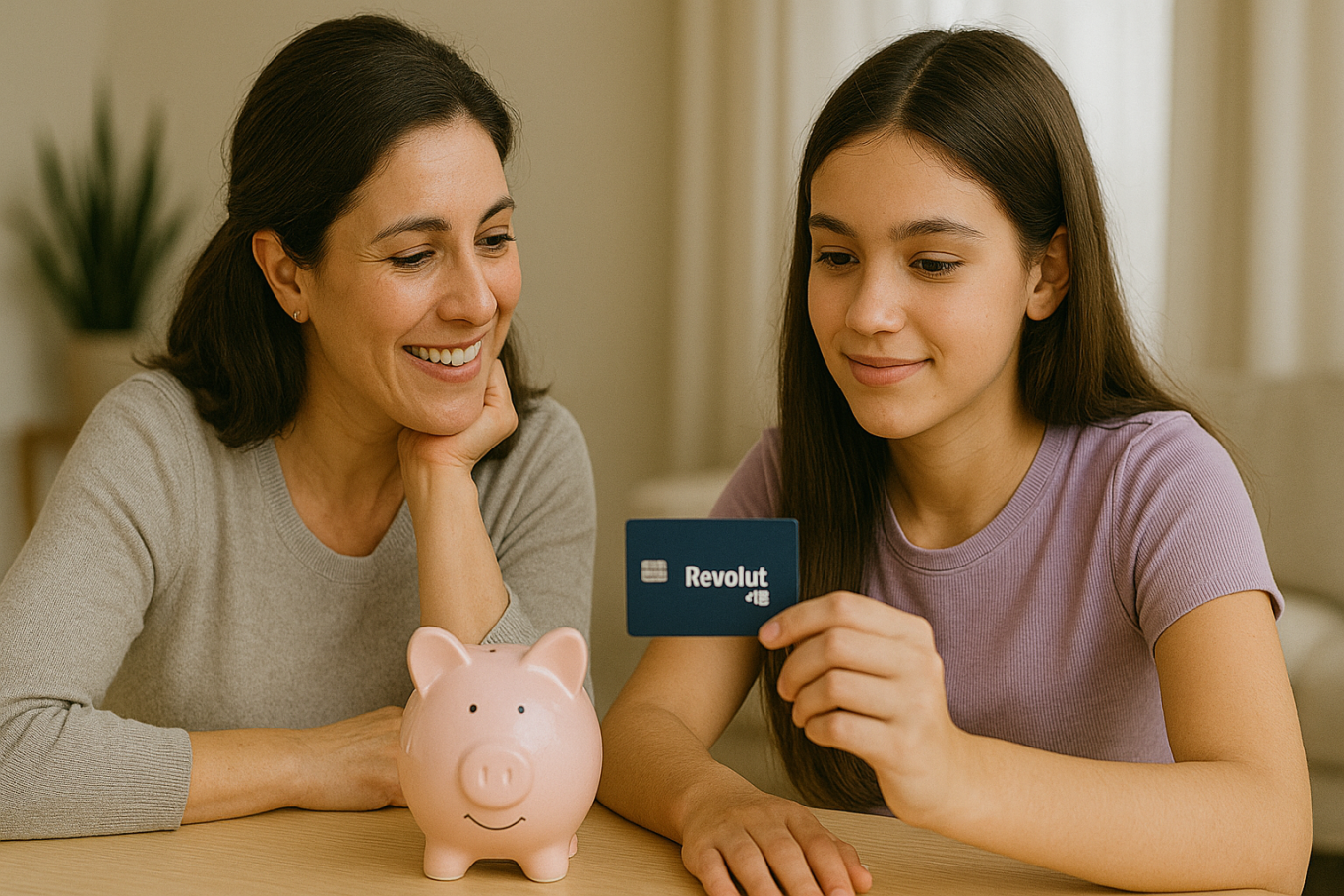
Revolut <18 is a digital solution for saving accounts for kids, available across Europe, the UK, Australia, Singapore, and other regions. Designed for children ages 6 to 17, it provides a digital wallet and a prepaid debit card under the supervision of a parent.

Highlights:

  • Instant app-based notifications
  • Parental controls and spending limits
  • Prepaid debit card for safe transactions
  • Budgeting tools and goal setting

Revolut <18 is ideal for families who want a modern, digital approach to teaching kids about saving and spending safely.

5. Chase First Banking
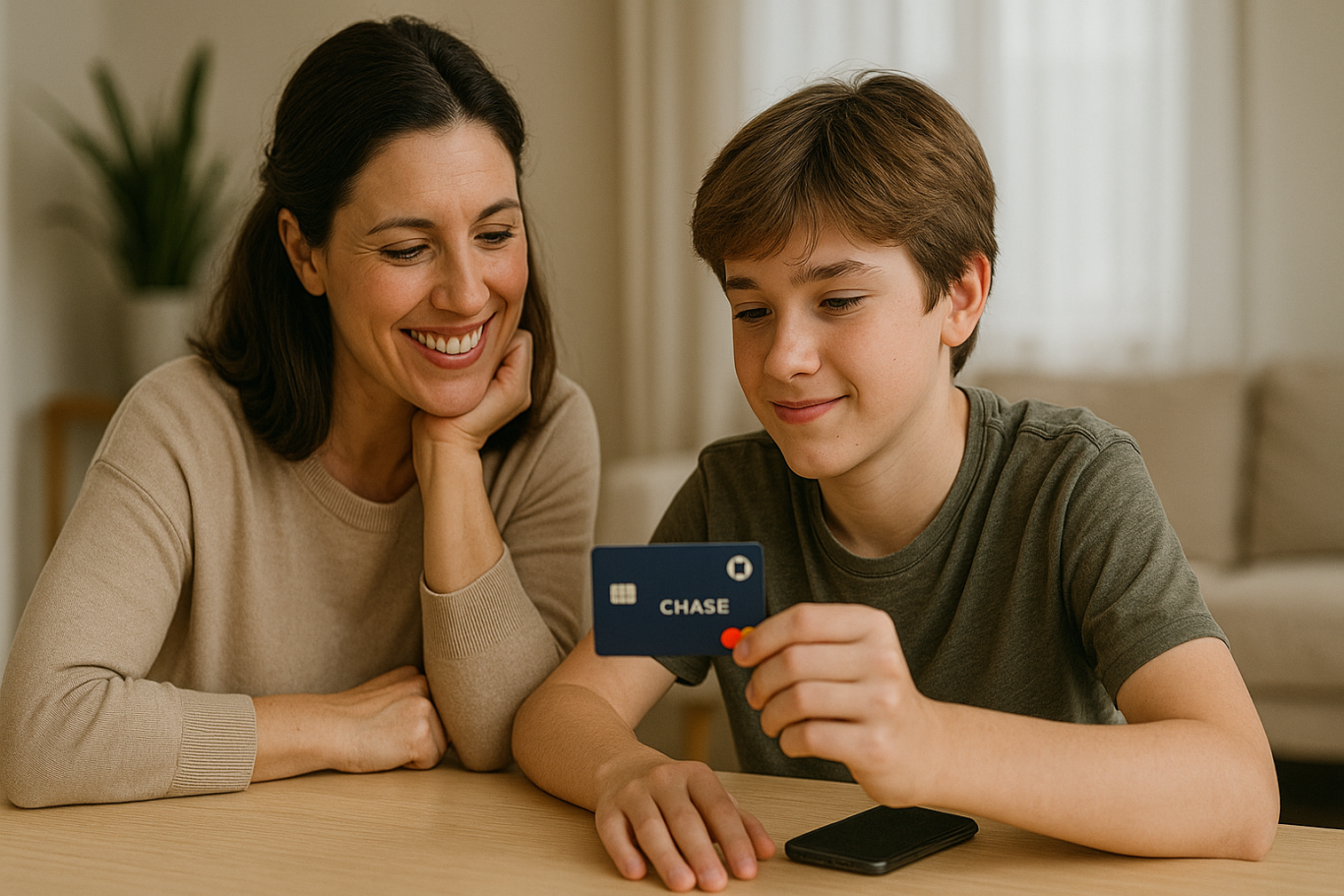
Chase First Banking is one of the latest saving accounts for kids in the United States, created in partnership with Greenlight. It combines checking and savings features with strong parental controls and educational tools.

Highlights:

  • No monthly service fees
  • Customizable saving, spending, and earning features
  • Parental approval for key transactions
  • Access to a large network of ATMs and branches

Chase’s mobile app is intuitive and helps children learn to set goals, manage money, and track their progress in real time.

Tips for Choosing the Right Saving Accounts for Kids

To maximize the benefits, here are some useful tips for selecting saving accounts for kids:

  • Choose an account that suits your child’s age and offers strong parental oversight.
  • Look for low fees, reasonable minimum deposits, and attractive interest rates.
  • Consider extra features such as mobile banking, debit cards, and educational content.
  • Prefer banks with programs that reward good saving habits and offer financial education.
  • Involve your child in the process of opening the account to build a sense of responsibility and motivation.

Saving, Financial Literacy, and Digital Skills for the Future

Ingin tahu detail program? Image

Ingin tahu detail program?

Introducing saving accounts for kids is not just about putting money away; it’s about building a foundation for lifelong financial literacy. In our increasingly digital world, it’s also wise to introduce children to essential digital skills like coding, preparing them for tomorrow’s challenges.

If you want your child to become both financially responsible and tech-savvy, sign them up for a free trial coding class at Timedoor Academy. Kids can learn money management while developing logical thinking and creativity, helping them grow into a wise and innovative generation.
Keep Reading

<strong>Building Positive Habits in Children on National Children’s Day</strong>
Building Positive Habits in Children on National Children’s Day
Every year on July 23rd, Indonesia celebrates National Children’s Day to show appreciation for the next generation. It is a moment of reflection for parents, educators, and communities to prioritize the needs, safety, and development of children. One of the most impactful ways to invest in a child’s future is by building positive habits in children from an early age. Habits are behaviors formed through repetition, and they often last a lifetime. Childhood is a critical phase in which values and patterns take root. That is why building positive habits in children during these formative years is so important. Why Early Habits Matter Simple routines like tidying up toys, saying “thank you,” or putting trash in the bin may seem minor. However, they lay the foundation for greater life skills such as responsibility, discipline, and empathy. On a broader level, building positive habits in children involves nurturing a mindset of honesty, teamwork, curiosity, and respect for learning. Children who are raised with consistent, positive habits are more likely to grow into responsible, independent individuals with strong character. On the other hand, children who lack structure or guidance during their early years may adopt unhealthy behaviors that are difficult to change later. The Role of Parents and the Environment Parents play the central role in building positive habits in children. Kids learn more from what they see than from what they are told. That means parents must model the values they wish to pass on. Showing punctuality, gratitude, patience, and balanced screen time will speak louder than any instruction. Beyond the home, children are shaped by their surroundings schools, peers, and community influences all matter. A supportive environment with positive reinforcement, teamwork, and structured activities helps strengthen the values instilled at home. Practical Ways to Start Building Positive Habits in Children Be Consistent Change doesn’t happen overnight. Whether it’s encouraging your child to read each night or tidy up after playing, repetition is key. Even ten minutes of daily practice can make a long-term difference. Lead by Example Children mimic behavior. If you want your child to manage time well, show them how you do it. Let them see you following schedules, keeping promises, and avoiding distractions. Use Encouragement and Praise A simple “Great job!” or “Thank you for helping” goes a long way. Positive reinforcement helps motivate kids to repeat good behaviors. Allow Room for Mistakes When building positive habits in children, understand that mistakes are part of the learning process. Patience and guidance are more effective than punishment. Involve Children in Decision-Making Let your child help plan their daily routine or choose their afternoon activity. When they feel a sense of ownership, they are more likely to stick to their responsibilities. Integrate Technology Wisely In today’s world, technology cannot be separated from childhood. Instead of avoiding it, guide your child to use it for learning. Educational apps, coding platforms, and creative tools can help turn screen time into productive time. National Children’s Day as a Moment for Reflection and Action National Children’s Day is not just a celebration, but an opportunity for reflection. As a society, have we done enough to support and protect children? As parents, have we been present enough in guiding their development? And most importantly, are we truly committed to building positive habits in children that will prepare them for the future? Positive habits are not built in a day. They take consistency, collaboration, and encouragement. Families, schools, and communities must work hand in hand to create environments that nurture growth and character. Try a Free Coding Class at Timedoor Academy The journey of parenting is filled with joy, challenge, and responsibility. National Children’s Day reminds us that every child deserves support, attention, and guidance. And one of the most meaningful forms of guidance we can offer is by consistently building positive habits in children. At Timedoor Academy, we believe that technology and character education go hand in hand. Our online coding and digital literacy programs are designed not only to build skills, but also to nurture self-discipline, curiosity, and confidence. Register your child for a free trial class today and take the first step in building habits that last a lifetime. Let’s shape a brighter future together one child at a time.
Who Knew? Coding Helps Kids Excel at Math in 2025
When parents hear the word “coding,” they often picture kids staring at a screen, typing complicated commands. But did you know that this activity can actually boost a child’s math skills? Yes, coding helps kids excel at math, and this benefit has been proven through studies and real-world learning experiences from children around the globe. Coding is no longer just a skill for future programmers. It is becoming a fundamental part of modern education, and its impact reaches far beyond computer science. For many children, coding serves as a gateway to understanding mathematical logic, improving attention to detail, and enjoying learning more than ever before.   Why Are Coding and Math So Closely Connected? Coding teaches kids how to think logically and systematically. When learning to code, children practice problem-solving, recognizing patterns, and building algorithms. These are also core elements of math. As kids learn to write step-by-step instructions in coding, they are also training themselves to solve math problems in a structured way. For example, when creating a program that calculates average scores, a child is not just coding. They are applying addition and division. This is a clear, practical example of how coding helps kids excel at math in a fun and hands-on way. Moreover, understanding sequences, loops, and conditions in programming encourages children to think mathematically. These are the same skills used in operations, geometry, and even data analysis. These areas of math can feel abstract in a textbook but come to life through coding.   Learning Logic Instead of Memorizing Formulas Math often feels intimidating because it is full of formulas to memorize. Coding, on the other hand, emphasizes understanding the logic behind each concept. When kids write basic programs using loops or if-else statements, they are also learning repetition and decision-making. Both of these are critical in arithmetic and algebra. Through coding, kids build a solid understanding of math without relying on rote memorization. That is how coding helps kids excel at math while also boosting their confidence and reducing anxiety around the subject. Coding allows them to approach math from a new angle. It is not just something to study but something to apply and explore creatively. This kind of active learning can spark curiosity and make math less intimidating.   Coding Makes Math More Relevant Many students struggle with math because they do not see how it applies to the real world. Coding changes that. When children create simple games, calculators, or interactive animations, they realize that math is essential to making those programs work. This realization increases motivation. Kids get excited when they see how math helps bring their ideas to life. No wonder coding helps kids excel at math. It brings learning into context and makes it meaningful. With coding, abstract math concepts become tools that help kids build something real. Instead of solving equations on paper, they are using those equations to animate a character, solve a puzzle, or calculate a score. This deepens their understanding and interest.   It Builds Focus and Perseverance Coding requires attention to detail. One wrong character can break the whole program. This teaches kids how to stay focused, troubleshoot problems, and persevere through frustration. These are the same skills they will need when tackling long or complex math problems. So coding is not just about tech. It is about shaping a productive learning mindset. That is another reason why coding helps kids excel at math and also builds character along the way. As they debug code, children learn that making mistakes is part of the process. This resilience is essential in mathematics, where trial and error often leads to breakthroughs and better understanding.   Fits Every Learning Style Each child learns differently. Some are visual learners, while others prefer hands-on activities. Coding supports all learning styles. Kids can explore concepts through animations, games, and simulations. Many of these activities involve math. Thanks to this flexibility, coding helps kids excel at math in a way that feels natural and tailored to their strengths. It empowers children to take ownership of their learning and progress at their own pace.   Conclusion: A Powerful Duo for the Future In today’s digital world, parents need to equip their children with relevant skills. Coding is more than a tech trend. It enhances academic performance, especially in math. Start early and see how coding helps kids excel at math while preparing them for the future.   Want Your Child to Excel in Both Coding and Math? Join Timedoor Academy, where kids learn coding in a fun, interactive environment that also boosts their math and logical thinking skills. Our programs are designed to support every child’s growth in both technology and academics. Sign up for a free trial today and discover how coding helps kids excel at math from the very beginning.
<strong>10 Best Sensory Play Ideas for Kids in 2025</strong>
10 Best Sensory Play Ideas for Kids in 2025
Sensory play for kids is a powerful way to support their motor, cognitive, and emotional development. Through hands-on sensory experiences, children explore textures, colors, sounds, and smells in a fun and educational way. Many parents are now looking for sensory activities that are easy to create at home using simple materials. In this article, you’ll discover 10 of the best sensory play ideas that are simple, effective, and perfect for kids aged 2 to 6. These activities help spark creativity while allowing children to engage with their surroundings using multiple senses. 10 Best Sensory Play Ideas for Kids in 2025 1. Dry and Wet Sand Play Fill a large container with dry sand on one side and damp sand on the other. Let children dig, scoop, and build. This classic activity provides textural contrast and is a great form of sensory play for kids. 2. Glitter Bottles Combine water, glitter, and a few drops of baby oil in a clear bottle. Shake and watch the glitter move slowly. This is a calming visual tool that supports focus and mindfulness. 3. Colored Flour Bin Mix flour with different food colorings. Kids can stir, shape, and play with the textures and colors. It's a simple way to introduce creativity and fine motor skills. 4. Texture Board Attach materials like velvet, cotton, bubble wrap, and sponge to a board. Kids can explore by touching and describing the textures. This supports descriptive language and sensory curiosity. 5. Frozen Fruit Cubes Freeze fruit pieces or colored water in small molds. Children can feel and taste the cubes as they melt. This is a cold, exciting, and safe sensory experience. 6. Soapy Swirl Mats Use a waterproof mat and add soapy water. Kids can use plastic tools to swirl, cut, and push bubbles around. This offers tactile fun with minimal mess. 7. Scented Dough Create homemade dough with added scents like vanilla or mint. Let kids shape the dough while enjoying the soothing smells. It’s one of the most engaging types of sensory play for kids. 8. Mystery Smell Boxes Fill small boxes with items like coffee grounds, orange peels, or herbs. Let kids sniff and guess what's inside. This builds their sense of smell and memory. 9. Magnetic Object Play Create a station with small metal objects and let children use magnets to move them. It combines touch with basic science exploration. 10. Vegetable Mud Mix vegetable peels with water and soil in a bin. Kids can squeeze and scoop the mixture. It’s messy, fun, and encourages curiosity through texture. Tips to Maximize Sensory Play Use a variety of sensesGreat sensory play for kids should involve at least two senses, such as sight and touch or smell and hearing. Keep it safeAlways use safe, non-toxic, and age-appropriate materials. Supervise activities closely, especially for toddlers. Encourage parent interactionJoin in the activities. Your presence helps guide the play while also strengthening your bond with your child. Keep it simple to cleanUse trays or bins to contain materials and make cleanup easy. Choose washable tools and surfaces. Adjust based on your child's reactionPay attention to what your child enjoys and be flexible. Not every texture will appeal to every child, and that’s perfectly normal. Why Sensory Play Supports Growth Sensory play for kids isn’t just fun, it supports language, motor skills, and early problem-solving. It allows children to explore, test, and learn about their environment in a hands-on way. Over time, this strengthens their ability to concentrate, follow instructions, and express themselves clearly. Blending Sensory with Digital Skills Once your child is engaged in sensory play for kids, it’s a great time to introduce digital learning tools like coding. At Timedoor Academy, kids learn programming in fun and interactive ways. Coding helps build logical thinking and creativity in a digital space. Sensory activities and digital literacy together create a well-rounded foundation for your child’s future. Try a free trial class at Timedoor Academy today!
float button