Jun 10, 2025

10 Best Sensory Play Ideas for Kids in 2025
<strong>10 Best Sensory Play Ideas for Kids in 2025</strong> image

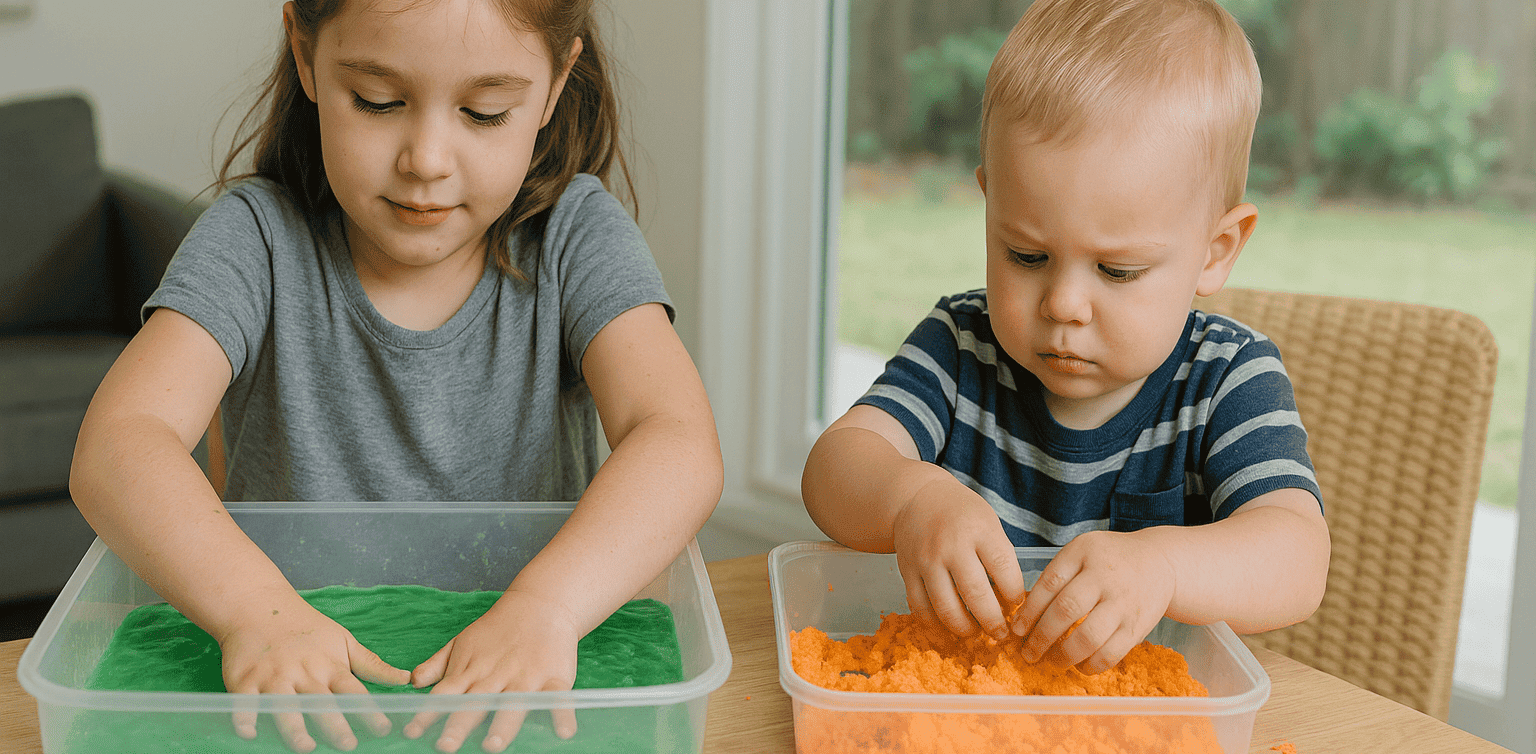
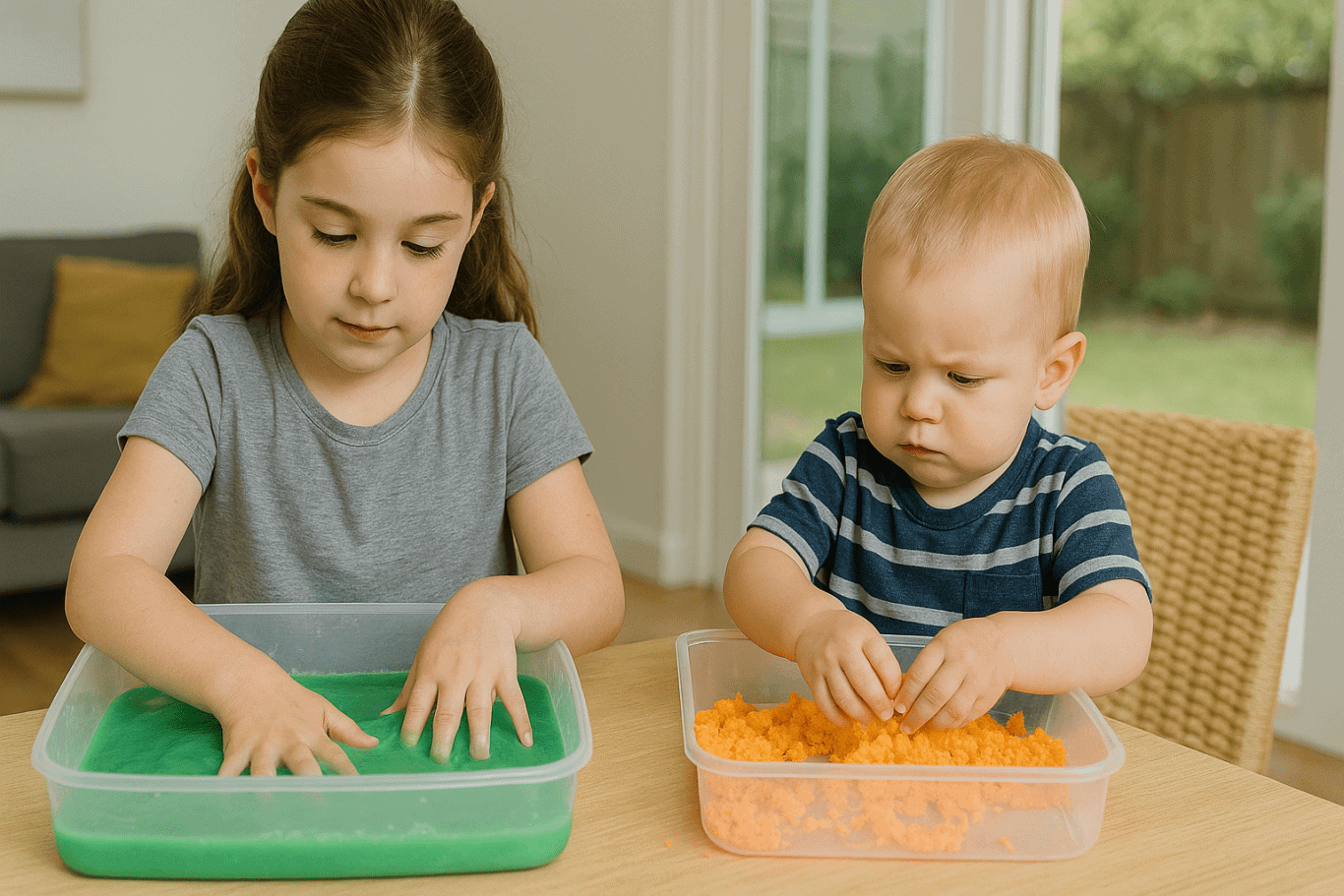
Sensory play for kids is a powerful way to support their motor, cognitive, and emotional development. Through hands-on sensory experiences, children explore textures, colors, sounds, and smells in a fun and educational way. Many parents are now looking for sensory activities that are easy to create at home using simple materials.

In this article, you’ll discover 10 of the best sensory play ideas that are simple, effective, and perfect for kids aged 2 to 6. These activities help spark creativity while allowing children to engage with their surroundings using multiple senses.

10 Best Sensory Play Ideas for Kids in 2025
sensory play for kids

1. Dry and Wet Sand Play

Fill a large container with dry sand on one side and damp sand on the other. Let children dig, scoop, and build. This classic activity provides textural contrast and is a great form of sensory play for kids.

2. Glitter Bottles

Combine water, glitter, and a few drops of baby oil in a clear bottle. Shake and watch the glitter move slowly. This is a calming visual tool that supports focus and mindfulness.

3. Colored Flour Bin

Mix flour with different food colorings. Kids can stir, shape, and play with the textures and colors. It’s a simple way to introduce creativity and fine motor skills.

4. Texture Board

Attach materials like velvet, cotton, bubble wrap, and sponge to a board. Kids can explore by touching and describing the textures. This supports descriptive language and sensory curiosity.

5. Frozen Fruit Cubes

Freeze fruit pieces or colored water in small molds. Children can feel and taste the cubes as they melt. This is a cold, exciting, and safe sensory experience.

6. Soapy Swirl Mats

Use a waterproof mat and add soapy water. Kids can use plastic tools to swirl, cut, and push bubbles around. This offers tactile fun with minimal mess.

7. Scented Dough

Create homemade dough with added scents like vanilla or mint. Let kids shape the dough while enjoying the soothing smells. It’s one of the most engaging types of sensory play for kids.

8. Mystery Smell Boxes

Fill small boxes with items like coffee grounds, orange peels, or herbs. Let kids sniff and guess what’s inside. This builds their sense of smell and memory.

9. Magnetic Object Play

Create a station with small metal objects and let children use magnets to move them. It combines touch with basic science exploration.

10. Vegetable Mud

Mix vegetable peels with water and soil in a bin. Kids can squeeze and scoop the mixture. It’s messy, fun, and encourages curiosity through texture.

Tips to Maximize Sensory Play
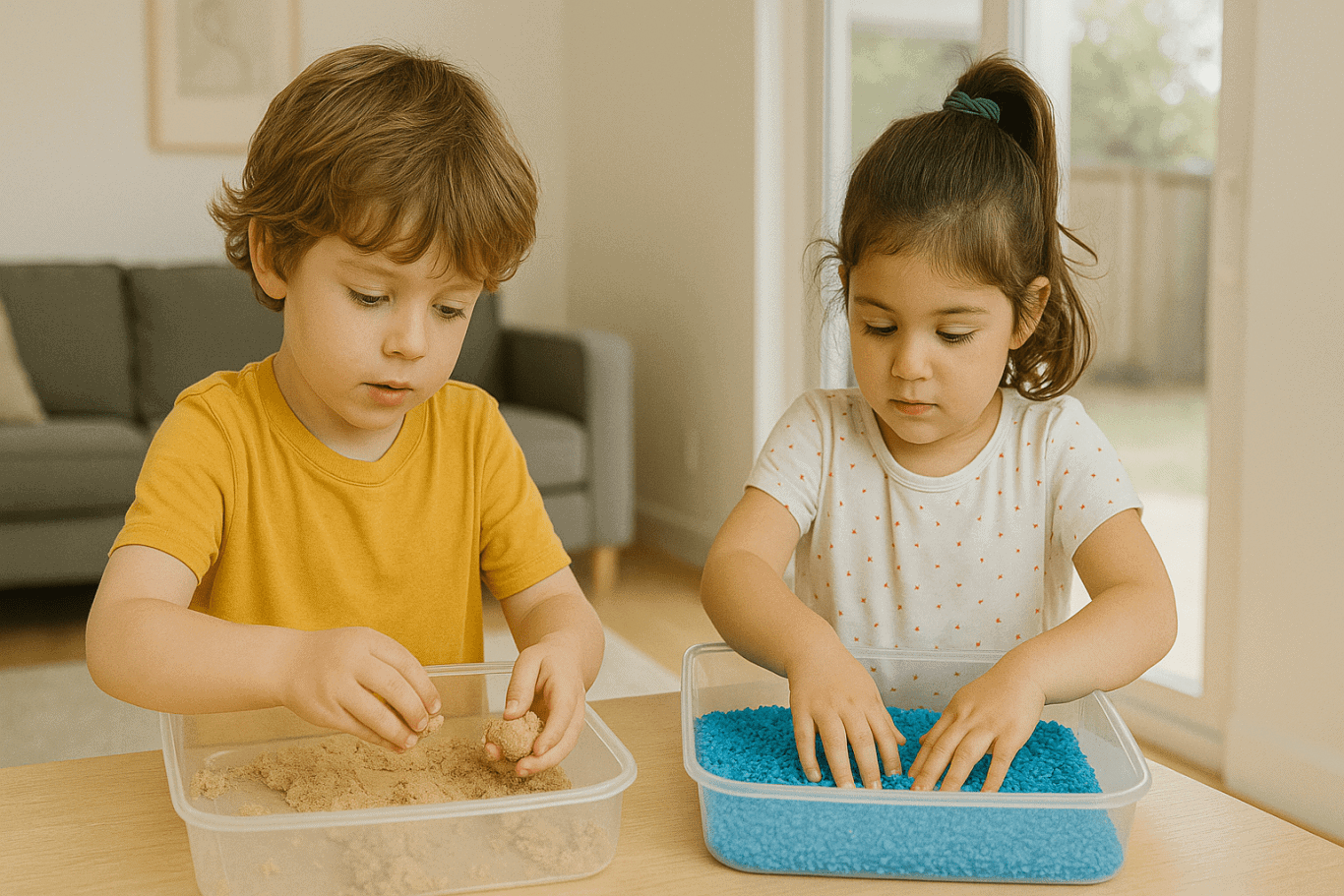
Use a variety of senses
Great sensory play for kids should involve at least two senses, such as sight and touch or smell and hearing.

Keep it safe
Always use safe, non-toxic, and age-appropriate materials. Supervise activities closely, especially for toddlers.

Encourage parent interaction
Join in the activities. Your presence helps guide the play while also strengthening your bond with your child.

Keep it simple to clean
Use trays or bins to contain materials and make cleanup easy. Choose washable tools and surfaces.

Adjust based on your child’s reaction
Pay attention to what your child enjoys and be flexible. Not every texture will appeal to every child, and that’s perfectly normal.

Why Sensory Play Supports Growth
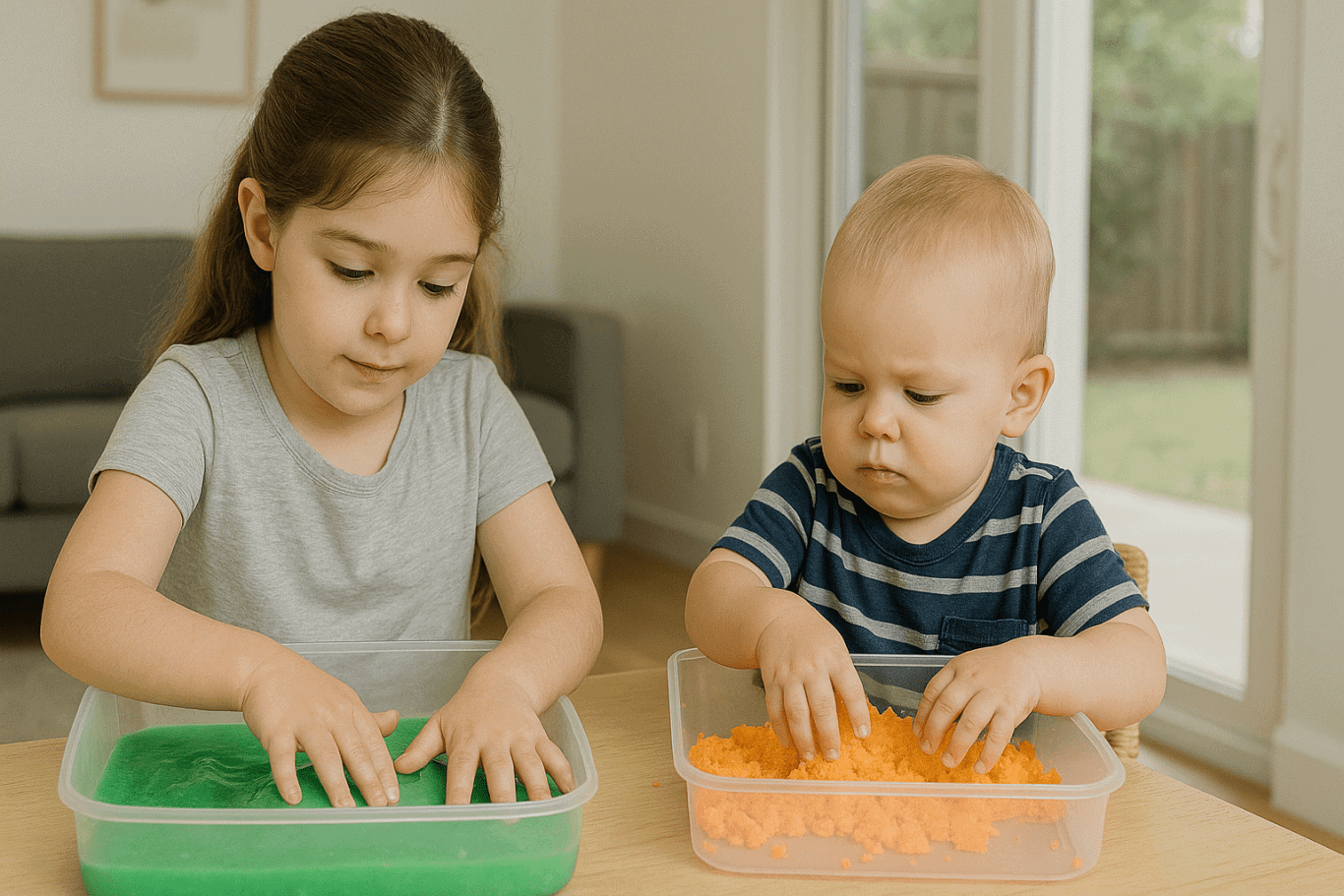
Sensory play for kids isn’t just fun, it supports language, motor skills, and early problem-solving. It allows children to explore, test, and learn about their environment in a hands-on way. Over time, this strengthens their ability to concentrate, follow instructions, and express themselves clearly.

Blending Sensory with Digital Skills

Ingin tahu detail program? Image

Ingin tahu detail program?

Once your child is engaged in sensory play for kids, it’s a great time to introduce digital learning tools like coding. At Timedoor Academy, kids learn programming in fun and interactive ways. Coding helps build logical thinking and creativity in a digital space. Sensory activities and digital literacy together create a well-rounded foundation for your child’s future. Try a free trial class at Timedoor Academy today!


Keep Reading

5 Easy Ways in Teaching Kids to Save Money from an Early Age
Teaching kids to save money is one of the most important lessons parents can give. While many focus on academic learning, financial literacy is a life skill that is just as crucial. Instilling habits like saving and managing money early on helps children grow into responsible and independent adults. However, teaching kids how to save is not always easy. It requires fun, age-appropriate methods and plenty of patience. In this article, we’ll explore five practical ways to teach kids to save money in their daily lives. 1. Explain the Value of Money in Simple Terms The first step in teaching kids to save money is helping them understand what money is and how it works. You can start by showing them the difference between coins and bills, and explaining how money is used to buy things and pay for services. Use real-life situations, like shopping, to provide context. For example, tell your child that one ice cream costs around $2, but if they want a toy, they need to save up. Children between the ages of 4 and 7 can begin to understand these concepts better with visual aids or through role-playing games. 2. Teach the Difference Between Needs and Wants Another key lesson in teaching kids to save money is helping them recognize the difference between needs and wants. Needs include essentials like food, clothing, and school supplies. Wants are things like new toys or extra snacks that can be delayed or skipped. When your child asks for something, use the opportunity to talk. Ask them, “Do you need this, or do you just want it?” Over time, kids will learn to think before making purchases and develop a sense of mindful spending. 3. Give Them a Piggy Bank or Open a Savings Account One great way to introduce saving habits is by giving your child a piggy bank or setting up a dedicated children’s savings account. You can encourage them to save part of their pocket money or birthday gifts regularly. For older kids, set simple goals together. If they want a $20 toy, show them how to save $5 per week until they reach it. This approach not only teaches kids to save money but also introduces the idea of goal-setting and planning. 4. Be a Role Model with Your Own Saving Habits Children are natural imitators. They often learn more from what their parents do than what they say. That’s why one of the most effective ways to teach kids to save money is to show them your own responsible habits. Let them see you making a shopping list, comparing prices, or choosing not to buy something that is not necessary. When kids watch their parents make smart financial decisions, they are more likely to adopt the same mindset. 5. Involve Kids in Simple Financial Decisions Including your child in small financial choices at home can help them understand the reasoning behind spending and saving. Let them help you plan meals on a budget or choose between two similar items while grocery shopping. These hands-on experiences not only teach kids how to save money, but also help them build confidence and a sense of responsibility. As they grow older, they’ll be better prepared to handle money independently. Why Saving Habits Matter for Your Child’s Future Teaching children to save is more than just helping them stash away a few coins. It builds character, discipline, and long-term thinking. Kids who learn to delay gratification, set priorities, and understand the value of money early on are more prepared to manage their finances later in life. Saving also teaches children that they cannot always have everything instantly, which is an important life lesson. They learn that effort and planning are key to achieving their goals, whether financial or personal. Saving Is Important, but So Are Digital Skills While saving money is a valuable habit, introducing children to digital skills is also essential. Learning things like coding from a young age helps kids develop logical thinking, creativity, and problem-solving abilities. Timedoor Academy offers fun, interactive online coding classes for kids, making it easy to explore the world of programming in a child-friendly way. Try a free class today at Timedoor Academy!
5 Powerful Secrets of the Project Based Learning Method in Coding Education
In today’s modern education system, learning methods have evolved to become more dynamic and interactive. One of the most effective approaches in improving students’ engagement and understanding is the project based learning method. This approach focuses on learning through direct experience and the practical application of knowledge in real-world projects. In the digital age, coding skills have become one of the most essential abilities for children to master early. However, learning coding is not just about memorizing syntax or following instructions. It’s about developing logical thinking, creativity, and problem-solving skills. That’s where the project based learning method plays a key role in helping children learn meaningfully and effectively. Why the Project Based Learning Method Works for Coding Children are naturally more interested when they can see the real results of their work. In the project based learning method, they don’t just listen to theory but are actively involved in creating projects such as simple games, interactive apps, or digital animations. Through this approach, students learn by exploring, collaborating, and experimenting. They discover how to organize ideas, design solutions, and solve real problems using coding logic. This process makes learning more engaging, fun, and memorable. Key Advantages of the Project Based Learning Method in Coding Boosts Learning Motivation When children see the outcomes of their own work, they gain a sense of pride and accomplishment. The project based learning method helps them feel that every lesson has a purpose. This builds intrinsic motivation to keep learning and exploring new things. Enhances Problem-Solving Skills Every project presents challenges that children must overcome. This trains them to think critically and find creative solutions. The project based learning method encourages perseverance and helps children build confidence in solving complex problems. Encourages Collaboration and Communication One of the most valuable elements of the project based learning method is teamwork. Students learn to share ideas, listen to others’ opinions, and combine their skills to achieve the best results. These social and communication skills are essential for their future success. Deepens Understanding of Technology Concepts By directly applying what they learn, children gain a deeper understanding of how technology works. They don’t just know how to write code; they understand the logic behind it and how it can be used to create meaningful solutions. Implementation at Timedoor Academy Timedoor Academy understands the importance of interactive and practical learning. That’s why our coding classes use the project based learning method to ensure every student learns actively and joyfully. Each module is carefully designed so that students can work on real projects based on their skill levels. For example, beginners might create interactive animations, while advanced learners can develop simple games or websites. Moreover, the instructors at Timedoor Academy act as mentors who guide children to think creatively behind every project. The learning experience not only produces digital products but also builds a problem-solving mindset that lasts a lifetime. Positive Impacts on Child Development Children who learn through the project based learning method show significant growth in various aspects. They become more confident as they complete real projects. Their critical thinking and time management skills also improve noticeably. Additionally, this approach teaches children that making mistakes is part of the learning process. When their projects don’t work as expected, they learn to fix and try again. This growth mindset is crucial in today’s ever-evolving technological world. Connecting Theory with Real Life One of the biggest challenges in teaching coding is helping students understand the connection between theory and real-world application. With the project based learning method, children learn that every line of code has a real function and purpose. For instance, they might create a simple app to organize their study schedule or design an educational game for their friends. Once they realize that coding skills can be used to build something useful, their enthusiasm for learning grows naturally. Parents’ Role in Supporting Learning Parents play a vital role in supporting their children’s journey using the project based learning method. Offering encouragement and appreciation for their work builds their confidence. Giving children the space to experiment and explore also helps nurture independent thinking. Parents can support by asking about their learning process, not just the final outcome. This strengthens the bond between parents and children while encouraging continuous growth. Conclusion: Active, Creative, and Meaningful Learning Coding education through the project based learning method is more than just teaching children to write code. It’s about shaping analytical thinkers who are creative, resilient, and solution-oriented. This approach empowers them to face challenges positively while building essential skills for the future.If you want your child to learn coding in an engaging and meaningful way, sign them up for a Free Trial Class at Timedoor Academy. Let them experience the joy of learning through real projects that spark creativity and build confidence for a bright digital future.
Who Knew? Coding Helps Kids Excel at Math in 2025
When parents hear the word “coding,” they often picture kids staring at a screen, typing complicated commands. But did you know that this activity can actually boost a child’s math skills? Yes, coding helps kids excel at math, and this benefit has been proven through studies and real-world learning experiences from children around the globe. Coding is no longer just a skill for future programmers. It is becoming a fundamental part of modern education, and its impact reaches far beyond computer science. For many children, coding serves as a gateway to understanding mathematical logic, improving attention to detail, and enjoying learning more than ever before.   Why Are Coding and Math So Closely Connected? Coding teaches kids how to think logically and systematically. When learning to code, children practice problem-solving, recognizing patterns, and building algorithms. These are also core elements of math. As kids learn to write step-by-step instructions in coding, they are also training themselves to solve math problems in a structured way. For example, when creating a program that calculates average scores, a child is not just coding. They are applying addition and division. This is a clear, practical example of how coding helps kids excel at math in a fun and hands-on way. Moreover, understanding sequences, loops, and conditions in programming encourages children to think mathematically. These are the same skills used in operations, geometry, and even data analysis. These areas of math can feel abstract in a textbook but come to life through coding.   Learning Logic Instead of Memorizing Formulas Math often feels intimidating because it is full of formulas to memorize. Coding, on the other hand, emphasizes understanding the logic behind each concept. When kids write basic programs using loops or if-else statements, they are also learning repetition and decision-making. Both of these are critical in arithmetic and algebra. Through coding, kids build a solid understanding of math without relying on rote memorization. That is how coding helps kids excel at math while also boosting their confidence and reducing anxiety around the subject. Coding allows them to approach math from a new angle. It is not just something to study but something to apply and explore creatively. This kind of active learning can spark curiosity and make math less intimidating.   Coding Makes Math More Relevant Many students struggle with math because they do not see how it applies to the real world. Coding changes that. When children create simple games, calculators, or interactive animations, they realize that math is essential to making those programs work. This realization increases motivation. Kids get excited when they see how math helps bring their ideas to life. No wonder coding helps kids excel at math. It brings learning into context and makes it meaningful. With coding, abstract math concepts become tools that help kids build something real. Instead of solving equations on paper, they are using those equations to animate a character, solve a puzzle, or calculate a score. This deepens their understanding and interest.   It Builds Focus and Perseverance Coding requires attention to detail. One wrong character can break the whole program. This teaches kids how to stay focused, troubleshoot problems, and persevere through frustration. These are the same skills they will need when tackling long or complex math problems. So coding is not just about tech. It is about shaping a productive learning mindset. That is another reason why coding helps kids excel at math and also builds character along the way. As they debug code, children learn that making mistakes is part of the process. This resilience is essential in mathematics, where trial and error often leads to breakthroughs and better understanding.   Fits Every Learning Style Each child learns differently. Some are visual learners, while others prefer hands-on activities. Coding supports all learning styles. Kids can explore concepts through animations, games, and simulations. Many of these activities involve math. Thanks to this flexibility, coding helps kids excel at math in a way that feels natural and tailored to their strengths. It empowers children to take ownership of their learning and progress at their own pace.   Conclusion: A Powerful Duo for the Future In today’s digital world, parents need to equip their children with relevant skills. Coding is more than a tech trend. It enhances academic performance, especially in math. Start early and see how coding helps kids excel at math while preparing them for the future.   Want Your Child to Excel in Both Coding and Math? Join Timedoor Academy, where kids learn coding in a fun, interactive environment that also boosts their math and logical thinking skills. Our programs are designed to support every child’s growth in both technology and academics. Sign up for a free trial today and discover how coding helps kids excel at math from the very beginning.
float button