Jun 08, 2024

Timedoor Academy Tech Festival 2024 Finalists Announcement
Timedoor Academy Tech Festival 2024 Finalists Announcement image

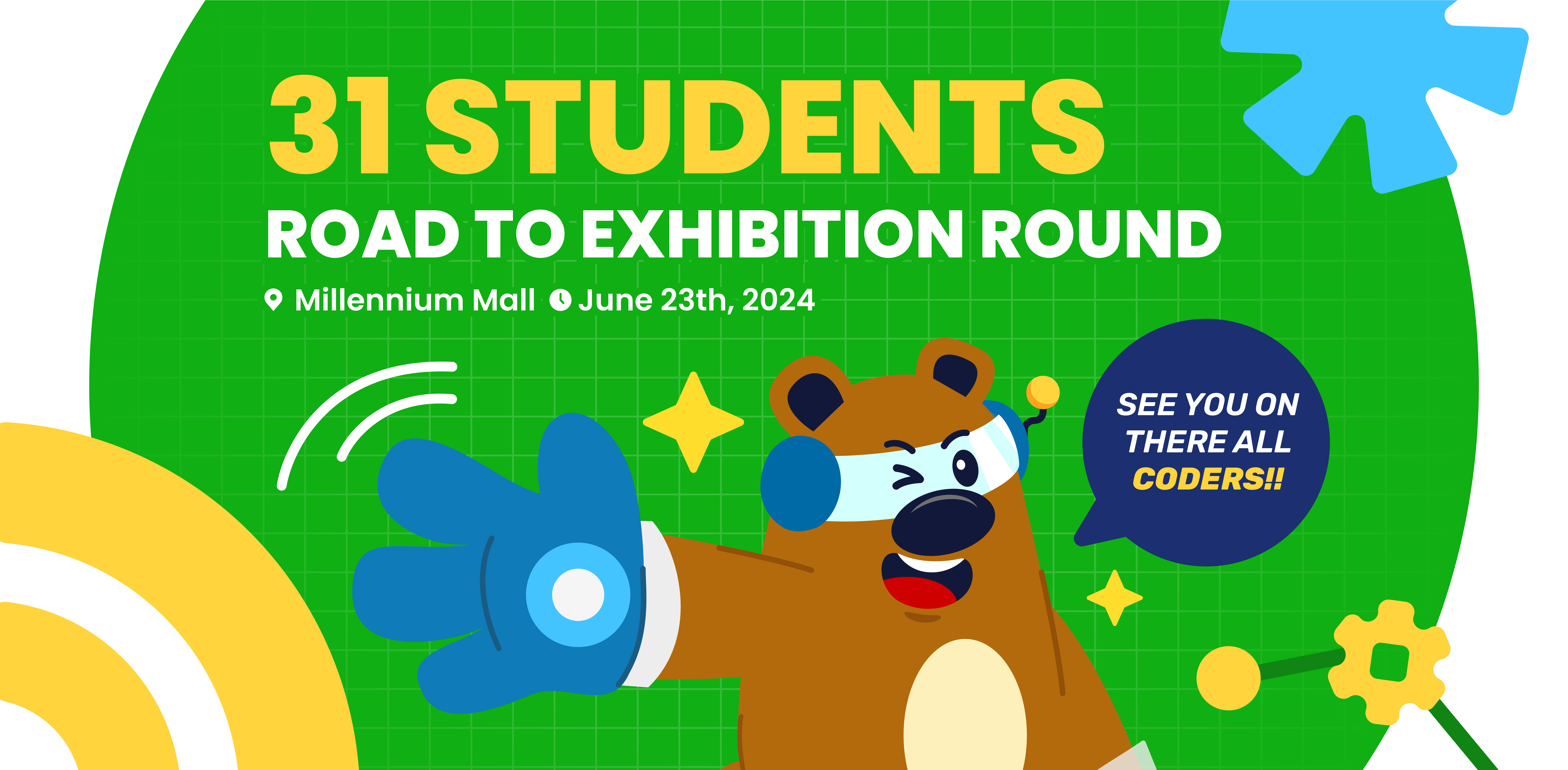
Timedoor Academy Tech Festival Coding Competition and Exhibition 2024 is an event aimed at providing a platform for all Timedoor Academy students to showcase various projects they have created, ranging from games and websites to applications. The preliminary round was participated by over 200++ participants from all over Indonesia. From these participants, an elimination stage was conducted to select 31 chosen participants for the Exhibition Round, which will be held offline at Millennium Mall Jakarta on Sunday, June 23, 2024.

Today, we announce the 31 participants selected to participate in the Exhibition Round at Millennium Mall Jakarta from all categories. The list of participants who made it to the Exhibition Round can be seen below.

Exhibition Finalist

GAME WITH KODU
STUDENT’S NAME BRANCH
Albert Liandra Kurniawan Timedoor Academy Cengkareng
Ida Bagus Oka Janaka Timedoor Academy Renon
Jeremy Dominic Liong Timedoor Academy Cengkareng
Jethro Buniardi Timedoor Academy Harapan Indah Bekasi
Muhammad Ghaisan Abgari Timedoor Academy Gading Serpong
GAME WITH SCRATCH 3
STUDENT’S NAME BRANCH
Anak Agung Gde Axel Mahendra Timedoor Academy Online ID
Anja Ruci Berlian Timedoor Academy Online ID
Darrel Arana Irwanto Timedoor Academy Cikarang
Emilie Kierra Rinaldy Timedoor Academy Kelapa Gading
I Putu Theodore Wira Pradana Timedoor Academy Jimbaran
GAME WITH CONSTRUCT 3
STUDENT’S NAME BRANCH
Gabriel Veriano Timedoor Academy Cikarang
Glenys Salsabila Kyeshi Parlina Timedoor Academy Gatsu Barat Bali
Michael Mahardika Wijaya Timedoor Academy Online ID
Putu Dimas Graha Wardhana Timedoor Academy Renon
Yehezkiel Kennard Alvaro La Beneamata Timedoor Academy Gatsu Barat Bali
GAME WITH ROBLOX
STUDENT’S NAME BRANCH
Clairine Elise Lei Timedoor Academy Online ID
Julio Miguel Setiawan Timedoor Academy Cikarang
Keigan Noel Hamdany Timedoor Academy Online ID
Peter Luciano Kencana Timedoor Academy Gading Serpong
Ryan Kenzie Tanady Timedoor Academy Cengkareng
GAME WITH PHASER 3
STUDENT’S NAME BRANCH
Demas Firjatulloh Janitro Timedoor Academy Online ID
I Gede Raditya Ananda Putra Timedoor Academy Renon
I Kadek Arya Raditya Timedoor Academy Renon
Made Anantawijaya Giriwidya Hantana Timedoor Academy Gatsu Barat Bali
Ni Putu Bela Septiandita Rustama Timedoor Academy Gatsu Barat Bali
WEBSITE
STUDENT’S NAME BRANCH
Ardhani Prayata Akmal Timedoor Academy Online ID
I Putu Mahendra Arya Valentino Timedoor Academy Renon
Komang Ayu Arista Dewi Timedoor Academy Gatsu Barat Bali
Matthew Vito Santoso Timedoor Academy Online ID
Ngakan Putu Satria Dewangga Timedoor Academy Gatsu Barat Bali
MOBILE APPS
STUDENT’S NAME BRANCH
Shavonne Miguel Halim Timedoor Academy Online ID

The 31 selected participants and their parents are expected to attend the online Technical Meeting for the Exhibition. The details are as follows:

Day/Date: Saturday, June 15, 2023
Time: 3:00 PM WIB / 4:00 PM WITA
Place: Online
Meeting ID: 839 547 7948
Passcode: 12345

Link : https://bit.ly/zoomEgypt

Participants and parents are also advised to review the exhibition round information in the Guidebook. You can download the Guidebook here: Download Guidebook.


Special Recognition

We also want to recognize the other 10 most creative projects (Phaser only 5), which will receive a medal. These medals will be sent to the recipients’ addresses as a token of our appreciation for their outstanding work.

Game with Kodu:

  • Arga Riviandra Zamara – Houbii Bogor
  • Firdhah Atiqah – Harapan Indah Bekasi
  • Gavin Immanuel Hosada – Bandung
  • Gede Kaivan Azkaradipta Manumesha Mataram – Renon Bali
  • Hanif Abhicandra Zafran – Gayungan Surabaya
  • Ida Bagus Bumi Prana – Renon Bali
  • Komang Cakradev – Renon Bali
  • Marc Daryl Mahadana – Houbii Bogor
  • Muhammad Malvino Putera Mulia – Gading Serpong
  • Skye Ansel Chen – Cengkareng

Game with Scratch 3:

  • Anindya Filia Susanto – Houbii Bogor
  • Azka Virendra Darmawan – Houbii Bogor
  • Gandewa Arjuna Gelar – Online ID
  • Levin Elnathan – Harapan Indah Bekasi
  • Maverick Archer Yeriel – Kelapa Gading
  • Mikhayla Leandra Krisbayu – Online ID
  • Owen Hiroshi Lie – Batam
  • Quinza Haziqah – Online ID
  • Theodorus Giovanni Daniswara – Gayungan Surabaya
  • Yehuda Matthew Muradsanobar Sihaloho – Cikarang

Game with Construct 3:

  • Cut Zara Tashanita – Online ID
  • I Gede Reva Awidya Kayana – Karangasem Bali
  • I Nyoman Aditya Basudeva Mahaputra – Gatsu Barat Bali
  • I Putu Aryasatya Mahendra Mahaputra – Renon Bali
  • I Putu Raditya Hendra Saputra – Karangasem Bali
  • Jonathan Isaac Santoso – Citraland Surabaya
  • Mas Maulana Ubaydillah Mukhayan – Renon Bali
  • Muhammad Fadhil – Kelapa Gading
  • Muhammad Laa Rayba Fiihi – Online ID
  • Ryan Alvaro Emmyson – Cengkareng

 Game with Roblox:

  • Altair Harry Janssena – Online ID
  • Arinathan Martuah Saragih – Online ID
  • Ida Bagus Agung Janar Wibawa – Renon Bali
  • Jillian Davyne Suyono – Online ID
  • Khalil Ezra Allegradana – Online ID
  • Muhammad Al Fatih – Online ID
  • Reflita Marsha Setiawan – Cikarang
  • Reigaara Endea Yustisia – Kelapa Gading
  • Rizky Arkananta Mahardika – Cengkareng
  • Zineddin Alkhawarizmi – Houbii Bogor

Game with Phaser:

  • Felix Mahendra Putra Bangun – Cikarang
  • Hanif Fausta Syafif – Online ID
  • I Gusti Ngurah Prama Wedanta – Tabanan Bali
  • Ida Bagus Pradnyana Wedhanta – Renon Bali
  • Richard Christopher Bono – Renon Bali

Website:

  • Bonaventura Silitonga – Online ID
  • Breza Artha Medico – Online ID
  • Darren Clementius Leonard – Kelapa Gading
  • Daven Bryan Suyono – Online ID
  • Erland Pramana – Houbii Bogor
  • Gede Divka Bramanta Devadatta Putra – Renon Bali
  • Kadek Pramana Kenzo Widia Poetra – Renon Bali
  • Made Calysta Maheswari – Online ID
  • Muhammad Ihsan Nadhif – Kelapa Gading
  • Regina Joan Medea Jati Laksono – Online ID

We thank all the students, parents, and mentors for their hard work and dedication. Let’s make the Timedoor Academy Tech Festival Coding Competition and Exhibition 2024 a memorable and inspiring experience for everyone involved!

Keep Reading

<strong>5 Best Free AI Apps for Kids That Make Learning Fun</strong>
5 Best Free AI Apps for Kids That Make Learning Fun
In today’s fast-paced digital world, free AI apps for kids have become an exciting solution for parents who want to support their children’s learning. Artificial Intelligence is no longer reserved for experts or professionals. Now, it’s available in engaging apps that help children read, solve problems, practice math, and boost creativity through fun and interactive tools. Still, many parents are unsure which free AI apps for kids are safe, educational, and truly effective. This article highlights five reliable AI-powered apps that are not only easy to use and child-friendly, but also completely free to access. 1. Khan Academy Kids Khan Academy Kids is one of the most widely recommended free AI apps for kids. It offers interactive lessons in reading, math, creativity, and emotional development. With the help of AI, the app personalizes content based on each child’s learning progress and preferences. The colorful design and engaging activities are tailored for children aged 2 to 8. Developed by education experts, the content is both fun and aligned with developmental stages. 2. Duolingo ABC Duolingo ABC is a simplified version of the main Duolingo language app, created specifically to help young learners develop reading skills. Using AI, the app adjusts lesson difficulty in real time and offers immediate feedback to children learning letters, words, and sounds. As one of the best free AI apps for kids focused on early literacy, Duolingo ABC is ad-free and safe for children when used with parental guidance. 3. Socratic by Google Socratic is an AI-powered educational tool from Google that helps children understand academic questions in a simple and visual way. Kids can take a photo of a homework question or type it in, and the app will provide clear answers and explanations. Ideal for children in elementary and middle school, Socratic supports learning in math, science, history, and language arts. It’s a smart choice among free AI apps for kids who need extra academic guidance and independence. 4. Quillionz Quillionz is a creative app that lets children generate quizzes and learning questions using AI. It encourages active engagement with educational material by allowing kids to become content creators, not just consumers. This app is especially helpful when reviewing lessons or preparing for schoolwork. Among the available free AI apps for kids, Quillionz stands out for promoting critical thinking and interactive learning at home or in the classroom. 5. Google Read Along Google Read Along is an app that supports children in learning to read out loud. It uses AI to listen to their voice, offering helpful corrections and encouragement. The app includes dozens of age-appropriate stories that children can explore at their own pace. It helps build reading confidence and fluency, making it one of the most effective free AI apps for kids who are just beginning their literacy journey. The progress tracking feature also lets parents follow along and celebrate their child’s improvement. Help Your Child Use Technology in a Positive Way Free AI apps for kids are a great way to introduce technology in a healthy, supportive way. But beyond using apps, it’s just as important to help children understand how technology works. Guiding them to learn and create with tech builds both digital awareness and real-life skills. One highly recommended path is coding. At Timedoor Academy, children can join age-appropriate coding classes that strengthen logical thinking, communication, and problem-solving through engaging, hands-on projects. Try a Free Coding Class at Timedoor Academy If you're curious how technology can help your child grow, try a free coding class at Timedoor Academy. It’s an opportunity for your child to turn screen time into learning time in a fun and supportive environment. With expert mentors and project-based lessons, coding becomes a favorite activity that sparks confidence and creativity. Book your free trial today and explore the possibilities together.
Bagaimana Teknologi Meningkatkan Kreativitas Anak
How Technology Boosts Creativity for Kids
In today's digital age, technology plays a significant role in shaping children's lives, offering them not only entertainment but also endless opportunities to enhance their creativity. How technology boosts creativity for kids is not just about playing games or watching videos; it's about engaging with tools that encourage children to explore new ideas, express themselves through various forms of art, and solve complex problems in innovative ways. In this article, we’ll dive into the many ways how technology boosts creativity for kids, helping parents and educators harness the power of technology for creative development.   1. Digital Tools That Boost Creativity for Kids Technology offers a vast array of digital tools designed to stimulate creativity in children. Drawing apps like Procreate or Tayasui Sketches, for example, allow kids to create beautiful artworks on tablets, pushing their imagination and skills. Music production software, such as GarageBand, is another fantastic tool to help children explore their musical creativity by composing songs and learning about sound design. These tools don’t just teach technical skills; they encourage kids to think creatively. The immediate feedback and flexibility offered by these apps allow children to experiment with different styles and techniques, making it a fun and educational way how technology boosts creativity for kids.   2. Problem-Solving and Critical Thinking One of the most impactful ways how technology boosts creativity for kids is by enhancing their problem-solving and critical thinking abilities. Educational games and apps that challenge children to solve puzzles, plan strategies, and make decisions help develop their cognitive skills. Apps like Scratch or Tynker, which teach coding and logic, are excellent examples of how technology boosts creativity for kids. By engaging with these platforms, children not only learn to code but also learn to think critically, test solutions, and refine their ideas. This helps them become creative problem-solvers who are capable of thinking outside the box, which is an essential skill for both academic success and life in general.   3. Access to a Wealth of Creative Learning Resources The internet is a treasure trove of creative learning resources that can help how technology boosts creativity for kids. Platforms like YouTube, TED-Ed, and Khan Academy provide a wide variety of content that can spark children’s imaginations. From DIY craft tutorials to science experiments, there is no shortage of material to engage kids and fuel their creativity. Moreover, eBooks and audiobooks offer children new ways to experience stories that stimulate their imagination. These resources allow kids to engage with the arts, explore new concepts, and learn new skills in creative and interactive ways.   4. Collaborative Creativity and Social Interaction Technology also offers unique opportunities for kids to collaborate on creative projects with others. Online platforms and apps designed for group work allow children to share ideas, co-create, and provide feedback to one another, fostering both creativity and social skills. By working together, kids not only boost creativity but also learn how to communicate effectively, manage team dynamics, and develop empathy. For instance, children can participate in group art projects, write collaborative stories, or join virtual hackathons. These shared creative experiences are a great way to help children enhance their creativity while also developing valuable interpersonal skills.   5. Digital Storytelling for Creative Expression Digital storytelling is another powerful way how technology boosts creativity for kids. With easy-to-use platforms like Storybird, Adobe Spark, and even Instagram, children can write, illustrate, and share their stories in engaging ways. These platforms allow kids to take control of their narratives, helping them express their thoughts, ideas, and emotions creatively. Storytelling is not only a fun way to engage with creativity but also a valuable skill that supports literacy, critical thinking, and emotional development. By using digital tools to tell their stories, children can learn how to organize their ideas, use technology to enhance their creations, and communicate their thoughts in new and innovative ways.   6. Immersive Technologies: Virtual and Augmented Reality Virtual Reality (VR) and Augmented Reality (AR) technologies are increasingly being used to enhance creativity for kids. These immersive technologies provide children with the opportunity to engage with creative environments in ways that are not possible in the real world. With VR and AR, children can design virtual spaces, explore interactive 3D models, and engage in hands-on creative activities. For example, using VR headsets, children can participate in virtual learning experiences that incorporate art, design, and creativity. They can create 3D models, design virtual sculptures, or explore complex architectural structures. AR apps like Quiver bring children’s drawings to life, allowing them to see their artwork come to life in augmented spaces. These tools give kids a whole new world to explore, further showing how technology boosts creativity for kids.   7. Technology as a Gateway to STEM Creativity Another way how technology boosts creativity for kids is by inspiring them to pursue STEM (Science, Technology, Engineering, and Mathematics) fields, where creativity is a crucial component. Coding platforms, robotics kits, and 3D printing tools all encourage kids to create, innovate, and design in the realms of engineering and technology. Tools like LEGO Mindstorms or robotics kits allow kids to build and program their own creations, providing them with hands-on experience in both technology and design. These activities encourage kids to think creatively about how to solve problems, design solutions, and bring their ideas to life.   How Technology Boosts Creativity for Kids in Countless Ways Incorporating technology into your child’s life can have a profound impact on their creative development. From digital art and music tools to coding apps and immersive experiences, technology offers a vast range of opportunities for kids to explore, create, and learn. By using these tools, parents and educators can help nurture creativity, problem-solving skills, and innovation in children, setting them up for future success. At Timedoor Academy, we provide various online resources and learning tools designed to help your child develop their creativity through technology. Whether it’s interactive coding classes, virtual workshops, or personalized learning materials, we’re here to support your child’s creative journey. Start a free trial today and explore how technology can boost creativity for kids in exciting and engaging ways!
How Virtual Reality in Kids Education Changes Learning
As technology becomes more embedded in daily life, education continues to evolve alongside it. One of the most exciting developments is the use of virtual reality in kids education, a concept that is no longer just futuristic. From classrooms to living rooms, VR is now used to enhance how children explore, understand, and retain knowledge. This article explores how VR is transforming the way kids learn, its benefits, real-world applications, and how parents and schools can embrace this shift.   What Is Virtual Reality in an Educational Context? Virtual reality is a digital simulation that allows users to interact with a 3D environment. In educational settings, it means that students can immerse themselves in topics such as history, science, art, and space in ways that were never possible before. Instead of reading about ancient civilizations, children can walk through virtual ruins. Rather than imagining the solar system, they can experience it in full scale. This hands-on approach to learning is what makes virtual reality in kids education so impactful.   From Passive Learning to Immersive Exploration Traditional learning often relies on reading, note-taking, and static visuals. While these methods are effective, they are not always engaging for every type of learner. Virtual reality enables multisensory learning experiences that feel more like exploration than instruction. For example, a child learning about volcanoes can virtually step inside one to see lava flow and tectonic plate movement. This type of experiential learning boosts curiosity and helps children grasp abstract or complex topics much faster.   Key Benefits of Virtual Reality in Kids Education 1. Increased Engagement and Motivation VR transforms lessons into adventures. Children are naturally more engaged when learning feels like play. This makes it easier to hold their attention and deepen their focus on the subject matter. 2. Better Knowledge Retention When children interact with content instead of simply reading or listening, their brains form stronger memory connections. VR helps students retain information through direct experience, not just memorization. 3. Safe Exploration of Real-World Concepts Certain experiments or field trips may be too dangerous, expensive, or inaccessible in real life. Virtual reality allows students to simulate these experiences safely. From exploring deep ocean ecosystems to observing chemical reactions, VR enables safe and repeatable learning. 4. Encourages Independent Learning Virtual reality in kids education supports autonomy. Children can learn at their own pace, repeat difficult lessons, and explore topics that interest them deeply. This fosters independent thinking and self-directed learning. 5. Inclusion for Different Learning Styles Some children learn visually, others through movement or sound. VR incorporates multiple modes of learning, helping educators reach students who might otherwise struggle with standard teaching formats.   Examples of VR Use in Real Classrooms Many educational institutions and platforms are already applying virtual reality in kids education. Some noteworthy tools include: Google Expeditions: Offers virtual field trips to locations such as the Great Wall of China or the surface of Mars. VictoryXR: Creates full science labs and virtual classrooms where students can conduct experiments. ClassVR: Provides ready-made curriculum-aligned content for schools to use with their students. These examples demonstrate how virtual reality in kids education is already improving outcomes in subjects like science, history, and geography.   How Parents and Teachers Can Get Started Adopting VR technology for learning doesn’t have to be expensive or difficult. Many educational VR platforms are compatible with smartphones and entry-level headsets. Parents can start by: Downloading trusted educational VR apps Using cardboard VR viewers with supported apps Setting screen time guidelines and offering support during learning sessions Teachers can integrate VR into their lesson plans by using tools that align with existing curriculum. It is important to ensure that content is age-appropriate and has clear learning objectives.   Things to Consider While the benefits are clear, there are a few considerations before adopting VR for children’s learning: Supervision: Younger kids need adult guidance to navigate VR content safely. Screen Time: Use VR as a supplement, not a replacement for human interaction or physical play. Content Quality: Not all VR apps are educational. Review each platform and select those developed by educators or trusted publishers. Equipment Requirements: Make sure devices are compatible and safe for children’s use. With thoughtful implementation, virtual reality in kids education can be a highly positive tool for both home and school environments.   The Future of Learning Is Immersive In 2025, virtual reality in kids education is no longer a novelty. It is becoming a core part of how children learn new skills, discover the world, and stay engaged in school. The technology is helping transform learning from something passive into something active, memorable, and exciting. As the cost of VR continues to decrease and content improves, more families and schools will be able to offer students this immersive learning experience.   Support Your Child’s Learning Journey with Timedoor Academy Looking for an engaging and tech-friendly way to support your child’s education? Timedoor Academy offers interactive online courses in coding, robotics, math, and digital creativity. While not all our classes use VR, they are designed with innovation and child engagement at the core. Sign up for a free trial class today and see how your child can build future-ready skills in a fun and structured environment — all from the comfort of home.
float button