Jul 07, 2025

Why Coding for Kids Is Ideal Starting at Age 5

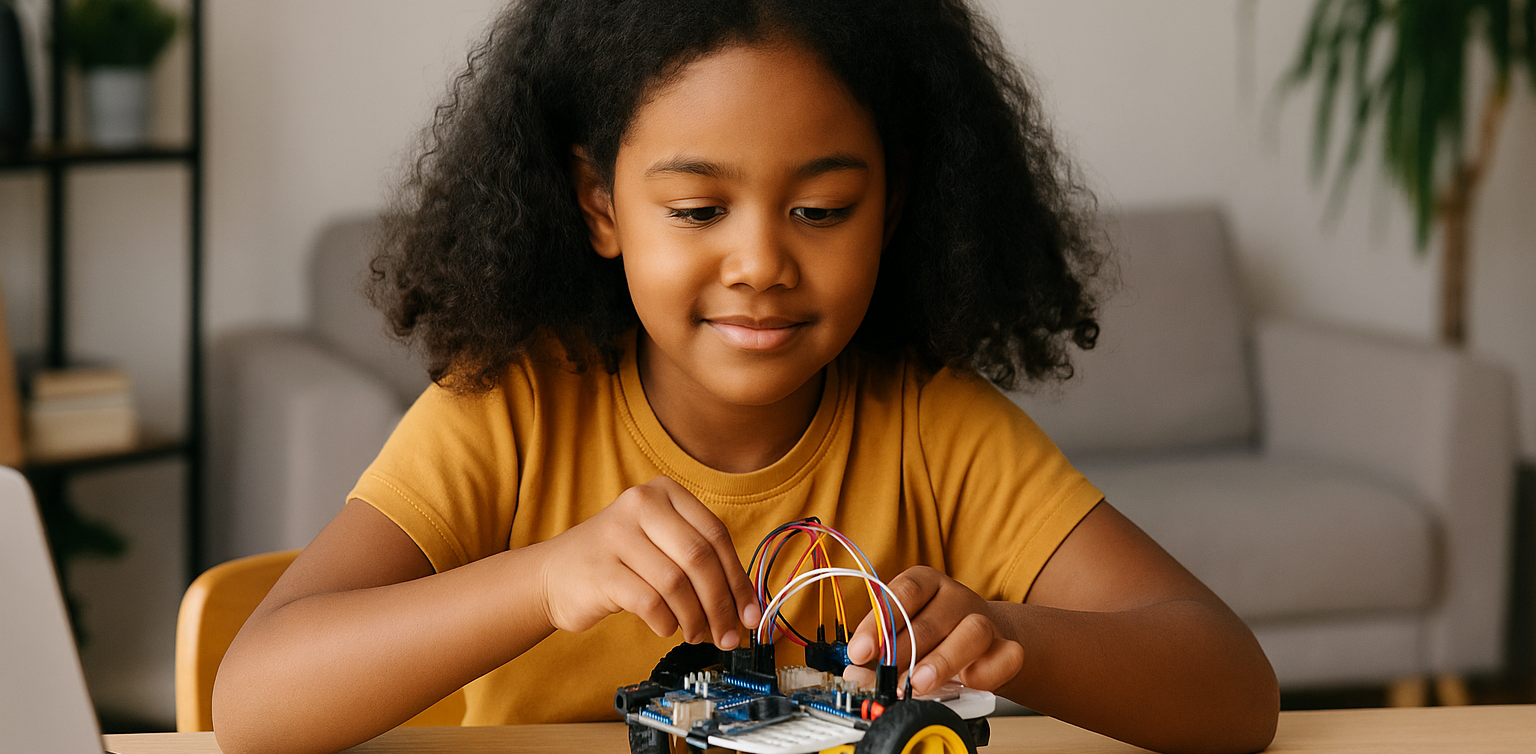
Why Coding for Kids Is Ideal Starting at Age 5 image

Many parents wonder if young children are ready to learn programming. The answer is absolutely yes, and it is highly encouraged. In recent years, coding for kids as young as five has become increasingly popular. It has been shown to support the development of logical thinking, creativity, and confidence from an early age.

Learning to code doesn’t mean children have to type lines of complex code like adults. In fact, the methods used for teaching coding for kids are designed to be fun and visual, often using colorful blocks or interactive games. This makes the learning process feel more like play than work.

1. Age 5 Is a Golden Window for Brain Development

Coding for Kids

Research shows that age 5 is a critical period for brain development. At this stage, children rapidly build their ability to think, absorb information, and recognize patterns. Coding for kids at age 5 takes advantage of this window to introduce logical and systematic thinking. As they solve simple coding challenges, children begin to develop strong problem-solving habits without even realizing it.

2. Builds Focus and Concentration

One of the biggest challenges for parents is helping children stay focused during learning. Coding engages children in logical sequences and hands-on tasks like programming a character to move. These activities gradually strengthen concentration. Coding for kids at this age can be an effective way to improve attention span through playful and interactive tasks.

3. Enhances Communication and Collaboration Skills

Coding isn’t always a solo activity. Many programs offering coding for kids at age 5 are built around collaboration. Children work in pairs or groups, share ideas, and express their thoughts. These moments naturally boost communication and teamwork, helping kids build social skills early on that will benefit them for years to come.

4. Introduces Technology in a Positive Way

Today’s children are no strangers to gadgets and the internet. Instead of completely restricting screen time, parents can guide their kids to use technology for educational purposes. Coding for kids is a smart way to shift them from passive digital consumption to active understanding of how tech works. It fosters digital creativity and responsibility from a young age.

5. Opens Up Future Career Opportunities

The future job market will be deeply rooted in technology. By introducing programming concepts early, parents give their children a head start. Coding for kids helps them develop not only technical skills, but also essential soft skills like perseverance, logical reasoning, and adaptability, all of which are vital for future success.

Try a Free Coding Class at Timedoor Academy

 Image

If you’re curious to see the benefits of coding for kids firsthand, Timedoor Academy offers a free trial class you can join from home. With a project-based curriculum and engaging visual materials, children are encouraged to explore technology in a way that’s fun and age-appropriate.

Timedoor’s curriculum is specially designed for young learners. Guided by professional mentors, children learn through play while building critical thinking skills and confidence. Don’t miss the chance to introduce your child to a positive and educational tech environment.

Keep Reading

<strong>5 Effective Ways on How to Deal with Children Addicted to TikTok</strong>
5 Effective Ways on How to Deal with Children Addicted to TikTok
How to deal with children addicted to TikTok has become an important concern for many parents in today’s fast-paced digital world. TikTok has quickly become a favorite platform among kids and teens, offering endless short-form videos that are entertaining and easy to access. It’s not uncommon for children to spend hours glued to their screens with little self-control. While it may seem like harmless fun, excessive use can lead to behavioral issues, loss of concentration, and declining academic performance. That’s why parents must understand and apply the right strategies early on before the habit turns into a more serious developmental issue. Why Do Kids Get Addicted to TikTok? TikTok is designed to serve continuous streams of personalized content. Its algorithm tracks user behavior to deliver videos that are highly engaging, making kids feel endlessly entertained. This makes it hard for them to stop watching or concentrate on schoolwork. Many children would rather scroll through TikTok than do homework or even play outside. This growing trend shows that how to deal with children addicted to TikTok is not just about limiting screen time but also about understanding the reasons behind their behavior. With the right approach, parents can redirect their children’s attention to healthier digital and social activities. 5 Effective Ways on How to Deal with Children Addicted to TikTok 1. Set Reasonable Screen Time Boundaries The first step in how to deal with children addicted to TikTok is establishing clear, reasonable screen time rules. For example, allow TikTok use only after homework is done and limit usage to one hour per day. Use parental control features if needed, and explain to your child why these rules are important. 2. Offer Fun and Engaging Alternatives Banning TikTok without providing alternatives will only frustrate your child. Instead, introduce fun activities such as outdoor play, painting, reading interactive stories, or making crafts. Filling their time with positive experiences is a smart move in how to deal with children addicted to TikTok so they won’t become overly dependent on their devices. 3. Have Open, Non-Judgmental Conversations Ask your child what they enjoy most about TikTok. Is it the humor, interesting content, or peer influence? Understanding their motivation helps you support them better. Keep the conversation open and empathetic, and involve them in setting healthy media habits. 4. Improve the Learning Environment at Home Many kids find home learning dull. Change your teaching style to make it more interactive using games, visual media, or hands-on activities. When children enjoy the learning experience at home as much as they do on TikTok, they’ll be more willing to engage. 5. Introduce Empowering Technology Activities Shift your child’s focus from passive content consumption to active digital engagement like learning coding. Not only is this stimulating and fun, but it also equips them with valuable skills for the future. This approach is a key part of how to deal with children addicted to TikTok by encouraging healthy, constructive interaction with technology. Try a Free Coding Class at Timedoor Academy Rather than cutting children off from the digital world entirely, it’s wiser to guide them toward meaningful and educational tech experiences. One great way to do this is through learning to code. At Timedoor Academy, children are introduced to technology in a hands-on way, helping them build logical thinking and self-confidence through age-appropriate real-world projects. You can sign up for a free coding trial class at Timedoor Academy to experience firsthand how fun and supportive learning can help your child grow. With a positive learning environment and guidance from professional mentors, your child can shift from passive scrolling to productive and empowering digital activities.
<strong>What Is Fatherless? 5 Overlooked Effects on Children in 2025</strong>
What Is Fatherless? 5 Overlooked Effects on Children in 2025
Many parents still don’t fully understand what is fatherless or how deeply it can affect a child’s development. At its core, fatherless describes a situation where a child grows up without the presence or meaningful involvement of a father figure. This isn’t limited to cases where the father is physically absent. It also includes situations where the father is emotionally unavailable or disengaged, even if he’s living under the same roof. As modern life becomes busier and family structures more complex, the number of children growing up without an engaged father figure continues to rise. Yet because there’s often a lack of awareness around what is fatherless, its impact is frequently underestimated. In reality, it can influence nearly every aspect of a child’s life — emotionally, socially, and academically. Here are five real and often overlooked effects of what is fatherless that every caregiver should be aware of: 1. Emotional and Behavioral Instability Children without consistent involvement from a father figure may struggle with emotional regulation. They can become more sensitive, withdrawn, anxious, or quick to anger. A lack of emotional guidance and security can leave children unsure of how to process big feelings. Understanding what is fatherless helps parents recognize these early signs and provide support before they grow into larger issues. 2. Low Self-Esteem and Insecurity A father’s encouragement and presence often play a huge role in a child’s sense of self-worth. When that connection is missing, children may feel unloved, unimportant, or unsure of their value. They might avoid challenges, struggle with confidence, or become overly reliant on praise from others. Recognizing what is fatherless can help caregivers provide emotional validation that children may not receive otherwise. 3. Academic Struggles Children who grow up in fatherless environments often face challenges with focus, motivation, and discipline when it comes to school. They may feel less driven to succeed or lack the encouragement they need to stay engaged. Once parents understand what is fatherless, they can step in with structure, emotional support, or even professional guidance to help children thrive in school. 4. Difficulty Building Healthy Social Skills The absence of a father figure can also impact how children interact with others. Some become overly shy and withdrawn, while others might act out or struggle with empathy and boundaries. Children learn by example, and without healthy male role models, they may find it difficult to develop strong communication and social skills. Being aware of what is fatherless helps parents and educators create more intentional opportunities for positive social learning. 5. Increased Dependence on Screens and Online Worlds When emotional support is lacking at home, children often turn to devices, social media, or online content for comfort and distraction. They may begin to prioritize digital stimulation over real-life connection, leading to isolation and overdependence on technology. This is another hidden risk within what is fatherless — one that can affect a child’s mental well-being and social development over time. What Can Parents and Caregivers Do? Acknowledging that a child may be experiencing the effects of fatherlessness is not about assigning blame. Instead, it’s the first step toward meeting their emotional needs in a more intentional way. Quality time, open communication, and consistent emotional support from other caregivers can make a powerful difference. Another way to help children build confidence and a sense of purpose is by introducing them to meaningful, skill-building activities — like learning to code. Coding encourages logical thinking, creativity, and problem solving, all of which contribute to stronger self-esteem and mental resilience. Try a Free Coding Class at Timedoor Academy Timedoor Academy offers fun, age-appropriate coding classes designed to help children explore their potential in a supportive and engaging environment. Whether they’re creating simple games or animations, children build valuable skills while developing confidence in their abilities. You can sign up for a free coding trial class and see firsthand how coding can positively shape your child’s growth — not just academically, but emotionally and socially, too. Let’s help children channel their energy into something creative, constructive, and empowering.
What Children Should Learn in the Age of AI
Growing up today, children are surrounded by artificial intelligence – from voice assistants that answer their questions to apps that personalize learning. This rapid change can feel daunting, but it also opens exciting opportunities. Global experts note that nearly 44% of job skills will shift in the next five years due to AI. In demand are skills like critical thinking, creativity, and social intelligence – the very human qualities that AI cannot easily replicate. In other words, to thrive in the age of AI, children need a mix of tech know-how and human-centric skills. An illustration of the top 10 job skills predicted for 2023. Many of the leading skills are cognitive or social-emotional (such as analytical thinking, creativity, and empathy), highlighting the growing importance of human strengths in an AI-driven world. So what should kids learn, exactly? This article will explore three areas: formal education (what schools should teach), extracurricular activities, and things parents can do at home. By focusing on these, we can help our elementary and middle schoolers grow into curious, capable, and compassionate individuals in a high-tech world.     Formal Education: New Basics for the AI Age Schools still teach the ABCs and 123s, but in the AI era the curriculum must expand to new areas. As UNESCO notes, adding skills like empathy, creativity, and critical thinking into lessons is essential. Important areas schools should cover include: Coding and AI Literacy: The basics of coding (even simple drag-and-drop coding or robotics) help kids understand how technology works. Coding teaches logic and problem-solving. Many countries now introduce coding in elementary school, and some even start AI concepts early. Learning how a computer “thinks” empowers children to go from tech consumers to creators. Digital Literacy and Ethics: Children must learn to use digital tools safely and responsibly. This includes understanding online privacy, cyberbullying, and how to spot misinformation. As AI tools (like chatbots or deepfakes) appear, students should discuss ethics and fairness in technology. Early lessons in digital citizenship help kids navigate an AI-filled world with wisdom and care. Critical Thinking: Instead of memorizing facts, kids need to learn how to think. Schools can nurture this by tackling open-ended problems and encouraging questions. When children practice analyzing situations and learn from small failures, they become flexible thinkers. This skill is key in a future where they’ll constantly need to adapt and solve new challenges (often alongside AI tools). Creativity and Innovation: AI is good at following patterns, but human imagination is still unmatched. Through projects in art, writing, science, or coding, schools can spark creativity. Whether it’s writing a story or building a gadget, creative tasks teach students to experiment and innovate. By “thinking outside the box,” children learn to come up with fresh ideas – a trait that will help them stand out in an AI-driven future. Collaboration and Social Skills: Working well with others is a skill that never goes out of style. Group projects in class teach kids how to communicate, cooperate, and resolve conflicts. These experiences also build empathy – understanding and respecting others. In the future, most jobs will require teamwork (often human-AI teams), so learning to collaborate early on gives children a huge advantage. Not all schools have updated their curricula yet. In fact, only a few countries have launched formal AI lessons in K-12 education, while many others are still catching up. Parents can advocate for these changes, but learning doesn’t only happen at school. That’s where after-school experiences can help fill the gaps.     Learning Beyond the Classroom: Extracurriculars and Hobbies Beyond the classroom, extracurricular activities give kids a chance to explore and build skills in fun ways: Coding & Robotics: Many communities have coding classes or robotics teams for kids. In a coding club, children might create simple games or program robots, practicing logic and persistence as they debug problems. Robotics competitions get kids working together to solve challenges. These activities show them they can build technology, not just use it. STEM Clubs and Camps: Programs focused on science, technology, engineering, or math let kids dive into hands-on projects. They might design a gadget, launch a model rocket, or even experiment with a simple AI-powered game. The informal setting makes learning fun and fuels their curiosity. Tackling STEM challenges outside class also teaches kids to be resourceful and think on their feet with peers. Creative Arts & Making: Activities like art, music, drama, or creative writing nurture imagination and innovation – qualities machines can’t replicate. Joining a theater group or art class helps kids express themselves and think creatively. Maker workshops (like tinkering with crafts, coding a gadget, or 3D printing) encourage problem-solving from a fresh angle. By creating something of their own – a story, a song, a piece of art – children learn to think outside the box. Team Sports & Groups: Sports teams, scouting, or any group activity teach teamwork and perseverance. When kids play on a team or do a group project, they learn to communicate, solve conflicts, and bounce back from setbacks. These experiences build character and resilience. They also mirror the collaborative spirit needed in most workplaces. Knowing how to cooperate and lead will help your child no matter what career they pursue. Extracurriculars often ignite passions that carry into adult life. Whether your child loves coding, soccer, or painting, these activities complement academics with practical skills and confidence. Just as importantly, children see that learning can happen anywhere – not just in a classroom – keeping their love of discovery alive.     Parenting in the Age of AI: Fostering Skills at Home Home is where children develop habits and attitudes that last a lifetime. Here are a few ways parents can instill important skills: Encourage Curiosity: Embrace your child’s “why” and “how” questions. When they ask something, explore the answer together – look it up or do a quick experiment. Show them how you find information and think through problems. By feeding their curiosity, you teach them that learning is a fun, ongoing process. A child who knows how to learn will adapt more easily to new technology and ideas. Nurture Creativity: Provide opportunities for unstructured play and creative projects. Give them art supplies, blocks, or even cardboard boxes to invent games or stories. This kind of play develops creativity and problem-solving. It shows kids they can have fun and be imaginative without a screen. By encouraging make-believe and projects at home, you help your child practice thinking in original ways – a skill that leads to innovation. Model Lifelong Learning: Let your child see you learning new things too. Talk about a book you read, a recipe you tried, or a problem you solved. Show that adults also face challenges and figure things out. For example, say, “I didn’t know how to fix the Wi-Fi, so I watched a tutorial and now it works!”. This teaches kids that it’s okay not to know everything and that perseverance pays off. If a new app or gadget confuses you, learn it with your child – you might even ask them for help. Your example will teach them that learning never stops. Set Tech Boundaries: Establish healthy tech habits early – for example, no screens at dinner or no phones after 8 PM – and explain why (screen time can affect sleep, and family time is important). Teach basic online safety: don’t share personal info or talk to strangers online, and ask a parent if something seems odd. As they get older, discuss using the internet and AI responsibly. If they use a homework-help chatbot, remind them it’s for hints, not copying answers. By guiding them, you help your child develop a balanced relationship with technology – they’ll enjoy the benefits without the harms. Teach Empathy and Social Skills: Make kindness and communication a daily practice. Encourage your child to think about others’ feelings (“How do you think your friend felt when you said that?”). Practice listening and taking turns during family conversations. When conflicts happen, help your child talk through the situation calmly and see the other person’s perspective. These exercises build emotional intelligence. Kids who learn to manage emotions, be considerate, and resolve disagreements will have a big advantage working with others in the future. By nurturing curiosity, creativity, kindness, and responsible tech use at home, you’re giving your child a solid foundation. They will grow up comfortable with technology but not overdependent on it, and tech-savvy yet also empathetic and adaptable. In a world full of smart machines, those human qualities will set them up for success.   Conclusion: Preparing Kids for a High-Tech Future The age of AI is here to stay, and our children will grow up with technologies we can only imagine. As parents, we don’t have to predict the future; we just need to equip our kids with adaptable skills and strong values. By ensuring they learn both technical skills (like coding and digital literacy) and human skills (like creativity, critical thinking, empathy, and teamwork), we empower them to use AI as a tool and not be overshadowed by it. In many ways, the heart of parenting remains the same. Encouraging your child’s curiosity, supporting their dreams, teaching them right from wrong, and providing love and support will always be crucial. These foundations, combined with opportunities to learn about technology and the world, will help your child thrive no matter how things change. They’ll be tech-savvy but also creative, digitally literate but also kind. With that balance, your child won’t just be prepared for the future – they’ll be ready to shape it.       Glossary of Key Terms Artificial Intelligence (AI): Technology allowing computers or machines to perform tasks that typically require human intelligence, such as learning, reasoning, and problem-solving. Coding: Writing instructions for computers to execute tasks; fundamental for building software, apps, and robotics. Digital Literacy: The ability to effectively find, evaluate, use, and create information using digital technologies and tools. Digital Ethics: Understanding and applying ethical principles when interacting in digital environments, including respect for privacy and prevention of cyberbullying. Critical Thinking: Analyzing facts to form a judgment, solve problems effectively, and make informed decisions. Creativity and Innovation: The ability to produce original ideas, approaches, and solutions that are valuable in various contexts. Collaboration: Working effectively with others toward a common goal, emphasizing communication, teamwork, and problem-solving. Empathy: The capacity to understand and share the feelings of others, critical for emotional intelligence and successful relationships. STEM: Acronym for Science, Technology, Engineering, and Mathematics; an interdisciplinary approach to learning. Digital Citizenship: Responsible and ethical behavior when using technology, including understanding privacy, online etiquette, and digital safety.     Frequently Asked Questions (FAQ) What age should children start learning about AI and coding? Children can begin learning the basics of coding and AI concepts as early as elementary school. Simple visual coding languages and robotic toys are age-appropriate ways to introduce these topics and build foundational skills. How important is creativity in an AI-driven world? Creativity is crucial, as it allows humans to envision and develop original ideas and solutions. While AI excels at repetitive tasks and pattern recognition, human creativity remains unmatched in problem-solving and innovation, making it a highly valuable skill for the future. Can after-school programs really enhance my child's readiness for an AI-driven future? Yes, after-school programs provide hands-on, practical experiences that complement classroom learning. Activities like robotics clubs, STEM camps, arts programs, and team sports help children develop critical thinking, creativity, teamwork, and resilience—skills highly valued in the AI age. How can parents teach children digital ethics effectively at home? Parents can teach digital ethics by openly discussing online behaviors, setting clear rules about screen time, and modeling responsible technology use. Regularly talking about topics such as online privacy, cyberbullying, and misinformation helps children navigate digital environments safely and responsibly. What can parents do to foster emotional intelligence? Parents can encourage emotional intelligence by regularly discussing feelings, modeling empathy, resolving conflicts constructively, and encouraging their children to see things from another person’s perspective. Regular communication and open dialogue build strong emotional skills. Is critical thinking more important than memorization in education now? Yes, in the AI era, critical thinking is becoming increasingly essential. While memorization has its place, critical thinking skills enable students to analyze information, make informed decisions, and adapt to rapidly changing scenarios, helping them thrive in a dynamic and uncertain future.
float button