Nov 19, 2024

Timedoor Academy Win Coding Competition in Southeast Asia!
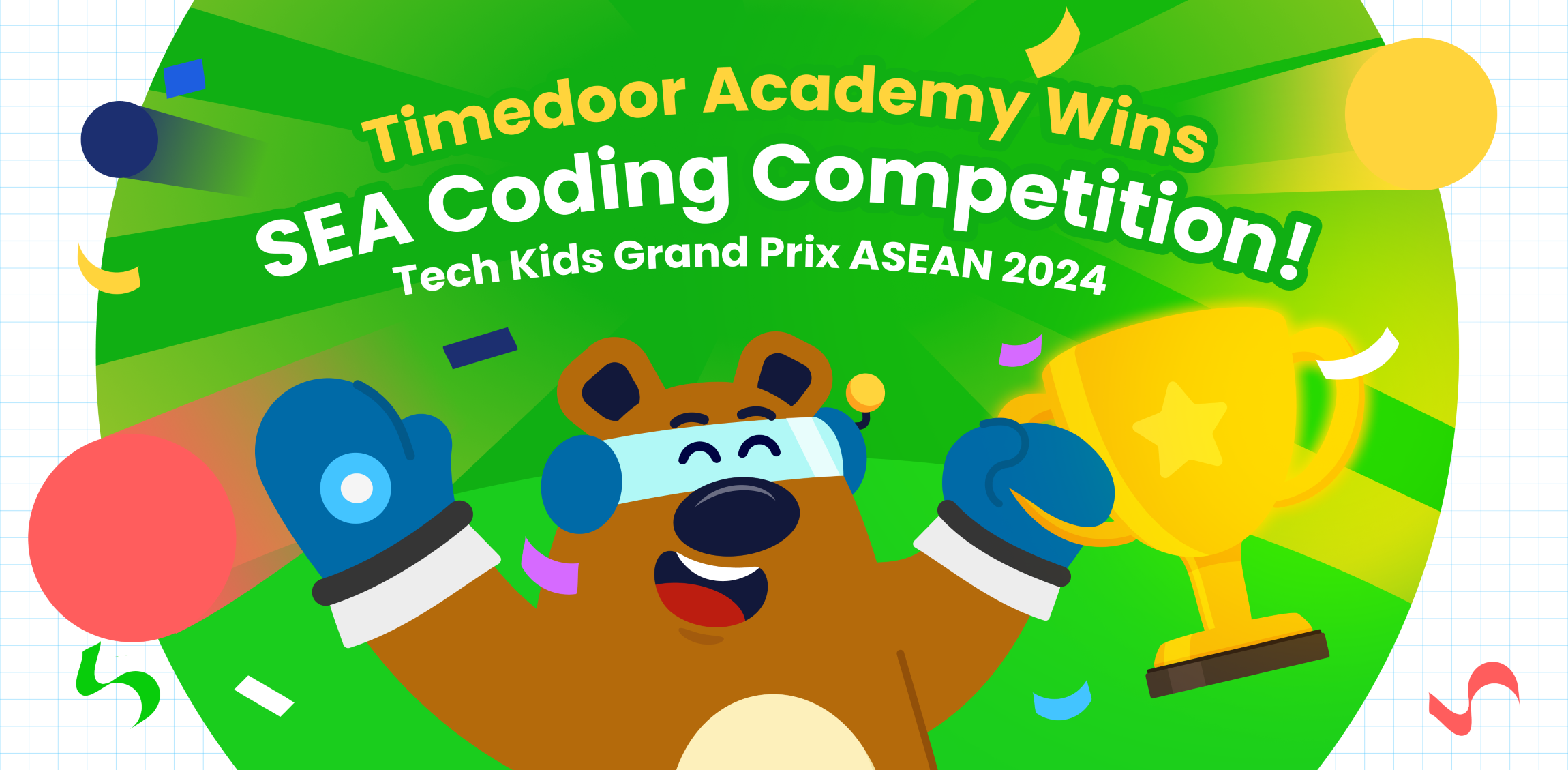
Timedoor Academy Win Coding Competition in Southeast Asia! image

Timedoor Academy Shines at the Biggest Kids Coding Competition in Southeast Asia!

We are thrilled to share the outstanding achievements of our students at the largest kids coding competition in Southeast Asia, Tech Kids Grand Prix ASEAN 2024, organized by a prominent Japanese company. This prestigious event brought together young coding enthusiasts from various countries, providing them with an incredible platform to showcase their creativity, skill, and determination.

An Unforgettable Event

This competition provided a platform for kids to showcase their unique coding projects, ranging from mobile apps to games, and even multimedia presentations. More than just a competition, it was an opportunity for students to explore their passions, push their boundaries, and connect with like-minded peers.

Timedoor Academy is thrilled to announce that three of our students stood out in the competition, earning impressive awards for their innovative work. Timedoor Academy also had several other students who earned Top 30 recognition, which further demonstrates the exceptional talent and dedication within our community.

Nadzkara Fakhri Madenda (Fay)

Fay menciptakan sebuah game interaktif kekayaan budaya Indonesia. Proyek ini memperkenalkan berbagai aspek budaya, seperti makanan tradisional, alat musik, pakaian, dan permainan rakyat daerah Indonesia. Fay meraih Presentation Award berkat kemampuannya dalam mempresentasikan proyek ini secara menarik dan detail di depan para juri.

Mohammad Fardeen

Fardeen dari Bangladesh, menciptakan sebuah aplikasi tabungan yang ditujukan untuk anak-anak. Fardeen terinspirasi dan merancang platform yang membantu anak-anak memahami pentingnya menabung dan literasi keuangan. Berkat visinya yang inovatif dan relevan, Fardeen berhasil meraih Product Award.

Top 30 Achievers

In addition to our winners, we also want to acknowledge the Top 30 students who represented Timedoor Academy with excellence. These students achieved impressive rankings that reflect their hard work and commitment:

  • I Nyoman Aditya Basudeva Mahaputra (Gatsu Branch)
  • Gede Agasthya Putra Darmawan (Gatsu Branch)
  • Theodorus Giovanni D (Gayungan Branch)
  • Jabir Sharwar (Online Bangladesh)
  • Mahrus Rahman Ayan (Online Bangladesh)

We are incredibly proud of all these students for their exceptional achievements and their contributions to the competition.

A Truly Memorable Experience

For our winners, this competition was more than just about winning—it was about growth, learning, and gaining invaluable experience. Both Fay and Fardeen expressed how meaningful the competition was to them, highlighting how much they learned throughout the process and how grateful they were for the guidance and support from Timedoor Academy and their dedicated teachers. Fay and Fardeen described the experience as “awesome” and said it was a journey they would always cherish.

Support from Timedoor Academy

To cheer on our students, Yutaka Tokunaga (CEO), Ayu Krisnasari (Curriculum Manager), and Bernadet Andini (Curriculum and Teacher Leader) flew to Singapore to provide their support during the event. Their presence was a testament to Timedoor Academy’s commitment to empowering students and supporting their growth at every stage of their learning journey.

We are incredibly proud of all the students who participated in this prestigious event. Their success is a reflection of their creativity, perseverance, and the dedication of the teachers and mentors who supported them. This competition has shown that Timedoor Academy students are truly capable of achieving greatness.

Looking Ahead

As we celebrate these incredible achievements, we are also looking forward to future opportunities for our students to shine. Timedoor Academy will continue to support and nurture young talent, helping them develop the skills they need to succeed in the digital world. We are excited to see what our students will accomplish next!

Stay tuned for more inspiring stories from Timedoor Academy as we continue to empower the next generation of innovators!

We provide opportunities for children to explore their potential in the programming world through our free trial sessions.

For more information, please visit the link here.
Keep Reading

Fun Ways to Help Kids Learn Math In 2025: Tips and Trick
For many kids, math can feel intimidating, boring, or just plain confusing. But with the right approach, it doesn’t have to be that way. When math is taught in a way that connects with how kids think and play, it can become one of their favorite subjects. In this article, we’ll explore fun ways to help kids learn math that you can try at home. These ideas are designed to build confidence, make learning enjoyable, and show kids that math is more than just numbers and formulas. Why Fun Matters in Learning Math Every child learns differently. Some understand best through visuals, while others learn by doing. Unfortunately, math is often taught through drills or worksheets that don’t speak to every child’s strengths. That’s why fun ways to help kids learn math are so important. When math is presented through games, stories, or real-life situations, it becomes more accessible and less stressful. It also helps kids build a positive attitude toward learning, especially for a subject that often gets a bad reputation. Turn Learning into Playtime One of the most effective ways to help children grasp math concepts is through play. When kids are having fun, they’re more likely to stay engaged and retain what they learn. Games like number bingo, card games with math challenges, or interactive apps make learning feel like part of everyday life. You don’t need expensive tools either. What matters most is creating a space where children feel excited, not pressured, to explore math. Simple Math Games to Try at Home Number Card ChallengeUse regular playing cards to practice addition or subtraction. Flip two cards and have your child call out the total. Make it a race to keep things fun. Hopscotch MathDraw a hopscotch board and add math problems to each square. Ask your child to solve the problem before hopping on. Math in the KitchenCooking is full of measurement and timing. Let your child help measure flour, count spoonfuls, or figure out how many cookies each person gets. Toy-Based CountingUse building blocks or toy cars to teach grouping, multiplication, or division. It’s especially helpful for visual learners. All these activities offer fun ways to help kids learn math without making it feel like a school assignment. Your Role as a Parent Many children struggle with math not because they can’t do it, but because they believe they can’t. That belief often comes from pressure, fear of mistakes, or a lack of confidence. As a parent, you can shift this mindset by encouraging effort and curiosity. Celebrate progress, no matter how small. With fun ways to help kids learn math, your support matters just as much as the method. Use Technology in a Positive Way Today’s technology offers tons of educational tools designed specifically for children. There are countless apps and websites that teach math through stories, games, and interactive challenges. Platforms like Timedoor Academy offer structured online classes that combine fun with effective learning. With the right tools, fun ways to help kids learn math become easier to find and apply in daily life. Make Math Social Kids often enjoy learning more when they can do it with others. Consider setting up math challenges between siblings or friends. You can also try a family game night with a math twist. Learning with others creates a sense of excitement and reduces pressure. It’s another fun way to help kids learn math while also building teamwork and communication skills. Make Math Part of Everyday Life Math is everywhere. It’s in the money you use at the store, the recipe you follow for dinner, and the clock you check every morning. Involving your child in these daily tasks can make math feel useful and natural. Let your child count change, estimate grocery costs, or track time before bedtime. When kids see math in action, they understand that it's a skill, not just a subject. Let Kids Find What Works for Them There is no one-size-fits-all method in learning. Some kids love singing math songs, while others enjoy solving puzzles. The key is to let your child explore different ways and figure out what helps them feel most confident. Fun ways to help kids learn math often come from trial and error. Give them room to experiment, and be there to cheer them on throughout the process. Make Learning Math Fun with Timedoor Academy If you're looking for guided, interactive math learning that your child will actually enjoy, Timedoor Academy offers online classes designed especially for kids. The lessons are built around engaging activities that teach core math skills in fun and creative ways. Try a free class today at Timedoor Academy and help your child discover fun ways to learn math at home with confidence and joy.
7 Strong Steps to Prepare Your Child as a Generation of Technology Creators
In today’s fast-paced digital era, understanding and creating technology has become one of the most essential skills for children. The world no longer only needs users of technology but also creators and innovators who can bring new solutions through digital creativity. That is why nurturing a generation of technology creators from an early age is a strategic step for parents and educators. Technology is now a part of almost every aspect of human life. From communication and education to entertainment, everything relies on digital innovation. In this context, the role of technology creators becomes crucial in shaping a more advanced, creative, and sustainable future. Children who understand the fundamentals of technology from a young age will grow with stronger logical, analytical, and creative thinking skills. 1. Cultivating an Innovative Mindset from an Early Age The first step in developing a generation of technology creators is to instill an innovative mindset in children. Instead of merely using apps or playing games, children should be encouraged to understand how those technologies are built. Through activities such as coding, digital design, or simple experiments with software, children begin to think like creators rather than consumers. This approach trains them to seek solutions, generate new ideas, and not fear making mistakes. The earlier children are introduced to the concept of creating technology, the greater their potential to grow into true innovators. 2. Strengthening Problem-Solving and Logical Thinking One of the main benefits of building a generation of technology creators is helping children develop systematic thinking and logical problem-solving skills. In the world of coding, for instance, they learn how to arrange steps so that computers can execute commands correctly. This process fosters critical thinking, which is valuable in many areas of life. Moreover, problem-solving activities teach perseverance and patience. Children learn that every mistake can be fixed through analysis and improvement, shaping a resilient and growth-oriented mindset. 3. Connecting Creativity with Technology Many parents think technology is rigid and technical, while in reality, it can also be a powerful medium for creativity. Children who grow as part of the generation of technology creators can combine art and technology to produce unique works such as animation, digital music, or interactive games. Through this creative approach, children learn that coding and design are not only about numbers and logic but also about imagination and self-expression. Technology provides them with the space to create something original and meaningful. 4. Building Early Career Readiness Technology skills are becoming one of the key foundations of the future workforce. Professions in digital fields, such as software development, game design, and artificial intelligence, are in high demand. By developing a generation of technology creators, parents help their children gain a competitive advantage from an early age. Children who grow up thinking in technological logic will adapt more easily to changes in the job market. They will not only be ready to face the future but also lead innovation that shapes it. 5. Teaching Digital Responsibility Being part of the generation of technology creators is not only about mastering technical skills but also about understanding the ethics behind technology use. Children should learn to create technologies that are useful, safe, and responsible for society. Through balanced digital education, they will understand the importance of privacy, respect for others’ work, and using technology for positive purposes. This foundation helps them grow into innovators who are not only intelligent but also ethical. 6. Enhancing Collaboration and Communication Skills In today’s technology-driven world, collaboration is the key to success. Building a generation of technology creators also means teaching children how to work in teams, exchange ideas, and value others’ opinions. Many technology projects require interdisciplinary teamwork involving developers, designers, and more. Through collaborative activities, children learn that great innovations are not created by one person alone but through effective teamwork and communication. These social skills will become valuable assets in their academic and professional journeys. 7. Building Independence and Confidence Children who can create something from their own ideas develop high self-confidence. They learn that every idea, no matter how small, has the potential to grow. This is the essence of the generation of technology creators: children who dare to dream, think critically, and turn ideas into reality. With the right support from parents and a positive learning environment, they will remain motivated to learn and innovate without limits. How Timedoor Academy Helps Build a Generation of Technology Creators Timedoor Academy understands the importance of nurturing children who not only use technology but also create it. Through project-based learning and guidance from professional mentors, students explore the world of coding, design, and digital innovation in a fun and interactive way. Every lesson is designed to develop logical thinking, creativity, and responsibility. With a child-friendly approach, Timedoor Academy helps every student grow their curiosity and passion to become part of the generation of technology creators who will shape the future. Take the First Step Today The world of technology keeps moving forward, and the future belongs to those who can create, not just consume. Help your child become part of the generation of technology creators who are ready to face the challenges of tomorrow with confidence, logic, and creativity.Sign up your child for a free trial class at Timedoor Academy today and discover how digital learning can become an inspiring, safe, and meaningful experience.
<strong>5 Best Ways Understanding Introvert vs Antisocial Kids Difference</strong>
5 Best Ways Understanding Introvert vs Antisocial Kids Difference
Many parents still struggle to tell the difference between introverted and antisocial behavior in children. Both can seem quiet or withdrawn, but they have very different meanings. Understanding introvert vs antisocial kids is essential so parents can respond with the right support and approach. Discovering Difference of Introvert vs Antisocial Kids An introverted child is someone who feels more comfortable doing quiet activities alone or with one or two close friends. They are not afraid of people, but social settings can be draining for them. Meanwhile, antisocial kids may break rules, ignore others’ feelings, and show disruptive behavior that goes beyond shyness or quietness.In this article, we will look at how to recognize introvert vs antisocial kids by identifying key behaviors and needs. 1. Different Roots Behind the Behavior Introverted kids prefer calm and independent play because it makes them feel secure and happy. It is a personal preference, not a sign of trouble. On the other hand, kids with antisocial tendencies often act out because of emotional or behavioral challenges. They may show no guilt when they hurt others or ignore rules at home and school. In this case, parents need to understand that introvert vs antisocial kids is not just about social interest, but about deeper behavioral differences. 2. Social Comfort and Adaptation Introverted children can build healthy friendships, even if it takes time. They open up when they feel safe and are not pressured to socialize too much. In contrast, antisocial children often resist or act aggressively in social situations. They may have little interest in forming relationships or even behave in harmful ways. Recognizing this helps in understanding the core difference between introvert vs antisocial kids. 3. Empathy and Emotional Response Introverts are often very empathetic. They notice how others feel and avoid conflict when possible. Antisocial kids, however, may lack empathy. They might say or do things that hurt others and show no signs of remorse. This lack of emotional connection is one of the clearest signs when comparing introvert vs antisocial kids. 4. Relationships and Communication While introverted children may have fewer friends, their relationships are often deep and meaningful. They connect on a personal level and value trust. Antisocial kids, on the other hand, tend to have troubled relationships. They may lie, break trust, or reject others altogether. This makes it hard for them to build or maintain any lasting bond. Parents should observe these patterns carefully when thinking about introvert vs antisocial kids. 5. What Parents Can Do For introverted children, it's important to respect their need for personal space. Support them by encouraging quiet hobbies, reading, or art. They still need social interaction, but in smaller, more manageable doses. If your child shows signs of being antisocial, such as constant rule-breaking or hurting others without guilt, it is best to seek help from a child psychologist. Early intervention can prevent more serious problems in the future. Learning the true nature of introvert vs antisocial kids helps guide that support. Early Awareness Brings Better Support Understanding introvert vs antisocial kids is not about labeling, but about offering the right care. Each child is unique, and when we listen without judgment, we open the door for them to grow confidently. A calm, patient environment and strong communication will make it easier for children to express their thoughts and feelings, regardless of their personality type. Want to Boost Logic and Confidence Too? Besides supporting your child's emotional growth, you can also help them develop skills like problem-solving and focus. Coding is a fun way to improve these abilities. It teaches kids structure, creativity, and critical thinking. Timedoor Academy offers fun and age-appropriate coding classes for kids. Let your child try a free coding trial class today and explore a new world of learning.
float button