May 27, 2025

5 Best Kids Playgrounds in Bali for a Fun Family Day Out
<strong>5 Best Kids Playgrounds in Bali for a Fun Family Day Out</strong> image

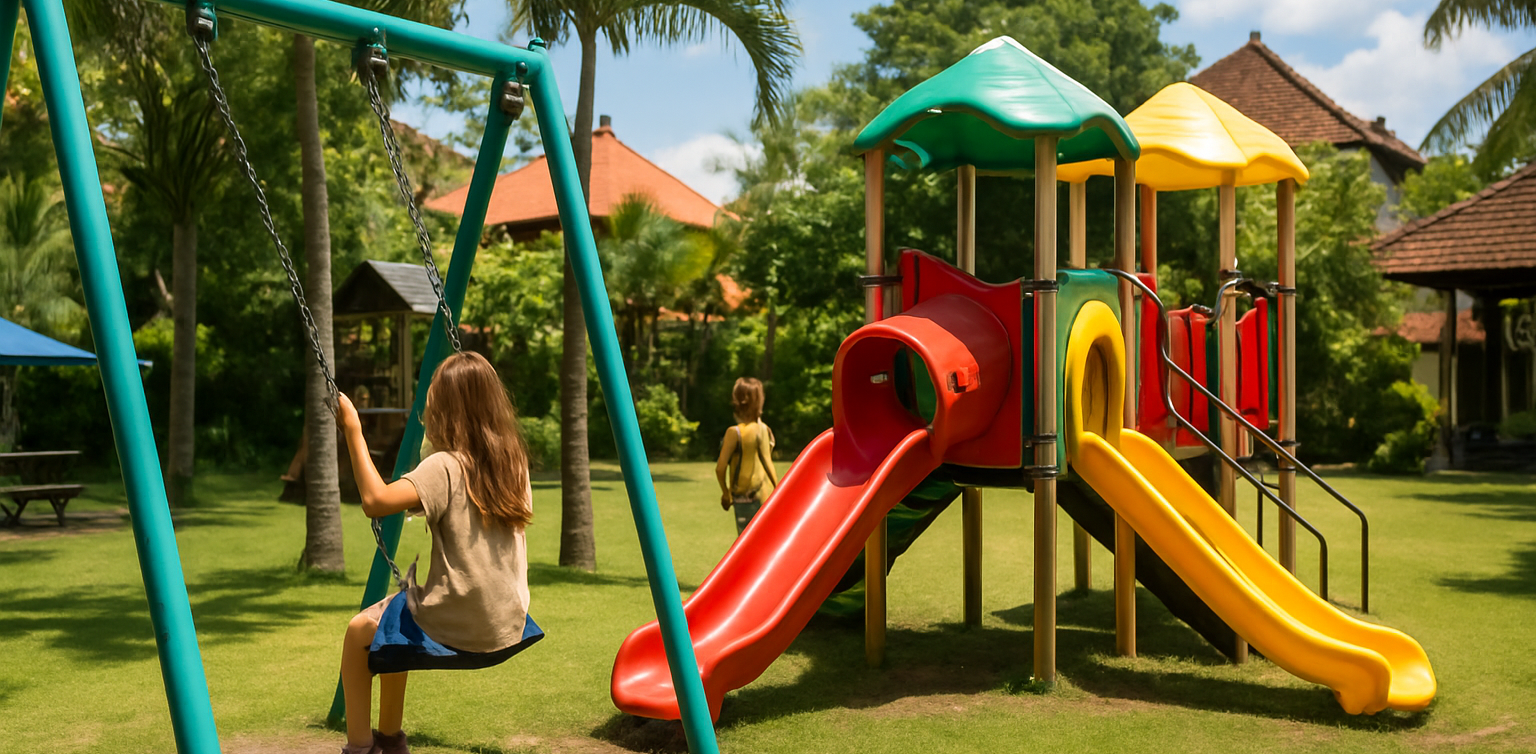
Bali is famous not only for its stunning beaches and vibrant culture, but also for its growing number of modern, family-friendly playgrounds. If you’re looking to spend quality holiday time with your loved ones, visiting a kids playgrounds in Bali is a fantastic choice. Today, you’ll find a wide range of playgrounds in Bali—indoor, outdoor, and even those combined with cafes and educational activities.

Playing at a kids playgrounds in Bali is not only fun, but also incredibly beneficial for children’s physical, social, and emotional development. Kids have the freedom to move, make new friends, and spark their creativity through all kinds of play experiences. Here are five recommended kids playgrounds in Bali that are open and ready to welcome your family in 2025!

1. Mai Main Playground Canggu

kids playgrounds in bali

Located on Jl. Padang Linjong No.8, Canggu, Mai Main Playground is one of the largest and most modern kids playgrounds in Bali, offering both indoor and outdoor play spaces that are safe and comfortable. Children can enjoy everything from giant slides and ball pits to trampolines and mini climbing walls.

What makes Mai Main special is its range of classes—ballet, art, and even animal interactions. It’s not just about play, but also learning, with activities designed to support motor skills, creativity, and social development. This playground is perfect for families wanting to spend meaningful time together.

2. Mookiland Family Park Bali

Situated on Jl. Raya Kedampang, Kerobokan, Mookiland Family Park Bali is a must-visit for outdoor fun. With over 5,000 square meters of space, children can run free on trampolines, zip lines, swings, and inflatable castles. There’s even a mini water park and an educational garden.

Parents can relax at the on-site restaurant, which serves healthy, kid-friendly meals. Surrounded by lush rice fields, the park feels fresh and peaceful—a perfect escape from the city. Mookiland also frequently holds exciting events like family runs, creative bazaars, and workshops.

3. Parklife Bali

Parklife Bali brings the “green park” concept to life with a full range of family facilities. Located at Jl. Raya Uma Buluh No.15, Canggu, Parklife features extensive outdoor play areas, a kids club, art classes, and even simple coding and science rooms.

Every weekend, Parklife hosts family events like picnics, children’s performances, and cooking classes. Kids can build forts, explore water games, and learn about nature as they play. There’s also a family-friendly restaurant with healthy menu options for all ages.

4. Peek A Boo Reborn

Located at Jl. Buana Raya No.22 C, Denpasar, Peek A Boo Reborn is a well-equipped kids playground in Bali with themed play areas, ball pits, trampolines, and tech-based educational games. It’s known as a pioneer in using AI to spark children’s creativity through interactive play.

Peek A Boo Reborn is open from 10 a.m. to 10 p.m., making it a flexible option for families. With a wide variety of play choices and attentive supervision, parents can relax knowing their children are safe and having fun.

5. Gurita Playground

Found at Jl. Tukad Batanghari No.69, Denpasar, Gurita Playground offers an indoor play experience with cheerful pastel colors. Kids can enjoy mini climbing walls, treehouses, ball pits, and a dedicated art room.

There’s also a child-friendly café, allowing parents to unwind while keeping an eye on their little ones. Gurita Playground is great for playdates, birthday parties, or just a fun weekend outing.

Tips for a Safe & Enjoyable Visit to Kids Playgrounds in Bali

To make the most of your visit to any kids playground in Bali, here are a few tips for parents:

  • Check opening hours and playground policies before visiting.
  • Pay attention to safety rules, like wearing grip socks and supervising children.
  • Bring extra supplies like a change of clothes, wet wipes, and a water bottle.
  • Talk to your child about playground rules, sharing, and cleanliness.
  • Use playtime as a chance to teach social skills, discipline, and creativity.

Playgrounds, Coding & Preparing Kids for the Future

Besides exploring kids playgrounds in Bali, the holidays are a perfect opportunity to try out educational activities like coding. Coding helps develop logic, problem-solving skills, creativity, and teamwork—just like playing at a playground!

With Timedoor Academy, learning coding is now fun and accessible. Children can discover coding in an interactive way, with hands-on projects tailored to their age and skill level. Timedoor Academy’s coding classes are designed to nurture not just digital skills, but also confidence and innovative thinking.

Make Your Bali Holiday Fun & Educational—Try a Free Coding Class at Timedoor Academy!

 Image

Ready to make your family holiday in Bali both fun and enriching? Plan a trip to a kids playground in Bali and don’t forget to add a coding class with Timedoor Academy to your itinerary! Sign up your child for a free trial class at Timedoor Academy and let them experience the excitement of learning coding in a playful, confidence-building way.

A holiday in Bali is about more than just play—it’s about preparing a creative, brave, and tech-savvy next generation. Happy holidays and enjoy every moment with your family!


Keep Reading

How to Deal with Child Tantrums: Smart Tips for Calm and Confident Parenting
For many parents, figuring out how to deal with child tantrums is one of the toughest parts of raising young kids. One moment they are fine, and the next, they are crying, shouting, or throwing things across the room. It is a stressful and exhausting situation that can easily test your patience. That is why every parent needs to understand how to deal with child tantrums calmly and effectively. With the right approach, tantrums do not have to turn into a daily battle. In fact, they can be valuable opportunities for both children and parents to learn and grow together.   Why Do Children Have Tantrums? Before diving into how to deal with child tantrums, it is important to understand why they happen in the first place. Tantrums are a normal part of early childhood development, especially for children between the ages of one and four. At this stage, children are still learning how to express their feelings in words. When they feel tired, hungry, frustrated, or overwhelmed, they express those emotions through tantrums. It does not mean they are being naughty or trying to manipulate you. They simply have not yet learned how to manage big emotions in a more appropriate way.   How to Deal with Child Tantrums Without Losing Your Cool Here are some practical steps to help you manage tantrums and keep the situation under control: 1. Calm Yourself The first and most important step in how to deal with child tantrums is managing your own emotions. Children often mirror their parents' reactions. If you remain calm, you are setting an example of emotional control. If you panic or get angry, your child is likely to escalate even more.   2. Acknowledge Their Feelings Instead of immediately trying to stop the outburst, take a moment to validate their emotions. Simple phrases like "You are upset because we cannot buy that toy, right?" help your child feel understood. This small step is a key part of how to deal with child tantrums effectively.   3. Redirect Their Attention After acknowledging their feelings, gently guide your child toward another activity. Offer to play a game, read a book, or suggest something they enjoy. Redirecting attention is a practical and proven method in how to deal with child tantrums, especially with younger kids.   4. Be Consistent with Boundaries Giving in to tantrums just to stop the noise might bring short-term relief but teaches the wrong lesson. Children will learn that tantrums are a way to get what they want. Staying consistent and firm with rules is essential when learning how to deal with child tantrums in a healthy and constructive way.   5. Teach Simple Breathing Techniques Introducing basic breathing exercises can help children learn to self-regulate. Encourage them to take slow, deep breaths when they feel upset. This method is a valuable tool in how to deal with child tantrums and builds long-term emotional resilience.   Turning Tantrums into Positive Learning Opportunities One effective way to support emotional growth is by giving children constructive outlets for their energy and feelings. For example, simple coding activities can help children develop patience, focus, and logical thinking. While coding might seem unrelated to tantrums, the process of breaking down problems step by step helps children build important self-regulation skills. In many ways, teaching a child how to deal with frustration during coding challenges mirrors the lessons you want to teach when figuring out how to deal with child tantrums.   Patience and Consistency Are Key Learning how to deal with child tantrums is not about finding an instant solution. Emotional regulation is a life skill that takes time and practice. The real key is showing patience and maintaining consistency in your responses. This approach helps children gradually learn how to manage their own emotions more effectively. Tantrums are not a sign of failure. They are a chance to guide children toward healthier ways of expressing their feelings.   Supporting Emotional Growth Through Positive Activities While tantrums can be exhausting, handling them with empathy and patience teaches children valuable emotional skills. Additionally, engaging kids in structured activities like coding provides another opportunity to practice focus, problem-solving, and perseverance. Coding encourages children to approach challenges with a calm and logical mindset. These are the same qualities they need when learning how to deal with child tantrums in everyday life. Curious how coding can help your child develop these skills? Timedoor Academy offers a free coding class designed especially for kids. The lessons are fun, interactive, and tailored to your child's learning pace. Give your child a positive and engaging learning experience. Register now for a free trial class at Timedoor Academy!
<strong>The Best Sports for Children Ages 3–17</strong>
The Best Sports for Children Ages 3–17
In today’s modern era, one of the biggest challenges for parents is making sure their children stay physically active amid the dominance of gadgets and digital activities. Many children prefer playing games at home rather than running or playing outdoors. In reality, choosing the best sports for children is very important to support their growth, health, and happiness. Through the right physical activities, children can develop healthy habits that last into adulthood. Every child has different interests and abilities. That’s why it is important for parents to understand what types of sports are best for their child, based on age, interest, and health conditions. By introducing physical activity from an early age, children will get to know their bodies, learn teamwork, and build self-confidence. Recommended Sports for Children by Age To maximize the benefits, here are some recommendations for the best sports for children, grouped by age: Ages 3–6:At this stage, children need simple and fun physical activities. Some of the best sports for young children include playing ball, riding a tricycle, swimming, gymnastics, and dancing. Games like hide and seek or jumping rope are also great for developing gross motor skills. Ages 7–12:Children can start joining more structured and competitive sports. Recommended sports for this age group include soccer, basketball, badminton, athletics, martial arts, and swimming. At this age, children also begin to learn teamwork and sportsmanship. Teenagers:As they enter their teenage years, children can choose sports that match their interests and talents, whether in teams or individually. They can also try more specific sports such as volleyball, table tennis, pencak silat, or archery. Teenagers are usually more motivated if sports are done together with friends. Tips to Keep Children Excited About Sports To help children stay enthusiastic and consistent about sports, parents can try these tips: Make sports a family routine, such as exercising together every weekend. Give children the opportunity to try various types of sports until they find what they enjoy most. Avoid comparing your child’s abilities with others; focus on their progress and efforts. Offer praise and support for every effort and achievement. Keep the sports environment fun, so that sports never feel like a burden or punishment. Balancing Sports and Digital Activities Besides introducing the best sports for children, it is also important to teach children how to manage their time between physical and digital activities. In the technology era, it’s true that children need to become familiar with the digital world, but physical health should always be a priority. Parents can create a daily schedule that balances study time, screen time, and physical exercise. This will help build healthy habits and prevent children from becoming too attached to their devices. Developing Children’s Potential Through Sports and Coding Nurturing a child’s potential goes beyond just finding the best sports for children. It also involves introducing them to 21st-century skills such as coding. Balancing a healthy body with an active mind is essential in this digital age. Coding trains children to think logically, creatively, and to solve problems, while sports help them develop discipline and self-confidence. Parents can blend physical and digital activities so that children can grow optimally, both physically and mentally. Try a Free Trial Coding Class at Timedoor Academy To help your child be even more prepared for future challenges, encourage them to join a free trial coding class at Timedoor Academy. In this class, children learn coding in an interactive and creative way, guided by professional mentors. Make your child’s screen time more meaningful with educational digital activities, without neglecting the importance of finding the best sports for children. Visit our website or social media pages, Timedoor Academy, to register for a free trial coding class that can be attended online from home. Finding the best sports for children does take time, but the benefits are enormous for their future. Active support and involvement from parents is essential so children can grow up healthy, happy, and confident to face the modern world.
<strong>What Is Deepfake? The Impact on Children in 2025 and How to Respond Wisely</strong>
What Is Deepfake? The Impact on Children in 2025 and How to Respond Wisely
The rapid development of digital technology has brought about countless innovations, and one of the most talked-about today is deepfake technology. Recently, the term “deepfake” has been frequently discussed, especially as more and more fake videos that appear shockingly real circulate on social media. But what is deepfake exactly, and why do parents need to understand and be cautious about this technology, especially to protect their children? This article will explain what is deepfake, how it works, and the potential impact it can have on children. We’ll also cover practical steps parents can take to help their kids face digital challenges with confidence. What Is Deepfake? Understanding the Technology Behind Fake Faces Before exploring its impact, it’s important for both parents and children to know what is deepfake. Deepfake is a term used for videos, images, or audio created with artificial intelligence (AI) so convincingly that they appear real, even though they’re fake. This technology can swap faces, mimic voices, or even make someone say or do things that never actually happened. Originally, deepfake technology was developed for entertainment and cinema, such as creating special effects in movies. However, as technology has advanced, deepfakes are increasingly misused—for spreading hoaxes, scams, and even digital bullying. That’s why digital literacy and education about deepfake is now more crucial than ever for Indonesian families. How Does Deepfake Work? To help children and parents better understand what is deepfake, let’s look at the basics of how this technology operates. Deepfake uses machine learning, especially deep learning techniques, to analyze and mimic someone’s facial expressions, voice, and movements. Using sets of videos or photos of a target, AI “learns” unique patterns and then applies them to new videos to make them appear extremely realistic. The end result of a deepfake is often very difficult to distinguish from real footage, especially at a glance. This makes deepfake technology dangerous if misused, particularly for children who may not yet know how to verify what they see online. The Impact of Deepfake on Children After understanding what is deepfake, it’s essential to recognize the negative effects it can have on children in the digital era: 1. Spread of Hoaxes and MisinformationChildren can easily be convinced by a deepfake video or audio that looks and sounds real, making them vulnerable to fake news, slander, or provocative issues. 2. Cyberbullying and ExploitationDeepfake can be used to create fake content that humiliates or damages a child’s reputation, or even as a tool for online bullying and exploitation. 3. Fraud and Privacy ThreatsA child’s personal data can be stolen and used to create deepfakes, which could then be involved in scams, blackmail, or other crimes. 4. Self-Doubt and Mental Health IssuesIf a child becomes a victim of deepfake, they may experience stress, shame, and even trauma, which can affect their self-confidence and mental well-being. 5. Difficulty Distinguishing Fact from ManipulationAt a young age, children are not fully equipped to tell the difference between genuine and fake content. Lack of digital literacy can make them more susceptible to digital manipulation. The Role of Parents: Education and Protection Simply understanding what is deepfake isn’t enough. Parents must also actively educate and guide their children to stay safe in the digital world. Here are some practical steps: Teach Digital Literacy EarlyDiscuss with your child about what is deepfake, how to spot fake content, and the importance of not believing every piece of information encountered online. Build Open CommunicationEncourage children to talk if they come across suspicious content or feel uncomfortable with something online. Strengthen Data Privacy AwarenessHelp children understand the importance of keeping personal data—photos, videos, and identity information—private and protected. Be a Role ModelParents should use technology and social media wisely, and avoid sharing or spreading unverified content. Introduce Positive Digital ActivitiesRedirect children’s attention to educational and productive digital activities, such as learning coding, creating digital projects, or exploring new knowledge. Coding: A Smart Way to Protect Children in the Digital World One concrete way to equip children for the deepfake era is to introduce them to coding. By learning to code, children don’t just become technology users—they also gain an understanding of how technology works. Coding sharpens logic, analytical skills, and encourages critical and creative thinking. Children who learn coding are better able to recognize digital manipulation and understand how AI behind deepfake works. Timedoor Academy offers interactive, fun, and age-appropriate coding programs. Children can learn to build apps, simple games, and even understand basic AI concepts through friendly and easy-to-follow methods. Time to Outsmart Deepfake, Starting from Home In today’s digital age, understanding what is deepfake should be a priority for every family. With the right knowledge, digital literacy education, and technology skills such as coding, children will be better prepared to face the risks and opportunities of the online world. Don’t let your child fall victim to digital manipulation! Register your child for a free trial class at Timedoor Academy and introduce them to coding and digital safety from an early age.
float button