Sep 04, 2025

Why Coding Games for Elementary School Kids Matter in the Digital Era 2025
Why Coding Games for Elementary School Kids Matter in the Digital Era 2025 image

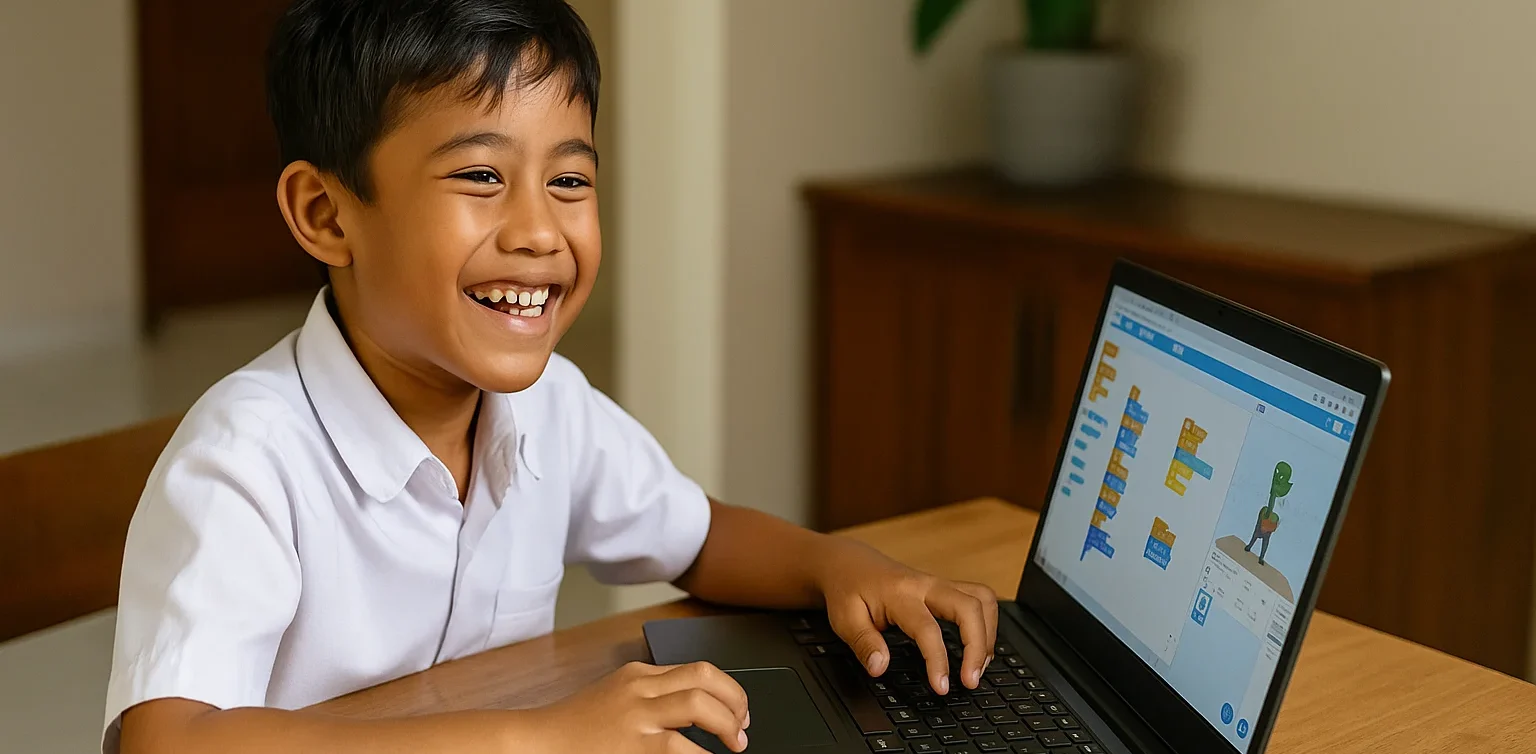
In today’s digital era, children grow up surrounded by technology. They are familiar with using gadgets to play, watch, or even learn. Instead of being only passive users, children should also be equipped with the skills to create with technology. One of the most valuable skills is coding. Specifically, coding games for elementary school kids can serve as a fun entry point to introduce programming logic from an early age.

Learning Through Play

coding games for elementary school kids


For children, learning while playing has always been the most effective approach. The concept of coding games for elementary school kids combines learning and play, allowing children to absorb knowledge without feeling pressured. By creating simple games, they can learn to think logically, solve problems, and understand how programs work. As a result, they are not only playing games but also building their own digital creations.

The Benefits of Teaching Coding in Elementary School

coding games for elementary school kids


Introducing coding games for elementary school kids provides children with many advantages that go far beyond technical skills. Some of the key benefits include:

  1. Boosting creativity
    Children can express their imagination by designing characters, stories, and challenges within the games they build.
  2. Sharpening critical thinking
    Every game follows a set of rules. Through coding, children learn how to structure and organize these rules so the game works properly.
  3. Encouraging teamwork
    Many coding platforms allow kids to collaborate on projects, teaching them the importance of working with others.
  4. Preparing for the future
    Digital skills are becoming increasingly important. By learning coding games for elementary school kids, children are better prepared to face the demands of tomorrow.

Child-Friendly Coding Platforms

coding games for elementary school kids


There are many platforms designed specifically for children. Some use colorful block-based coding that is easy to understand, while others introduce basic text-based commands gradually. Platforms like Scratch and Tynker, along with educational apps developed by learning institutions, make coding interactive and enjoyable. With this kind of approach, coding games for elementary school kids can be explored without overwhelming or intimidating young learners.

The Role of Parents in Supporting Learning


Parents play a vital role in supporting their children’s journey into coding. Providing time, access, and encouragement helps children grow more confident. When a child shows interest in creating a simple game, parents should appreciate their efforts and celebrate small achievements. With consistent support, learning coding games for elementary school kids becomes an engaging and meaningful activity rather than just another lesson.

Teaching coding from an early age is an invaluable investment in a child’s future. With the right methods, coding goes beyond technical knowledge and becomes a way to develop creativity, logical reasoning, and resilience. Through coding games for elementary school kids, children can learn while playing and at the same time build essential skills that will serve them well in the digital era

How Timedoor Academy Helps

 Image


As an institution focused on technology education for children, Timedoor Academy offers a curriculum specifically designed for elementary school students. With a project-based learning method, children not only grasp concepts but also produce real outcomes such as simple games they can proudly share and play. The classes are interactive, age-appropriate, and most importantly fun. This makes coding games for elementary school kids approachable and exciting, turning challenges into enjoyable learning opportunities.


Would you like your child to experience the joy of creating their own games while learning valuable skills? Sign them up for a free trial class at Timedoor Academy. Let your child discover how fun and empowering it can be to build their own digital creations. Click here to register and start their exciting journey in coding today.


Keep Reading

Indonesia’s Golden Generation
National Children’s Day and the Dream of Indonesia’s Golden Generation
Every year on July 23rd, Indonesia celebrates National Children’s Day, a reminder of our responsibility to nurture, protect, and empower the nation’s children. While this day is filled with joy and celebration, it also serves a deeper purpose: to reflect on the kind of future we want to build. That future begins today, with the steps we take to raise what we hope will become Indonesia Golden Generation. The term Indonesia Golden Generation refers to the generation of children who are expected to lead the nation by the year 2045, as Indonesia marks its centennial of independence. This vision is not just aspirational. It is a long-term national goal that requires thoughtful, coordinated action—starting with how we raise and educate children today. Why National Children’s Day Matters National Children’s Day is more than just a date on the calendar. It’s a national call to ensure children are growing up in a safe, inclusive, and empowering environment. It reminds us to examine whether every child in the country has access to quality education, supportive family environments, and the resources needed to thrive in a fast-changing world. Creating Indonesia Golden Generation is not the sole responsibility of the government. It requires shared commitment from families, educators, communities, and the private sector. Collaboration across these sectors is essential to providing meaningful learning experiences that will shape the values, character, and abilities of tomorrow’s leaders. The Characteristics of Indonesia Golden Generation To prepare today’s children for leadership in 2045, we must understand the traits that define Indonesia’s Golden Generation: Strong Character Children must be raised with values such as honesty, responsibility, empathy, and respect. Tech-Savvy and Globally Minded They need to understand digital tools and how to interact with the world critically and ethically. Collaborative and Adaptive Skills like teamwork, open communication, and problem-solving will be essential in every aspect of life. Leadership and Initiative Children should be encouraged to make decisions, take responsibility, and learn from mistakes with confidence. All of these characteristics begin with early education and life experiences. A nurturing environment filled with curiosity, exploration, and guidance helps lay the foundation for Indonesia Golden Generation. The Role of Parents and Education Parents play the most influential role in a child’s development. A loving home where children feel heard and supported is the starting point. But schools and educators must also serve as true partners, not just in academic development but also in teaching life values. Modern education must be more flexible and future-oriented than ever before. Memorization alone is no longer enough. Children must be taught to think, analyze, innovate, and apply their learning to real-world challenges. This is how we prepare them to become part of Indonesia Golden Generation. Introducing Technology Early, Wisely In the digital age, technology is not a luxury. It’s a necessity. Children should not only learn how to use technology, but also how to create with it. Teaching coding, digital art, and even AI basics early on helps them become not just consumers, but contributors to the digital world. This approach supports the broader vision of Indonesia Golden Generation, where children are empowered to build and lead in a world that demands both technical skills and strong ethics. From Celebration to Action National Children’s Day should inspire more than decorations and ceremonies. It should drive real efforts to improve how we support and prepare our children. This includes better education systems, inclusive programs, and access to tools that promote digital literacy and critical thinking. Raising Indonesia Golden Generation is not an overnight project. It is a journey that must begin today. Every act whether reading a book together, teaching a new skill, or simply spending quality time contributes to that long-term goal. Try a Free Coding Class at Timedoor Academy National Children’s Day is a celebration of hope and possibility. It invites us to see children not only as the future, but also as the foundation of what Indonesia can become. With love, care, and the right kind of education, we are shaping the future Indonesia Golden Generation deserves. At Timedoor Academy, we believe in preparing children for a future filled with both opportunities and challenges. Through digital education programs that focus on both skills and values, we’re helping to build strong, capable young people who are ready to thrive. Sign your child up for a free trial class today at Timedoor Academy and take a meaningful step toward building Indonesia Golden Generation starting right at home.
Amazing Benefits of Robotics Course for Elementary Students Every Parent Should Know
Technology is advancing rapidly year by year. Children who are currently in elementary school will face a future filled with innovation, automation, and artificial intelligence. Therefore, equipping them with relevant skills from an early age is crucial. One of the best ways to prepare them is through a robotics course for elementary students. With engaging and practical methods, children can learn to understand technology while also developing their creativity. What Is a Robotics Course? A robotics course is a learning program that introduces children to the process of designing, assembling, and programming simple robots. Through a robotics course for elementary students, children can explore the basic principles of science, technology, engineering, and mathematics, often referred to as STEM. These activities are designed to be fun and interactive, so children feel like they are playing while actually building valuable skills. The Benefits of Robotics Course for Children Many parents are choosing a robotics course for elementary students because of its wide-ranging benefits. First, children learn to think logically and systematically. Each robot component must be installed in the correct order, helping them understand cause-and-effect relationships. Second, they develop problem-solving skills. When the robot does not work as expected, children are encouraged to find creative solutions. Third, the course teaches patience and perseverance since building a robot requires time and dedication. Boosting Creativity and Imagination Beyond technical aspects, a robotics course for elementary students also nurtures creativity. Children are not limited to simply following instructions, but are encouraged to design and test their own ideas. For instance, they can build robots that walk, light up, or even play simple music. This process shows children that technology is not only something to use, but also something they can create themselves. Developing Social Skills Many robotics course for elementary students programs are conducted in groups. This allows children to collaborate with peers, exchange ideas, and solve challenges together. Learning how to work in a team will benefit them not only in school, but also in their personal and professional lives later on. Building a Strong Foundation for the Future In today’s world, technology skills are key to future success. By taking a robotics course for elementary students, children are not only prepared for academic challenges but also given a strong foundation for careers in technology-related fields. Areas such as artificial intelligence, data science, and mechanical engineering will be easier to grasp because they have already been introduced to the basics of robotics at a young age. The Role of Parents in Supporting Learning Parental support plays a major role in a child’s learning journey. Celebrating small achievements, assisting them during robot-building sessions, or simply listening to their stories about class experiences can boost their confidence. With such support, every session in a robotics course for elementary students will become even more meaningful. Why Choose Timedoor Academy? Timedoor Academy offers a robotics program tailored specifically for elementary school students. Its curriculum goes beyond technical knowledge by also focusing on creative thinking and collaboration. Each class is guided by experienced mentors who understand how to introduce technology to young learners effectively. With a fun and interactive environment, children will be excited to join every session. Enroll Your Child at Timedoor Academy! If you want your child to develop future-ready skills, now is the perfect time to take action. Register them for a Free Trial at Timedoor Academy and discover how robotics courses can transform curiosity into real abilities. Click the registration button today and give your child the best opportunity to grow and succeed.
5 Must-Try Eid al Adha Food Recipes for a Delicious Family Celebration
Eid al-Adha is always associated with moments of togetherness and the tradition of sharing sacrificial meat. One of the best ways to celebrate this special day is by serving delicious homemade dishes for your loved ones. That’s why many people look for Eid al Adha food recipes that are unique, tasty, and different from previous years. This time, we’re sharing five Eid al Adha food recipes you can try at home. These recipes are not only practical and delicious, but they are also perfect for enjoying with the whole family. By using the sacrificial meat, you can explore a variety of Indonesian dishes that are rich in flavor and tradition. 1. Lamb Satay with Peanut Sauce Lamb satay is one of the most popular Eid al Adha food recipes and is always highly anticipated. Tender chunks of lamb, paired with a savory peanut sauce, create a taste that’s truly unforgettable. Ingredients: 500 grams lamb, cut into cubes 10 satay skewers 3 tablespoons sweet soy sauce 1 tablespoon cooking oil Peanut Sauce: 100 grams fried peanuts, ground 2 cloves garlic 2 large red chilies 3 tablespoons tamarind water Salt and sugar to taste How to make: Marinate the lamb with soy sauce and oil, let it sit for 30 minutes. Blend the peanut sauce ingredients, sauté until fragrant, then add tamarind water, salt, and sugar. Skewer the lamb and grill until cooked through. Serve with peanut sauce and fried shallots. 2. Special Beef Curry (Gulai Sapi) Beef curry is always a top choice among Eid al Adha food recipes. The rich yellow broth and tender beef are simply irresistible. Ingredients: 500 grams beef, cut as desired 500 ml coconut milk 1 stalk lemongrass 2 bay leaves Blended spices: 6 shallots 4 garlic cloves 2 cm ginger, turmeric, galangal 5 candlenuts 5 red chilies How to make: Sauté the blended spices, lemongrass, and bay leaves until fragrant. Add the beef, mix well. Pour in the coconut milk and simmer over low heat until the meat is tender and the broth thickens. Serve hot. 3. Sweet and Spicy Lamb Stew (Tongseng) Tongseng lamb is a wonderful alternative among Eid al Adha food recipes, especially if you love a soupy dish that’s rich in flavor. Ingredients: 400 grams lamb 1/2 small cabbage, roughly sliced 2 tomatoes 5 shallots, 3 garlic cloves 3 bird’s eye chilies (or to taste) 2 kaffir lime leaves, 1 stalk lemongrass How to make: Sauté shallots, garlic, and chilies until fragrant. Add the lamb, stir until the color changes. Add kaffir lime leaves, lemongrass, and tomatoes. Add cabbage and enough water. Cook until the meat and cabbage are tender. 4. Fresh Beef Soup Beef soup is a great Eid al Adha food recipe for children or elders because of its tender texture and refreshing broth. Ingredients: 500 grams beef, cut into small pieces 2 carrots, sliced 2 potatoes, diced 1 stalk each of scallion and celery 1 tomato How to make: Boil the beef until tender, remove the foam. Add carrots, potatoes, and other seasonings. Once everything is soft, add scallion, celery, and tomato. Serve the soup hot. 5. Purwakarta-style Maranggi Satay If you want to try something different among Eid al Adha food recipes, maranggi satay is a great choice. The combination of beef and special seasonings makes this satay a family favorite. Ingredients: 500 grams beef, cubed 2 tablespoons sweet soy sauce 1 tablespoon lime juice 1 tablespoon ground coriander How to make: Marinate the beef with soy sauce, lime juice, and coriander for 1 hour. Skewer the beef and grill over charcoal until cooked. Serve with spicy sambal or pickles. Tips for Cooking Tender Sacrificial Meat To make the most out of your Eid al Adha food recipes, here are a few simple tips for cooking meat: Cut the meat against the grain so it becomes more tender when cooked. Use grated pineapple or wrap the meat in papaya leaves during marination to soften it. Cook on low heat to let the spices soak in thoroughly. Making Eid al Adha More Meaningful and Educational Eid al Adha is not just about enjoying a variety of Eid al Adha food recipes with your family. It is also the perfect time to teach values of togetherness, sharing, and creativity to your children. Get them involved in the kitchen, let them help prepare ingredients, and introduce them to traditional Indonesian cuisine. Aside from cooking, family time like this can also be a great opportunity to introduce new skills to your children, such as learning to code. Coding encourages logical and creative thinking, which is highly valuable in today’s digital era. If you want your child to grow and thrive in the digital world, feel free to try the free trial coding class at Timedoor Academy. Make your family moments even more exciting, meaningful, and full of inspiration!
float button