May 05, 2025

How to Use Figma for Kids: A Fun and Simple Digital Design Guide

How to Use Figma for Kids: A Fun and Simple Digital Design Guide image

In today’s digital era, graphic design has become an increasingly essential skill, even for kids. Design is not just about drawing or creating illustrations. It also helps children develop creativity, visual logic, and systematic thinking. One of the most popular and beginner-friendly design tools to introduce early on is Figma. This article will guide you on how to use Figma for kids in a fun and easy-to-follow way.

Figma is a web-based design platform widely used by UI/UX professionals and graphic designers. But because of its intuitive interface and real-time collaboration features, Figma can also be a great learning tool for children, especially those curious about digital design, posters, invitations, app layouts, or even simple games.

Why Kids Should Learn Digital Design

Digital design is not only about aesthetics, but also about communication. Kids who learn design early tend to express ideas visually, organize information clearly, and feel more confident experimenting with their creativity. Design skills also open doors to other fields like illustration, app development, animation, and branding.

By learning how to use Figma for kids, the design process becomes more engaging. They can instantly try, rearrange, and explore design elements without needing to install any additional software.

What to Prepare Before Using Figma

Before your child starts designing, here are some things to set up:

  • Figma account: Create a free account at figma.com. Use a parent’s email and assist during setup.
  • Device: A laptop or desktop with a stable internet connection works best.
  • Simple design theme: Start with fun, easy projects like a birthday card or character illustration.

Benefits of Using Figma for Kids

Here are some of the main benefits of using Figma as a learning tool for kids:

  • Enhances creativity and visual aesthetics
  • Builds logical thinking through layout structure
  • Boosts confidence through hands-on creation
  • Encourages teamwork and collaboration in online settings

Step-by-Step Guide: How to Use Figma for Kids

Below are specific steps on how to use Figma for kids, including core features and how to guide them:

1. Introduce the Interface and Basic Tools
how to use figma for kids

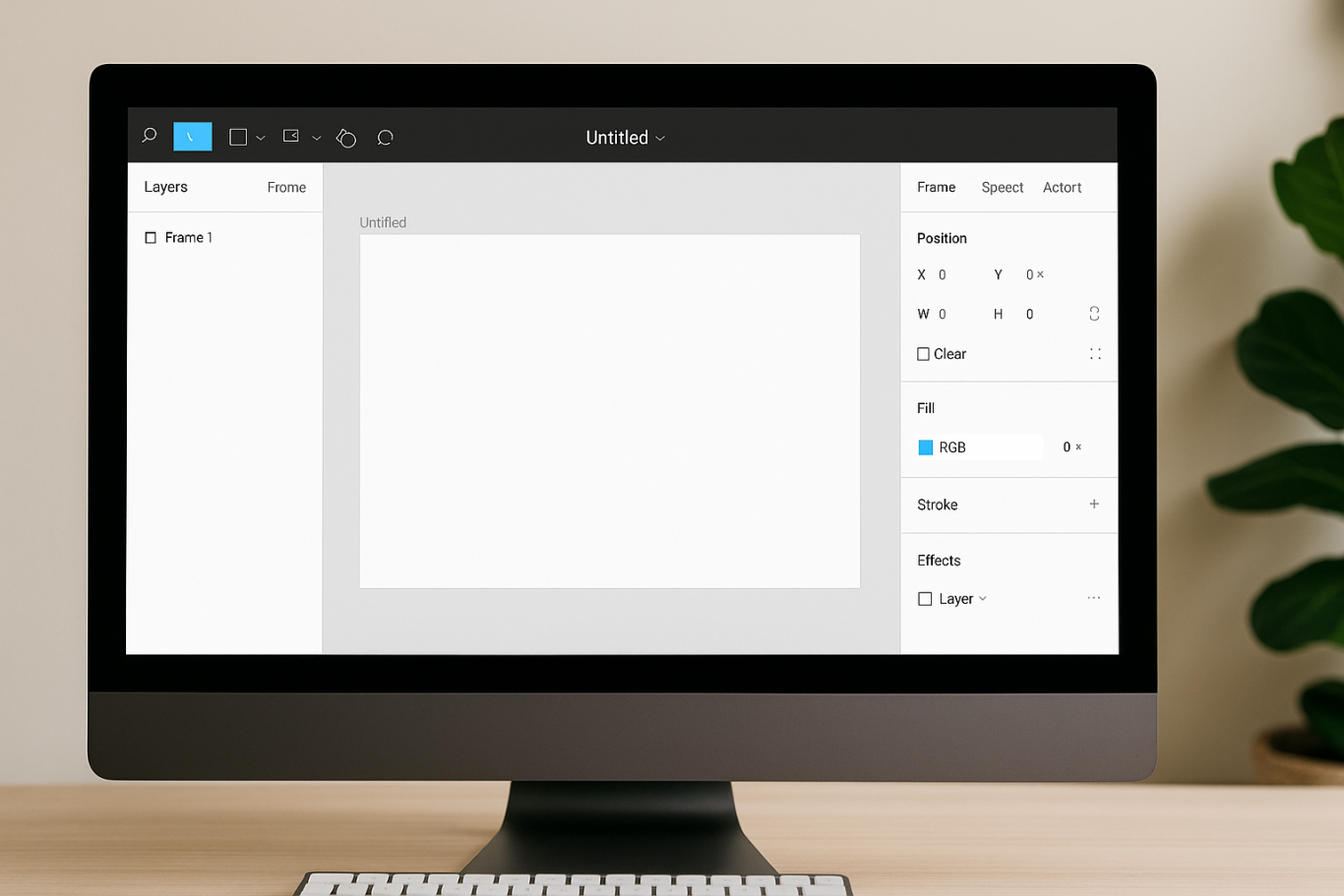
After logging in to a Figma account, walk your child through the main elements of the workspace:

  • Canvas: the blank area where they’ll build designs
  • Top toolbar: includes tools like Move, Frame, Shape, and Text
  • Left panel: shows the object structure (layers)
  • Right panel: used to adjust color, size, position, and effects

Let them freely draw circles, squares, or stars and experiment with colors. This unstructured play helps them get familiar with Figma naturally. This is also a great starting point in how to use Figma for kids in a stress-free way.

2. Start a New Project
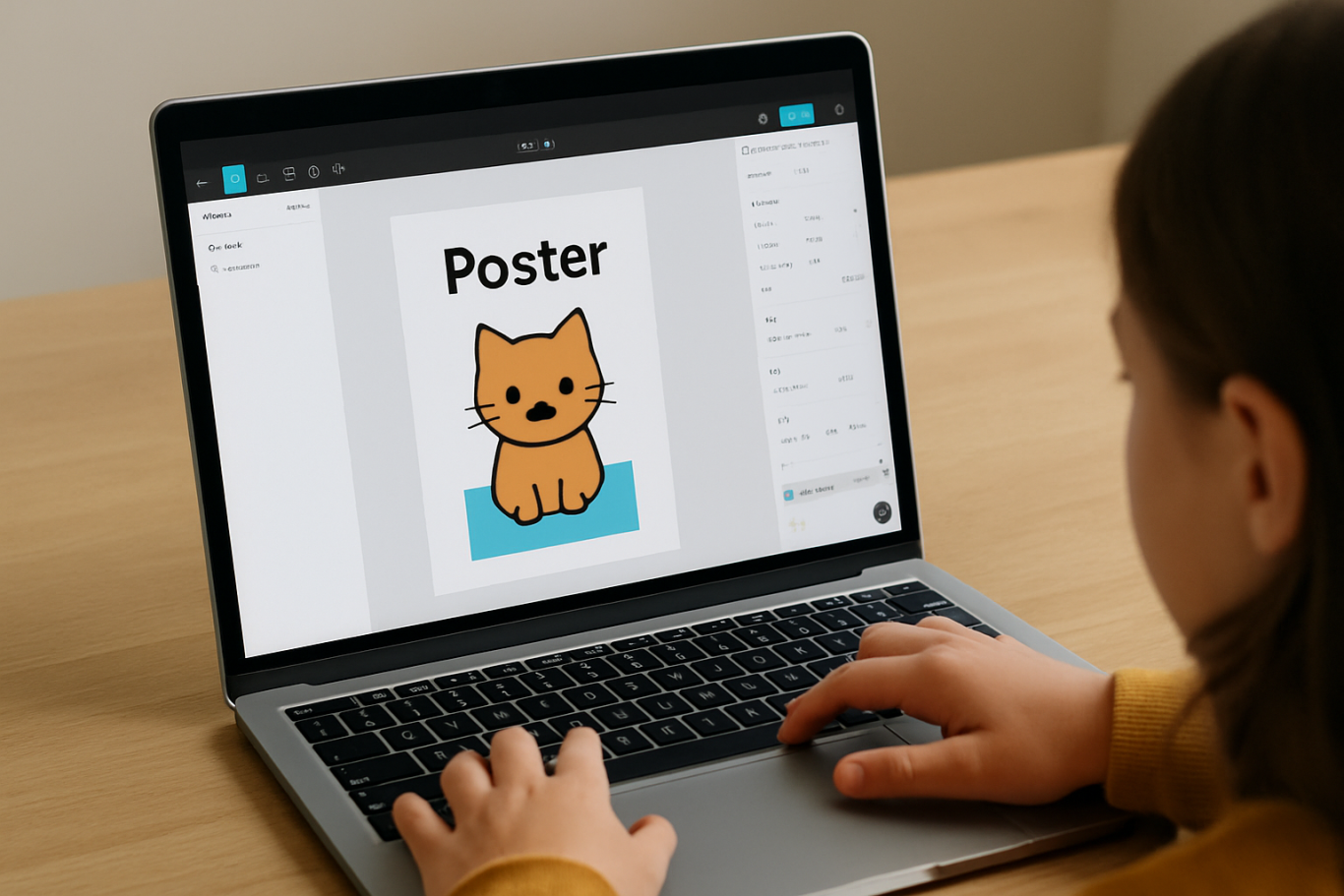
Click New Design File and let your child name it something fun like “My Poster” or “Cute Cat Project.” Then:

  • Create a Frame using A4 size or mobile screen dimensions
  • Add shapes via the Shape tool, then change colors on the right panel
  • Add text with the Text Tool, and adjust font size, color, and position

This step of how to use Figma for kids feels like drawing on a digital piece of paper—fun and intuitive.

3. Add Images and Illustrations
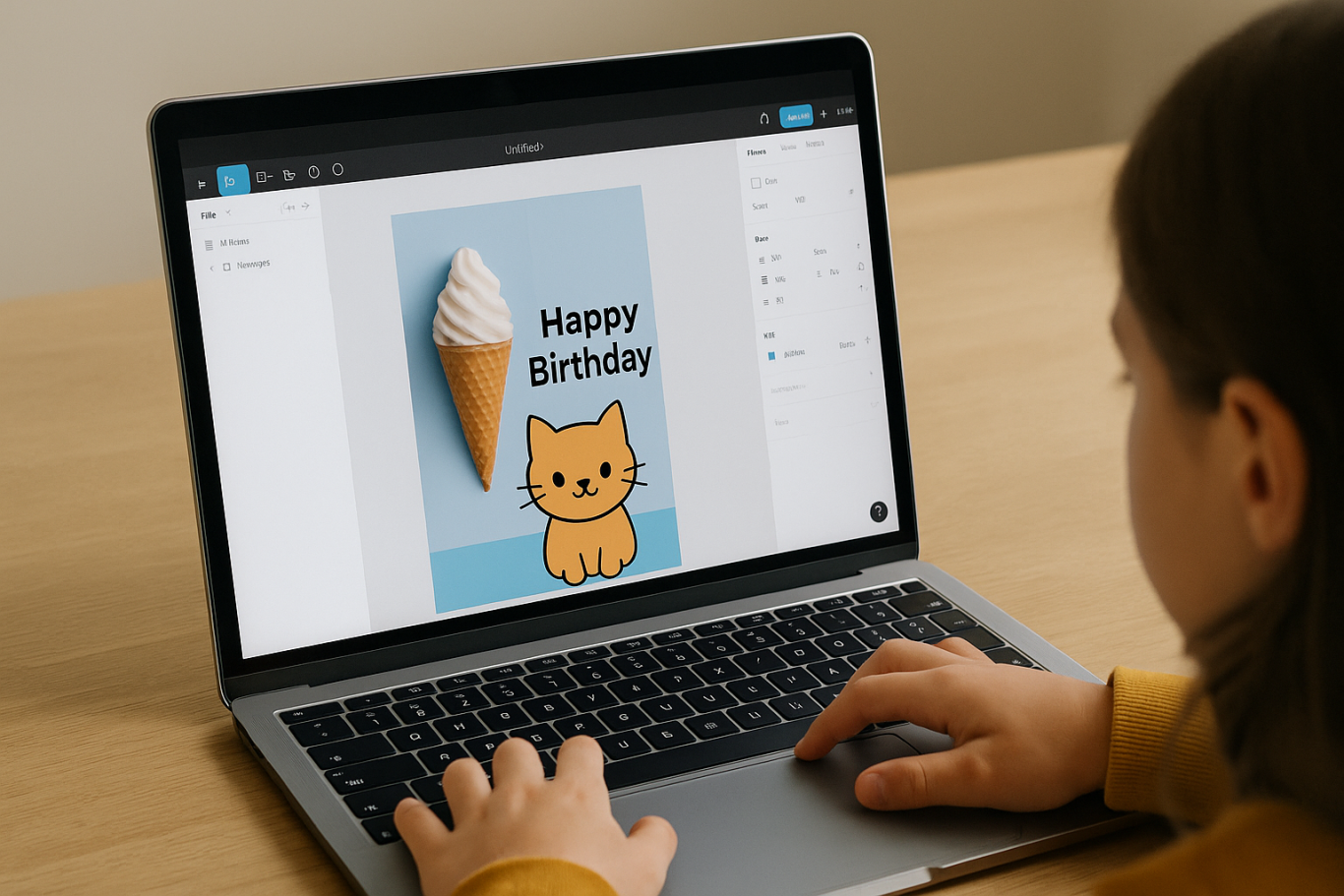
To make their design more dynamic, help them insert images:

  • Click File > Place Image and choose from your computer
  • Or simply drag and drop into the canvas
  • Use the Unsplash plugin to find royalty-free images directly inside Figma

This makes it easier for kids to create digital greeting cards, collages, or mood boards. These small projects are practical examples of how to use Figma for kids in real-life situations.

4. Create Simple App or Game Layouts
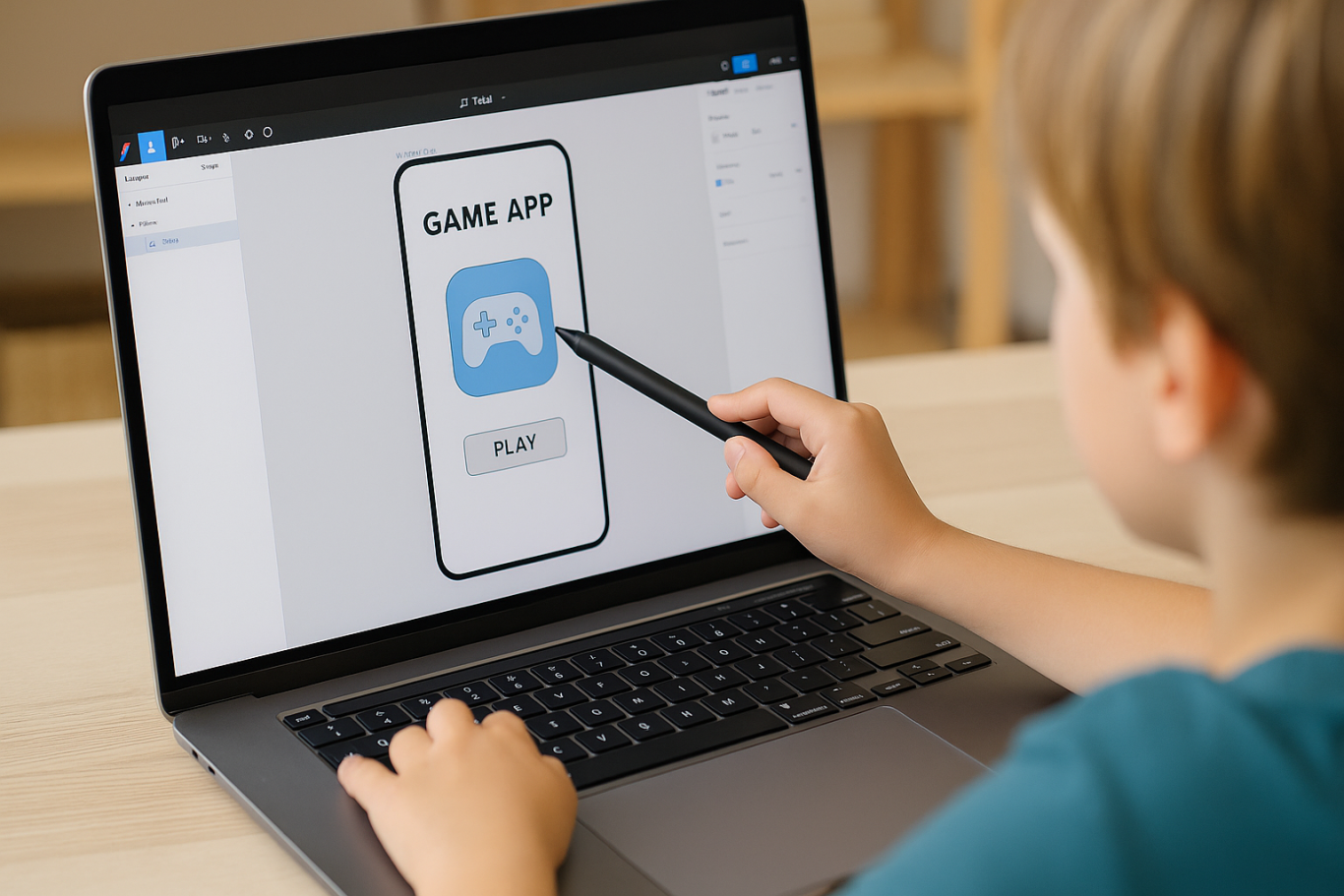
For older kids, try introducing them to basic app layout design:

  • Use Frames sized for iPhone or Android
  • Add titles, icons, and buttons
  • Turn elements into Components for duplication
  • Use Prototype mode to simulate screen transitions

This is a creative and exciting way to teach design logic and basic UX thinking. It’s also a more advanced stage in how to use Figma for kids who want to go deeper.

5. Collaborate and Present
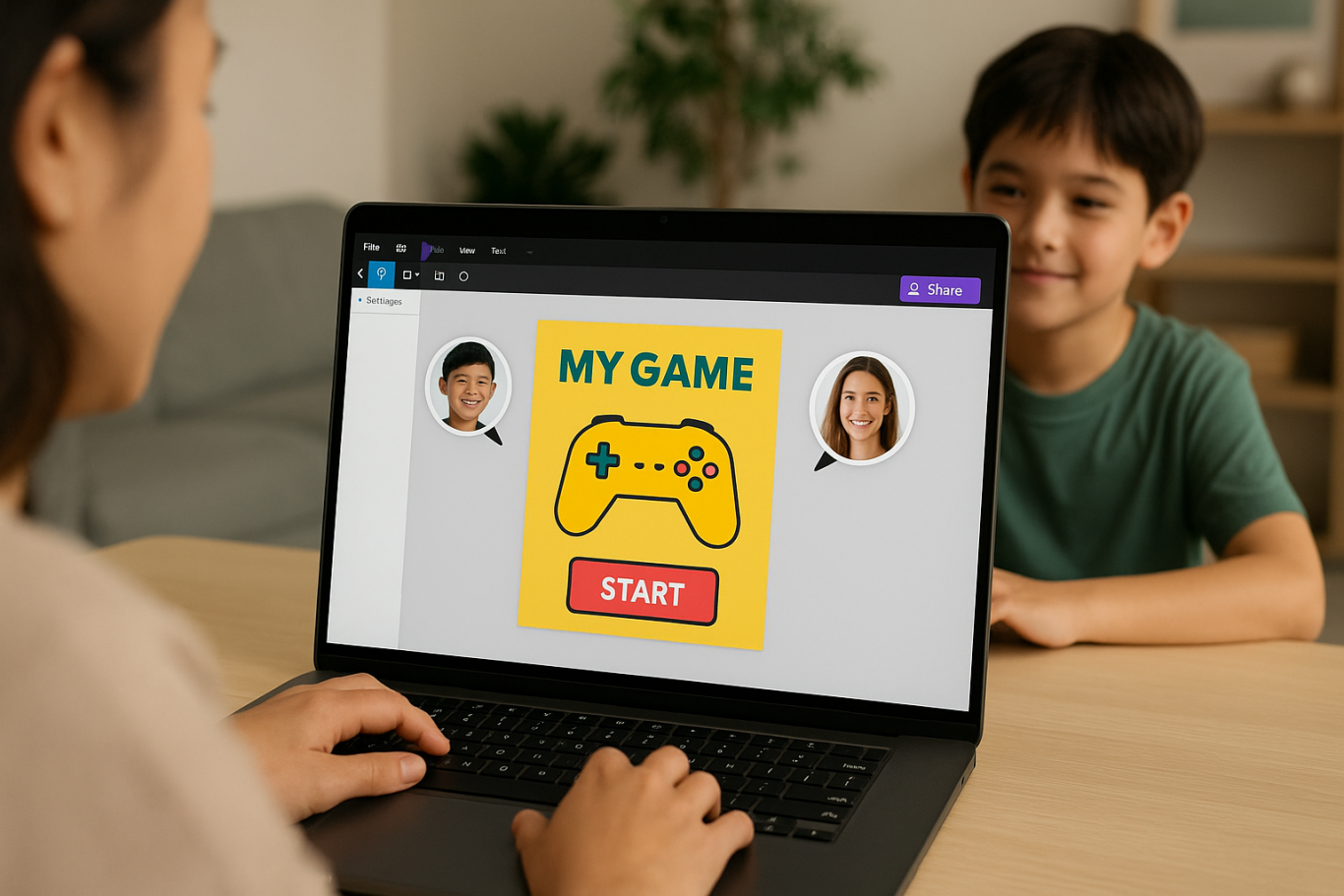
Figma is perfect for collaborative learning. Kids can:

  • Click Share to invite parents, teachers, or friends
  • Use Presentation Mode to view their design full-screen
  • Receive comments directly on the canvas and learn from feedback

These interactions help kids learn how to present and improve their ideas. How to use Figma for kids can extend into valuable lessons on teamwork and communication.

Combine with Online Design Classes

To support their learning journey, consider enrolling your child in an online design course. Timedoor Academy offers kid-friendly design programs based on fun projects and personalized learning. Learning how to use Figma for kids is much easier when supported by friendly mentors and structured activities.

Tips for Parents to Support Learning

To make the learning process smoother, parents can:

  • Be present during the early stages, then give room to explore
  • Ask about their designs and encourage storytelling
  • Avoid focusing on perfection—celebrate creativity instead
  • Try designing together as a bonding activity

Ready to Introduce the World of Design?

Introducing your child to digital creativity can begin with simple tools like Figma. With the right guidance and playful approach, how to use Figma for kids becomes a fun activity that sharpens logic, builds visual confidence, and sparks interest in technology.

Ingin tahu detail program? Image

Ingin tahu detail program?

Timedoor Academy is here to support your journey. With interactive online classes and friendly instructors, your child can learn to design with confidence. Try a free class today and help your child discover their design potential from an early age.

Keep Reading

Winners’ Announcement of Bootcamp December 2024
Timedoor Academy BootCamp 2024 was held from December 9 to 27, 2024, with over 200 participants from both Online and Offline classes across Indonesia. This year, we also launched two exciting new programs: Kids Machine Learning and Entrepreneurship, which generated even more excitement among our students. Timedoor Academy offers a dynamic 5-day BootCamp, featuring various programs that allow students to choose based on their interests. The Coding Camp includes a wide range of courses such as Game Development, Website Development, Python Development, Roblox Development, Artificial Intelligence, and Internet of Things (IoT). Meanwhile, our Design Camp focuses on nurturing students’ creativity through programs like Animation Creation, Branding Design, UI/UX Design, and Comic Making. At Timedoor Academy, we aim to help students become skilled programmers, designers, and comic artists in just 5 days by challenging them to create top-tier projects using cutting-edge platforms. This experience equips them to become digital experts ready to tackle the challenges of today and tomorrow! Today, we’re excited to announce the top award recipients from each program category. The award winners are recognized for their Best Project and Best Participant achievements. Check out the list of winners below! JUNIOR ANIMATOR CATEGORY PARTICIPANT’S NAME BRANCH Best Project Malik Akbar Pahlevi Cimanggu, Bogor Best Participant Made Indah Widyasari Renon JUNIOR 3D GAME CATEGORY PARTICIPANT’S NAME BRANCH Best Project Ibra Maimun Medan Best Participant Azfar Milo Respati Gatsu JUNIOR CONSTRUCT CATEGORY PARTICIPANT’S NAME BRANCH Best Project Randall Elmer Keeley Sanjaya Citraland Best Participant Brigita Clarisa Kanaya Bandaso Cikarang KIDS CONSTRUCT BEGINNER + WEBSITE CATEGORY PARTICIPANT’S NAME BRANCH Best Project Muhammad Iqbal Rachman Jambi Best Participant M.Abizar Maimun Medan KIDS MACHINE LEARNING CATEGORY PARTICIPANT’S NAME BRANCH Best Project Nabila Syahquita Pontianak Best Participant I Gede Agasthya Putra Darmawan Gatsu KIDS ANDROID APP DEVELOPER CATEGORY PARTICIPANT’S NAME BRANCH Best Project Raisa Raya Sabriya Jambi Best Participant Fatih Rizqi Mubarok Jambi KIDS ROBLOX CATEGORY PARTICIPANT’S NAME BRANCH Best Project Tyo Putra Daud Gorontalo Best Participant Natanael Halim Cikarang KIDS PYTHON CATEGORY PARTICIPANT’S NAME BRANCH Best Project Reinhart Amadeus Christianto Online ID Best Participant Olivia Kisya Mahendra Jimbaran KIDS AI DEVELOPER CATEGORY PARTICIPANT’S NAME BRANCH Best Project Jason Andrew Cikarang Best Participant Gabriel Prathama Wijaya Online ID TEENS PHASER CATEGORY PARTICIPANT’S NAME BRANCH Best Project Naufal Arfan Online ID Best Participant Muhammad Rizki Mahendra Online ID TEENS WEB DEVELOPER CATEGORY PARTICIPANT’S NAME BRANCH Best Project Arkaan Fatih Safaraz Pekanbaru Best Participant Faeyza Nur Huda Online ID TEENS ROBLOX CATEGORY PARTICIPANT’S NAME BRANCH Best Project Affa Danendra Sarwoko Pontianak Best Participant Muhammad Vedro Alfadillah Pontianak TEENS PYTHON CATEGORY PARTICIPANT’S NAME BRANCH Best Project Gregory Gaven Greenlake Best Participant Komang Gede Bayu Sefti Wiguna Renon TEENS APP DEV CATEGORY PARTICIPANT’S NAME BRANCH Best Project I Gusti Ayu Ari Cahya Widiadnyani Gatsu Best Participant Valkyrie Chan Online ID TEENS AI DEV CATEGORY PARTICIPANT’S NAME BRANCH Best Project Filigon Bryliant El Fikri Sirait Kelapa Gading Best Participant Aghniya Kelapa Gading  COMIC KIDS CATEGORY PARTICIPANT’S NAME BRANCH Best Project Razita Maryam Hernanda Online ID Best Participant Christopher Martin Susanto Online ID  COMIC TEENS CATEGORY PARTICIPANT’S NAME BRANCH Best Project Joanne Gracia Susanto Online ID Best Participant Ulinnuha Inma Ghozali Online ID  DESIGN BRANDING CATEGORY PARTICIPANT’S NAME BRANCH Best Project Kanaka Mahabarata Online ID Best Participant Anja Ruci Berlian Online ID  DESIGN ANIMATION CATEGORY PARTICIPANT’S NAME BRANCH Best Project Manuel Angelo Siburian Online ID Best Participant Justin Clarence Luckijaya Gatsu  DESIGN UI/UX WEB CATEGORY PARTICIPANT’S NAME BRANCH Best Project Jovan Wang Online ID Best Participant Jonathan Wang Online ID IOT KIDS & TEENS CATEGORY PARTICIPANT’S NAME BRANCH Best Project Kevin Hansel Wibowo Citraland Best Participant Kadek Nirwasita Danaswara Gatsu
<strong>Authoritarian Parenting vs Gentle Parenting: Weighing Parenting Styles for Children in 2025</strong>
Authoritarian Parenting vs Gentle Parenting: Weighing Parenting Styles for Children in 2025
As society evolves, so do parenting trends both in Indonesia and worldwide. While authoritarian parenting was once the standard, gentle parenting is now gaining popularity among many modern families. The debate about authoritarian parenting vs gentle parenting raises an important question: which approach is more effective for shaping a child's character in today’s digital age? This article explores the core differences between authoritarian parenting and gentle parenting, discusses the strengths and weaknesses of each, and offers guidance on how parents can choose or even blend these approaches to best suit their children and family needs. What is Authoritarian Parenting? Authoritarian parenting is rooted in traditional values where discipline, obedience, and clear hierarchy are emphasized within the family. Parents take on a leadership role that is to be respected, while children are expected to follow rules and instructions with minimal negotiation. This style is characterized by strict rules, consequences for disobedience, and one-way communication, where the child’s opinion often holds little weight. Key features include: Non-negotiable rules set by parents Punishments or consequences for breaking rules Limited space for children to express their opinions A strong focus on achievement, independence, and resilience Gentle Parenting: A Contrasting Approach On the other hand, gentle parenting centers on empathy, open communication, and emotional support. Parents act as guides and companions rather than strict authority figures. Gentle parenting encourages children to be confident, expressive, and emotionally intelligent. This approach still involves boundaries, but they are established through understanding and dialogue rather than rigid control. Consistency, emotional validation, and positive reinforcement are the pillars of gentle parenting. Strengths and Weaknesses of Authoritarian Parenting As a classic style, authoritarian parenting is still used by many because it is believed to foster discipline and independence. Children raised with this approach often adapt well to rules and cope under pressure. However, there are risks: this method can make children afraid to make their own decisions, less self-confident, and reluctant to express their feelings or opinions. Gentle parenting, meanwhile, is often seen as more suitable for today’s tech-savvy generation. However, if not balanced with clear boundaries, it can leave children uncertain about rules and appropriate behavior. Authoritarian Parenting in the Digital Age: Challenges and Adaptation In this era of instant information, social media, and rapid cultural shifts, authoritarian parenting faces new challenges. Today’s children are exposed to more ideas and influences than ever before. While discipline and boundaries remain essential, parents also need to update their communication style so that children feel heard and understood. A blended approach—combining the structure of authoritarian parenting with the empathy and communication of gentle parenting—can help children become both resilient and emotionally healthy. Tips for Balancing Parenting Styles Here are some tips for keeping parenting effective in the modern age: Create Rules Together: Involve your child in setting family rules and explain the reasons behind them. Be Consistent but Open: Stick to important rules but be willing to adapt as your child grows. Validate Emotions: Listen to your child’s feelings and help them understand their emotions, even when maintaining discipline. Encourage Two-Way Dialogue: Give space for your child to share thoughts and concerns, not just receive instructions. Lead by Example: Show discipline, honesty, and responsibility in your own actions. Preparing Children for the Future When adapted thoughtfully, authoritarian parenting can help children develop the discipline, responsibility, and independence they’ll need for success in school, friendships, and future careers. However, don’t forget to also nurture their emotional and creative sides for a well-rounded upbringing. Nurture Future Skills with Timedoor Academy No matter which parenting style you choose, giving your child valuable skills for the future is essential. Coding, for example, is now a foundation for many modern professions. At Timedoor Academy, children can learn coding in a fun and interactive way, building logic, creativity, and problem-solving skills. Timedoor Academy offers a free trial class so your child can experience coding before joining the regular program. With expert teachers and a child-friendly curriculum, your child will be ready to adapt and thrive in the world ahead. Start a new adventure with Timedoor Academy today—sign up your child and help open the door to a brighter, opportunity-filled future.!
Why Coding for Kids Is Necessary in 2025?
With the rapid growth of technology, many parents are beginning to wonder if learning to code is becoming as essential as reading or math. As we approach 2025, nearly every aspect of life is increasingly connected to the digital world. That brings up a big question for families: is coding for kids something they really need to prioritize? We all want to prepare our children for the future. In this context, coding for kids is not just about preparing them for careers in tech. It’s also about helping them build useful life skills like critical thinking, problem-solving, and digital confidence. Coding for Kids Is Not Just for Future Programmers One common misconception is that only kids who want to become programmers should learn to code. In reality, coding helps children develop logical thinking and structured problem-solving skills. When kids learn coding, they are training their brains to approach problems step by step and think clearly. These skills are useful far beyond technology. Children who think in an organized way often do better in school subjects like math and science. So when we talk about the benefits of coding for kids, we’re also talking about building stronger thinking habits for life. The Future Job Market Will Rely on Technology We may not know exactly what jobs will look like in the future. But one thing is certain—technology will be part of nearly every profession. Understanding coding for kids means giving them a foundation that allows them to adapt to change and take advantage of new opportunities. Even in creative or non-tech careers, basic digital literacy is essential. Teaching coding for kids at a young age gives them a strong foundation that can apply across a wide range of future possibilities. Coding Builds Patience and Resilience Learning to code involves lots of trial and error. Children learn how to fix problems, try again, and improve their work. These are real-life lessons in patience and resilience. Through coding for kids, they develop the ability to stay calm and focused even when things don’t work perfectly. These soft skills are just as important as academic ones. Children who code learn to accept mistakes as part of the process, and they become better problem solvers because of it. Start with Simple and Fun Activities Not every child has to start writing complex code right away. There are many playful and creative ways to introduce coding for kids, especially at early ages. It can begin with games, logic puzzles, or interactive apps that teach the basics in an enjoyable way. The key is to create positive experiences. When coding feels fun and engaging, kids are more likely to continue learning. Parents don’t need to be tech experts—they just need to be supportive and encouraging as their kids explore. Coding for Kids Doesn’t Have to Be Expensive A big myth about learning to code is that it requires expensive tools or lessons. Today, there are many online platforms that offer quality coding for kids programs at affordable prices, or even for free. Timedoor Academy, for example, provides online classes designed specifically for children, with friendly mentors and fun projects. It’s a simple and effective way to introduce kids to the world of coding from the comfort of home. Why Coding for Kids Is a Smart Investment More than a trend, coding for kids is a long-term investment in your child’s development. It strengthens both technical and personal skills. From building logic to growing confidence, the value goes far beyond the screen. As technology continues to evolve, helping kids understand it early on will empower them to not just consume digital tools, but also create and innovate with them. Make Learning to Code Fun with Timedoor Academy If you’re ready to get your child started on a fun and meaningful tech journey, Timedoor Academy offers engaging online classes tailored for kids. With hands-on projects and expert guidance, your child will learn to code in a way that is exciting and age-appropriate. Try a free class today and explore how coding for kids can open the door to a confident and creative future.
float button