Dec 25, 2023

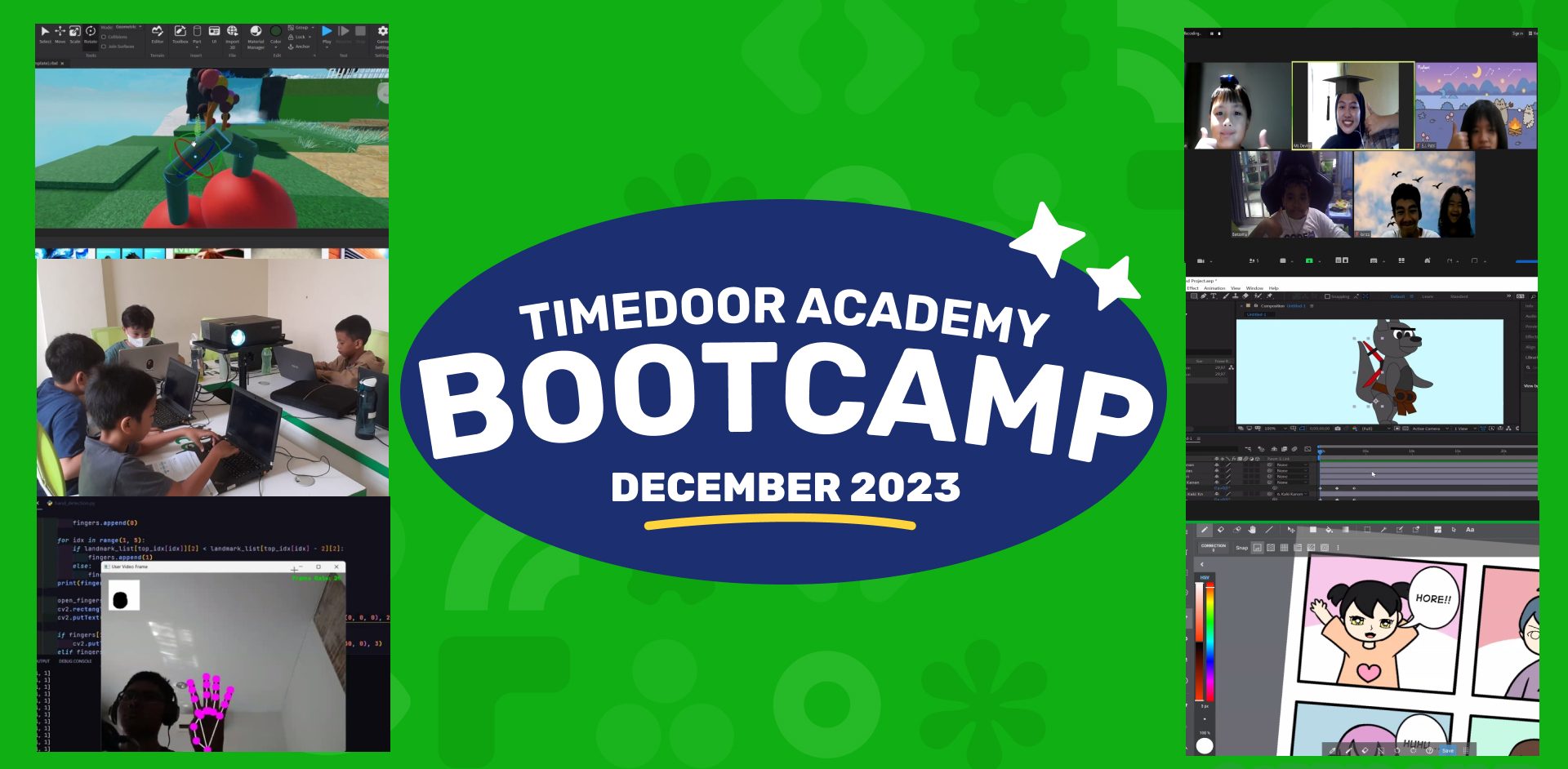
Timedoor Academy Bootcamp December 2023 Awardee Announcement

Timedoor Academy Bootcamp December 2023 Awardee Announcement image

Timedoor Academy BootCamp 2023 Batch 1 and Batch 2 was held from 11 – 22 December 2023. With more than 200++ participants from Online Classes and Offline Classes in several areas including Jakarta, Bogor, Tangerang, Bandung, Surabaya, Bali, Batam and Medan. We also launched our new programs, UI/UX Design and Internet of Thing (IOT) which were held online and offline in several regions.

Timedoor Academy holds Programming and Multimedia Design classes for 5 days with various programs that students can choose according to their interests. Coding Camp offers many programs including Game Developer, Website Developer, Python Developer, Roblox Developer, Artificial Intelligence Development, and Internet of Thing (IOT). As before, we are offers Design Camp with a learning program that focuses on children’s creativity including Making Animations, Design Branding, UI/UX Design and Comic Making.

Timedoor Academy sets a goal for students to become programmers, designers and comic artists in just 5 days by creating the best projects using the chosen platform that challenges them to be able to become digital experts in the present and the future!

Today we announced the 2 best award recipients from each program category. Award recipients consist of Best Project and Best Participant. Please check below :


JUNIOR ANIMATOR
CATEGORY PARTICIPANT’S NAME
Best Project  I Gusti Agung Gde Nathan Iswara Dwipayana
Best Participant  Luh Putu Derian Dharma
JUNIOR DEVELOPER
CATEGORY PARTICIPANT’S NAME
Best Project  Khalid izzudin
Best Participant  Darren Gavriel
JUNIOR ADVANCE GAME DEV
CATEGORY PARTICIPANT’S NAME
Best Project  Benjamin Othniel Sianturi
Best Participant  Alaric Dante Miranda
KIDS CONSTRUCT BEGINNER + WEB
CATEGORY PARTICIPANT’S NAME
Best Project  Araya Khanti Devi
Best Participant  Irdana Halwa
KIDS ROBLOX
CATEGORY PARTICIPANT’S NAME
Best Project  Dave Michael Timothy Panjaitan
Best Participant  Ryan Kenzie Tanady
KIDS PYTHON
CATEGORY PARTICIPANT’S NAME
Best Project  Laurencia Clio Setiadi
Best Participant  Maxwell Oscario Tan
KIDS IOT
CATEGORY PARTICIPANT’S NAME
Best Project  Kadek Vedhanta Asahi Wijaya
Best Participant  Dewa Gede Narayana Satria Daton Putra
KIDS COMIC
CATEGORY PARTICIPANT’S NAME
Best Project  Aiesha Naiaputri Nugroho
Best Participant  Hilwa Fathiya Qurrata’ain
TEENS PHASER
CATEGORY PARTICIPANT’S NAME
Best Project  Andrian Wurich
Best Participant  Miguel Aipassa
TEENS WEB DEVELOPER
CATEGORY PARTICIPANT’S NAME
Best Project  Keila Kusuma
Best Participant  Gilberto Rafael Effendie
TEENS APP DEVELOPER
CATEGORY PARTICIPANT’S NAME
Best Project  Raisha Afiqah Khairunnisa
Best Participant  Rafael Davin
TEENS ROBLOX
CATEGORY PARTICIPANT’S NAME
Best Project  Julio Miguel Setiawan
Best Participant  Samuel Lovenno Sadana
TEENS PYTHON
CATEGORY PARTICIPANT’S NAME
Best Project  Hendry Hermawan
Best Participant  Arka Pradipa Dwi Santoso
TEENS IOT
CATEGORY PARTICIPANT’S NAME
Best Project  Fathi Rafi Ismail Priambodo
Best Participant  Ryu Garren Siarta
 TEENS ARTIFICIAL INTELLIGENCE
CATEGORY PARTICIPANT’S NAME
Best Project  Reagan Dathan Mula
Best Participant  Cornelius Rafanala Maheswara
TEENS COMIC
CATEGORY PARTICIPANT’S NAME
Best Project  Rajwa Nurul Dzihni
Best Participant  Ida Ayu Dhama Parwati Astuti
DESIGN ANIMATION
CATEGORY PARTICIPANT’S NAME
Best Project  Emerentia Jessica Putri
Best Participant  Cedric Franklin Chandra
UI/UX Design
CATEGORY PARTICIPANT’S NAME
Best Project  Eleanora Kalyca Fayola Siregar
Best Participant  Vanessa Althea Aditya

All awardee will receive medals, exclusive T-shirts and merchandise from Timedoor Academy. Send your address to Timedoor Academy Admin to claim your prize.

Keep Reading

<strong>7 Signs of ADHD in Children Parents Should Recognize</strong>
7 Signs of ADHD in Children Parents Should Recognize
Child development is a unique journey for every individual. While each child grows at their own pace with different traits and temperaments, there are times when parents become concerned about certain behaviors. A child who is unusually restless, often distracted, or frequently ignores instructions may be showing early signs of a condition known as ADHD. ADHD, or Attention Deficit Hyperactivity Disorder, is a neurodevelopmental condition that often begins in childhood and can continue into adulthood. It affects a child’s ability to pay attention, manage impulses, and control movement. Recognizing the signs of ADHD in children early can make a significant difference in how they grow and succeed. Here are some of the most common signs to look out for: 1. Difficulty Paying Attention A frequent sign of ADHD in children is difficulty focusing on one task. Children may be easily distracted, often lose things, or appear not to listen even when spoken to directly. Tasks that require sustained mental effort, like homework or reading, are particularly challenging. 2. Often Forgetful or Careless Children with ADHD tend to forget daily activities or make mistakes due to lack of focus, not because of low intelligence. Missing instructions, leaving assignments unfinished, or forgetting important items are common behaviors. These are often overlooked as typical child behavior but can be part of the signs of ADHD in children. 3. Hyperactive Behavior Many children are energetic, but hyperactivity in ADHD goes beyond normal levels. Children may constantly move, fidget, or talk excessively. They struggle to sit still, even during meals or story time. This type of behavior is one of the most visible signs of ADHD in children. 4. Impatience or Trouble Waiting Children with ADHD often find it hard to wait their turn or follow social rules. They may interrupt others, speak out in class, or take over games. These actions can affect how they interact with friends and adults, making social development more difficult. This is another key sign of ADHD in children that parents should observe. 5. Acting Without Thinking Impulsivity is another clear indicator. A child might do something risky, like running across the street without checking for cars or grabbing a hot object. In conversation, they may say things without thinking or shout out answers before a question is finished. Such impulsive actions are commonly found in children showing signs of ADHD in children. 6. Emotional Outbursts Many children with ADHD experience difficulty managing their emotions. They may get frustrated easily, cry or become angry quickly, and struggle to calm down. These emotional reactions may seem too intense for the situation and are often misunderstood. However, this is also among the signs of ADHD in children. 7. Difficulty Following Routine Children with ADHD often struggle to adapt to routines or structured environments. They may forget the order of steps, need constant reminders, or find it hard to transition between activities. These behaviors can be challenging at school and home. Understanding this as part of the signs of ADHD in children can help parents respond with more patience and support. ADHD Is More Than Just Being Active It is important to remember that not all active or distracted children have ADHD. Kids naturally have high energy levels and shorter attention spans. What sets ADHD apart is how frequently these behaviors occur and how much they interfere with a child’s life. If the signs of ADHD in children are present for more than six months and are affecting school or relationships, it may be time to seek professional help. A thorough diagnosis should come from a qualified psychologist or developmental pediatrician. Parents should not try to diagnose on their own. Parental Support Can Make a Big Difference Supporting a child with ADHD requires consistency, empathy, and often guidance from professionals. With the right structure, children with ADHD can thrive and build positive habits for life. Understanding the signs of ADHD in children gives parents the power to help their child succeed. A Positive Outlet: Coding for Kids For children who have difficulty staying focused, creative and structured activities can help. Coding is one such activity. At Timedoor Academy, we offer coding classes that teach kids how to think logically, solve problems, and stay engaged. The visual and hands-on nature of coding makes it ideal for children who learn differently. Interested in trying it out? Sign up for a free coding class at Timedoor Academy and let your child explore a world of creativity and learning through coding.
Fun Coding Activities Kids Can Do to Boost Creativity in 2025
In today’s digital age, coding for kids is no longer unfamiliar. Many parents recognize the importance of introducing coding early as one of the essential 21st-century skills. Beyond helping children understand technology, learning to code can also be a fun way to spark their creativity. This article explores some exciting coding activities kids can try to make learning programming more engaging and creative.   Why Is Coding for Kids Important? Learning to code from an early age offers many benefits for children’s development, including: Developing Systematic Thinking: Kids learn to break down complex problems into smaller, manageable steps. Enhancing Creativity and Innovation: Coding encourages kids to imagine and create new solutions or projects like games and animations. Building Problem-Solving Skills: Children get used to facing challenges and finding effective ways to solve them. Improving Collaboration: Many coding projects teach kids how to work together as a team and communicate clearly. Preparing for a Digital Future: Coding skills become valuable assets in a world increasingly dependent on technology.   Fun Coding Activities Kids Can Do 1. Create Simple Games One of the most enjoyable coding activities for kids is making simple games. Using platforms like Scratch or Code.org, children can learn basic logic while being creative. They might create puzzle games, adventure games, or interactive quizzes. This step-by-step game-building process helps kids learn gradually and feel proud when their creations can be played by themselves or friends.   2. Make Animations and Interactive Stories Besides games, kids can try coding animations or interactive stories. This sharpens their storytelling skills along with visual creativity. Platforms such as Tynker or Scratch allow children to combine images, sounds, and movements to bring stories to life.   3. Daily Coding Challenges Giving simple daily coding challenges can spark curiosity and keep kids excited to learn. Examples include programming a virtual robot to move, changing background colors, or making characters move in specific directions. These challenges can be adapted based on the child’s age and skill level.   4. Build Simple Applications For older kids or those familiar with coding basics, building simple apps like calculators, to-do lists, or quiz apps can be fun. This teaches them how functions and user interfaces work.   5. Experiment with Robotics and IoT Combining coding with robotics or the Internet of Things (IoT) can be super exciting for kids. They can learn to program robots to perform certain tasks or control devices through apps they create. This blends coding concepts with real-world applications, making learning even more engaging.   Tips to Make Coding Fun for Kids Choose Kid-Friendly Platforms: Use coding platforms that are easy to understand and interactive. Scratch, Tynker, and Code.org are popular choices. Provide Guidance: Accompany your child during their coding journey, especially when they’re learning new concepts. Align Projects with Interests: Tailor coding projects to your child’s hobbies and passions to keep them motivated. Offer Praise and Encouragement: Celebrate every effort and creation to maintain their enthusiasm. Combine Coding with Other Activities: Integrate coding with arts, math, or science to broaden learning experiences.   Supporting Your Child’s Creativity Through Fun Coding Learning coding for kids is more than just mastering programming languages; it’s about nurturing creativity, logic, and problem-solving skills. With fun coding activities like game creation, animations, daily challenges, simple apps, and robotics, children can learn in an enjoyable and effective way. Parents can support this by choosing the right platforms, guiding the learning process, and making coding an activity that matches their child’s interests. One recommended program is Timedoor Academy, which offers child-friendly, easy-to-follow coding lessons. Timedoor Academy also provides free trial classes, allowing parents and kids to explore coding for free and without pressure before deciding to enroll.
5 Tips Developing Children Creativity with Technology: A Key to a Bright Future
Children are the future, and their creativity plays a significant role in shaping the world. In today’s rapidly changing digital age, technology has become a part of daily life. However, many parents worry about how to integrate technology into their children’s lives in a meaningful and productive way. One of the most impactful ways to do so is by developing children creativity with technology. When used correctly, technology can be a powerful tool for stimulating children’s imagination, fostering problem-solving skills, and enhancing their learning experience. This article will explore the importance of creativity in child development and how parents can harness technology to encourage creativity in their children. The Importance of Creativity in Child Development Creativity is not just about art or music; it is about the ability to think outside the box, solve problems, and adapt to new situations. In today’s world, where change happens rapidly, creativity has become one of the most valuable skills for success. Teaching children to be creative helps them approach challenges with confidence and resourcefulness, making them more resilient in the future. However, creativity does not develop on its own. It needs to be nurtured through experiences, guidance, and exposure to different ideas. One of the most effective ways to develop children creativity with technology is by using digital tools and resources to inspire imagination and innovation. How Technology Can Foster Creativity in Children There are many ways in which technology can be used to develop children creativity with technology. Here are some examples: 1. Digital Art and Design Apps Apps like Canva, Adobe Spark, and Tinkercad provide children with the opportunity to create their own designs, graphics, and 3D models. These apps not only teach children how to use technology but also allow them to express their creativity visually. This hands-on approach helps develop children creativity with technology, enhancing their skills in design and problem-solving. 2. Learning Coding and Building Projects Coding is one of the most valuable skills in the 21st century, and it is also a fantastic way to develop children creativity with technology. Through coding, children learn how to create games, apps, and websites, all while honing their problem-solving abilities. Platforms like Scratch, Code.org, and Blockly make learning coding fun and interactive, giving children the tools they need to build their own digital creations. 3. Making Animations and Videos Creating animations and videos is another excellent way to develop children creativity with technology. By using apps like Scratch or Kinemaster, children can craft their own stories, characters, and animations, which helps them develop storytelling and visual communication skills. These projects encourage creative thinking and give children the confidence to bring their ideas to life. 4. Music Creation with Technology Technology can also foster creativity in children through music. Apps like GarageBand allow children to create their own songs, learn how to play digital instruments, and experiment with different sounds. Developing children creativity with technology in this way helps them explore the world of music and understand rhythm, melody, and harmony, all while using digital tools. 5. Building Digital Content and Blogging Blogging and digital content creation also offer children a platform to express their creativity. They can write, make videos, and share their thoughts with the world. This process not only improves their writing and communication skills but also teaches them about digital literacy and the importance of creating positive, engaging content online. The Role of Parents in Guiding Technology Use While technology can be a powerful tool for developing children creativity with technology, it’s essential that parents play an active role in guiding their children’s use of it. Without proper guidance, children can easily get distracted or fall into the trap of mindless screen time. Parents should ensure that children use technology for productive purposes, such as learning new skills, engaging in creative activities, or collaborating on projects. Setting time limits, providing quality content, and engaging with children during their digital activities are important steps in ensuring that technology serves as a positive influence in their lives. Developing Children’s Creativity with Technology at Timedoor Academy At Timedoor Academy, we believe in the power of technology to enhance children’s learning experience. Our coding and technology programs are designed not just to teach technical skills but also to inspire creativity and innovation in children. Through fun, interactive lessons, we help children develop essential skills like problem-solving, teamwork, and digital literacy. By developing children creativity with technology, we prepare them for a future where technology plays a central role in almost every field. Our courses focus on providing hands-on learning experiences, ensuring that children are not just passive consumers of technology but active creators and innovators. The Power of Technology to Enhance Creativity In today’s world, developing children creativity with technology is not just an option but a necessity. Technology offers endless possibilities for children to explore, create, and innovate. As parents, it is our responsibility to guide children in using technology in a positive and productive way, so they can develop the skills they need to succeed in the future.At Timedoor Academy, we are committed to helping children harness the power of technology to enhance their creativity, develop essential skills, and prepare for the future. If you want your child to start learning and exploring the world of technology, we invite you to sign up for a free trial at Timedoor Academy and watch them grow into creative and confident digital creators.
float button