Jul 25, 2025

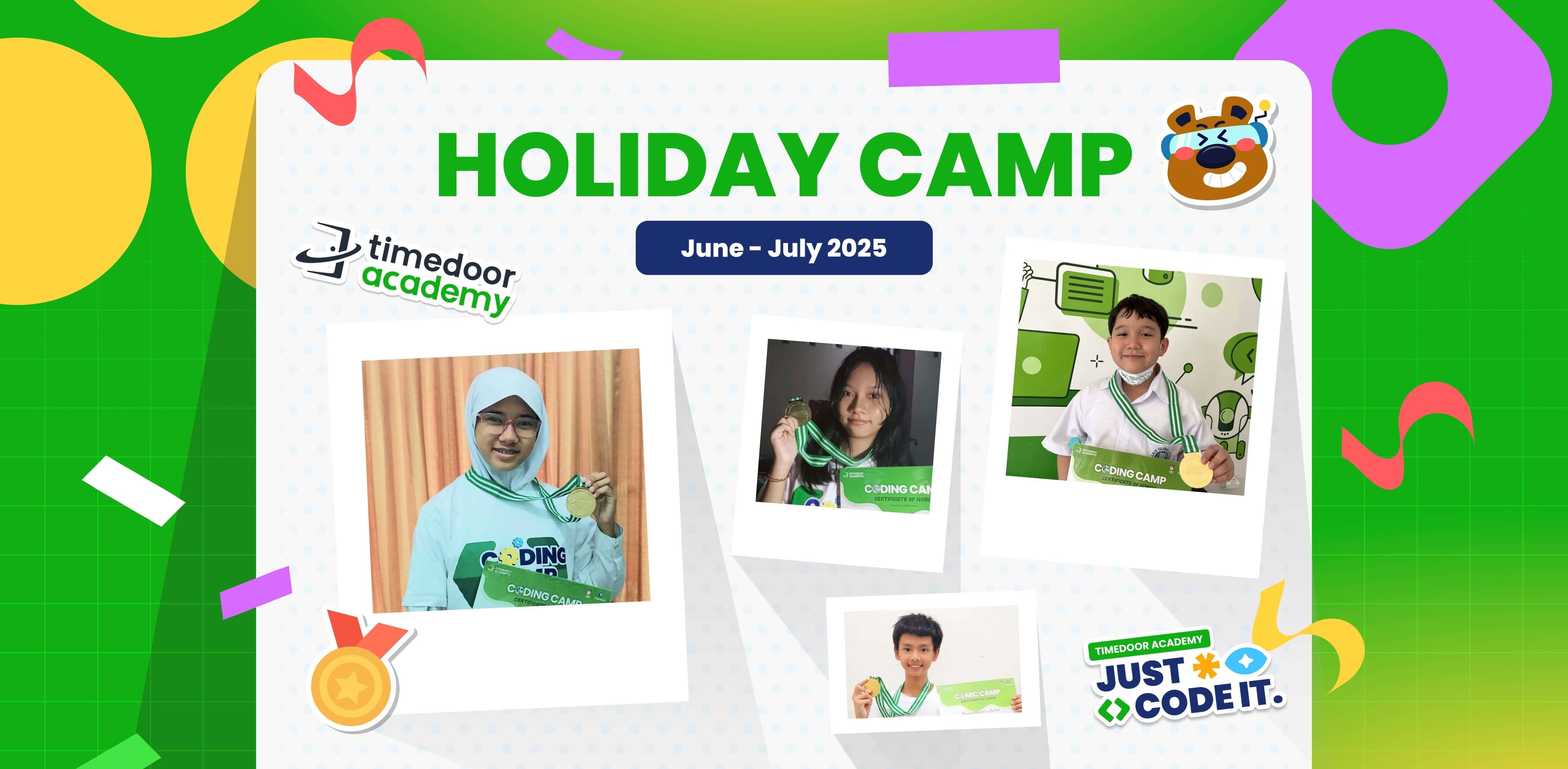
Official Announcement of Holiday Camp Awards June to July 2025

Official Announcement of Holiday Camp Awards June to July 2025 image

Holiday Camp 2025 was successfully held from June 9 to July 11, 2025, with over 500 participants from all over Indonesia!
This year was even more special with the launch of a new program: English Camp, which made the learning experience even more fun and comprehensive.

The 5-day Holiday Camp at Timedoor Academy was designed for students who wanted to learn coding or design based on their interests. Various programs were available, such as Python Development, Roblox Development, Artificial Intelligence, UI/UX Design, and Comic Making. With guidance from professional instructors and exciting, challenging projects, participants were able to improve their digital skills according to the subject they chose.

Today, we are proud to announce the participants who are entitled to receive awards for Best Project and Best Participant.
Please see the list of winners below:

JUNIOR ANIMATOR
CATEGORY PARTICIPANT’S NAME BRANCH
Best Project Rafie Dhanapati Tang Jambi
Best Participant Adifa Khairisa Hamdel Pekanbaru
JUNIOR 3D GAME
CATEGORY PARTICIPANT’S NAME BRANCH
Best Project Albercio Javier Zafran Green Lake City
Best Participant Feni Chandra Kirana Cikarang
JUNIOR CONSTRUCT
CATEGORY PARTICIPANT’S NAME BRANCH
Best Project Aira Meta Letisha Jambi
Best Participant Raditya Alvarendra Ramadhan Cikarang
KIDS CONSTRUCT BEGINNER + WEBSITE
CATEGORY PARTICIPANT’S NAME BRANCH
Best Project Komang Tribuana Devi Danu Asri Gatsu Bali
Best Participant Nyoman Ngurah Reyndra Devananta Gatsu Bali
KIDS MACHINE LEARNING
CATEGORY PARTICIPANT’S NAME BRANCH
Best Project Altair Jordan Wiryadhika Palembang
Best Participant Nathanael Gusti Ngurah Gyanendra Raditya Cikarang
KIDS ANDROID APP DEVELOPER
CATEGORY PARTICIPANT’S NAME BRANCH
Best Project Andi Kayla Fatmah Jambi
Best Participant Marvella Alexa Jambi
KIDS ROBLOX FIND THE PIZZA (V1 & V2)
CATEGORY PARTICIPANT’S NAME BRANCH
Best Project Joanna Glory Celia Tampubolon Pontianak
Best Participant Mikaela Larasatiningrum Widharto Cikarang
KIDS PYTHON
CATEGORY PARTICIPANT’S NAME BRANCH
Best Project Muhammad Nabhan Rinaldi Makassar
Best Participant Dhiyo Lucas Iswantoro Manado
KIDS AI DEVELOPER
CATEGORY PARTICIPANT’S NAME BRANCH
Best Project Rafael Lorenzo Citraland
Best Participant Felix Parulian Kurniawan Online ID
TEENS PHASER
CATEGORY PARTICIPANT’S NAME BRANCH
Best Project I Putu Abyakta Dhika Kurniawan Renon
Best Participant Addo Darian Peejaya Renon
TEENS WEB DEVELOPER
CATEGORY PARTICIPANT’S NAME BRANCH
Best Project Quraisy Aqila Rafif Cikarang
Best Participant Awwalun Tangguh Firjatullah Citraland
TEENS ROBLOX NEVERLAND SURVIVAL (V1 & V2)
CATEGORY PARTICIPANT’S NAME BRANCH
Best Project Rafael Geovanni Kelapa Gading
Best Participant Ignasius Tristan Widharto Cikarang
TEENS PYTHON
CATEGORY PARTICIPANT’S NAME BRANCH
Best Project Arkaan Fatih Safaraz Pekanbaru
Best Participant M. Izyan Adly A Gayungan
TEENS APP DEV
CATEGORY PARTICIPANT’S NAME BRANCH
Best Project Vannesa Feryan William Medan Maimun
Best Participant
TEENS AI DEV
CATEGORY PARTICIPANT’S NAME BRANCH
Best Project Udara Alouin Arauna Situngkir Kelapa Gading
Best Participant Callie Angeline Sutanto Online ID
 TEENS IoT
CATEGORY PARTICIPANT’S NAME BRANCH
Best Project Darren Hanzel Kelapa Gading
Best Participant Jonathan Isaac Santoso Citraland
 COMIC KIDS
CATEGORY PARTICIPANT’S NAME BRANCH
Best Project Alyaa Kunaziza Werdaya Online ID
Best Participant Malika Della Sachanda Online ID
 COMIC TEENS
CATEGORY PARTICIPANT’S NAME BRANCH
Best Project Arisha Qurrotua’yunina Online ID
Best Participant Raphaella Generosa Simanjuntak Gatsu Bali
 DESIGN ANIMATION
CATEGORY PARTICIPANT’S NAME BRANCH
Best Project Amos Gracio Immanuel Harapan Indah Bekasi
Best Participant Regina Sayo Harapan Indah Bekasi
 UI/UX APPS
CATEGORY PARTICIPANT’S NAME BRANCH
Best Project Sherin Magdalena langelo Cikarang
Best Participant Daffa Muhammad Cikarang
ENGLISH CAMP
CATEGORY PARTICIPANT’S NAME BRANCH
Best Participant I Gede Bagus Aksara Abinaya Gatsu Bali

Keep Reading

<strong>The Phenomenon of Child Exploitation by Influencers: A New Parenting Challenge in the Digital Era 2025</strong>
The Phenomenon of Child Exploitation by Influencers: A New Parenting Challenge in the Digital Era 2025
In recent years, the rapid growth of social media has given rise to countless influencers with millions of followers. It has become increasingly common for these influencers to feature their children in content to gain more attention, likes, and financial benefits. However, this trend does not always have a positive impact. Child exploitation has become a growing concern, especially when children are used as tools to boost popularity or generate income online. This article takes a deeper look at the phenomenon of child exploitation by influencers, the potential effects on children's development, and the important roles of parents and society in addressing this issue. What Is Child Exploitation in the Digital World? Child exploitation in the digital era refers to situations where children are excessively used for content creation, economic gain, or popularity, without regard for their rights, comfort, or future. In the influencer world, child exploitation often appears in the following ways: Children are made the main stars in family content, pranks, or toy unboxing videos. Children’s private lives are continuously exposed to the public, sometimes including sensitive moments like anger, sadness, or other personal experiences. Children are asked to promote products, do endorsements, or follow trends that may not be appropriate for their age. The profits generated from this content are not used for the benefit of the child, or the child is never given a voice in these decisions. Why Is Child Exploitation by Influencers Such a Serious Problem? There are several reasons why child exploitation by influencers is a serious issue: Violation of Children’s RightsEvery child has the right to privacy, to grow and develop healthily, and not to be treated as a commercial object. When child exploitation happens on social media, these rights are often ignored in pursuit of popularity. Mental Health RisksExcessive exposure to the public eye can make children feel pressured, unsafe, or even anxious. Negative comments, online bullying, and the expectation to always be perfect can impact a child’s psychological development. Lost ChildhoodChildren who are constantly on camera, have to act for content, or are heavily involved in content production are at risk of losing out on natural moments of play and age-appropriate learning. Long-Term ConsequencesChild exploitation can affect a person well into adulthood. They may struggle to form their own identity, suffer from low self-esteem, or regret their digital footprint that has already spread widely. Warning Signs of Child Exploitation by Influencers Parents and society need to be vigilant about these warning signs: The child looks uncomfortable, forced, or often cries during filming. The child is made to do things that are not age-appropriate for the sake of content. All of the child’s activities are documented and shared publicly without limits. Parents seem more focused on views, likes, and comments than the child’s well-being. The child is never asked for their opinion about their participation in content. The Role of Parents: Setting Boundaries, Ethics, and Responsibility Parents play the most important role in preventing child exploitation in the digital world. Here are some steps that can be taken: Respect Privacy BoundariesNot every moment of a child’s life needs to be shared publicly. Respect their privacy, especially if they show reluctance or discomfort. Prioritize Mental HealthMake sure children do not feel pressured, are not overexposed, and have space to be themselves off-camera. Involve Children in DecisionsTalk to your child before making content together. Listen to their wishes and feelings. Educate About Digital RisksHelp your child understand the consequences of digital footprints, cyberbullying, and the long-term impact of online content. Focus on the Child’s NeedsIf content generates income, ensure the child’s rights are protected. Prioritize education, comfort, and development, not just popularity. Society and Policy Makers Have a Role Too Beyond parental responsibilities, society and policy makers must work together to address child exploitation. Governments need to strengthen regulations on child protection in the digital world, including rules on commercial content involving children, transparency in managing a child’s earnings, and education for both influencers and parents. The public can also help by raising awareness or speaking up when they see content that involves child exploitation. A supportive environment is crucial to ensure this trend is not normalized or justified as mere entertainment. Teaching Children Boundaries in the Digital Era It is also important for parents to help children understand their own rights and boundaries online. Include them in discussions about what is appropriate to share on social media, and encourage them to say no if they ever feel uncomfortable. This helps children grow up with confidence and a healthy sense of self-protection from an early age. Protect Children Wisely and Build Digital Skills Child exploitation by influencers is a real challenge in the digital age that cannot be ignored. Parents, society, and policy makers need to work together to protect children from excessive exposure and pressure online. Always put children’s rights, well-being, and future first. In addition to limiting children’s exposure on social media, parents can equip their children with positive skills that are relevant for the digital era, such as learning to code. By joining coding classes at Timedoor Academy, kids can nurture their creativity, develop logical thinking, and explore technology in a fun and safe way, without needing to be in front of the camera. Sign your child up for a free trial class at Timedoor Academy so they can experience engaging, educational coding lessons that build confidence. Let’s make social media a platform for education and creativity, not a tool for child exploitation in the name of popularity.
Cara Menghasilkan Uang dari Koding
How to Make Money Coding as a Kid
In today’s tech-driven world, kids are not just consumers of technology. They can become creators too. One exciting way for young minds to explore this potential is by learning how to code. What’s even better? Coding is not just a fun and valuable skill. It can also help children start earning money at an early age. In this article, we will explore practical and age-appropriate ideas on how to make money coding as a kid, and how platforms like Timedoor Academy can help kickstart the journey.   1. Build and Sell Simple Games One of the most popular ways for kids to make money with coding is by creating simple games. Platforms like Scratch allow children to build their own games using visual programming blocks. Once they get the hang of it, kids can upload their games to platforms like itch.io or Game Jolt, where others can play and support their work through donations or small purchases. This is a great way for kids to combine creativity with coding skills. It also teaches them the basics of digital entrepreneurship, such as designing for users and thinking about what makes a game fun and engaging.   2. Design a Personal Website or Blog Creating a personal website is a great way for kids to showcase their projects and interests. Using platforms like WordPress, Wix, or coding from scratch with HTML/CSS, kids can build blogs, portfolios, or fan pages. Once the website gains some visitors, there are many ways to monetize it. These include placing ads through Google AdSense with adult guidance, using affiliate links, or even selling digital products like game templates or beginner-friendly coding guides. This helps kids learn how websites work and how online income is generated in real life.   3. Create YouTube Coding Tutorials Another exciting option on how to make money coding as a kid is by creating YouTube tutorials. Kids can teach others how to code in Scratch, build simple apps, or walk through a project step by step. These videos do not need to be fancy. They just need to be clear and helpful. As the channel grows, monetization through YouTube ads, sponsorships, and affiliate links becomes possible. This is also a great way for kids to improve their communication skills while reinforcing their own understanding of coding.   4. Sell Digital Art or Assets for Games Kids who enjoy both coding and art can create digital assets like characters, backgrounds, or sound effects. These can be sold on platforms like Unity Asset Store, OpenGameArt, or Itch.io. For example, if your child designs a cool background for a Scratch game, they can package it with a few more designs and offer it for free or for a small fee online. This is a fun way to blend art, coding, and entrepreneurship.   5. Try Safe Freelance Gigs (With Parental Help) Older kids or teenagers ages 13 and up can start exploring junior freelance work in simple coding tasks. These include fixing bugs, customizing websites, or helping with small scripts. Sites like Fiverr or Freelancer often have beginner-friendly gigs that can be done with parental supervision. Even if the job pays only a few dollars at first, the experience and confidence gained are invaluable. It helps children see how coding is used in the real world and builds their early portfolio.   6. Participate in Coding Competitions Many platforms and organizations hold coding competitions or hackathons for kids. These events often come with prizes such as gadgets, cash, or even scholarships. Websites like Tynker, Code.org, and local coding academies host events where kids can test their skills and possibly win something exciting. Competing not only motivates kids to learn faster. It also introduces them to other like-minded peers and creates a supportive community.   7. Build Mobile Apps With tools like Thunkable, MIT App Inventor, or even Flutter, kids can start building simple mobile apps. Whether it is a calculator, a quiz game, or a daily planner, these apps can be uploaded to the Google Play Store with adult help. Even if the app is free, kids can include ads or in-app purchases to start earning money. It is a great way to explore real-world coding with tangible outcomes.   8. Teach Coding to Other Kids Once your child becomes confident in their coding skills, they can teach younger children or peers who are just starting out. Whether it is through local workshops, helping a sibling, or organizing a mini class with friends, this builds leadership and communication skills. Some older kids even offer beginner Scratch tutoring sessions online, turning their knowledge into a meaningful side hustle.   Why Learning to Code Early Matters Understanding how to make money coding as a kid goes beyond earning an allowance. It teaches real-world skills like time management, problem-solving, entrepreneurship, and confidence. Kids who code not only learn how to build apps or games. They also gain a mindset that prepares them for the future.   Start Coding the Fun Way with Timedoor Academy If your child is curious about coding, game creation, or building their first app, Timedoor Academy is the perfect place to begin. With interactive lessons, expert guidance, and beginner-friendly projects, kids can explore coding in a way that is fun and engaging. Ready to see if coding is right for your child? Visit us to join a free trial class and let your child turn creativity into real skills and even their first coding income.
Fun Science Experiments For Kids You Can Try at Home in 2025
Children are naturally curious. Unfortunately, that curiosity can fade when learning feels limited to books or school assignments. In reality, learning can be a fun activity you enjoy together at home. One of the best ways to keep your child engaged is through fun science experiments for kids. These experiments are not just for fun. They are also a simple and effective way to introduce basic concepts of logic, cause and effect, and help children develop structured thinking. Plus, they offer valuable quality time for parents and children to bond. Why Should You Try Science Experiments at Home? Before we dive into the examples, it is worth understanding why fun science experiments for kids are so beneficial. First, kids learn better when they can see and experience things directly, rather than just reading about them. Second, it shows children that learning is not always about sitting still at a desk. Third, it creates opportunities for meaningful parent-child interaction through shared learning moments. Simple and Fun Science Experiments For Kids No need for complicated tools. Most of these activities use everyday items you probably already have at home. 1. Baking Soda and Vinegar Volcano A timeless experiment that never fails to impress. Build a small “volcano” from clay or playdough around a container, add baking soda, then pour vinegar mixed with food coloring. The result is a small lava-like eruption that kids will love. 2. Walking Water Rainbow Line up cups filled with colored water, placing empty cups in between. Connect them with folded paper towels. Over time, the water will "walk" through the towels and mix colors, creating a rainbow effect. This is a fantastic visual example of capillary action and a perfect fun science experiment for kids. 3. DIY Lava Lamp Using a plastic bottle, add vegetable oil, water, food coloring, and an effervescent tablet. Watch as colorful bubbles rise and fall, mimicking a lava lamp. This teaches kids about density and simple chemical reactions. 4. Magic Milk Pour milk into a shallow dish, add drops of food coloring, then touch the surface with a cotton swab dipped in dish soap. The colors will swirl and move due to changes in surface tension. This fun experiment also sparks curiosity about how molecules interact. 5. Static Electricity Butterfly Cut a butterfly shape from tissue paper, rub a balloon on your hair, then bring it close to the paper. The butterfly wings will "lift" due to static electricity. This simple and entertaining activity helps children understand basic physics concepts. From Science to Coding: Training a Child’s Logical Thinking At first glance, these fun science experiments for kids might seem simple. However, they actually help develop logical thinking, patience, and step-by-step problem-solving. These are the same foundational skills used in coding. Coding teaches children to break down complex problems into smaller tasks, much like the scientific process in experiments. Both require focus, precision, and persistence. If children become familiar with structured thinking through simple science activities, transitioning to coding will feel like a natural and enjoyable next step. Tips to Keep Home Experiments Fun and Stress-Free To make sure your experiments go smoothly and your child stays excited, keep these tips in mind: Safety first. Always supervise, even when using everyday materials. Get your child involved from the start. Let them help prepare and take ownership. Do not fear failure. Mistakes are valuable learning opportunities. Relate experiments to everyday life. Show how science is all around them. Learning Can Be Fun and Practical By doing fun science experiments for kids, parents can make learning more enjoyable and hands-on. It allows children to experience cause and effect directly, beyond memorizing facts from a textbook. If you want to take it a step further, introducing your child to coding is another great way to develop structured thinking. Coding helps children stay focused, think logically, and persevere through challenges. Try a Free Coding Class with Timedoor Academy If you are looking for a way to combine fun and learning, Timedoor Academy offers free coding classes for kids. The lessons are interactive, engaging, and designed to match your child’s age and learning pace. Sign up today and help your child sharpen their logical thinking skills from an early age: Join Timedoor Academy's Free Coding Trial Class
float button