8 Best! Rekomendasi Kursus dan Les Coding Anak di Cibinong, Bogor Lengkap Beserta Harga 2026

8 Best! Rekomendasi Kursus dan Les Coding Anak di Cibinong, Bogor Lengkap Beserta Harga 2026

Di era modern, kemampuan coding anak menjadi salah satu keterampilan penting yang membantu anak mengembangkan logika berpikir, kreativitas, serta kemampuan memecahkan masalah. Tak heran jika semakin banyak orang tua mencari kursus coding anak atau les coding anak di Cibinong yang terpercaya agar anak mampu memahami teknologi sejak dini dan menciptakan karya digital sederhana, baik untuk kebutuhan belajar maupun pengembangan minat di bidang teknologi.  Dengan mengikuti kursus dan les coding anak yang berkualitas, anak-anak dapat belajar konsep pemrograman secara bertahap, melatih pola pikir logis, serta meningkatkan kemampuan problem solving melalui berbagai proyek menarik seperti membuat game sederhana, animasi, atau aplikasi dasar. Berikut adalah 8 rekomendasi kursus dan les coding anak di Cibinong, Bogor tahun 2026 lengkap dengan harga, program, dan keunggulannya masing-masing.  Berikut ini beberapa rekomendasi les coding anak di Cibinong, Bogor dan sekitarnya yang telah kami rangkum: 1. Timedoor Academy - Les Coding Anak di Cibinong Sumber: https://timedooracademy.com/id/branch/les-coding-di-cibinong/  Harga: Mulai dari Rp 575.000 per bulan (kelas Bahasa Indonesia, 1x/minggu), Rp 680.000 per bulan (kelas Bahasa Inggris, 1x/minggu), ada opsi 2x/minggu Timedoor Academy Cibinong merupakan pilihan utama bagi orang tua yang mencari les coding anak di Cibinong dengan kualitas terbaik. Program coding anak di sini dirancang untuk usia 5-18 tahun dengan jenjang yang jelas, mulai dari Junior untuk usia 5-7 tahun dengan durasi 60 menit per pertemuan, Kids untuk usia 8-11 tahun, hingga Teens untuk usia 12-18 tahun dengan durasi 90 menit. Semua berbasis kurikulum yang terinspirasi dari praktik pendidikan teknologi di Inggris dan Jepang. Materi yang diajarkan disusun dalam roadmap terstruktur mencakup Scratch, Roblox, Python, Robotika, hingga Kecerdasan Buatan untuk jenjang yang lebih tinggi. Timedoor Academy Cibinong menggunakan sistem Adaptive Learning berbasis LMS dengan kelas kecil berisi 3 sampai 5 siswa sehingga setiap anak mendapat perhatian yang optimal dari pengajar. Selain itu, siswa secara rutin diikutsertakan dalam kompetisi coding anak nasional dan internasional, membuktikan kualitas pembelajaran yang konsisten dan terarah. Fitur Utama: Program untuk usia 5 sampai 18 tahun dengan jenjang Junior, Kids, dan TeensMateri mencakup coding anak, IoT, Drone, Roblox, VR/AR, Website, hingga AIKelas kecil 3 sampai 5 siswa per kelas untuk pendampingan lebih optimalSistem Adaptive Learning dengan LMS, materi bisa diakses kapan sajaPilihan kelas Bahasa Indonesia dan Bahasa InggrisTersedia kelas trial gratis sebelum mendaftarBanyak pilihan diskon seperti friend referal saat mendaftar Alamat: Di Kawasan Sekolah Salman Al Farisi, Jl. Cikaret Kramat No.1, Harapan Jaya, Kec. Cibinong, Kabupaten Bogor, Jawa Barat 16916 Hubungi tim Timedoor Academy Cibinong melalui WhatsApp di +62 851-7433-4292 untuk informasi selengkapnya atau kunjungi website di sini. 2. First Technos Cibinong Sumber: https://www.instagram.com/first.technos/ Harga: Biaya atau SPP untuk coding anak sebesar Rp150.000,00 per bulan First Technos hadir sebagai opsi lembaga les coding anak di cibinong yang sangat menarik karena menggabungkan literasi digital dengan pendekatan yang ramah anak. Lembaga ini didedikasikan untuk membangun minat generasi muda terhadap sains dan teknologi. Melalui program coding anak yang interaktif, anak-anak di Cibinong tidak hanya diposisikan sebagai konsumen gadget, tetapi dilatih logika berfikirnya agar bisa memproduksi aplikasi atau game sederhana karya mereka sendiri. Dalam pembelajarannya, anak-anak akan dikenalkan dengan dasar-dasar algoritma melalui pemrograman visual. Mentor di First Technos sangat berpengalaman dalam menciptakan suasana belajar yang ceria, sehingga mematahkan stigma bahwa coding anak itu rumit. Dengan biaya yang kompetitif dan lokasi yang strategis di area Cibinong, First Technos sangat ideal bagi orang tua yang ingin menanamkan pola pikir komputasional sejak dini. Fitur Utama: Berfokus pada penanaman literasi digital dan pola pikir komputasionalMenggunakan bahasa pemrograman visual yang interaktif dan ramah pemulaPendekatan belajar yang ceria, menghilangkan rasa bosan pada anakBiaya kursus yang kompetitif dengan fasilitas belajar memadaiMentor yang komunikatif dan terbiasa mendampingi anak-anak Alamat: Pabuaran, Kec. Cibinong, Kabupaten Bogor, Jawa Barat 16916 Hubungi First Technos Cibinong melalui WhatsApp di 0857-1929-6854 atau kunjungi instagram @first.technos untuk informasi selengkapnya atau kunjungi  facebook mereka di sini.  3. Robonico Indonesia - Cibinong Sumber: https://www.instagram.com/robonicoindonesia/ Harga: Hubungi langsung Robonico Indonesia untuk info harga lebih lanjut   Bagi anak-anak yang menyukai eksperimen fisik, Robonico Indonesia menyediakan program les coding anak di cibinong yang dipadukan secara apik dengan ilmu mekanika robotik. Program ini sangat efektif untuk anak-anak dengan gaya belajar kinestetik. Dengan mengintegrasikan coding anak ke dalam wujud fisik sebuah robot, siswa dapat melihat secara langsung bagaimana baris kode yang mereka buat di layar komputer dapat menggerakkan motor atau merespons sensor pada robot rakitannya. Robonico menggunakan educational kit yang dirancang khusus untuk merangsang kreativitas dan problem-solving. Anak-anak akan dibimbing mulai dari proses merakit komponen (seperti balok atau Lego mekanik) hingga menyuntikkan logika pemrograman di dalamnya. Ini menjadikan Robonico destinasi yang tepat untuk mengasah keterampilan motorik halus sekaligus logika perangkat lunak secara bersamaan. Fitur Utama: Integrasi sempurna antara pembelajaran software (coding) dan hardware (robotik)Menggunakan educational kit yang aman dan memacu kreativitas fisikSangat cocok untuk anak bergaya belajar kinestetik dan visualSuasana belajar hands-on project yang kompetitif dan menyenangkanMengasah logika komputasi sekaligus keterampilan motorik halus Alamat: Jl. Komp. Bekang No.1, RT.1/RW.5, Cibinong, Kec. Cibinong, Kabupaten Bogor, Jawa Barat 16911 Hubungi Robonico Indonesia Cibinong melalui telepon di 0816-5493-1324 atau kunjungi instagram di @robonicoindonesia untuk informasi selengkapnya atau kunjungi website di sini.  4. Kalananti Cibinong Sumber: https://www.kalananti.id/ Harga: Mulai dari sekitar Rp80.000 per sesi atau berkisar antara Rp 2-5 juta per paket, tergantung pada jenis program dan promo yang berlaku   Sebagai bagian dari ekosistem Ruangguru, Kalananti memberikan akses les coding anak di cibinong yang berkualitas tinggi karena telah terakreditasi oleh lembaga internasional STEM.org. Untuk layanan luring di wilayah Cibinong, orang tua biasanya dapat memanfaatkan fasilitas terintegrasi yang ada di cabang Brain Academy terdekat. Program coding anak di Kalananti sengaja dikemas dalam cerita petualangan fiksi dan animasi, menjadikannya sangat memikat bagi anak usia 5 hingga 17 tahun. Pembelajaran difokuskan pada penguasaan metode computational thinking di mana siswa dibimbing memecahkan masalah langkah demi langkah. Melalui sesi live teaching dan pendampingan di fasilitas kelas yang sangat nyaman, materi coding anak mulai dari block-programming hingga logika terstruktur dapat diserap maksimal. Kalananti menjadi gerbang inovasi yang menyenangkan bagi anak-anak di Cibinong. Fitur Utama: Kurikulum STEM (Science, Technology, Engineering, Mathematics) terakreditasi internasionalMateri pembelajaran dikemas unik dengan tema animasi dan petualangan fiksiFasilitas belajar tatap muka yang nyaman berkolaborasi dengan Brain AcademySesi live teaching interaktif yang dipandu oleh pengajar profesionalTerdapat progress report rutin untuk memantau perkembangan belajar anak Alamat: Jl. Raya Mayor Oking Jaya Atmaja No.122, Cirimekar, Kec. Cibinong, Kabupaten Bogor, Jawa Barat 16917 Hubungi Kalananti Indonesia cabang Cibinong melalui telepon di 0823-1959-2263 atau WhatsApp di +6281219001284 untuk informasi selengkapnya atau kunjungi website resmi di sini 5. FSEC Cibinong Sumber: https://www.instagram.com/fsec.cibinong/ Harga: Hubungi langsung untuk info harga terbaru. FSEC (First Step Education Center) Cibinong pada dasarnya merupakan lembaga bimbingan belajar komprehensif, namun kini mulai berinovasi menawarkan program ekstrakurikuler les coding anak di cibinong untuk memenuhi kebutuhan literasi era modern. FSEC sangat cocok bagi orang tua yang ingin mengkonsolidasikan jadwal les anak dalam satu atap, misalnya menggabungkan penguatan bahasa Inggris atau matematika dengan keterampilan komputer dasar. Materi coding anak yang diberikan di FSEC biasanya berfokus pada tahapan fundamental. Anak-anak usia sekolah dasar akan diajarkan mengenal logika algoritma melalui platform visual yang bersahabat seperti Scratch. Dengan bimbingan tutor lokal yang komunikatif, FSEC menciptakan lingkungan belajar komunal yang suportif agar anak-anak di Cibinong merasa santai dan antusias saat belajar bahasa pemrograman. Fitur Utama: Lembaga edukasi terpadu yang mempermudah orang tua mengatur jadwal les tambahanFokus materi coding anak pada tingkat fundamental (beginner friendly)Menggunakan pendekatan platform visual (seperti Scratch) yang mudah dipahamiLingkungan belajar komunal dan bersahabat bagi anak-anak lokal CibinongBiaya investasi pendidikan yang sangat terjangkau Alamat: Ruko Cibinong City Center Blok C No. 34 Pakansari, Cibinong - Bogor Hubungi FSEC Cibinong melalui WhatsApp di 0812-1000-7803 untuk informasi selengkapnya atau kunjungi instagram resmi mereka di @fsec.cibinong di sini.  6. Algonova Indonesia Sumber: https://algonova.com/ind/id/coding Harga: Kelas kelompok kecil mulai Rp 102.000 per pertemuan, ada trial gratis 60 menit Meskipun Algonova merupakan platform berbasis online, layanannya menjadi alternatif les coding anak di cibinong yang sangat diminati berkat fleksibilitasnya. Tanpa perlu repot keluar rumah menghadapi kemacetan, anak-anak dapat mengakses kelas coding anak berkualitas tinggi langsung dari perangkat mereka di Cibinong. Ekosistem belajar daring Algonova sengaja dirancang agar tetap interaktif, sehingga screen time anak berubah menjadi aktivitas yang edukatif dan produktif. Algonova sangat menitikberatkan pada pengembangan kemampuan berpikir logis (computational thinking). Dalam sesi live session, tutor akan memandu siswa langkah demi langkah untuk merancang mini games, membuat animasi, hingga memecahkan teka-teki logika pemrograman. Sistem online yang adaptif ini memastikan anak bisa belajar sesuai dengan kecepatannya sendiri di lingkungan yang aman. Fitur Utama: Ekosistem belajar 100% online yang bisa diakses langsung dari rumah di CibinongFokus pada pengembangan computational thinking dan penyelesaian masalah logisKurikulum coding anak yang diatur secara adaptif untuk pemulaSesi live teaching interaktif bersama tutor berpengalaman Menghilangkan kendala waktu transportasi sehingga jadwal belajar lebih efisien Alamat: Layanan beroperasi secara online penuh, mudah diakses dari Cibinong Hubungi Algonova Indonesia melalui telepon di +622150996971 atau instagram di @algonova_indonesia untuk informasi selengkapnya atau kunjungi website resmi mereka di sini.  7. Bionix Indonesia Sumber: https://www.instagram.com/bionix_id/ Harga: Mulai dari Rp100.000 hingga Rp800.000, tergantung jenis kegiatan atau paket pertemuannya. Berpusat di area Bogor dan sering menjangkau kawasan sekitarnya, Bionix Bogor menawarkan solusi les coding anak di cibinong dengan kekhususan pada eksplorasi sains, robotik, dan pemrograman. Lembaga ini memiliki komitmen untuk mencetak kreator-kreator muda yang berani berinovasi. Bionix menyediakan wadah di mana anak-anak bisa bebas berimajinasi dan menerjemahkan ide-ide mereka ke dalam karya berbasis teknologi yang nyata. Program coding anak di Bionix disusun agar sangat partisipatif. Mulai dari pengenalan struktur algoritma, pembuatan perintah logika, hingga simulasi digital. Siswa kerap didorong untuk berkolaborasi dalam proyek kelompok, yang mana hal ini sangat bagus untuk melatih jiwa kepemimpinan (leadership) dan komunikasi (presentasi karya). Bionix menjadi pilihan kokoh bagi pengembangan bakat teknologi anak di wilayah Bogor Raya.. Fitur Utama: Menggabungkan eksplorasi sains, robotika dasar, dan ilmu pemrograman (coding)Mendorong siswa untuk berani berinovasi dan mempresentasikan karyanyaPembelajaran berorientasi pada proyek nyata (project-based)Melatih keahlian teknis (hard skill) sekaligus kolaborasi kelompok (soft skill)Ekosistem belajar yang suportif dan sangat menghargai kreativitas anak Alamat: Jl. Pertanian No.8, Ragajaya, Kecamatan Bojonggede, Kabupaten Bogor, Jawa Barat 16920 Hubungi Bionix Indonesia melaluo WhatsApp di 0822-9944-7422 atau kunjungi laman Facebook dan Instagram resmi mereka untuk info selengkapnya atau kunjungi website mereka di sini. 8. Anakode Indonesia Sumber: https://anakode.id/ Harga: Mulai dari Rp 500.000 per program pelatihan  Flashcom Indonesia adalah perusahaan IT dan lembaga pelatihan komputer terkemuka yang memiliki rekam jejak kuat di Jawa Timur, dengan jangkauan layanan hingga ke Mojokerto. Meski dikenal sering menangani pelatihan korporat atau profesional dewasa, Flashcom juga menyediakan paket kursus coding yang disesuaikan untuk pelajar dan anak-anak yang memiliki minat serius di bidang teknologi komputer dan pemrograman. Pembelajaran di Flashcom didesain lebih terstruktur layaknya mini-bootcamp. Anak-anak dan remaja akan diajarkan fondasi algoritma, pembuatan game sederhana menggunakan tools seperti Construct atau Scratch, hingga pengenalan bahasa pemrograman berbasis teks seperti Python. Diajarkan langsung oleh mentor yang juga merupakan praktisi IT, siswa akan mendapatkan wawasan industri dan best practice sejak usia sekolah. Fitur Utama: Kurikulum praktikal yang mengutamakan pendekatan "belajar dengan cara membuat"Materi sangat relevan dengan tren teknologi digital masa kiniPenyampaian bahasa pemrograman dengan gaya kasual dan mudah dicernaFokus kuat pada pembuatan game sederhana dan literasi web dasarDidampingi oleh mentor IT muda yang penuh semangat dan passionate Alamat: Gedung Startup Center IPB, Jl. Taman Kencana No.3, Kota Bogor Hubungi Anakode Indonesia melalui WhatsApp di +628122493028 atau kunjungi Instagram @anakode.id untuk informasi selengkapnya atau kunjungi website resmi mereka di sini Mengapa Memilih Les Coding Anak di Cibinong?  Mengikuti kursus bimbel anak maupun les bimbel anak akan memberikan bekal penting untuk masa depan. Anak belajar mengembangkan kemampuan pemecahan masalah, kepercayaan diri, serta pemikiran kritis. Keterampilan bimbel anak ini juga sangat berguna saat anak mengikuti lomba, presentasi sekolah, atau saat menghadapi ujian. Selain penguatan materi di sekolah, jangan lupa pentingnya menyeimbangkan kemampuan anak dengan keahlian teknologi seperti coding. Di era digital, penguasaan teknologi akan melengkapi anak agar semakin siap menghadapi tantangan zaman. Mempersiapkan masa depan anak tidak cukup hanya dengan sekolah formal. Lengkapi pendidikan mereka di Timedoor Academy, Bimbel dan Coding dan AI terbaik di Indonesia yang telah dipercaya lebih dari 25.000+ siswa di 10+ negara. Kini hadir di 70+ lokasi di seluruh Indonesia, termasuk di kota Cibinong, kami menghadirkan kurikulum berstandar global Pearson dan STEM.org. Jangan lewatkan kesempatan ini, ajak putra-putri Anda mencoba Free Trial sekarang juga! [Klik di Sini untuk Daftar Free Trial] Timedoor Academy Cibinong Alamat:  Jl. Mojopahit No.288, Mergelo, Sentanan, Kec. Magersari, Kota Mojokerto, Jawa Timur 61323 Hubungi kami melalui WhatsApp:+6285385553400 
Official Announcement of Timedoor Academy Holiday Camp Awards June to July 2026

Official Announcement of Timedoor Academy Holiday Camp Awards June to July 2026

Timedoor Academy’s June 2026 Holiday Camp was successfully held from June 22 to July 10, 2026, drawing over 600 participants from Timedoor Academy branches across Indonesia. Students ranging from the Junior to Teen levels participated in various classes tailored to their interests—such as Junior Animator, Digital Innovator, Roblox, Make AI with Pictoblox, Machine Learning for Kids, Construct & Website, Cyber ​​Heroes, AI with Python, UI/UX Design, Comic Creation, Creative Entrepreneur, and many other engaging programs. This year’s Timedoor Academy Holiday Camp was made even more special by the introduction of two new programs: Digital Innovator and Creative Entrepreneur. Through project-based learning, participants not only acquired technical skills but also developed their creativity, critical thinking, and problem-solving abilities by working on projects throughout the program. Today, Timedoor Academy proudly announces the participants who earned the "Best Project" and "Best Participant" awards for their work during the June 2026 Holiday Camp. Congratulations to all the winners, and thank you to every participant who took part in the Timedoor Academy June 2026 Holiday Camp. Please view the Holiday Camp list of award recipients below. JUNIOR ANIMATOR CATEGORY PARTICIPANT'S NAME BRANCH Best Project Ayunda Kamaratih Palu Best Participant Nathanael Xaxier Balikpapan JUNIOR 3D CATEGORY PARTICIPANT'S NAME BRANCH Best Project Aiden Leonard Jusuli Tangcity - Tangerang Best Participant Savic Batam JUNIOR CONSTRUCT CATEGORY NAMA PESERTA BRANCH Best Project Christabel Xaviera Angeline Jambi Best Participant Michael James Hartono Cikarang - Bekasi KIDS AI WITH PICTOBLOX CATEGORY PARTICIPANT'S NAME BRANCH Best Project M. Lubab N. Jombang Best Participant Putu Honnesh Raka Hemendra Gatsu - Denpasar KIDS CYBER HEROES CATEGORY PARTICIPANT'S NAME BRANCH Best Project M.Riffat Ghaisan Palembang Best Participant Gede Aska Abhivanaya Gatsu - Denpasar KIDS CONSTRUCT & WEBSITE CATEGORY PARTICIPANT'S NAME BRANCH Best Project Atallah Zhafran Al Rafif Balikpapan Best Participant Najwa Khaira Balikpapan KIDS ROBLOX CATEGORY PARTICIPANT'S NAME BRANCH Best Project Emeraldy A Danantyo Cibubur - Jakarta Timur Best Participant Akasyah Kynan Andano Citraland - Surabaya KIDS AI WITH PYTHON CATEGORY PARTICIPANT'S NAME BRANCH Best Project Mikael Oliver Thio Cengkareng - Jakarta Barat Best Participant Baron Cannavaro Ananta Kediri KIDS PYTHON CATEGORY PARTICIPANT'S NAME BRANCH Best Participant Ahmad Rafisqy Taufiq Makassar MACHINE LEARNING FOR KIDS CATEGORY PARTICIPANT'S NAME BRANCH Best Project Axel Dominic Cengkareng - Jakarta Barat Best Participant Naufal Adhyasta Pratama Tangcity - Tangerang KIDS APP CATEGORY PARTICIPANT'S NAME BRANCH Best Project Muhammad Yusuf Mojokerto Best Participant Nadia Fitri Malang TEENS WEB DEVELOPER CATEGORY PARTICIPANT'S NAME BRANCH Best Project Adara Shi Balikpapan Best Participant Faith Evangeline Widjaja Online ID TEENS ROBLOX CATEGORY PARTICIPANT'S NAME BRANCH Best Project Layla Jasmine Ardila Putri Grand Depok City - Depok Best Participant Alexander Putra Bain Tangcity - Tangerang TEENS PYTHON CATEGORY PARTICIPANT'S NAME BRANCH Best Project Javier Atanio Palu Best Participant Christian Excel Lasamahu Sukomanunggal - Surabaya TEENS AI WITH PHYTON CATEGORY PARTICIPANT'S NAME BRANCH Best Project Mirza Haidar Taufiq Online ID Best Participant Rasyidatu Rafiqa Fauzi Jagakarsa - Jakarta Selatan  COMIC KIDS CATEGORY PARTICIPANT'S NAME BRANCH Best Project Alfons Clarence Halim Kelapa Gading - Jakarta Utara Best Participant Yoel Aiden Kurniawan Kelapa Gading - Jakarta Utara COMIC TEENS CATEGORY PARTICIPANT'S NAME BRANCH Best Participant Joane Charlotte Huang Online ID KIDS - DESIGN ANIMATION CATEGORY PARTICIPANT'S NAME BRANCH Best Project Maxcell Andyson Suherman Green Lake City - Tangerang Best Participant Rafandra Kenzie Varen Madiun  TEENS - DESIGN ANIMATION CATEGORY PARTICIPANT'S NAME BRANCH Best Participant Clarissa H Madiun TEENS - DESIGN UI/UX KATEGORI PARTICIPANT'S NAME BRANCH Best Participant Hans Gilbert Edmondo Citraland - Surabaya   IoT KIDS CATEGORY PARTICIPANT'S NAME BRANCH Best Project Akhtar Azizi Khoiron Mojokerto Best Participant M. Fadlu Robith Mojokerto IoT TEENS CATEGORY PARTICIPANT'S NAME BRANCH Best Project Dhafin Azka Maula Zuldy Gayungan - Surabaya Best Participant Alkhalifi Muhammad Arshaad Gayungan - Surabaya KIDS DIGITAL INNOVATOR CATEGORY PARTICIPANT'S NAME BRANCH Best Project Irena Kayleen Adhitirta Cikarang - Bekasi Best Participant Nathan William Irawan Semarang TEENS DIGITAL INNOVATOR CATEGORY PARTICIPANT'S NAME BRANCH Best Project Made Gina Nindya Putri Gatsu - Denpasar Best Participant Josua Dillwyn Wijaya Winarto Semarang CREATIVE ENTREPRENEUR CATEGORY PARTICIPANT'S NAME BRANCH Best Project Ritchie Chrysander Semarang Best Participant Max Mogens Surya Nugroho Renon - Denpasar    
Why did Indonesia ban Roblox but Australia did not? A thorough look at children’s digital safety

Why did Indonesia ban Roblox but Australia did not? A thorough look at children’s digital safety

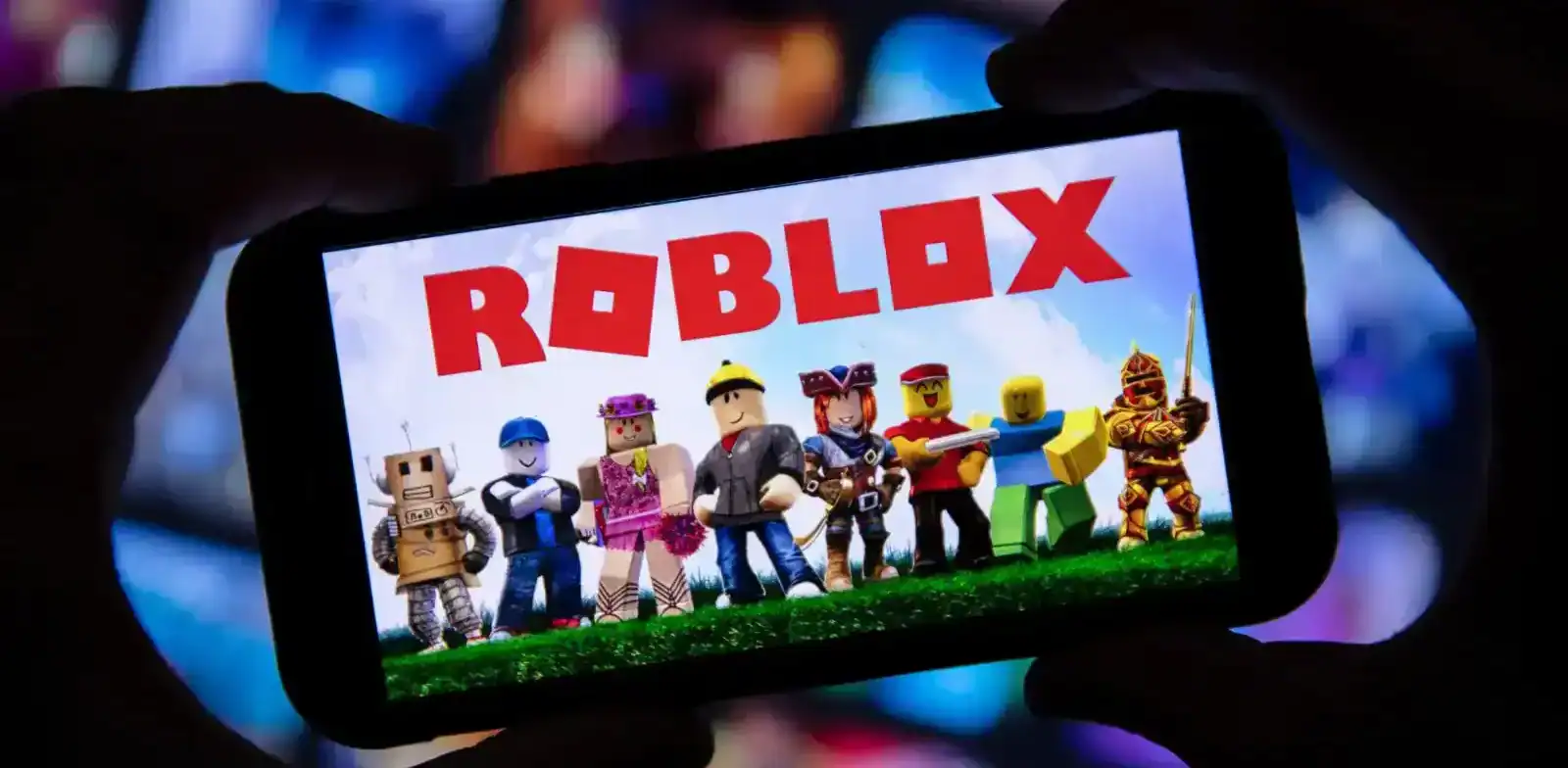
Source: marketing-interactive.com Recently, the government's policy to restrict or even block access to Roblox for children under the age of 16 has become a hot topic among parents. This move was triggered by the rampant cases of grooming (online child sexual abuse) and the spread of age-inappropriate content on the platform. As parents, it is natural to feel concerned. However, let us examine this phenomenon from a global perspective. In Australia, despite facing the same level of cybercrime risks, Roblox continues to operate without any restrictions. Why is the approach so different? Different Perspectives: Gaming Platform vs Social Media There are two main reasons why the Australian government did not take extreme measures such as a total block: Viewed as a Creative Ecosystem Platform, Not Just Social Media The Australian government and its digital regulatory agency view Roblox primarily as a gaming platform where children can learn to be creative, not just social media. Their regulatory focus is on the responsibility of game developers to create a safe environment, not on blocking access for users. Default Private Policy for Children's Accounts Through the Safety by Design initiative, the Australian government urges platforms to provide automatic protection. As a result, children's accounts there are set to private mode by default. This means that the chat feature with strangers and profile visibility are closed from the moment they register. So, what about children in Indonesia? The main control currently lies in the hands of parents. Parents must proactively activate security features manually. It's quite easy to do: go to the Settings menu, then select Parental Controls. There, parents can activate the Parent PIN so that children cannot change the settings, as well as turn off the chat feature to close two-way communication with strangers. Is Blocking Enough? The answer: No. Blocking one application may provide a temporary sense of security, but it does not solve the root of the problem. The digital world is vast. Currently, almost all online games have two-way communication features. If access to Roblox is closed, potential digital crimes such as cyberbullying or grooming can still lurk around children through other games or platforms. Closing one door will not stop ‘uninvited guests’ from looking for an open window. The only strong defence that children can take with them wherever they surf is digital literacy. Children must be equipped with critical thinking skills when communicating online. They must understand stranger danger (the danger of strangers in the virtual world), game literacy, and mindful messaging (thinking before responding to messages). Turning Concerns into Potential Teaching children technical digital literacy can sometimes be confusing. The language we use is often difficult for them to understand, or even comes across as lecturing. If parents are unsure where to start, entrusting this education to the experts is the wisest choice. At Timedoor Academy, children are not only taught to be passive consumers of games, but are guided to be productive creators. They can learn to make their own games using Roblox Studio in a 100% safe and monitored environment. Moreover, the Timedoor Academy curriculum incorporates digital literacy material in a fun and age-appropriate way. They will learn to recognise the characteristics of cyberbullying, understand privacy boundaries, and how to protect themselves online. In this era of artificial intelligence and rapidly advancing technology, limiting children's exploration risks leaving them far behind their peers. Children who are not equipped with technological skills and digital literacy from an early age will miss out on many opportunities in the future. Ensure your little ones are ready to face the challenges of the digital world with their full potential. Parents can secure their first steps by consulting for free at Timedoor Academy. The opportunity to provide protection while developing your child's talents is right before your eyes, do not delay in making a decision. Reading References for Parents: Australian eSafety Commissioner: Protecting children on gaming platforms Roblox Corp: Safety and Civility - Parent Guide UNICEF: Digital Literacy for Children and Teens Prepare your little one for the future through exciting learning experiences. Sign up for a free trial  session now!
Why was Roblox banned in Indonesia? Here is Komdigi’s explanation and how children can remain creative without risk!

Why was Roblox banned in Indonesia? Here is Komdigi’s explanation and how children can remain creative without risk!

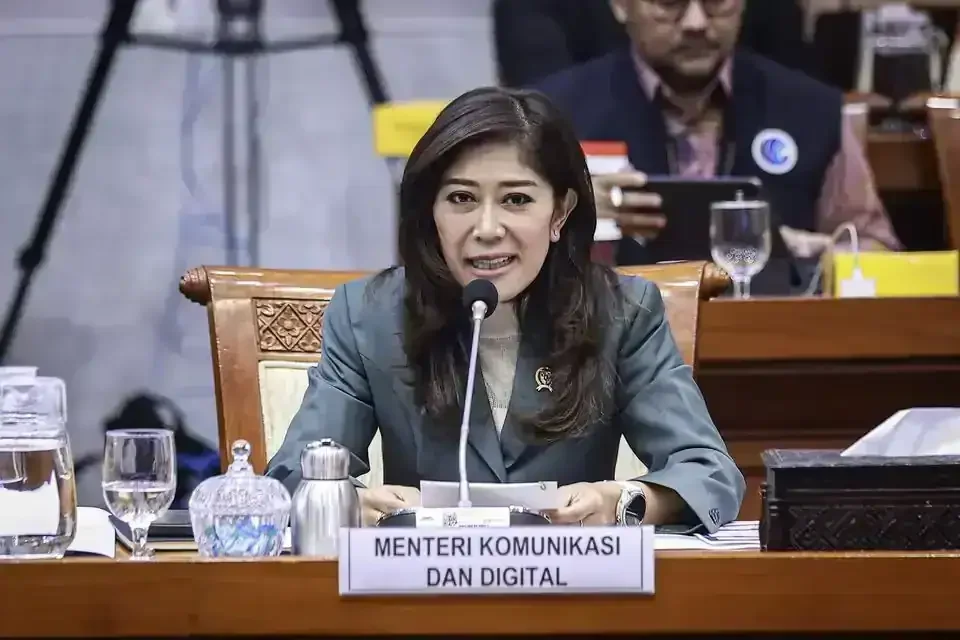
Source: katadata.co.id Shocking news has come from the Ministry of Communication and Digital Affairs (Komdigi). On social media, official statements regarding restrictions on access to digital platforms for minors have begun to be widely discussed. Many parents are asking, ‘Is it true that Roblox will be banned?’ Through its official statement, the government has reaffirmed its commitment to protecting children from digital risks. Komdigi stated that starting on 28 March 2026, access to social media (such as TikTok and Instagram) and gaming platforms such as Roblox will be restricted for children under the age of 16. This is because these platforms are classified as high risk in terms of exposure to age-inappropriate content. Why is the Government Concerned? We must acknowledge that child safety in the virtual world is a major challenge. As a very popular platform, Roblox does pose risks if used without strict supervision, especially in relation to interactions with strangers or user-generated content that has not been fully filtered. This is what underpins the government's decisive action to minimise the negative impact on the mental health and safety of our children. Good News: Roblox Continues to Tighten Security Despite the blocking issue, it is important for parents to know that globally, Roblox itself continues to make major updates to its security system. Based on information from Internet Matters and The Guardian, Roblox has launched new features to give parents greater control: Parental Accounts: Parents can now link their accounts to their children's accounts to monitor their activities directly. Age Restrictions for Children Under 13: Children under the age of 13 are now restricted from accessing chat features outside of the game and are prohibited from entering social hangout categories that are considered less educational. Content Maturity Labels: A clearer rating system to ensure children only play content appropriate for their age category. Don't Let Children Be Sad, Turn Them Into ‘Creators’  Looking at this issue, we need to see it from a broader perspective. The main problem is not with Roblox itself, but with how children use it. At Timedoor Academy, we help children transition from being passive Players (Users) to productive Creators through Roblox Studio.   Why is learning in Roblox Studio safe and beneficial? Productive Platform: Roblox Studio is not a place to play games, but a professional game development tool. To date, there are no regulations prohibiting the use of Roblox Studio because its function is for education and creativity. Learning Future Skills: Through our curriculum, children learn programming logic (coding), mathematics, and even English in a very enjoyable way. Educational Games: The games we teach at Timedoor Academy focus on educational content, enabling children to build a positive digital world. Safety Commitment at Timedoor Academy Parents, don't worry! At Timedoor Academy, we are fully committed to ensuring the safety and comfort of your children's learning experience. We prioritise a safe learning environment, especially when teaching coding through Roblox Studio. Here are the concrete steps we take to protect our students: Full Supervision: Our main focus is to develop children's productive skills through coding. Therefore, we will continue to supervise students in using Roblox Studio as long as there is no official ban from the government. This ensures that students' learning continues to run smoothly. Identity Verification: If new regulations require stricter verification, we will ask for your consent as parents to use official IDs. The goal? To ensure that your child's account remains legal, safe, and fully compliant with government regulations, so you can rest assured while your child creates. Total Transparency for Parents: We believe in complete openness. You can always access and check all the details of your child's activities during class, from coding projects to any interactions. With this approach, Timedoor Academy is not just a place to learn coding, but also a trusted partner in educating children safely. Conclusion for Parents Instead of focusing our energy on our children's disappointment over restricted access to play, let's encourage them to see new opportunities. Turn their sense of ‘loss’ into motivation to create. With Timedoor Academy, children are no longer just spending time in front of a screen, but are building their own future as technology creators. Want more advice on how to channel your child's interest in technology in a more positive way? Join our community at Timedoor Academy! Prepare your little one for the future through exciting learning experiences. Sign up for a free trial  session now!
Official Announcement of Holiday Camp Awards December 2025

Official Announcement of Holiday Camp Awards December 2025

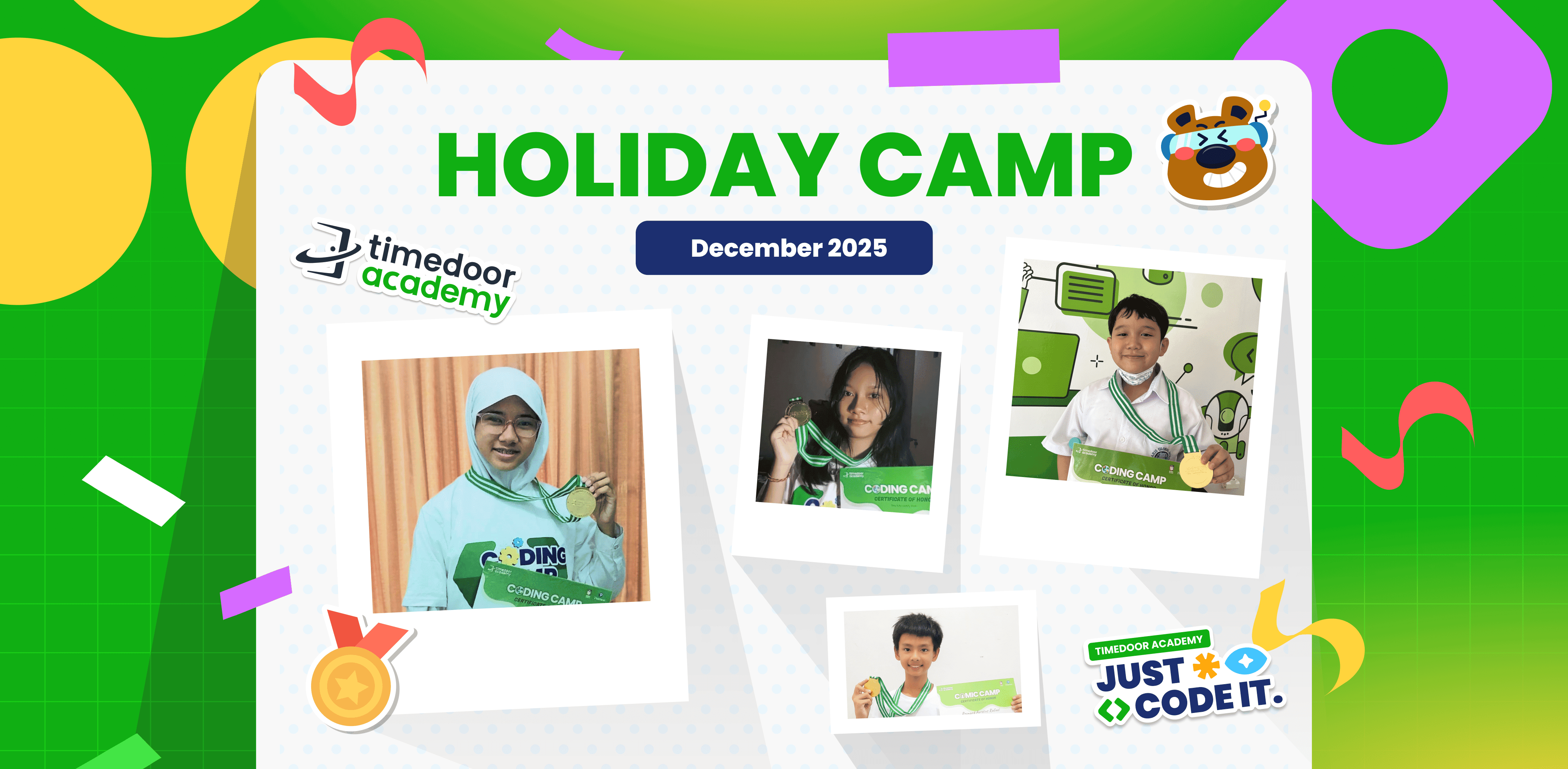
We are thrilled to celebrate the success of Holiday Camp 2025 held by Timedoor Academy, which took place from December 15 to December 30. This year’s event was our biggest yet, welcoming over 500 talented students from across Indonesia! The experience reached new heights this year with the debut of our latest "Programs such as Cyber Heroes, in which students identify cyber threats such as phishing and malware by using Mini Games & Scratch, and also Make AI with Pictoblox, providing a well-rounded and immersive learning environment. On this special occasion, the students dived deep into their passions—ranging from Python and Roblox Development to Artificial Intelligence, and Comic Making. Under the mentorship of our expert teachers, participants tackled ambitious projects and sharpened the digital skills essential for their futures. After much deliberation, we are now ready to honor those who truly stood out for their creativity and dedication. We are proud to present the winners of the Best Project and Best Participant awards: JUNIOR ANIMATOR CATEGORY PARTICIPANT’S NAME BRANCH Best Project Rayson Devatta Wang Jambi Best Participant Rafka Irtiza Syaqier Sentul JUNIOR 3D GAME CATEGORY PARTICIPANT’S NAME BRANCH Best Project Mikael Jose Alvaro Cikarang Best Participant Kyrie Manado JUNIOR CONSTRUCT CATEGORY PARTICIPANT’S NAME BRANCH Best Project Justin Owen Tandi Cikarang Best Participant Saddam Khairul Hanif Cikarang AI WITH PICTOBLOX CATEGORY PARTICIPANT’S NAME BRANCH Best Project Alden Immanuel Barneth Bandaso Mandagi Cikarang Best Participant Raizel Zane Wiltan Palembang CYBER HEROES CATEGORY PARTICIPANT’S NAME BRANCH Best Project Thomas Harvianz Green Lake City Best Participant Fransisca Karla Alveenia Hadiwijaya Yogyakarta KIDS CONSTRUCT CATEGORY PARTICIPANT’S NAME BRANCH Best Participant Zara Shaquitta Tanujaya BSD KIDS ROBLOX CATEGORY PARTICIPANT’S NAME BRANCH Best Project Habibi Rafif Cibubur Best Participant Ziggy Raziq Rizalya Makassar KIDS PYTHON CATEGORY PARTICIPANT’S NAME BRANCH Best Project Bennedict Javier Jambi Best Participant Felix Gerard Wyenn Tanjung Duren TEENS WEB DEVELOPER CATEGORY PARTICIPANT’S NAME BRANCH Best Project Nathanael Andromeda Juan Kristanes Batam Best Participant Muhammad Hafizh Prananda Aryawan Malang TEENS ROBLOX CATEGORY PARTICIPANT’S NAME BRANCH Best Project Marcia Josephine Renon Best Participant Muhammad Fajri Akbar Lampung TEENS PYTHON CATEGORY PARTICIPANT’S NAME BRANCH Best Project Rayhan Avicenna Alfatih Jagakarsa Best Participant Kalyana Adinda Parahita Jagakarsa TEENS AI CATEGORY PARTICIPANT’S NAME BRANCH Best Project Tsaqif Bariq R.H. Gayungan Best Participant Elishine Syallom Citraland  COMIC KIDS CATEGORY PARTICIPANT’S NAME BRANCH Best Project Katrina Amadea Tanuwidjaja Online Best Participant Flynn Oliseh Opene Online IOT KIDS & TEEN CATEGORY PARTICIPANT’S NAME BRANCH Best Project Daffa Muhammad Zahir Cikarang Best Participant Gerald Kelapa Gading  
7 Strong Steps to Prepare Your Child as a Generation of Technology Creators

7 Strong Steps to Prepare Your Child as a Generation of Technology Creators

In today’s fast-paced digital era, understanding and creating technology has become one of the most essential skills for children. The world no longer only needs users of technology but also creators and innovators who can bring new solutions through digital creativity. That is why nurturing a generation of technology creators from an early age is a strategic step for parents and educators. Technology is now a part of almost every aspect of human life. From communication and education to entertainment, everything relies on digital innovation. In this context, the role of technology creators becomes crucial in shaping a more advanced, creative, and sustainable future. Children who understand the fundamentals of technology from a young age will grow with stronger logical, analytical, and creative thinking skills. 1. Cultivating an Innovative Mindset from an Early Age The first step in developing a generation of technology creators is to instill an innovative mindset in children. Instead of merely using apps or playing games, children should be encouraged to understand how those technologies are built. Through activities such as coding, digital design, or simple experiments with software, children begin to think like creators rather than consumers. This approach trains them to seek solutions, generate new ideas, and not fear making mistakes. The earlier children are introduced to the concept of creating technology, the greater their potential to grow into true innovators. 2. Strengthening Problem-Solving and Logical Thinking One of the main benefits of building a generation of technology creators is helping children develop systematic thinking and logical problem-solving skills. In the world of coding, for instance, they learn how to arrange steps so that computers can execute commands correctly. This process fosters critical thinking, which is valuable in many areas of life. Moreover, problem-solving activities teach perseverance and patience. Children learn that every mistake can be fixed through analysis and improvement, shaping a resilient and growth-oriented mindset. 3. Connecting Creativity with Technology Many parents think technology is rigid and technical, while in reality, it can also be a powerful medium for creativity. Children who grow as part of the generation of technology creators can combine art and technology to produce unique works such as animation, digital music, or interactive games. Through this creative approach, children learn that coding and design are not only about numbers and logic but also about imagination and self-expression. Technology provides them with the space to create something original and meaningful. 4. Building Early Career Readiness Technology skills are becoming one of the key foundations of the future workforce. Professions in digital fields, such as software development, game design, and artificial intelligence, are in high demand. By developing a generation of technology creators, parents help their children gain a competitive advantage from an early age. Children who grow up thinking in technological logic will adapt more easily to changes in the job market. They will not only be ready to face the future but also lead innovation that shapes it. 5. Teaching Digital Responsibility Being part of the generation of technology creators is not only about mastering technical skills but also about understanding the ethics behind technology use. Children should learn to create technologies that are useful, safe, and responsible for society. Through balanced digital education, they will understand the importance of privacy, respect for others’ work, and using technology for positive purposes. This foundation helps them grow into innovators who are not only intelligent but also ethical. 6. Enhancing Collaboration and Communication Skills In today’s technology-driven world, collaboration is the key to success. Building a generation of technology creators also means teaching children how to work in teams, exchange ideas, and value others’ opinions. Many technology projects require interdisciplinary teamwork involving developers, designers, and more. Through collaborative activities, children learn that great innovations are not created by one person alone but through effective teamwork and communication. These social skills will become valuable assets in their academic and professional journeys. 7. Building Independence and Confidence Children who can create something from their own ideas develop high self-confidence. They learn that every idea, no matter how small, has the potential to grow. This is the essence of the generation of technology creators: children who dare to dream, think critically, and turn ideas into reality. With the right support from parents and a positive learning environment, they will remain motivated to learn and innovate without limits. How Timedoor Academy Helps Build a Generation of Technology Creators Timedoor Academy understands the importance of nurturing children who not only use technology but also create it. Through project-based learning and guidance from professional mentors, students explore the world of coding, design, and digital innovation in a fun and interactive way. Every lesson is designed to develop logical thinking, creativity, and responsibility. With a child-friendly approach, Timedoor Academy helps every student grow their curiosity and passion to become part of the generation of technology creators who will shape the future. Take the First Step Today The world of technology keeps moving forward, and the future belongs to those who can create, not just consume. Help your child become part of the generation of technology creators who are ready to face the challenges of tomorrow with confidence, logic, and creativity.Sign up your child for a free trial class at Timedoor Academy today and discover how digital learning can become an inspiring, safe, and meaningful experience.
7 Powerful Reasons Why Coding Game Roblox for Kids Can Shape Their Future

7 Powerful Reasons Why Coding Game Roblox for Kids Can Shape Their Future

In today’s fast-paced digital world, technology skills have become an essential part of children’s growth. One of the most engaging ways to introduce programming is through the coding game Roblox for kids. Roblox is more than just a gaming platform; it is a creative learning space where children can build their own virtual worlds while understanding programming logic in a fun and interactive way. For parents, introducing coding at an early age is not just a trend but a long-term investment. By learning to code through Roblox, children develop logical thinking, creativity, and collaboration skills. In this article, we will explore seven powerful reasons why the coding game Roblox for kids can play a vital role in shaping a smarter, more innovative future generation. 1. Turning Playtime into Learning Time Children often spend hours playing games. However, with the coding game Roblox for kids, playtime can become a productive learning experience. Roblox Studio, the platform’s game creation tool, allows kids to understand how a game is built from scratch. They can design characters, write scripts, and create their own game mechanics. Through this process, children are introduced to basic coding concepts such as variables, logic, and functions in a simple and engaging way. It transforms gaming from passive entertainment into an active and educational activity. 2. Boosting Creativity and Imagination One of the biggest strengths of the coding game Roblox for kids is its ability to unleash creativity. Within Roblox, children can build their own virtual worlds, from a simple playground to a futuristic city. There are no limits to what they can imagine and create. This design and coding process allows kids to turn their ideas into something tangible. They do not just use technology; they become creators who understand how it works. Combining art, logic, and problem-solving helps them develop creativity in multiple dimensions. 3. Building Problem-Solving and Critical Thinking Skills Every game developed in Roblox presents unique challenges. Children who explore the coding game Roblox for kids often encounter situations where they need to fix coding bugs or adjust game features to make everything run smoothly. These experiences naturally strengthen their problem-solving skills. Kids learn to analyze problems, test solutions, and think systematically. These are essential abilities not only for digital development but also for daily life, school projects, and teamwork. 4. Encouraging Collaboration and Communication Roblox is a global platform that encourages collaboration among users from all around the world. Through the coding game Roblox for kids, children can learn to work in teams, share ideas, and respect others’ opinions. These teamwork and communication skills are crucial for the future, especially in a professional world that relies heavily on cross-disciplinary and cross-cultural cooperation. Kids also learn how to explain ideas clearly and solve problems together. 5. Equipping Children with Future-Ready Skills In the coming years, digital skills will be one of the most valuable assets for any profession. By learning the coding game Roblox for kids, children build a solid foundation for future careers in app development, game design, or even artificial intelligence. Understanding programming logic gives them a significant advantage in a technology-driven world. Even if they do not become programmers, the structured and analytical mindset learned from coding will benefit them in many areas of life. 6. Making Learning Fun and Engaging One of the biggest challenges in education is maintaining children’s interest in learning. Through the coding game Roblox for kids, learning becomes an enjoyable experience rather than a chore. Children learn by doing, experimenting, and seeing their ideas come to life in real time. They feel proud when their game works and others play it. This sense of accomplishment builds confidence and motivates them to continue exploring and improving their skills in technology. 7. Inspiring Early Entrepreneurship Roblox is not only about coding; it also teaches valuable lessons about digital entrepreneurship. Kids who master coding game Roblox for kids can create popular games and even earn income through Roblox’s in-game economy. This experience fosters a sense of responsibility, creativity, and business awareness from an early age. They learn about value creation, audience engagement, and the importance of innovation in attracting players. How Timedoor Academy Helps Children Master the World of Coding Timedoor Academy believes that every child has incredible potential in the digital age. Through fun, interactive, and age-appropriate lessons, students are guided to explore the world of programming, including coding game Roblox for kids, in a safe and educational environment. Each class is designed not only to teach technical skills but also to instill values like digital responsibility, teamwork, and creativity. With the support of professional mentors, children are encouraged to experiment, innovate, and develop their curiosity about technology. Start Your Child’s Digital Journey Today The digital world is evolving rapidly, and the future belongs to those who can adapt and create with technology. If you want your child to become more than just a technology user but also a creative thinker, coding game Roblox for kids is the perfect first step.Enroll your child in a free trial class at Timedoor Academy today and discover how learning coding can become an inspiring, enjoyable, and rewarding experience that prepares them for a bright future.
7 Important Reasons Why Understanding the Function of VR in the Future Will Change How Children Learn

7 Important Reasons Why Understanding the Function of VR in the Future Will Change How Children Learn

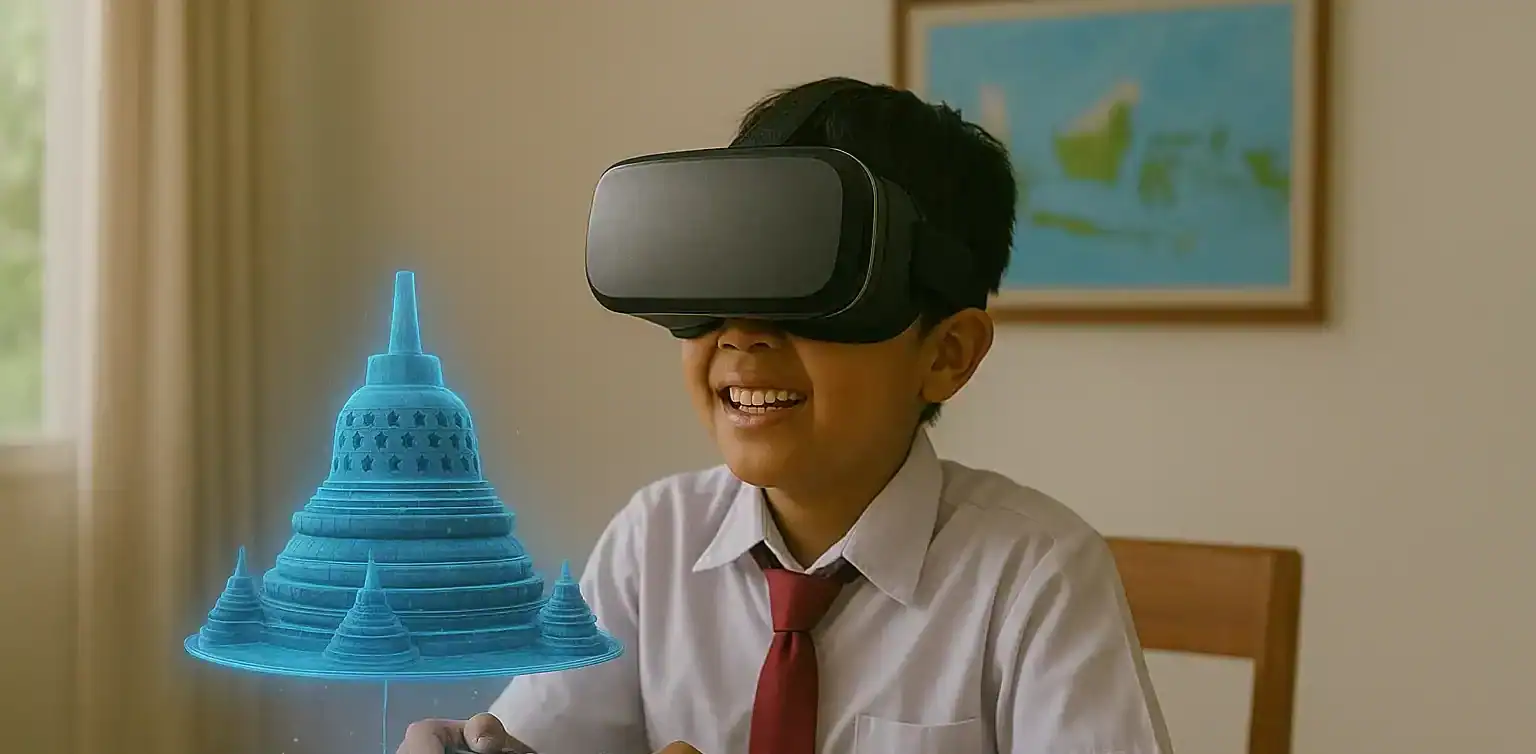
Technology is advancing rapidly, and one of the most fascinating innovations shaping the future is Virtual Reality (VR). In the past, VR might have sounded like a concept from a science fiction movie, but today, this technology has become a real part of education, entertainment, and even professional training. With its ability to create deep and immersive experiences, the function of VR in the future is predicted to become one of the most important elements in the ever-evolving digital world. Virtual Reality allows users to interact with an artificial environment that feels realistic through headsets and sensors. In the context of education, this technology is not just a form of entertainment but also a bridge to deeper and more interactive learning. Children can explore outer space, study human anatomy, or even conduct scientific experiments virtually without any real-world risks. But how important is the function of VR in the future, and how can this technology shape the way our children learn and grow? Here are seven strong reasons why every parent needs to understand the great potential of this technology 1. Providing a More Realistic Learning Experience One of the most promising functions of VR in the future is its ability to provide immersive and realistic learning experiences. Instead of only reading books or watching videos, children can “enter” directly into the learning material. For example, when studying history, they can explore the Egyptian pyramids or witness historical events as if they were truly there. This experience-based learning improves children’s understanding of concepts and memory retention. With more sensory engagement, their brains process information in a more meaningful way. 2. Increasing Children’s Engagement and Motivation Learning is often a challenge for children, especially when teaching methods feel monotonous. Through the function of VR in the future, learning activities can turn into something exciting and full of adventure. Imagine children learning coding, physics, or biology in a virtual world where every lesson becomes an interactive game. VR provides a sense of exploration and discovery that keeps children more motivated to learn. Additionally, this technology helps children with visual or kinesthetic learning styles better understand material in ways that suit their strengths. 3. Developing Empathy and Social Awareness Beyond formal education, the function of VR in the future also plays an important role in developing empathy and social understanding. With VR, children can experience what it feels like to be in someone else’s situation, such as living in another country or understanding the challenges faced by individuals with physical limitations. These experiences broaden their perspectives and nurture values such as compassion, empathy, and respect for diversity. In an era of globalization, these abilities are invaluable in shaping a more inclusive and open-minded generation. 4. Supporting the Learning of Technical and Practical Skills In the future job market, many professions will use VR for training and simulation. Therefore, understanding the function of VR in the future becomes important from an early age. For example, in the medical field, students can use VR to practice surgery without any risk to real patients. In the aviation industry, trainee pilots can learn to control aircraft through realistic simulations. Even in design, architects can create and “walk through” virtual buildings before actual construction begins. Thus, children who are familiar with VR from an early age will have a competitive advantage in the future because they understand how this technology works and how to apply it in practical ways. 5. Encouraging Creativity and Innovation VR is not just about experiencing artificial worlds but also about creating them. One of the most powerful functions of VR in the future is its ability to nurture children’s creativity. Through VR platforms, children can design their own virtual worlds, create characters, or even program interactions within them. This offers great opportunities to combine imagination, art, and technology. Beyond being fun, the process also trains critical thinking and problem-solving skills that are essential for the future. 6. Providing a Safe Environment for Experimentation and Mistakes One of the greatest advantages of the function of VR in the future is its ability to create a safe environment for learning through trial and error. In a virtual world, children can experiment freely without fear of failure or causing real-world harm. This is especially useful in science, engineering, and programming education, where making mistakes is an important part of the learning process. Children can repeat simulations until they truly understand the concept, building confidence and healthy curiosity. 7. Opening New Opportunities in Education and Careers VR technology paves new paths in global education. With the function of VR in the future, children from different parts of the world can learn together in virtual classrooms, interact with teachers from other countries, and access high-quality educational resources without geographical limits. In addition, VR-based industries such as game design, app development, digital training, and entertainment will continue to grow rapidly. Children who understand and can adapt to this technology will have broader and more exciting career opportunities in the future. How Timedoor Academy Equips Children with Future Technology Understanding Timedoor Academy believes that the future of children is not only determined by academic ability but also by their understanding of technology. Through interactive and enjoyable learning, students are introduced to the world of coding, digital design, and innovative technology relevant to today’s advancements, including the function of VR in the future. Under the guidance of professional mentors, every child is encouraged to explore technology with curiosity, responsibility, and creativity. The goal is to help children become not just technology users, but innovative and forward-thinking creators. Start Your Child’s Technology Journey Today Technologies like VR are not just temporary trends but vital parts of children’s educational and career futures. If you want your child to be ready for the future with strong digital skills and a deep understanding of the function of VR in the future, now is the time to take the first step. Register your child for a free trial class at Timedoor Academy today and discover how digital learning can be fun, safe, and inspiring for their future.
Coding Is the Future: 7 Powerful Reasons Why Parents Should Care

Coding Is the Future: 7 Powerful Reasons Why Parents Should Care

In today’s rapidly evolving digital era, coding in future education has become one of the most essential topics for parents and educators alike. The world is shifting toward automation, artificial intelligence, and digital creativity, making coding not just a technical skill but a fundamental form of literacy. Teaching children how to code is no longer an extra activity; it is a preparation for a successful and meaningful future. As technology transforms every aspect of life, understanding coding in future education allows parents to help their children build problem-solving abilities, logical thinking, and creativity. From designing apps to exploring robotics, learning to code opens up unlimited possibilities for young minds to express themselves and thrive in a technology-driven world. 1. Preparing Children for Tomorrow’s Jobs The global job market is changing rapidly. Many future careers will depend on digital skills, especially programming. Professions that require coding expertise are expanding across industries, from healthcare and finance to entertainment and education. Introducing coding in future education ensures that children are prepared to compete in a world where technology leads innovation. By learning coding early, children gain a strong foundation that can open the door to careers in software development, engineering, data science, and even digital entrepreneurship. Parents who encourage this learning give their children a head start in an increasingly competitive environment. 2. Strengthening Problem-Solving and Logical Thinking Coding teaches children how to think, not just what to think. When children write code, they learn to break big problems into smaller, manageable steps. This logical structure encourages analytical thinking that can be applied not only in academics but also in daily life. Integrating coding in future education also helps children develop patience and persistence. When faced with an error or “bug,” they learn the value of testing, refining, and improving, a mindset that nurtures resilience and growth. 3. Encouraging Creativity Through Technology Creativity and technology are no longer separate worlds. Through coding in future education, children can transform their imagination into reality by designing games, creating websites, or developing digital art. Coding gives them the tools to bring their ideas to life, combining creativity with critical thinking. This creative expression builds confidence and allows children to see technology as more than just entertainment, it becomes a platform for innovation and self-expression. 4. Supporting Academic Growth and Future Readiness Studies show that children who learn coding often perform better in math, science, and language subjects. The logical and structured way of thinking developed through coding enhances academic skills across disciplines. By prioritizing coding in future education, schools can create an environment where students not only consume technology but also understand how it works. In the long run, this helps prepare students for advanced studies in computer science, engineering, and other STEM-related fields, ensuring they stay ahead in an ever-changing digital society. 5. Promoting Responsible Digital Citizenship As children spend more time online, understanding how technology works also helps them navigate it responsibly. Incorporating coding in future education fosters awareness about digital ethics, online privacy, and cybersecurity. Children who learn coding are more likely to use the internet wisely, respect digital boundaries, and contribute positively to the online world. This balance of technical skill and moral awareness is crucial for raising responsible digital citizens. 6. Empowering Collaboration and Teamwork Coding is not a solitary skill, it often involves teamwork and communication. Many modern coding projects require collaboration, idea sharing, and collective problem-solving. By engaging in coding in future education, children learn how to work effectively with others, value different perspectives, and contribute to group success. These interpersonal skills are highly valued in every profession, preparing children not only to excel individually but also to thrive in team-oriented environments. 7. Opening a Path to Innovation and Lifelong Learning The world of technology never stops evolving. By embracing coding in future education, children develop a lifelong learning mindset that keeps them adaptable and open to change. They learn how to explore new tools, experiment with emerging technologies, and think critically about how digital solutions can improve the world around them. This mindset of curiosity and innovation ensures that they are not left behind but rather lead the way in shaping the future. How Timedoor Academy Brings the Future Closer Timedoor Academy believes that every child has the potential to become a creator of technology, not just a user. Through structured learning programs, students explore coding, robotics, and digital creativity in a supportive and engaging environment. By integrating coding in future education into each lesson, Timedoor Academy ensures that children not only gain technical skills but also learn values such as responsibility, teamwork, and innovation. With guidance from professional mentors, every child is encouraged to build confidence, curiosity, and a growth mindset that will serve them in every aspect of life. Take the First Step Today Technology shapes the future, and your child can be part of it.Help your child begin their journey in coding in future education by joining a free trial class at Timedoor Academy today. Discover how our expert mentors can inspire your child to explore, create, and grow in a safe and encouraging environment. Let your child not just use technology, but understand and build it.
6 Simple and Trendy Street Food Recipes for Kids in 2025
Snacks are an important part of a child's school day, especially during breaks and playtime. In 2025, the trend for street food recipes for kids is growing, focusing on healthy ingredients, easy preparation, and of course, great taste. Making snacks at home not only saves money but also allows parents to control the quality and hygiene of the food their children eat. Plus, cooking together can be a valuable time for learning and creativity. Here are 6 trendy and easy street food recipes for kids that you can try at home using simple ingredients and straightforward steps.   1. Mini Pancakes with Fresh Fruit Mini pancakes are a favorite snack for many kids. Their soft texture and the natural sweetness from fresh fruit make them a healthy choice for lunchboxes or afternoon treats. Ingredients: 100 grams all-purpose flour 1 egg 150 ml milk 2 tablespoons sugar Fresh fruit pieces (strawberries, bananas, blueberries) How to make: Mix all dry and wet ingredients until smooth without lumps. Heat a non-stick pan on low heat, pour small round pancakes, and cook until golden on both sides. Serve the mini pancakes topped with fresh fruit for an appealing and nutritious snack.   2. Date Chocolate Balls For kids who love sweet snacks but need something healthy, these date chocolate balls are perfect. Dates provide natural sweetness and high fiber, which is good for digestion. Ingredients: 150 grams pitted dates 2 tablespoons cocoa powder 50 grams chopped walnuts How to make: Blend or mash the dates until smooth. Mix in cocoa powder and chopped walnuts until well combined. Shape the mixture into small balls and chill in the fridge for at least 30 minutes to firm up before serving.   3. Banana Yogurt Ice Cream Banana ice cream with plain yogurt is a refreshing and healthy treat. Yogurt contains probiotics that benefit kids' digestive health. Ingredients: 2 ripe bananas 150 ml plain yogurt 1 tablespoon honey How to make: Blend the bananas, yogurt, and honey until smooth and well mixed. Pour the mixture into ice cream molds and freeze for at least 4 hours. This banana yogurt ice cream is perfect for cooling off while providing good nutrition.   4. Chocolate and Cheese Roll Sandwiches These easy-to-make roll sandwiches are kids' favorites thanks to the delicious mix of sweet chocolate and savory cheese. Ingredients: 4 slices of crustless white bread Chocolate spread as needed Grated cheese as needed How to make: Spread chocolate on each bread slice, sprinkle with grated cheese, then roll up tightly. Slice as desired. These rolls can be eaten as is or lightly toasted to melt the cheese and add a crispy texture.   5. Fruit Yogurt Salad Fruit salad with yogurt is a healthy and refreshing snack. Feel free to vary the fruits depending on the season for more variety. Ingredients: Chopped apples, grapes, melon, and other fruits 150 ml plain yogurt 1 tablespoon honey How to make: Mix the chopped fruits with yogurt and honey. Stir well and serve chilled for a fresh and tasty treat.   6. Banana Chocolate Muffins These banana chocolate muffins combine the natural sweetness of bananas with chocolate chips that kids love. They're perfect for school snacks or afternoon treats. Ingredients: 2 ripe bananas, mashed 100 grams all-purpose flour 50 grams sugar 1 egg 50 grams chocolate chips How to make: Mix mashed bananas, egg, and sugar until smooth. Gradually add flour while stirring. Fold in the chocolate chips gently. Pour the batter into muffin molds and bake at 180°C (350°F) for 20 minutes or until cooked through.   Why Making Your Own Street Food Recipes for Kids Matters Making street food recipes for kids at home has many benefits. Besides ensuring the ingredients are healthier and safer, children also learn about food and cooking processes. This helps boost their creativity and responsibility for what they eat. Cooking together also creates precious bonding moments between parents and children. Teaching kids to make healthy snacks encourages better lifestyle habits from an early age.   Learning Coding for Kids — How Does It Connect with Cooking? Combining cooking with learning coding can make kids even more excited to learn. For example, children can be encouraged to create a simple app featuring their favorite snack recipes while picking up basic coding skills. This is a fun and effective way to introduce technology at an early age. For parents who want their kids to start learning coding in a fun and easy way, Timedoor Academy offers specially designed coding programs for children. You can also take advantage of Timedoor Academy’s free trial class so your child can try coding for free before enrolling in full courses. So, don’t hesitate to try these 6 trendy and easy street food recipes for kids. Not only are they delicious and healthy, but cooking together can be a fun and rewarding learning experience. And don’t forget to support your child’s coding journey so they’re ready for the digital world ahead with Timedoor Academy.
How to Choose a College Major: Why IT Major Is One of the Best Options in 2025
Deciding on how to choose a college major is one of the most important decisions for any student. The major you pick can shape your future career, skills, and opportunities. With so many options available, it can feel overwhelming to decide which path to take. Among the many fields, an IT major (Information Technology) stands out as a strong choice for students looking to enter a fast-growing, dynamic industry with global opportunities. This article will help you understand why an IT major could be the right fit and offer tips on how to choose a college major wisely. Why Choosing the Right College Major Matters Deciding on how to choose a college major is more than just picking a subject to study. It determines the skills you will develop, the network you build, and the kind of career path you might follow. A well-chosen major aligns with your interests and the demands of the job market, giving you a better chance at success after graduation. Many students struggle with this choice because they want to balance passion with practicality. You want to enjoy what you study but also ensure that your skills will be valuable in the real world. Understanding the current and future job market trends can guide you to make an informed decision. Why Consider an IT Major? High Demand and Job SecurityThe IT industry is growing rapidly worldwide. Businesses, governments, and organizations of all sizes rely on IT professionals to maintain systems, secure data, and develop new technologies. Roles like software developer, network administrator, cybersecurity analyst, and data scientist are in high demand and expected to grow for years to come. Versatile Skills Applicable Across IndustriesAn IT major equips you with technical skills that apply in various sectors such as healthcare, finance, education, entertainment, and more. Whether you want to build apps, manage cloud infrastructure, or analyze big data, the skills from an IT major open doors in many fields. Attractive Salaries and Career GrowthBecause of the specialized skills required, IT careers often come with competitive salaries. Plus, the tech industry is known for offering career advancement opportunities, certifications, and the chance to work in innovative environments. Continuous Learning and InnovationIT is an ever-evolving field. If you enjoy learning new technologies and solving problems creatively, an IT major offers a dynamic and stimulating career path. Tips for How to Choose a College Major Assess Your Interests and StrengthsThink about what subjects excite you and where your skills lie. Passion combined with aptitude often leads to success. Research Job Market TrendsLook into which majors have strong job prospects both locally and globally. The IT field, for example, shows consistent growth worldwide. Consider Your Long-Term GoalsWhere do you see yourself in 5 or 10 years? Choose a major that aligns with your vision. Talk to Professionals and AlumniConnect with people who have studied or work in your fields of interest to get real-world insights. Explore Related Courses or WorkshopsTry online courses, coding bootcamps, or workshops in IT or other areas you’re curious about. This can help you get a feel for what you like. How Online Learning Can Boost Your IT Journey Choosing an IT major doesn’t mean you only learn in classrooms. Many successful IT professionals supplement their studies with online courses and coding bootcamps. Platforms like Timedoor Academy offer interactive and beginner-friendly coding classes that can help you build practical skills alongside your college education. Timedoor also provides free trial classes, so you can explore if coding and IT are right for you before fully committing. This kind of hands-on experience can give you an edge when entering the job market. Making an Informed Choice How to choose a college major is a question many students face. By reflecting on your interests, researching industries, and exploring fields like IT major, you can make a choice that benefits both your passion and career prospects. If you’re leaning towards technology and innovation, an IT major is definitely worth considering. And remember, learning doesn’t stop with your degree. Using resources like Timedoor Academy to build real skills can set you up for success in the competitive global job market. Start your learning journey today with a free trial class and see where IT can take you!
Gen Alpha Slangs: A Guide to Understand How Kids Talk Today in 2025
“Gyatt!”, “So rizz!”, “I’m going skibidi first.” If you’ve ever overheard kids saying things like this and felt totally lost, you’re definitely not alone. These are examples of gen alpha slangs — the unique language used by children born after 2010 who are growing up fully immersed in the digital world. Gen Alpha kids do not just grow up with technology, they live inside it. They pick up most of what they know from TikTok, YouTube Shorts, and social media rather than from textbooks or TV like older generations did. Because of that, their vocabulary is shaped by online trends, memes, and global internet slang, which can be tricky for adults to catch on to. To help parents connect better with their kids, here is a quick dictionary of popular gen alpha slangs complete with meanings and examples.   Gen Alpha Slangs: Popular Terms and What They Mean Rizz Meaning: Charm or the ability to attract others, usually in friendship or dating. Example: “That guy has so much rizz, he talks calmly but everyone just likes him.” Note: This comes from “charisma” and is used to describe someone with a strong personal appeal.   Skibidi Meaning: A term from the viral “Skibidi Toilet” meme used to describe something weird, creepy, or just “no way.” Example: “Don’t go in that room, the vibe is super skibidi.” Note: It does not have a literal meaning but is part of gen alpha slangs’ quirky humor.   Gyatt Meaning: A spontaneous shout when surprised or impressed, a playful twist on “goddamn.” Example: “Gyatt! Your room looks so neat today.” Note: Used when something really catches your attention in a good way.   Slay Meaning: To do something confidently and impressively. Example: “Her performance today totally slayed!” Note: A compliment for someone who nails it.   NPC Meaning: Short for Non-Playable Character from video games meaning someone passive or unengaged. Example: “He just stays quiet in the group chat, like an NPC.” Note: Used sarcastically for someone who seems to have no initiative.   Sigma Meaning: A calm, independent person who does not show off but still has influence. Example: “He does not talk much but everyone listens, total sigma.” Note: Describes someone strong without needing to be loud or dominant.   No cap Meaning: Honestly, no lie, seriously telling the truth. Example: “That movie was amazing, no cap.” Note: Used to stress that what is said is completely true.   Why Should Parents Understand Gen Alpha Slangs? Language is how we connect and if parents want to stay close with their kids, understanding gen alpha slangs is a helpful step. You do not have to use every trendy word yourself but knowing what they mean and how kids use them can help you: Avoid misunderstandings Create a safe space for honest conversations Build trust by showing you get where they are coming from Spot trends or content that might be risky or inappropriate Gen alpha slangs also give a window into how today’s kids think, fast, visual, and quick to adapt to global digital culture.   Turning Their Digital Language Into Something Useful Since kids are already used to quick, creative online communication, why not guide that energy into learning skills like coding? Coding is basically a language for talking to computers. It teaches structure, logic, and step-by-step problem solving, skills that will matter more and more in the future. For Gen Alpha kids who are naturally visual and adaptable, coding can be a perfect bridge between their creative side and the tech-driven world ahead.   See Gen Alpha Slangs as a Chance to Connect, Not a Barrier Instead of worrying about unfamiliar words, try to see gen alpha slangs as an opportunity to get closer to your kids. It is not just a passing fad but a reflection of their ever-changing world. When we understand how they speak, we can better understand how they think. That is where real connection starts. If you want to help your child build skills that match their world, Timedoor Academy offers coding classes designed to be fun and visual, just the way Gen Alpha learns best. Feel free to check out the free trial classes and see if coding could be a new way for your child to shine.
Fun and Easy Coding Lessons for Kids in 2025
In today’s fast-moving digital world, coding has become an essential skill for children. It’s not just about preparing them to become future programmers, but also about helping them build logic, improve critical thinking, and solve problems in a structured way. That’s why introducing coding lessons for kids at an early age is a smart move for both parents and educators. Teaching coding to children, especially those in elementary school, requires a different approach than teaching older students or adults. The material must be adapted to their level of understanding and presented in a way that is fun and interactive, so they stay engaged and motivated. So, what kind of coding lessons for kids are best suited for young learners? Let’s explore the options. Why Kids Should Learn Coding Before diving into the types of coding lessons for kids, it’s important to understand why coding is valuable from a young age. Some of the key benefits include: 1. Strengthening logical thinkingCoding teaches kids how to think in steps and solve problems using logic. This helps develop structured and organized thought patterns. 2. Encouraging creativityThrough coding, children can build their own games, animations, and digital stories. It sparks imagination and creative expression. 3. Preparing for the digital futureAs technology becomes more integrated into everyday life and future careers, understanding coding gives kids a head start and builds a strong foundation. 4. Building resilienceWhen something in their code doesn’t work, kids are encouraged to find solutions and try again. This helps develop patience and problem-solving skills. Recommended Coding Lessons for Kids There are many ways to introduce coding lessons for kids, depending on their age and learning style. Here are some great starting points: 1. Understanding Basic Logic and Algorithms Before learning a programming language, kids need to grasp simple concepts like sequences, conditionals (if-then statements), and loops. These can be taught using hands-on activities like card games, unplugged coding puzzles, or guided problem-solving exercises. 2. Block-Based Programming Block-based platforms are one of the most effective ways to start coding lessons for kids. Kids drag and drop visual blocks that represent code to complete tasks. Some popular platforms include: Scratch: Designed for children to build animations, games, and interactive projects. Code.org: Offers beginner-friendly lessons with characters and stories that keep kids engaged. Blockly: Similar to Scratch and great for easing the transition into text-based programming. These tools make learning to code intuitive, visual, and fun. 3. Beginner Programming Languages Once children are comfortable with block-based coding, they can begin to explore simple programming languages such as: Python: Known for its readability and simplicity, perfect for beginners. HTML & CSS: Great for kids interested in web design and layout. Basic JavaScript: Helps kids understand interactivity and logic on websites. These coding lessons for kids should be introduced slowly and supported by mentors who understand how to guide young learners. 4. Real-Life Coding Applications To make learning more meaningful, kids can be shown how coding is used in real life. They can build educational games, simulate everyday systems like traffic lights, create interactive calendars, or program basic robots using tools like Micro:bit or LEGO Robotics. These hands-on applications show that coding can be both fun and useful. Tips for Teaching Kids to Code For coding lessons for kids to be effective, the teaching method is just as important as the content. Here are a few tips: Use interactive visualsChildren understand and retain more when they see how things work. Use videos, animations, and coding games. Make learning funIncorporate games, challenges, and reward systems to keep kids motivated and engaged. Celebrate small winsRecognizing achievements helps build confidence and encourages progress. Keep it gradualAvoid overwhelming kids by focusing on one concept at a time and allowing them to master it before moving on. Start Early, Build Strong Foundations The best coding lessons for kids are those that suit their developmental level, encourage creativity, and support essential skills like logical thinking and problem-solving. By starting early, children are not only introduced to the world of technology, but they also gain confidence in exploring and understanding how digital systems work around them. If you’re looking for a program that makes coding accessible, fun, and age-appropriate, Timedoor Academy offers interactive lessons led by experienced instructors. Sign your child up for one of our engaging classes and take advantage of our free trial session. It’s the perfect way to introduce coding lessons for kids in a positive and meaningful way!
5 Dangerous Games for Kids Parents Should Watch Out For in 2025
Technology brings countless benefits, especially in education. However, easy access to the digital world also exposes children to dangerous games for kids. Many parents believe games are harmless fun, but in reality, some can negatively impact a child’s development. This article will cover a list of dangerous games for kids, the risks they pose, and how parents can guide their children toward healthier digital habits.   Why Are Some Games Dangerous for Kids? Before diving into the list of dangerous games for kids, it is important to understand why certain games pose risks. Here are some of the most common dangers: Gaming AddictionGames with instant rewards or endless gameplay loops make it hard for kids to stop playing. This often disrupts their study time, sleep schedule, and daily routine. Exposure to Violence and AggressionShooting and fighting games can influence a child’s behavior. Over time, constant exposure may lead to increased irritability or mimicry of violent actions. Negative Online InteractionsOnline multiplayer games expose children to strangers without proper safeguards. This can lead to cyberbullying, exposure to inappropriate language, and negative social influences. Physical Health NeglectProlonged gaming reduces physical activity. This increases risks of obesity, posture problems, and overall sedentary lifestyle habits. Inappropriate Ads and MicrotransactionsMany games target children with in-game purchases and advertisements. Without understanding the implications, kids may make unintended purchases or see content not suitable for their age.   List of Dangerous Games for Kids Here are some examples of dangerous games for kids that require close parental supervision or should be avoided entirely. 1. Free Fire A popular battle royale game known for fast-paced action and violence. Free Fire carries risks of addiction and can influence aggressive behavior patterns in children. 2. PUBG Mobile Similar to Free Fire, PUBG Mobile features intense combat and survival modes. Its competitive nature can lead to emotional stress and obsession with winning. 3. Call of Duty Mobile This game presents high-level realistic violence. The combination of vivid graphics and intense sound effects can have a strong psychological impact on younger players. 4. Grand Theft Auto (GTA) Series GTA is infamous for its explicit content, extreme violence, and criminal elements. This series is highly inappropriate for children and is not recommended under any circumstances. 5. Roblox (Without Supervision) While Roblox can be safe with moderation, user-generated content within the platform is not always child-friendly. Without proper supervision, children can stumble upon games with violent or negative themes.   The Dangers of Gaming Without Parental Supervision Unsupervised gaming can amplify the dangers of gaming for kids. Beyond excessive screen time, gaming without limits may affect children’s behavior, habits, and even personal data security. That is why parental involvement is key. Instead of simply banning games, parents should redirect their children's attention to positive digital experiences that foster growth and learning.   Redirecting Kids to Positive Digital Activities One effective way to shift attention from dangerous games for kids is to introduce children to productive digital activities, such as learning to code. Coding teaches children logical thinking, patience, and problem-solving skills. Just like solving puzzles, coding involves structured steps that train children to think critically and creatively. With interactive and fun approaches, children can enjoy their time online while gaining valuable skills.   Practical Tips for Parents to Handle Gaming Risks To prevent children from falling into harmful gaming habits, parents can take these practical steps: Monitor the games your child plays. Always check age ratings and trusted reviews. Set clear and consistent limits on gaming time. Enforce healthy boundaries. Discuss the dangers of gaming for kids openly. Focus on educating rather than just restricting. Introduce productive digital activities. Coding, graphic design, and digital art are excellent alternatives. Balance screen time with physical activities and family time. Ensure children stay active and socially engaged offline.   Being Smart About the Digital World Not all games are harmful, but it is crucial for parents to identify which are safe and which are dangerous games for kids. The solution is not solely about restrictions but also about providing direction. When children are guided toward positive digital experiences, they can benefit from technology in constructive ways. Introducing children to coding is a meaningful alternative. It develops structured thinking, problem-solving, and opens up creative opportunities in the digital world.   Free Coding Classes at Timedoor Academy Timedoor Academy offers free coding classes for kids, designed with fun, interactive lessons suited for young learners. This can be a great alternative to help children stay engaged with digital media in a productive and educational way. Register now and help your child explore a healthier digital lifestyle: Join Timedoor Academy's Free Coding Trial Class
Fun Science Experiments For Kids You Can Try at Home in 2025
Children are naturally curious. Unfortunately, that curiosity can fade when learning feels limited to books or school assignments. In reality, learning can be a fun activity you enjoy together at home. One of the best ways to keep your child engaged is through fun science experiments for kids. These experiments are not just for fun. They are also a simple and effective way to introduce basic concepts of logic, cause and effect, and help children develop structured thinking. Plus, they offer valuable quality time for parents and children to bond. Why Should You Try Science Experiments at Home? Before we dive into the examples, it is worth understanding why fun science experiments for kids are so beneficial. First, kids learn better when they can see and experience things directly, rather than just reading about them. Second, it shows children that learning is not always about sitting still at a desk. Third, it creates opportunities for meaningful parent-child interaction through shared learning moments. Simple and Fun Science Experiments For Kids No need for complicated tools. Most of these activities use everyday items you probably already have at home. 1. Baking Soda and Vinegar Volcano A timeless experiment that never fails to impress. Build a small “volcano” from clay or playdough around a container, add baking soda, then pour vinegar mixed with food coloring. The result is a small lava-like eruption that kids will love. 2. Walking Water Rainbow Line up cups filled with colored water, placing empty cups in between. Connect them with folded paper towels. Over time, the water will "walk" through the towels and mix colors, creating a rainbow effect. This is a fantastic visual example of capillary action and a perfect fun science experiment for kids. 3. DIY Lava Lamp Using a plastic bottle, add vegetable oil, water, food coloring, and an effervescent tablet. Watch as colorful bubbles rise and fall, mimicking a lava lamp. This teaches kids about density and simple chemical reactions. 4. Magic Milk Pour milk into a shallow dish, add drops of food coloring, then touch the surface with a cotton swab dipped in dish soap. The colors will swirl and move due to changes in surface tension. This fun experiment also sparks curiosity about how molecules interact. 5. Static Electricity Butterfly Cut a butterfly shape from tissue paper, rub a balloon on your hair, then bring it close to the paper. The butterfly wings will "lift" due to static electricity. This simple and entertaining activity helps children understand basic physics concepts. From Science to Coding: Training a Child’s Logical Thinking At first glance, these fun science experiments for kids might seem simple. However, they actually help develop logical thinking, patience, and step-by-step problem-solving. These are the same foundational skills used in coding. Coding teaches children to break down complex problems into smaller tasks, much like the scientific process in experiments. Both require focus, precision, and persistence. If children become familiar with structured thinking through simple science activities, transitioning to coding will feel like a natural and enjoyable next step. Tips to Keep Home Experiments Fun and Stress-Free To make sure your experiments go smoothly and your child stays excited, keep these tips in mind: Safety first. Always supervise, even when using everyday materials. Get your child involved from the start. Let them help prepare and take ownership. Do not fear failure. Mistakes are valuable learning opportunities. Relate experiments to everyday life. Show how science is all around them. Learning Can Be Fun and Practical By doing fun science experiments for kids, parents can make learning more enjoyable and hands-on. It allows children to experience cause and effect directly, beyond memorizing facts from a textbook. If you want to take it a step further, introducing your child to coding is another great way to develop structured thinking. Coding helps children stay focused, think logically, and persevere through challenges. Try a Free Coding Class with Timedoor Academy If you are looking for a way to combine fun and learning, Timedoor Academy offers free coding classes for kids. The lessons are interactive, engaging, and designed to match your child’s age and learning pace. Sign up today and help your child sharpen their logical thinking skills from an early age: Join Timedoor Academy's Free Coding Trial Class
How to Help Kids Stay Focused While Studying at Home in 2025
Many parents struggle with children who find it hard to stay focused while studying at home. School assignments pile up, but their attention often drifts elsewhere — whether to gadgets, television, or simply daydreaming. This situation can be frustrating for parents. That is why it is important to understand how to help kids stay focused while studying with realistic and effective approaches. This article will explore the common reasons why children struggle with concentration and offer practical strategies that parents can apply at home. With simple yet targeted steps, parents can help build better study habits and support their child's focus.   Why Do Kids Struggle to Focus While Studying? Before diving into how to help kids stay focused while studying, it is essential to understand the root causes. Several common factors can affect a child's ability to concentrate: Disruptive EnvironmentNoise from the television, younger siblings playing, or constant gadget notifications can easily distract children during study time. Lack of Interest in the SubjectWhen learning materials feel boring or irrelevant, it becomes difficult for kids to stay engaged and focused. Poor Timing for StudyingForcing children to study when they are tired, hungry, or mentally drained will only make it harder for them to concentrate. Age-Appropriate Attention SpanEvery child has a different capacity for concentration, especially at a young age. Sometimes, parents expect too much in this regard. Early Habit of MultitaskingChildren who are used to playing games while watching videos or listening to music may struggle to develop the ability to focus on a single task.   Practical Ways to Help Kids Stay Focused While Studying at Home Once you understand the underlying issues, here are some practical steps on how to help kids stay focused while studying: 1. Create a Comfortable and Distraction-Free Study Space Ensure your child has a dedicated study area that is well-lit, quiet, and free from distractions like television or unnecessary gadgets. 2. Adjust Study Time to Match Their Rhythm Pay attention to when your child is most alert and ready to learn, such as after a nap or a healthy breakfast. Avoid study sessions when they are visibly tired. 3. Break Study Time into Short, Manageable Sessions Younger children are more likely to stay focused with 20 to 30-minute study sessions, followed by short breaks. This helps maintain their concentration without overwhelming them. 4. Use Interactive Learning Methods Switch from monotonous study routines to more engaging approaches. Visual aids, educational games, and hands-on activities can make learning more interesting. 5. Support Without Hovering Be present to guide your child without micromanaging. Give them space to try solving tasks on their own and step in only when they truly need help. 6. Appreciate Effort, Not Just Results Recognize and praise your child's effort to focus, no matter how small. Emphasizing the learning process rather than only the final outcome encourages a healthier attitude toward studying.   How Coding Can Help Improve Kids' Focus One effective way to help kids stay focused while studying is by introducing them to coding activities. Learning to code teaches children how to break down problems into smaller, manageable steps. This process helps develop focus, logical thinking, and patience. Coding is often presented in the form of interactive games, making it fun and engaging for children. Without realizing it, they practice maintaining concentration and structured thinking — skills that are valuable not only for school but also for everyday life.   The Key: Consistency and Patience Helping kids stay focused while studying is a gradual process. There are no instant solutions. Consistency and patience from parents are crucial in developing better learning habits. Every child learns at their own pace, so it is important for parents to adjust their approach to fit their child's personality. It is natural for children to get bored, frustrated, or easily distracted. However, with the right support and strategies, they can gradually build stronger focus without feeling pressured.   From Struggling to Focus to Becoming Independent Learners Dealing with a child who struggles to stay focused while studying is not easy. But with patience, the right approach, and continuous encouragement, parents can help their children develop better concentration skills. Creating a conducive learning environment, understanding the child's needs, and choosing engaging study methods are essential steps in this journey. In addition, activities like learning coding can serve as an effective way to train children’s focus and logical thinking. Coding teaches them to solve problems step by step and stay patient throughout the process. Timedoor Academy offers free coding trial classes for children, designed with fun and easy-to-follow methods. Enroll now and help your child become more focused and engaged in their learning journey.
How to Deal with Child Tantrums: Smart Tips for Calm and Confident Parenting
For many parents, figuring out how to deal with child tantrums is one of the toughest parts of raising young kids. One moment they are fine, and the next, they are crying, shouting, or throwing things across the room. It is a stressful and exhausting situation that can easily test your patience. That is why every parent needs to understand how to deal with child tantrums calmly and effectively. With the right approach, tantrums do not have to turn into a daily battle. In fact, they can be valuable opportunities for both children and parents to learn and grow together.   Why Do Children Have Tantrums? Before diving into how to deal with child tantrums, it is important to understand why they happen in the first place. Tantrums are a normal part of early childhood development, especially for children between the ages of one and four. At this stage, children are still learning how to express their feelings in words. When they feel tired, hungry, frustrated, or overwhelmed, they express those emotions through tantrums. It does not mean they are being naughty or trying to manipulate you. They simply have not yet learned how to manage big emotions in a more appropriate way.   How to Deal with Child Tantrums Without Losing Your Cool Here are some practical steps to help you manage tantrums and keep the situation under control: 1. Calm Yourself The first and most important step in how to deal with child tantrums is managing your own emotions. Children often mirror their parents' reactions. If you remain calm, you are setting an example of emotional control. If you panic or get angry, your child is likely to escalate even more.   2. Acknowledge Their Feelings Instead of immediately trying to stop the outburst, take a moment to validate their emotions. Simple phrases like "You are upset because we cannot buy that toy, right?" help your child feel understood. This small step is a key part of how to deal with child tantrums effectively.   3. Redirect Their Attention After acknowledging their feelings, gently guide your child toward another activity. Offer to play a game, read a book, or suggest something they enjoy. Redirecting attention is a practical and proven method in how to deal with child tantrums, especially with younger kids.   4. Be Consistent with Boundaries Giving in to tantrums just to stop the noise might bring short-term relief but teaches the wrong lesson. Children will learn that tantrums are a way to get what they want. Staying consistent and firm with rules is essential when learning how to deal with child tantrums in a healthy and constructive way.   5. Teach Simple Breathing Techniques Introducing basic breathing exercises can help children learn to self-regulate. Encourage them to take slow, deep breaths when they feel upset. This method is a valuable tool in how to deal with child tantrums and builds long-term emotional resilience.   Turning Tantrums into Positive Learning Opportunities One effective way to support emotional growth is by giving children constructive outlets for their energy and feelings. For example, simple coding activities can help children develop patience, focus, and logical thinking. While coding might seem unrelated to tantrums, the process of breaking down problems step by step helps children build important self-regulation skills. In many ways, teaching a child how to deal with frustration during coding challenges mirrors the lessons you want to teach when figuring out how to deal with child tantrums.   Patience and Consistency Are Key Learning how to deal with child tantrums is not about finding an instant solution. Emotional regulation is a life skill that takes time and practice. The real key is showing patience and maintaining consistency in your responses. This approach helps children gradually learn how to manage their own emotions more effectively. Tantrums are not a sign of failure. They are a chance to guide children toward healthier ways of expressing their feelings.   Supporting Emotional Growth Through Positive Activities While tantrums can be exhausting, handling them with empathy and patience teaches children valuable emotional skills. Additionally, engaging kids in structured activities like coding provides another opportunity to practice focus, problem-solving, and perseverance. Coding encourages children to approach challenges with a calm and logical mindset. These are the same qualities they need when learning how to deal with child tantrums in everyday life. Curious how coding can help your child develop these skills? Timedoor Academy offers a free coding class designed especially for kids. The lessons are fun, interactive, and tailored to your child's learning pace. Give your child a positive and engaging learning experience. Register now for a free trial class at Timedoor Academy!
10 Unhealthy Foods for Kids That Parents Should Watch Out For
Every parent wants their child to grow up healthy and full of energy. But in today’s world, where processed foods are everywhere, it’s easy to overlook how much of what kids eat is actually harmful to their health. Many of the snacks and meals kids love are considered unhealthy foods for kids — tasty, yes, but loaded with ingredients that can cause serious health problems down the line. In this article, we’ll walk through 10 common unhealthy foods for kids that should be limited, along with why building healthy eating habits early is so important.   1. Fast Food Burgers, fries, chicken nuggets — these fast food favorites are high in saturated fat, calories, and sodium. They may be convenient, but eating them too often can lead to weight gain and increase the risk of heart disease later in life. Fast food is one of the most recognizable unhealthy foods for kids and should be enjoyed only occasionally.   2. Instant Noodles Quick and easy to prepare, instant noodles are a go-to for busy families. However, they’re loaded with salt, unhealthy fats, and preservatives. Regularly eating instant noodles can raise blood pressure and put unnecessary strain on children’s kidneys, making them one of the most problematic unhealthy foods for kids.   3. Packaged Snacks Potato chips, cheese puffs, and other bagged snacks might be tasty, but they’re often full of artificial flavors, trans fats, and excessive salt. With little to no nutritional value, these snacks are classic examples of unhealthy foods for kids that can easily be replaced with healthier alternatives.   4. Sugary Candy and Sweets Most kids love sweets, but too much sugar leads to tooth decay, weight gain, and even a higher risk of developing type 2 diabetes. Whether it’s candy, chocolate bars, or gummy treats, sugary snacks are firmly in the category of unhealthy foods for kids.   5. Soda and Sugary Drinks Soft drinks and sugary juices pack an enormous amount of added sugar and artificial additives. Not only do they contribute to obesity, but they also weaken bones and harm dental health. It’s no surprise that sugary drinks are among the most well-known unhealthy foods for kids.   6. Sweetened Breakfast Cereals Many cereals marketed toward children are more dessert than breakfast, containing high levels of sugar and very little fiber. Starting the day with these sugary options can cause energy crashes and unhealthy snacking habits later on. Despite clever advertising, sweetened cereals are undoubtedly unhealthy foods for kids.   7. Store-Bought Ice Cream While an occasional scoop of ice cream is fine, commercially produced varieties are often loaded with sugar and unhealthy fats. When consumed too frequently, ice cream becomes yet another source of unnecessary calories and one more item on the list of unhealthy foods for kids.   8. Bubble Tea and Flavored Beverages Bubble tea and flavored milk drinks have become trendy among kids worldwide. Unfortunately, they’re typically packed with sugar, syrups, and calorie-dense toppings. These drinks are fun but should be considered occasional treats, as they’re definitely unhealthy foods for kids.   9. Deep-Fried Street Food Fried snacks sold by street vendors are often cooked in reused oil and prepared in less-than-hygienic conditions. Consuming these foods regularly increases the intake of harmful fats and raises the risk of digestive issues, making them one of the most dangerous unhealthy foods for kids.   10. Packaged Cakes and Pastries Mass-produced cakes, donuts, and pastries are high in refined sugars, unhealthy fats, and preservatives. Regularly eating these sweet treats can contribute to weight gain, disrupt hormone balance, and increase the risk of chronic diseases. Without a doubt, they belong on the list of unhealthy foods for kids.   Why Should You Limit Unhealthy Foods for Kids? The effects of unhealthy foods for kids go far beyond weight gain. Poor eating habits can affect children’s physical growth, learning abilities, mood, and immunity. Kids who frequently consume high-sugar, high-fat, and heavily processed foods may struggle with focus, experience low energy, and be more prone to illness. That’s why it’s essential for parents to guide their children towards healthier food choices early on. Teaching kids about nutrition helps them develop lifelong habits that support their overall well-being.   Don’t Forget Digital Literacy: A Key Skill for Today’s Kids While promoting healthy eating is vital, fostering digital skills is equally important. Introducing kids to coding, for example, helps develop logical thinking, creativity, and problem-solving abilities that are crucial in the digital age. Timedoor Academy offers fun, interactive coding classes specifically designed for kids. It’s a great way to support your child’s overall growth — mind and body. Ready to give your child a head start? Sign up for a free coding trial class with Timedoor Academy today and help them build essential skills for the future.
float button