Why did Indonesia ban Roblox but Australia did not? A thorough look at children’s digital safety

Why did Indonesia ban Roblox but Australia did not? A thorough look at children’s digital safety

Source: marketing-interactive.com Recently, the government's policy to restrict or even block access to Roblox for children under the age of 16 has become a hot topic among parents. This move was triggered by the rampant cases of grooming (online child sexual abuse) and the spread of age-inappropriate content on the platform. As parents, it is natural to feel concerned. However, let us examine this phenomenon from a global perspective. In Australia, despite facing the same level of cybercrime risks, Roblox continues to operate without any restrictions. Why is the approach so different? Different Perspectives: Gaming Platform vs Social Media There are two main reasons why the Australian government did not take extreme measures such as a total block: Viewed as a Creative Ecosystem Platform, Not Just Social Media The Australian government and its digital regulatory agency view Roblox primarily as a gaming platform where children can learn to be creative, not just social media. Their regulatory focus is on the responsibility of game developers to create a safe environment, not on blocking access for users. Default Private Policy for Children's Accounts Through the Safety by Design initiative, the Australian government urges platforms to provide automatic protection. As a result, children's accounts there are set to private mode by default. This means that the chat feature with strangers and profile visibility are closed from the moment they register. So, what about children in Indonesia? The main control currently lies in the hands of parents. Parents must proactively activate security features manually. It's quite easy to do: go to the Settings menu, then select Parental Controls. There, parents can activate the Parent PIN so that children cannot change the settings, as well as turn off the chat feature to close two-way communication with strangers. Is Blocking Enough? The answer: No. Blocking one application may provide a temporary sense of security, but it does not solve the root of the problem. The digital world is vast. Currently, almost all online games have two-way communication features. If access to Roblox is closed, potential digital crimes such as cyberbullying or grooming can still lurk around children through other games or platforms. Closing one door will not stop ‘uninvited guests’ from looking for an open window. The only strong defence that children can take with them wherever they surf is digital literacy. Children must be equipped with critical thinking skills when communicating online. They must understand stranger danger (the danger of strangers in the virtual world), game literacy, and mindful messaging (thinking before responding to messages). Turning Concerns into Potential Teaching children technical digital literacy can sometimes be confusing. The language we use is often difficult for them to understand, or even comes across as lecturing. If parents are unsure where to start, entrusting this education to the experts is the wisest choice. At Timedoor Academy, children are not only taught to be passive consumers of games, but are guided to be productive creators. They can learn to make their own games using Roblox Studio in a 100% safe and monitored environment. Moreover, the Timedoor Academy curriculum incorporates digital literacy material in a fun and age-appropriate way. They will learn to recognise the characteristics of cyberbullying, understand privacy boundaries, and how to protect themselves online. In this era of artificial intelligence and rapidly advancing technology, limiting children's exploration risks leaving them far behind their peers. Children who are not equipped with technological skills and digital literacy from an early age will miss out on many opportunities in the future. Ensure your little ones are ready to face the challenges of the digital world with their full potential. Parents can secure their first steps by consulting for free at Timedoor Academy. The opportunity to provide protection while developing your child's talents is right before your eyes, do not delay in making a decision. Reading References for Parents: Australian eSafety Commissioner: Protecting children on gaming platforms Roblox Corp: Safety and Civility - Parent Guide UNICEF: Digital Literacy for Children and Teens Prepare your little one for the future through exciting learning experiences. Sign up for a free trial  session now!
Why was Roblox banned in Indonesia? Here is Komdigi’s explanation and how children can remain creative without risk!

Why was Roblox banned in Indonesia? Here is Komdigi’s explanation and how children can remain creative without risk!

Source: katadata.co.id Shocking news has come from the Ministry of Communication and Digital Affairs (Komdigi). On social media, official statements regarding restrictions on access to digital platforms for minors have begun to be widely discussed. Many parents are asking, ‘Is it true that Roblox will be banned?’ Through its official statement, the government has reaffirmed its commitment to protecting children from digital risks. Komdigi stated that starting on 28 March 2026, access to social media (such as TikTok and Instagram) and gaming platforms such as Roblox will be restricted for children under the age of 16. This is because these platforms are classified as high risk in terms of exposure to age-inappropriate content. Why is the Government Concerned? We must acknowledge that child safety in the virtual world is a major challenge. As a very popular platform, Roblox does pose risks if used without strict supervision, especially in relation to interactions with strangers or user-generated content that has not been fully filtered. This is what underpins the government's decisive action to minimise the negative impact on the mental health and safety of our children. Good News: Roblox Continues to Tighten Security Despite the blocking issue, it is important for parents to know that globally, Roblox itself continues to make major updates to its security system. Based on information from Internet Matters and The Guardian, Roblox has launched new features to give parents greater control: Parental Accounts: Parents can now link their accounts to their children's accounts to monitor their activities directly. Age Restrictions for Children Under 13: Children under the age of 13 are now restricted from accessing chat features outside of the game and are prohibited from entering social hangout categories that are considered less educational. Content Maturity Labels: A clearer rating system to ensure children only play content appropriate for their age category. Don't Let Children Be Sad, Turn Them Into ‘Creators’  Looking at this issue, we need to see it from a broader perspective. The main problem is not with Roblox itself, but with how children use it. At Timedoor Academy, we help children transition from being passive Players (Users) to productive Creators through Roblox Studio.   Why is learning in Roblox Studio safe and beneficial? Productive Platform: Roblox Studio is not a place to play games, but a professional game development tool. To date, there are no regulations prohibiting the use of Roblox Studio because its function is for education and creativity. Learning Future Skills: Through our curriculum, children learn programming logic (coding), mathematics, and even English in a very enjoyable way. Educational Games: The games we teach at Timedoor Academy focus on educational content, enabling children to build a positive digital world. Safety Commitment at Timedoor Academy Parents, don't worry! At Timedoor Academy, we are fully committed to ensuring the safety and comfort of your children's learning experience. We prioritise a safe learning environment, especially when teaching coding through Roblox Studio. Here are the concrete steps we take to protect our students: Full Supervision: Our main focus is to develop children's productive skills through coding. Therefore, we will continue to supervise students in using Roblox Studio as long as there is no official ban from the government. This ensures that students' learning continues to run smoothly. Identity Verification: If new regulations require stricter verification, we will ask for your consent as parents to use official IDs. The goal? To ensure that your child's account remains legal, safe, and fully compliant with government regulations, so you can rest assured while your child creates. Total Transparency for Parents: We believe in complete openness. You can always access and check all the details of your child's activities during class, from coding projects to any interactions. With this approach, Timedoor Academy is not just a place to learn coding, but also a trusted partner in educating children safely. Conclusion for Parents Instead of focusing our energy on our children's disappointment over restricted access to play, let's encourage them to see new opportunities. Turn their sense of ‘loss’ into motivation to create. With Timedoor Academy, children are no longer just spending time in front of a screen, but are building their own future as technology creators. Want more advice on how to channel your child's interest in technology in a more positive way? Join our community at Timedoor Academy! Prepare your little one for the future through exciting learning experiences. Sign up for a free trial  session now!
Official Announcement of Holiday Camp Awards December 2025

Official Announcement of Holiday Camp Awards December 2025

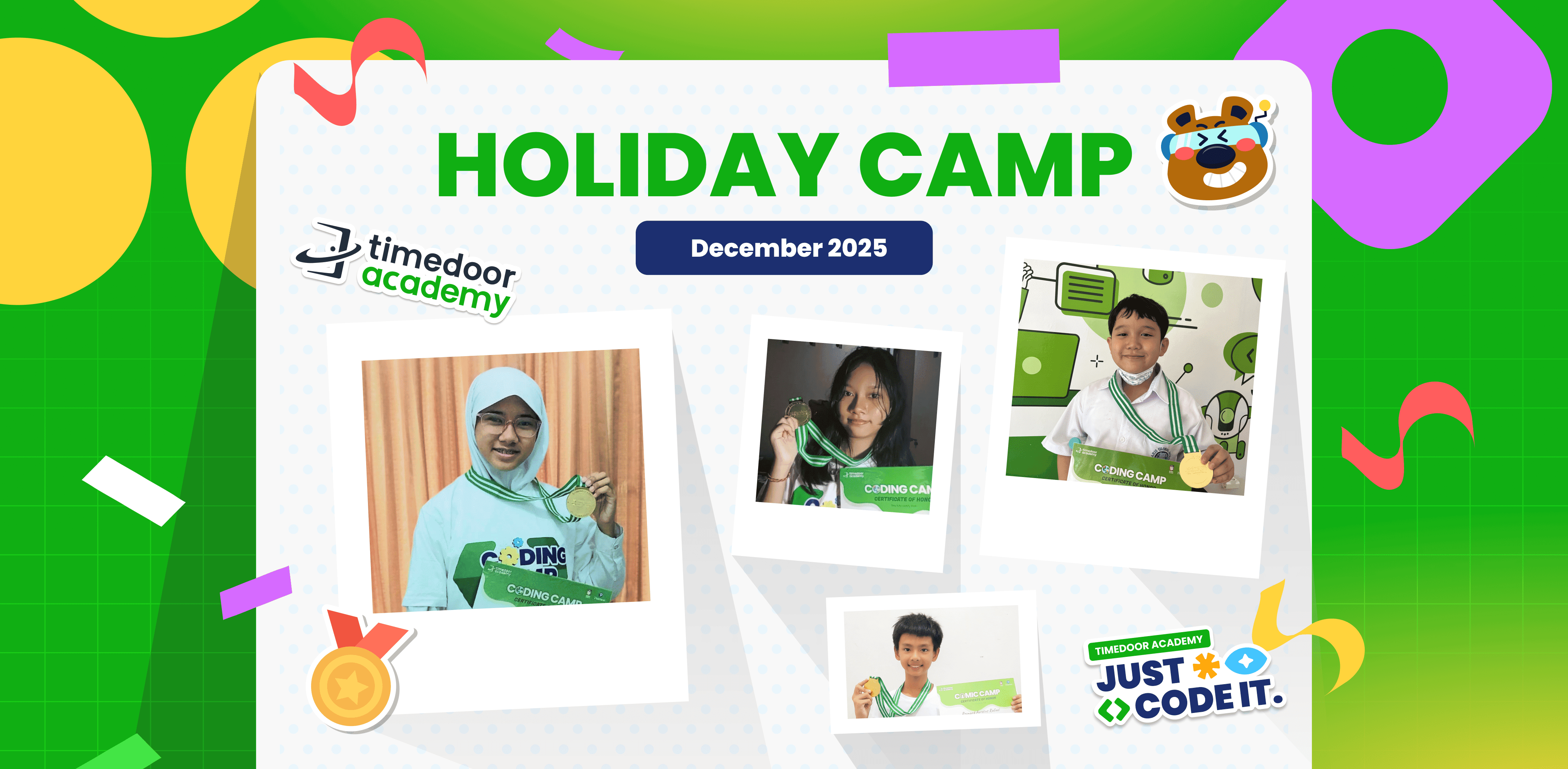
We are thrilled to celebrate the success of Holiday Camp 2025 held by Timedoor Academy, which took place from December 15 to December 30. This year’s event was our biggest yet, welcoming over 500 talented students from across Indonesia! The experience reached new heights this year with the debut of our latest "Programs such as Cyber Heroes, in which students identify cyber threats such as phishing and malware by using Mini Games & Scratch, and also Make AI with Pictoblox, providing a well-rounded and immersive learning environment. On this special occasion, the students dived deep into their passions—ranging from Python and Roblox Development to Artificial Intelligence, and Comic Making. Under the mentorship of our expert teachers, participants tackled ambitious projects and sharpened the digital skills essential for their futures. After much deliberation, we are now ready to honor those who truly stood out for their creativity and dedication. We are proud to present the winners of the Best Project and Best Participant awards: JUNIOR ANIMATOR CATEGORY PARTICIPANT’S NAME BRANCH Best Project Rayson Devatta Wang Jambi Best Participant Rafka Irtiza Syaqier Sentul JUNIOR 3D GAME CATEGORY PARTICIPANT’S NAME BRANCH Best Project Mikael Jose Alvaro Cikarang Best Participant Kyrie Manado JUNIOR CONSTRUCT CATEGORY PARTICIPANT’S NAME BRANCH Best Project Justin Owen Tandi Cikarang Best Participant Saddam Khairul Hanif Cikarang AI WITH PICTOBLOX CATEGORY PARTICIPANT’S NAME BRANCH Best Project Alden Immanuel Barneth Bandaso Mandagi Cikarang Best Participant Raizel Zane Wiltan Palembang CYBER HEROES CATEGORY PARTICIPANT’S NAME BRANCH Best Project Thomas Harvianz Green Lake City Best Participant Fransisca Karla Alveenia Hadiwijaya Yogyakarta KIDS CONSTRUCT CATEGORY PARTICIPANT’S NAME BRANCH Best Participant Zara Shaquitta Tanujaya BSD KIDS ROBLOX CATEGORY PARTICIPANT’S NAME BRANCH Best Project Habibi Rafif Cibubur Best Participant Ziggy Raziq Rizalya Makassar KIDS PYTHON CATEGORY PARTICIPANT’S NAME BRANCH Best Project Bennedict Javier Jambi Best Participant Felix Gerard Wyenn Tanjung Duren TEENS WEB DEVELOPER CATEGORY PARTICIPANT’S NAME BRANCH Best Project Nathanael Andromeda Juan Kristanes Batam Best Participant Muhammad Hafizh Prananda Aryawan Malang TEENS ROBLOX CATEGORY PARTICIPANT’S NAME BRANCH Best Project Marcia Josephine Renon Best Participant Muhammad Fajri Akbar Lampung TEENS PYTHON CATEGORY PARTICIPANT’S NAME BRANCH Best Project Rayhan Avicenna Alfatih Jagakarsa Best Participant Kalyana Adinda Parahita Jagakarsa TEENS AI CATEGORY PARTICIPANT’S NAME BRANCH Best Project Tsaqif Bariq R.H. Gayungan Best Participant Elishine Syallom Citraland  COMIC KIDS CATEGORY PARTICIPANT’S NAME BRANCH Best Project Katrina Amadea Tanuwidjaja Online Best Participant Flynn Oliseh Opene Online IOT KIDS & TEEN CATEGORY PARTICIPANT’S NAME BRANCH Best Project Daffa Muhammad Zahir Cikarang Best Participant Gerald Kelapa Gading  
7 Strong Steps to Prepare Your Child as a Generation of Technology Creators

7 Strong Steps to Prepare Your Child as a Generation of Technology Creators

In today’s fast-paced digital era, understanding and creating technology has become one of the most essential skills for children. The world no longer only needs users of technology but also creators and innovators who can bring new solutions through digital creativity. That is why nurturing a generation of technology creators from an early age is a strategic step for parents and educators. Technology is now a part of almost every aspect of human life. From communication and education to entertainment, everything relies on digital innovation. In this context, the role of technology creators becomes crucial in shaping a more advanced, creative, and sustainable future. Children who understand the fundamentals of technology from a young age will grow with stronger logical, analytical, and creative thinking skills. 1. Cultivating an Innovative Mindset from an Early Age The first step in developing a generation of technology creators is to instill an innovative mindset in children. Instead of merely using apps or playing games, children should be encouraged to understand how those technologies are built. Through activities such as coding, digital design, or simple experiments with software, children begin to think like creators rather than consumers. This approach trains them to seek solutions, generate new ideas, and not fear making mistakes. The earlier children are introduced to the concept of creating technology, the greater their potential to grow into true innovators. 2. Strengthening Problem-Solving and Logical Thinking One of the main benefits of building a generation of technology creators is helping children develop systematic thinking and logical problem-solving skills. In the world of coding, for instance, they learn how to arrange steps so that computers can execute commands correctly. This process fosters critical thinking, which is valuable in many areas of life. Moreover, problem-solving activities teach perseverance and patience. Children learn that every mistake can be fixed through analysis and improvement, shaping a resilient and growth-oriented mindset. 3. Connecting Creativity with Technology Many parents think technology is rigid and technical, while in reality, it can also be a powerful medium for creativity. Children who grow as part of the generation of technology creators can combine art and technology to produce unique works such as animation, digital music, or interactive games. Through this creative approach, children learn that coding and design are not only about numbers and logic but also about imagination and self-expression. Technology provides them with the space to create something original and meaningful. 4. Building Early Career Readiness Technology skills are becoming one of the key foundations of the future workforce. Professions in digital fields, such as software development, game design, and artificial intelligence, are in high demand. By developing a generation of technology creators, parents help their children gain a competitive advantage from an early age. Children who grow up thinking in technological logic will adapt more easily to changes in the job market. They will not only be ready to face the future but also lead innovation that shapes it. 5. Teaching Digital Responsibility Being part of the generation of technology creators is not only about mastering technical skills but also about understanding the ethics behind technology use. Children should learn to create technologies that are useful, safe, and responsible for society. Through balanced digital education, they will understand the importance of privacy, respect for others’ work, and using technology for positive purposes. This foundation helps them grow into innovators who are not only intelligent but also ethical. 6. Enhancing Collaboration and Communication Skills In today’s technology-driven world, collaboration is the key to success. Building a generation of technology creators also means teaching children how to work in teams, exchange ideas, and value others’ opinions. Many technology projects require interdisciplinary teamwork involving developers, designers, and more. Through collaborative activities, children learn that great innovations are not created by one person alone but through effective teamwork and communication. These social skills will become valuable assets in their academic and professional journeys. 7. Building Independence and Confidence Children who can create something from their own ideas develop high self-confidence. They learn that every idea, no matter how small, has the potential to grow. This is the essence of the generation of technology creators: children who dare to dream, think critically, and turn ideas into reality. With the right support from parents and a positive learning environment, they will remain motivated to learn and innovate without limits. How Timedoor Academy Helps Build a Generation of Technology Creators Timedoor Academy understands the importance of nurturing children who not only use technology but also create it. Through project-based learning and guidance from professional mentors, students explore the world of coding, design, and digital innovation in a fun and interactive way. Every lesson is designed to develop logical thinking, creativity, and responsibility. With a child-friendly approach, Timedoor Academy helps every student grow their curiosity and passion to become part of the generation of technology creators who will shape the future. Take the First Step Today The world of technology keeps moving forward, and the future belongs to those who can create, not just consume. Help your child become part of the generation of technology creators who are ready to face the challenges of tomorrow with confidence, logic, and creativity.Sign up your child for a free trial class at Timedoor Academy today and discover how digital learning can become an inspiring, safe, and meaningful experience.
7 Powerful Reasons Why Coding Game Roblox for Kids Can Shape Their Future

7 Powerful Reasons Why Coding Game Roblox for Kids Can Shape Their Future

In today’s fast-paced digital world, technology skills have become an essential part of children’s growth. One of the most engaging ways to introduce programming is through the coding game Roblox for kids. Roblox is more than just a gaming platform; it is a creative learning space where children can build their own virtual worlds while understanding programming logic in a fun and interactive way. For parents, introducing coding at an early age is not just a trend but a long-term investment. By learning to code through Roblox, children develop logical thinking, creativity, and collaboration skills. In this article, we will explore seven powerful reasons why the coding game Roblox for kids can play a vital role in shaping a smarter, more innovative future generation. 1. Turning Playtime into Learning Time Children often spend hours playing games. However, with the coding game Roblox for kids, playtime can become a productive learning experience. Roblox Studio, the platform’s game creation tool, allows kids to understand how a game is built from scratch. They can design characters, write scripts, and create their own game mechanics. Through this process, children are introduced to basic coding concepts such as variables, logic, and functions in a simple and engaging way. It transforms gaming from passive entertainment into an active and educational activity. 2. Boosting Creativity and Imagination One of the biggest strengths of the coding game Roblox for kids is its ability to unleash creativity. Within Roblox, children can build their own virtual worlds, from a simple playground to a futuristic city. There are no limits to what they can imagine and create. This design and coding process allows kids to turn their ideas into something tangible. They do not just use technology; they become creators who understand how it works. Combining art, logic, and problem-solving helps them develop creativity in multiple dimensions. 3. Building Problem-Solving and Critical Thinking Skills Every game developed in Roblox presents unique challenges. Children who explore the coding game Roblox for kids often encounter situations where they need to fix coding bugs or adjust game features to make everything run smoothly. These experiences naturally strengthen their problem-solving skills. Kids learn to analyze problems, test solutions, and think systematically. These are essential abilities not only for digital development but also for daily life, school projects, and teamwork. 4. Encouraging Collaboration and Communication Roblox is a global platform that encourages collaboration among users from all around the world. Through the coding game Roblox for kids, children can learn to work in teams, share ideas, and respect others’ opinions. These teamwork and communication skills are crucial for the future, especially in a professional world that relies heavily on cross-disciplinary and cross-cultural cooperation. Kids also learn how to explain ideas clearly and solve problems together. 5. Equipping Children with Future-Ready Skills In the coming years, digital skills will be one of the most valuable assets for any profession. By learning the coding game Roblox for kids, children build a solid foundation for future careers in app development, game design, or even artificial intelligence. Understanding programming logic gives them a significant advantage in a technology-driven world. Even if they do not become programmers, the structured and analytical mindset learned from coding will benefit them in many areas of life. 6. Making Learning Fun and Engaging One of the biggest challenges in education is maintaining children’s interest in learning. Through the coding game Roblox for kids, learning becomes an enjoyable experience rather than a chore. Children learn by doing, experimenting, and seeing their ideas come to life in real time. They feel proud when their game works and others play it. This sense of accomplishment builds confidence and motivates them to continue exploring and improving their skills in technology. 7. Inspiring Early Entrepreneurship Roblox is not only about coding; it also teaches valuable lessons about digital entrepreneurship. Kids who master coding game Roblox for kids can create popular games and even earn income through Roblox’s in-game economy. This experience fosters a sense of responsibility, creativity, and business awareness from an early age. They learn about value creation, audience engagement, and the importance of innovation in attracting players. How Timedoor Academy Helps Children Master the World of Coding Timedoor Academy believes that every child has incredible potential in the digital age. Through fun, interactive, and age-appropriate lessons, students are guided to explore the world of programming, including coding game Roblox for kids, in a safe and educational environment. Each class is designed not only to teach technical skills but also to instill values like digital responsibility, teamwork, and creativity. With the support of professional mentors, children are encouraged to experiment, innovate, and develop their curiosity about technology. Start Your Child’s Digital Journey Today The digital world is evolving rapidly, and the future belongs to those who can adapt and create with technology. If you want your child to become more than just a technology user but also a creative thinker, coding game Roblox for kids is the perfect first step.Enroll your child in a free trial class at Timedoor Academy today and discover how learning coding can become an inspiring, enjoyable, and rewarding experience that prepares them for a bright future.
7 Important Reasons Why Understanding the Function of VR in the Future Will Change How Children Learn

7 Important Reasons Why Understanding the Function of VR in the Future Will Change How Children Learn

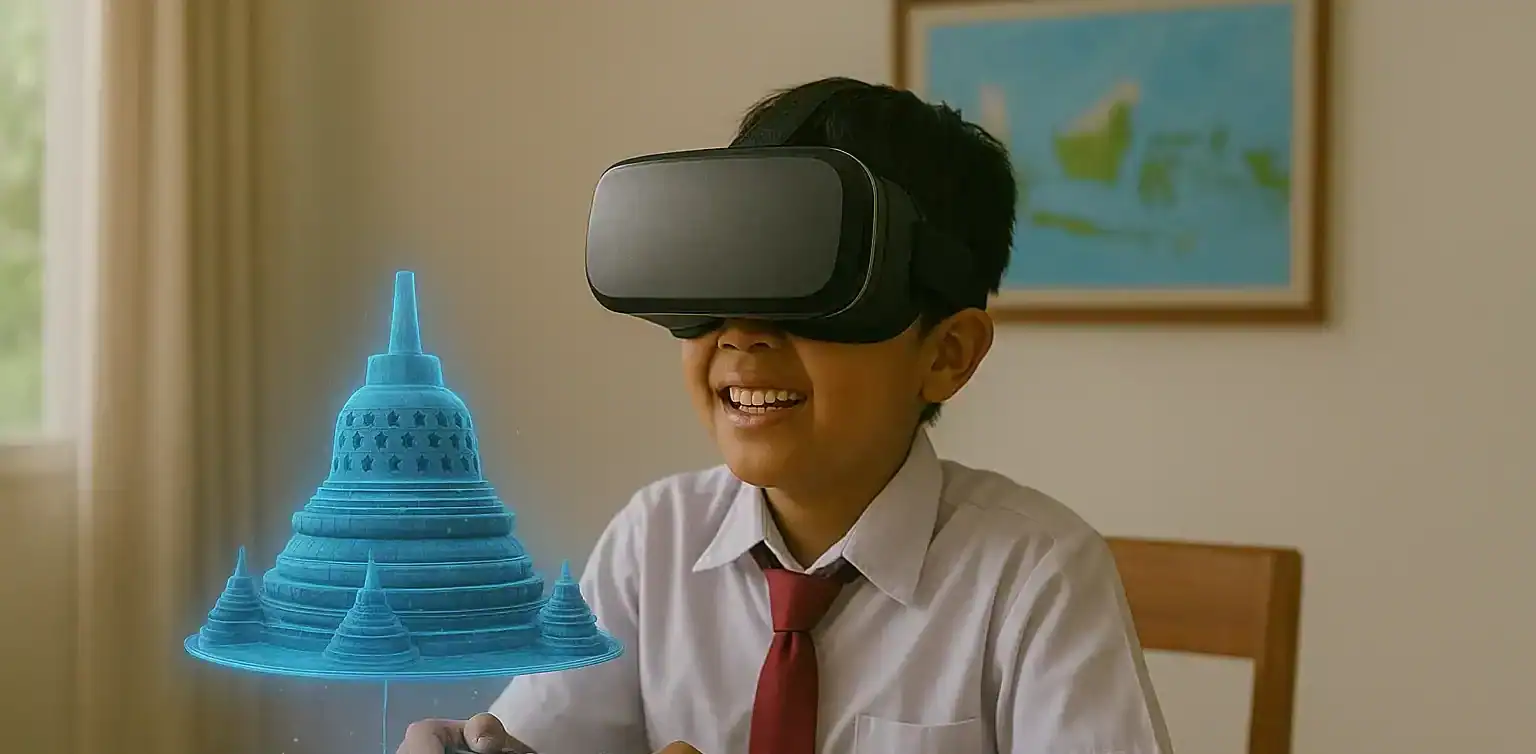
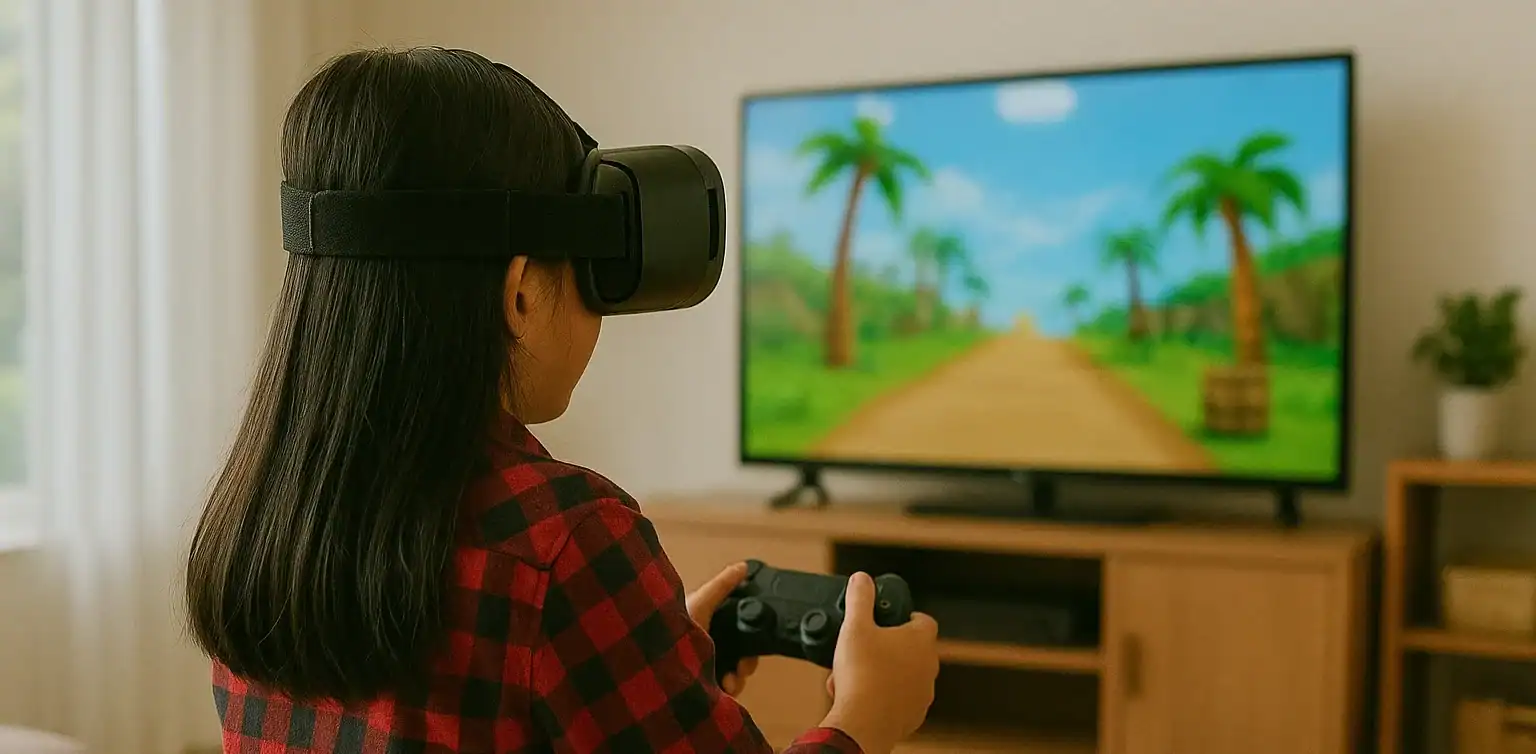
Technology is advancing rapidly, and one of the most fascinating innovations shaping the future is Virtual Reality (VR). In the past, VR might have sounded like a concept from a science fiction movie, but today, this technology has become a real part of education, entertainment, and even professional training. With its ability to create deep and immersive experiences, the function of VR in the future is predicted to become one of the most important elements in the ever-evolving digital world. Virtual Reality allows users to interact with an artificial environment that feels realistic through headsets and sensors. In the context of education, this technology is not just a form of entertainment but also a bridge to deeper and more interactive learning. Children can explore outer space, study human anatomy, or even conduct scientific experiments virtually without any real-world risks. But how important is the function of VR in the future, and how can this technology shape the way our children learn and grow? Here are seven strong reasons why every parent needs to understand the great potential of this technology 1. Providing a More Realistic Learning Experience One of the most promising functions of VR in the future is its ability to provide immersive and realistic learning experiences. Instead of only reading books or watching videos, children can “enter” directly into the learning material. For example, when studying history, they can explore the Egyptian pyramids or witness historical events as if they were truly there. This experience-based learning improves children’s understanding of concepts and memory retention. With more sensory engagement, their brains process information in a more meaningful way. 2. Increasing Children’s Engagement and Motivation Learning is often a challenge for children, especially when teaching methods feel monotonous. Through the function of VR in the future, learning activities can turn into something exciting and full of adventure. Imagine children learning coding, physics, or biology in a virtual world where every lesson becomes an interactive game. VR provides a sense of exploration and discovery that keeps children more motivated to learn. Additionally, this technology helps children with visual or kinesthetic learning styles better understand material in ways that suit their strengths. 3. Developing Empathy and Social Awareness Beyond formal education, the function of VR in the future also plays an important role in developing empathy and social understanding. With VR, children can experience what it feels like to be in someone else’s situation, such as living in another country or understanding the challenges faced by individuals with physical limitations. These experiences broaden their perspectives and nurture values such as compassion, empathy, and respect for diversity. In an era of globalization, these abilities are invaluable in shaping a more inclusive and open-minded generation. 4. Supporting the Learning of Technical and Practical Skills In the future job market, many professions will use VR for training and simulation. Therefore, understanding the function of VR in the future becomes important from an early age. For example, in the medical field, students can use VR to practice surgery without any risk to real patients. In the aviation industry, trainee pilots can learn to control aircraft through realistic simulations. Even in design, architects can create and “walk through” virtual buildings before actual construction begins. Thus, children who are familiar with VR from an early age will have a competitive advantage in the future because they understand how this technology works and how to apply it in practical ways. 5. Encouraging Creativity and Innovation VR is not just about experiencing artificial worlds but also about creating them. One of the most powerful functions of VR in the future is its ability to nurture children’s creativity. Through VR platforms, children can design their own virtual worlds, create characters, or even program interactions within them. This offers great opportunities to combine imagination, art, and technology. Beyond being fun, the process also trains critical thinking and problem-solving skills that are essential for the future. 6. Providing a Safe Environment for Experimentation and Mistakes One of the greatest advantages of the function of VR in the future is its ability to create a safe environment for learning through trial and error. In a virtual world, children can experiment freely without fear of failure or causing real-world harm. This is especially useful in science, engineering, and programming education, where making mistakes is an important part of the learning process. Children can repeat simulations until they truly understand the concept, building confidence and healthy curiosity. 7. Opening New Opportunities in Education and Careers VR technology paves new paths in global education. With the function of VR in the future, children from different parts of the world can learn together in virtual classrooms, interact with teachers from other countries, and access high-quality educational resources without geographical limits. In addition, VR-based industries such as game design, app development, digital training, and entertainment will continue to grow rapidly. Children who understand and can adapt to this technology will have broader and more exciting career opportunities in the future. How Timedoor Academy Equips Children with Future Technology Understanding Timedoor Academy believes that the future of children is not only determined by academic ability but also by their understanding of technology. Through interactive and enjoyable learning, students are introduced to the world of coding, digital design, and innovative technology relevant to today’s advancements, including the function of VR in the future. Under the guidance of professional mentors, every child is encouraged to explore technology with curiosity, responsibility, and creativity. The goal is to help children become not just technology users, but innovative and forward-thinking creators. Start Your Child’s Technology Journey Today Technologies like VR are not just temporary trends but vital parts of children’s educational and career futures. If you want your child to be ready for the future with strong digital skills and a deep understanding of the function of VR in the future, now is the time to take the first step. Register your child for a free trial class at Timedoor Academy today and discover how digital learning can be fun, safe, and inspiring for their future.
Coding Is the Future: 7 Powerful Reasons Why Parents Should Care

Coding Is the Future: 7 Powerful Reasons Why Parents Should Care

In today’s rapidly evolving digital era, coding in future education has become one of the most essential topics for parents and educators alike. The world is shifting toward automation, artificial intelligence, and digital creativity, making coding not just a technical skill but a fundamental form of literacy. Teaching children how to code is no longer an extra activity; it is a preparation for a successful and meaningful future. As technology transforms every aspect of life, understanding coding in future education allows parents to help their children build problem-solving abilities, logical thinking, and creativity. From designing apps to exploring robotics, learning to code opens up unlimited possibilities for young minds to express themselves and thrive in a technology-driven world. 1. Preparing Children for Tomorrow’s Jobs The global job market is changing rapidly. Many future careers will depend on digital skills, especially programming. Professions that require coding expertise are expanding across industries, from healthcare and finance to entertainment and education. Introducing coding in future education ensures that children are prepared to compete in a world where technology leads innovation. By learning coding early, children gain a strong foundation that can open the door to careers in software development, engineering, data science, and even digital entrepreneurship. Parents who encourage this learning give their children a head start in an increasingly competitive environment. 2. Strengthening Problem-Solving and Logical Thinking Coding teaches children how to think, not just what to think. When children write code, they learn to break big problems into smaller, manageable steps. This logical structure encourages analytical thinking that can be applied not only in academics but also in daily life. Integrating coding in future education also helps children develop patience and persistence. When faced with an error or “bug,” they learn the value of testing, refining, and improving, a mindset that nurtures resilience and growth. 3. Encouraging Creativity Through Technology Creativity and technology are no longer separate worlds. Through coding in future education, children can transform their imagination into reality by designing games, creating websites, or developing digital art. Coding gives them the tools to bring their ideas to life, combining creativity with critical thinking. This creative expression builds confidence and allows children to see technology as more than just entertainment, it becomes a platform for innovation and self-expression. 4. Supporting Academic Growth and Future Readiness Studies show that children who learn coding often perform better in math, science, and language subjects. The logical and structured way of thinking developed through coding enhances academic skills across disciplines. By prioritizing coding in future education, schools can create an environment where students not only consume technology but also understand how it works. In the long run, this helps prepare students for advanced studies in computer science, engineering, and other STEM-related fields, ensuring they stay ahead in an ever-changing digital society. 5. Promoting Responsible Digital Citizenship As children spend more time online, understanding how technology works also helps them navigate it responsibly. Incorporating coding in future education fosters awareness about digital ethics, online privacy, and cybersecurity. Children who learn coding are more likely to use the internet wisely, respect digital boundaries, and contribute positively to the online world. This balance of technical skill and moral awareness is crucial for raising responsible digital citizens. 6. Empowering Collaboration and Teamwork Coding is not a solitary skill, it often involves teamwork and communication. Many modern coding projects require collaboration, idea sharing, and collective problem-solving. By engaging in coding in future education, children learn how to work effectively with others, value different perspectives, and contribute to group success. These interpersonal skills are highly valued in every profession, preparing children not only to excel individually but also to thrive in team-oriented environments. 7. Opening a Path to Innovation and Lifelong Learning The world of technology never stops evolving. By embracing coding in future education, children develop a lifelong learning mindset that keeps them adaptable and open to change. They learn how to explore new tools, experiment with emerging technologies, and think critically about how digital solutions can improve the world around them. This mindset of curiosity and innovation ensures that they are not left behind but rather lead the way in shaping the future. How Timedoor Academy Brings the Future Closer Timedoor Academy believes that every child has the potential to become a creator of technology, not just a user. Through structured learning programs, students explore coding, robotics, and digital creativity in a supportive and engaging environment. By integrating coding in future education into each lesson, Timedoor Academy ensures that children not only gain technical skills but also learn values such as responsibility, teamwork, and innovation. With guidance from professional mentors, every child is encouraged to build confidence, curiosity, and a growth mindset that will serve them in every aspect of life. Take the First Step Today Technology shapes the future, and your child can be part of it.Help your child begin their journey in coding in future education by joining a free trial class at Timedoor Academy today. Discover how our expert mentors can inspire your child to explore, create, and grow in a safe and encouraging environment. Let your child not just use technology, but understand and build it.
10 Powerful Reasons Why Understanding The Importance of Digital Safety for Kids Matters Today

10 Powerful Reasons Why Understanding The Importance of Digital Safety for Kids Matters Today

In the digital era, kids are growing up surrounded by screens, the internet, and endless online interactions. While technology offers many advantages, it also introduces new challenges that parents cannot ignore. From social media exposure to online gaming and digital learning, kids face potential risks that may affect their privacy, safety, and mental well-being. That is why understanding the importance of digital safety for kids has become a vital aspect of modern parenting. As technology becomes an inseparable part of daily life, the need to educate kids about online behavior, privacy protection, and responsible technology use becomes more urgent. Digital literacy is no longer just an option; it is an essential skill for every child in the 21st century. 1. Building Awareness About Online Threats Many kids use the internet without understanding its potential dangers. Parents and educators need to guide them to recognize harmful websites, suspicious links, or strangers who might have bad intentions. Teaching kids about the importance of digital safety for kids helps them develop awareness from an early age, making them more cautious when navigating the online world. 2. Protecting Personal Information One of the key components of the importance of digital safety for kids is teaching them how to protect their personal information. Many websites and apps ask for details such as names, photos, and locations. Without proper knowledge, kids may share private data that could be misused by others. Parents must teach their kids never to share personal information without permission and to use privacy settings responsibly. 3. Preventing Cyberbullying Cyberbullying is a growing concern in today’s society. Kids who spend time on social media or online games may face bullying, harassment, or exclusion. By understanding the importance of digital safety for kids, both parents and kids can learn how to prevent, identify, and handle cyberbullying effectively. Encouraging open communication and emotional support is key to protecting a child’s mental health online. 4. Encouraging Responsible Social Media Use Social media platforms are a popular space for kids to express themselves and connect with friends. However, it is also a place where misinformation, inappropriate content, and privacy issues can occur. Educating kids about the importance of digital safety for kids means guiding them to use social media responsibly, think before they post, and understand the consequences of sharing personal content publicly. 5. Managing Screen Time Wisely Digital safety also includes managing how much time kids spend online. Excessive screen time can lead to fatigue, distraction, and reduced focus in learning. Understanding the importance of digital safety for kids helps parents and kids create healthy boundaries between study time, online entertainment, and offline activities. Balanced screen time supports both mental and physical well-being. 6. Strengthening Digital Literacy Skills Digital literacy goes beyond knowing how to use gadgets. It involves critical thinking, information evaluation, and problem-solving skills. Through programs like coding or digital creativity classes, kids can learn how to use technology safely and productively. Learning the importance of digital safety for kids empowers them to become responsible digital citizens who use technology for positive purposes. 7. Avoiding Scams and Online Manipulation Kids can easily fall for online scams, such as fake giveaways or misleading ads. They may also be influenced by manipulative content designed to collect data or promote harmful behavior. Teaching them the importance of digital safety for kids helps prevent these incidents. They learn to identify suspicious behavior and make smarter online choices. 8. Promoting Positive Online Communication Online communication can be beneficial when used positively. Kids can learn, share ideas, and collaborate across cultures. However, they must also understand the ethics of digital communication, such as respecting others’ opinions and avoiding hurtful language. Incorporating the importance of digital safety for kids into their learning encourages empathy and respect in every online interaction. 9. Preparing for a Digital Future As technology continues to evolve, digital safety becomes an essential foundation for every future career. Kids who understand the importance of digital safety for kids will grow into professionals who value data protection, cybersecurity, and ethical technology use. Early exposure to these concepts prepares them to thrive in a world where digital skills are in high demand. 10. Empowering Parents and Schools to Collaborate Lastly, promoting the importance of digital safety for kids requires collaboration between parents, teachers, and institutions. Schools can integrate digital safety education into the curriculum, while parents can apply these lessons at home. Together, they create a safe and supportive environment where kids can explore technology without fear. How Timedoor Academy Helps Strengthen Digital Safety Education Timedoor Academy understands that technology can be both exciting and challenging for kids. Through structured learning programs, students not only develop coding and digital skills but also gain awareness about online safety, privacy, and responsible internet use. Each class is designed to help kids understand the importance of digital safety for kids in practical and engaging ways. By joining Timedoor Academy, your child will be guided by professional mentors who are committed to creating a positive and secure learning environment. Parents can feel confident knowing that their kids are developing both technical knowledge and safe digital habits. Ready to Help Your Child Explore Technology Safely? Digital safety begins with knowledge. If you want your child to grow up as a confident, creative, and responsible digital user, now is the perfect time to take the first step. Register your child for a free trial class at Timedoor Academy today! Discover how our expert mentors can help shape your child’s understanding of technology while ensuring their safety in the digital world.
7 Powerful Secrets to Make Children Excited About Learning Technology

7 Powerful Secrets to Make Children Excited About Learning Technology

In today’s fast-paced digital era, understanding technology has become one of the most essential skills for kids. However, many parents are still unsure about how to make kids interested in learning technology. Most kids prefer playing games on their phones or watching videos for entertainment rather than using technology for something educational. In fact, when used correctly, technology can be a bridge toward a bright future. kids who are familiar with technology from an early age have greater opportunities to develop creativity, logical thinking, and problem-solving skills. Timedoor Academy understands this challenge and is committed to helping parents find the best approach to make their kids love the world of technology in a positive and enjoyable way. Let us explore seven powerful secrets that will help you discover how to make kids interested in learning technology naturally and effectively. 1. Start with What Your Child Loves The first step in finding how to make kids interested in learning technology is to identify what your child enjoys the most. For instance, if your child loves drawing, introduce them to simple digital design apps. If they love playing games, invite them to learn how to create their own games. When learning is connected to their personal interests, kids are more likely to understand and stay engaged. They will see technology not as a rigid subject but as a tool for creativity and self-expression. 2. Make Learning Interactive and Meaningful kids are naturally drawn to interactive activities. They love to participate and see results from their own efforts. Therefore, one of the best ways on how to make children interested in learning technology is by providing fun and hands-on experiences. At Timedoor Academy, each lesson is designed to be engaging through activities like creating animations, designing websites, or building simple educational games. These experiences help kids understand technology in a visual and contextual way rather than only through theory. When kids can see their animation move or their program run successfully, their excitement and curiosity grow naturally. 3. Create a Supportive Learning Environment A supportive environment plays a key role in sparking a child’s interest. If parents limit technology use without clear guidance, kids might see technology as something negative. However, when the environment encourages exploration, they become more confident to try new things. One effective method of how to make kids interested in learning technology is to create a positive learning space. Parents can schedule a special time to learn together, ask about what their child is discovering, or even try out coding lessons alongside them. When kids feel valued and supported, their motivation to learn will rise significantly. 4. Introduce Technology as a Creative Tool kids often see technology only as a form of entertainment. In reality, technology holds incredible potential for creating meaningful works. To truly discover how to make kids interested in learning technology, show them that technology can be used to create something valuable. For example, they can make digital comics, design game characters, or write interactive stories using beginner-friendly programming tools. When kids realize that they can produce something original and exciting through technology, their curiosity will naturally grow stronger. 5. Show Inspiring Role Models in Technology Inspiration can come from real people who have made an impact in the world of technology. Tell your kids stories about people like Mark Zuckerberg, Elon Musk, or young Indonesian developers who have created digital innovations. This approach can be one of the best examples of how to make kids interested in learning technology because it helps them see real-life success stories. Kids will understand that technology is not limited to adults or professionals; it is a field open to anyone with passion and creativity. Through these stories, kids can be motivated to dream big and work toward their own goals in the tech world. 6. Use the Right Learning Platform Not all learning platforms are suitable for kids . Some are too technical, while others may lack meaningful challenges. That is why choosing the right educational platform is crucial. Timedoor Academy provides the perfect solution for parents looking for how to make kids interested in learning technology in a fun and age-appropriate way. Here, kids learn coding and technology through project-based lessons that encourage creativity, logical thinking, and collaboration. With interactive classes and friendly mentors, kids will discover that learning technology is not difficult but actually exciting and rewarding. 7. Celebrate Every Achievement Even small accomplishments deserve recognition. One of the most effective approaches to how to make kids interested in learning technology is by celebrating every milestone. When your child finishes their first coding project or creates a simple app, express your appreciation and excitement. These positive reinforcements help them feel proud of their progress and eager to continue learning. As a result, learning will no longer feel like a chore but an enjoyable and fulfilling adventure. The Role of Parents in Nurturing Tech Interest Parents play a crucial role in supporting and guiding their kids as they explore technology. Emotional support and shared curiosity can make the learning process more meaningful. Be your child’s learning companion. Listen to their stories, help them solve challenges, and avoid judging mistakes. By doing so, you strengthen your bond and boost your child’s confidence. You do not have to be a tech expert to support your child. Showing genuine enthusiasm and encouragement is often enough to make a lasting impact on their learning journey. Register Your Kid Now! Encouraging kids to learn technology may seem challenging at first, but it is definitely possible. By applying these principles of how to make kids interested in learning technology, parents can help their kids discover the fun and creative side of the digital world. Kids who learn to love technology from an early age will grow into creators, not just consumers. They will be better prepared to face future challenges with creativity, confidence, and problem-solving skills.Would you like your child to learn technology in a fun and inspiring way? Register now for a Free Trial Class at Timedoor Academy! Let your child experience interactive learning that builds creativity, logic, and curiosity about technology from an early age.
Anak-anak Koding
Benefits of Coding: How Can Children Overcome Challenges Through Coding?
Educate children by utilizing the benefits of coding in order to help children learn more valuable life skills. Have you encountered situations where the young ones have trouble dedicating themselves to their choices and remaining attentive as well as persistent to the task at hand? Identifying what needs to be chosen and how to maintain a commitment to those choices is a crucial skill that needs to be developed from an early age, particularly in the event of the common challenge faced by parents or educators where youngsters struggle to commit and maintain focus on tasks.  Kids should understand the value of perseverance and focused effort, learning to stay committed rather than abandoning their task especially when facing difficulties during the completion process.  As they grow, kids require opportunities that allow them to practice making decisions and persevering in their chosen paths. Hence, providing them with an environment that offers opportunities to foster and practice these skills will help children develop the resilience and determination necessary to persevere and overcome challenges.   The Power and Benefits of Coding to Help Children Introducing coding at an early age provides kids with a unique and supportive environment to develop essential life skills, specifically perseverance, determination, long-term project management, and resilience to overcome challenges. This approach leverages the inherent nature of tasks, which often require sustained effort and problem-solving.   Cause and Effect in Coding Concept Children should already begin to realize that each of their choices has long-term consequences. This awareness is a crucial aspect in shaping cognitive and emotional development from a young age. Code learning will help children engage in projects that demand patience and persistence at the same time. Early coding concepts present the kids with the cause-and-effect relationship concept seeing that it is a clear and immediate example of how actions (writing code) lead to specific outcomes. This case would develop logical reasoning skills where it allows them to connect events and understand how one action leads to another or affects the outcome. It enables them to recognize that certain errors are necessary learning experiences that need to be encountered to solve and make a perfect result.   Embracing Mistakes as Learning Opportunities in Coding Moreover, having them know that mistakes are not the end of the world is important to make them prepared for future challenges and obstacles in their life. Experiences will help children to develop emotional strength and the ability to bounce back from setbacks. In this term, errors or bugs frequently appear throughout the development process is just the beginning of a great debugging adventure. These glitches, flaws, or defects are an inherent part of programming and often emerge at various stages of writing and executing code. Hence, the non-functional code the youth wrote assists them in understanding that these are natural occurrences and viewing them positively as stepping stones to greater comprehension and not as failures.  The journey constantly requires and encourages kids to be determined and engaged in deep analysis, resolve complications, and experiment with different solutions. This will make them aware of the process of hypotheses and give them confidence in conducting simple experiments in order to find a workable solution.     Read Our Other Articles: How Should We Manage Gadget Addiction in Children? Free Coding Class for Children in Orphanage     Real-World Application and Benefits of Coding Skills   Case Study: Children Animating a Virtual Character Through Coding As an illustration, a child coding to animate the movement of a virtual character. However, there are unexpected results on the visual feedback after their commands are visually observed where the character glitches, misbehaves, or even makes an inhuman movement.    Children's Problem-Solving in Actions In order to solve the problem, the coder must perform the actions to find the mistakes and debug their code to make the movement of animation smoother and without errors. During the process of identifying what went wrong and why it happened, the kid will practice and refine their analytical skills, and critical thinking. At the same time, consistent effort over time is required where they are required to be patient with themselves and maintain high self-motivation. Thus, this will help children develop those skills that are greatly needed throughout their lives later on   Building Confidence and Self-Esteem Through Coding Success Furthermore, being able to find the error and successfully make the code prompt work as planned and without trouble would gradually boost the children’s confidence and self-esteem. Having high belief in their capabilities encourages them which help children to be curious and attentive to tackle other more complex obstacles in the related aspect. These are considered transferable skills that beneficially have wide-ranging applications for the kids' future and it is indeed beyond the environment of programming.    Conclusion In conclusion, learning how to code is a positive way not to only make them more productive but also to have more applicable skills. Coding offers a unique and effective platform for the young ones to develop crucial life skills. At once, it nurtures them to understand the cause-and-effect and to see any setback in their life not as a progress stopper but as a helpful signal to resolve the mistakes they face.  Throughout the process, the determination built will fortify children’s mindset always to overcome challenges in their future successful journey and allow them to be modern mini-Einsteins. What to highlight is that these experiences are not only to enhance their programming abilities but also the benefits of coding to help children foster transferable skills that will benefit them in various aspects of life. The reason is that by introducing coding at an early age creates a supportive environment for youngsters to build resilience, boost confidence, and cultivate a growth mindset, preparing them for future challenges both within and beyond the realm of technology.   Facilitate Youngers in a Supportive Educational Environment   Therefore, unlock your sons and daughters' potential and nurture their problem-solving skills through our innovative and engaging coding courses. Timedoor Academy, is your young ones' gateway to the exciting world of technology! We offer IT education courses designed to empower the next bright and young generation. At Timedoor, we provide expert teachers with hands-on, interactive lessons that transform complex concepts into fun and engaging experiences that will help children open their paths. Sign up for our free trial class and watch as your young one's eyes light up with the thrill of discovery and innovation. Visit Timedoor Academy's website for more information.   Frequent Asked Questions Q: What is coding? A: Coding is the process of translating ideas into instructions using a language that computers can understand and execute.   Q: Why children should learn to code? A: It teaches and helps children with several valuable skills that are also applicable to other realms of life including problem-solving, persistence, decision-making, digital literacy, and many others.   Q: Do children can learn coding? A: Yes, they can learn it. There are many engaging and enjoyable ways to make the course understandable for youngsters.   Q: Is coding really needed in the future? A: It is one of the most valuable skills in the future seeing that there is a constant increase in the demand for an individual to be technology-dependent.   Q: At what age should a kid start learning to code? A: There are several reliable sources stating that it is recommended to begin learning to code at 5-6 years.
Timedoor Academy Bootcamp June-July 2024 Awardee Announcement
Timedoor Academy's BootCamp 2024 : From Zero to Pro took place from June 24 to July 5, 2024, drawing over 200 participants from both online and offline classes across multiple cities such as Jakarta, Bogor, Tangerang, Bandung, Semarang, Surabaya, Bali, Batam, Pontianak, dan Palembang. Our BootCamp (5-day courses) in Programming and Multimedia Design offered students a variety of options. The Coding Camp covered Game Developer, Website Developer, Python Programming, Roblox Developer, Artificial Intelligence, and IoT. The Design Camp focused on Animation, UI/UX Design, and Comic Making to nurture creativity. Timedoor Academy's mission is to transform students into proficient programmers, designers, and comic artists within just 5 days. By guiding them through challenging projects on their preferred platforms, we equip them to excel as digital experts, poised to tackle both current and future challenges! Today, we're excited to announce the winners of the Best Project and Best Participant awards in each category. Check out the details below: JUNIOR ANIMATOR CATEGORY PARTICIPANT’S NAME BRANCH Best Project Arganta Saka Yudha Jimbaran Best Participant Valen Putra Oh Cikarang JUNIOR DEVELOPER CATEGORY PARTICIPANT’S NAME BRANCH Best Project Regina Citraland Best Participant Ngakan Putu Gavin Arganta Renon ADVANCE GAME DEV CATEGORY PARTICIPANT’S NAME BRANCH Best Project Nattaya Karuna Prajnaparamitha  Renon Best Participant Ukasyah Batam KIDS CONSTRUCT BEGINNER + WEB CATEGORY PARTICIPANT’S NAME BRANCH Best Project Irena Louisa Online ID Best Participant Conan Satria Cheah Bandung KIDS ROBLOX CATEGORY PARTICIPANT’S NAME BRANCH Best Project Gabriel Veriano Cikarang Best Participant Sherin Agustine Pontianak KIDS PYTHON CATEGORY PARTICIPANT’S NAME BRANCH Best Project Jordan Emanuel Suryonugroho Online ID Best Participant Medina Zahra Adlina Online ID KIDS AI CATEGORY PARTICIPANT’S NAME BRANCH Best Project Matthew Aditya Kelapa Gading Best Participant Christopher Ken Kelapa Gading TEENS PHASER CATEGORY PARTICIPANT’S NAME BRANCH Best Project Ferdiyan Paradisetia Gatsu Best Participant Georgy Aiden Kolius Bandung TEENS WEB DEV CATEGORY PARTICIPANT’S NAME BRANCH Best Project Annisa Aurelia Satriani Cikarang Best Participant Mar'ie Helmi Alim Renon TEENS ROBLOX CATEGORY PARTICIPANT’S NAME BRANCH Best Project Sulthan Abdullah Al Faiq Online ID Best Participant Ken Sadi Ganesha Gatsu TEENS PYTHON CATEGORY PARTICIPANT’S NAME BRANCH Best Project Alya Kusuma Nurjannah Online ID Best Participant Joe Lukas Wili Sukomanunggal TEENS APP DEV CATEGORY PARTICIPANT’S NAME BRANCH Best Project Desmond Elvis  Batam Best Participant Shakira Kelapa Gading TEENS AI CATEGORY PARTICIPANT’S NAME BRANCH Best Project Gede Nararya Aruna Yoga Online ID Best Participant Rashad Kelapa Gading COMIC KIDS CATEGORY PARTICIPANT’S NAME BRANCH Best Participant & Best Project Noura Aufaa Shanum  Online ID COMIC TEENS CATEGORY PARTICIPANT’S NAME BRANCH Best Project Kevia Rava Zhafira Online ID Best Participant Reynard Aurelius Rafael Online ID DESIGN ANIMATION CATEGORY PARTICIPANT’S NAME BRANCH Best Project Valkyrie Chan Online ID Best Participant Russell Edgar Diputra Online ID DESIGN UI/UX WEB  CATEGORY PARTICIPANT’S NAME BRANCH Best Project Amira Nabila Rachman Online ID Best Participant Valkyrie Chan Online ID DESIGN UI/UX APP  CATEGORY PARTICIPANT’S NAME BRANCH Best Project Fazka Arfin Nautama Online ID Best Participant Alvaro Gavriel Barlianta Online ID IOT KIDS/TEENS  CATEGORY PARTICIPANT’S NAME BRANCH Best Project Jaya Gayungan Best Participant Canasya Adhya Parami Gatsu All awardee will receive medals, exclusive T-shirts and merchandise from Timedoor Academy. Send your address to Timedoor Academy Admin to claim your prize.
Kecanduan Gadget Pada Anak
How Should We Manage Gadget Addiction in Children?
In this digital era, gadget addiction in children has become a major concern for parents. Excessive digital use can negatively impact a child's physical, emotional, and social development. A notable study in Bangladesh identified a significant relationship between high gadget addiction and poor cognitive function among children. This research also indicated certain factors, including demographic and family dynamics.  However, parents should not worry too much as gadget addiction can be controlled. Before discussing ways to control gadget addiction, parents must first understand the causes of gadget addiction in children.     Causes of Gadget Addiction in Children   Attractive Digital Content The presence of applications, video games, and social media keeps children constantly engaged due to their attractive features. Passive engagement with entertainment through digital devices can have significant disadvantages and contribute to the development of gadget addiction in children. When children's interactions with technology are primarily focused on passive consumption of content, rather than active learning or creative activities, it increases the risk of them becoming overly dependent on and addicted to their devices. Furthermore, social media can make children feel valued and acknowledged through likes and comments, which can lead to addiction to validation. The algorithms behind these applications are designed to continually capture users' attention, making it difficult for children to stop and increasing the likelihood of excessive use of social media and video games.   Lack of Alternative Activities Children who do not have activities such as hobbies or other physical activities are more prone to gadget addiction. A lack of alternative activities will lead children to turn to digital devices to fill their free time. Some academic studies indicated that increased screen time is often associated with higher rates of sedentary behavior, which includes prolonged periods of sitting or lying down. The impact of screen time on physical activity levels is significant, with evidence suggesting that screen engagement leads to decreased physical activity and increased risk of being overweight​ For example, children without physical activities will quickly become bored, and playing with gadgets becomes the go-to activity. Thus, a lack of social interaction and outdoor activities contributes to the increase in gadget use among your children.   Parental and Environmental Role Children tend to imitate what they see. Studies have shown that young children often replicate what they see on screen or what is modeled by adults in their immediate surroundings.  If children see parents or people in their environment frequently using gadgets, they will feel that excessive gadget use is normal and will contribute to gadget addiction. For example, if parents are often busy with their gadgets in front of their children, the children will assume this behavior is acceptable. Hence, parents have a significant influence in shaping their children's habits.   Emotional Needs Research indicates that children often use gadgets to cope with stress, boredom, or loneliness in real life. This behavior is associated with various mental health outcomes, and gadgets are sometimes used as a primary tool for emotional regulation. They see gadgets as a primary solution to their problems, not realizing that other activities, such as playing outside or interacting with friends, and any other things like that. It's true that Some studies suggest that such use can temporarily relieve stress but might not address underlying issues, leading to potential increases in depressive and anxiety symptoms later on. Children who struggle to communicate or do not receive enough attention from their parents are likely to seek solace in gadgets. This can become a difficult habit to break without the proper steps from parents. Read Our Other Articles: Best 19! Sekolah Swasta dan Internasional di Kota Surabaya Barat – Biaya, Alamat, Lengkap 2024/2025 Why Website Speed is Important? How to Check a Website Speed by Yourself   Ways to Control Gadget Addiction in Children   Set Time Limits for Gadget Use [caption id="attachment_14707" align="alignnone" width="582"] Screen Time Limit Based on Age. Designed by Timedoor Academy[/caption] According to the Ministry of Health of the Republic of Indonesia, children under the age of 2 are recommended not to be given access to gadgets. If necessary, usage should not exceed 1 hour per day and must be supervised by parents. Children aged 2-5 years are recommended to have 1 hour daily. For children aged 6-12 years, it should not exceed 1.5 hours per day, and for children aged 12-18 years, it is 2 hours per day. Parents can create a daily schedule that includes time for studying, playing outside, physical activities, and rest to help children understand the importance of balancing their time.   Give a Good Example Children will imitate their parents' habits. Therefore, parents must set a good example in using gadgets. Show your children that you have time limits and engage in other activities such as exercising. Research suggests that parental behavior significantly influences children's habits and attitudes toward technology. For example, parents can set rules not to use gadgets during dinner or family gatherings. This way, children will know there is a specific time for gadget use.   Encourage Other Positive Activities Encourage your children to engage in various other activities, such as playing outside, drawing, exercising, or finding hobbies that match their interests and talents. Providing these activity options will help children shift their focus away from gadgets. Additionally, encouraging children to participate in community or club activities can help them discover new interests and become more socially involved. This is effective in reducing screen time.   Educate About Gadget Use According to BMC Psychiatry, excessive mobile device use among children is linked with various mental health outcomes like anxiety, stress, and poor educational performance. Teach your children about the consequences of excessive gadget use. Parents can explain the negative impacts and discuss with children how to use gadgets wisely. Developing digital literacy and gadget usage is important to help prevent potential gadget addiction in children. When children have the skills and understanding to use digital devices responsibly, they are less likely to become overly reliant on or addicted to them." This education can include information about the health risks associated with excessive gadget use. By understanding these risks, children can be more cautious when using gadgets.   Use Parental Controls In this practical era, parents do not need to worry too much about their children's gadget activities. You can activate Parental Control features on your children's devices. These controls can monitor the apps your children use, how long they use them, and even block inappropriate content. However, parents must also understand and respect their children's privacy to maintain their comfort. These controls can be accessed on various devices, such as Android, iOS, Windows, Google, and even home wifi routers. This way, you can feel more at ease by controlling your children's activities through these features.   Involve Children in Educational Activities Parents should take the right innovative approach in facing this digital era. If parents find it challenging to change their children's gadget addiction to a more productive utilization, involve them in educational activities that use gadgets, such as language learning apps, coding, and programming classes, or educational games.   Those are some important points parents should consider regarding children's gadget use. You can manage gadget addiction by utilizing technology educationally, as offered by Timedoor Academy. Timedoor Academy offers IT Education classes for your beloved children to stay positively engaged with technology. Here, children will learn to utilize technology, including creating and developing their own games. We offer trial classes for those who want to try it first. Register your children now and experience the benefits! Try it for free here.
Timedoor Academy Tech Festival 2024 Finalists Announcement
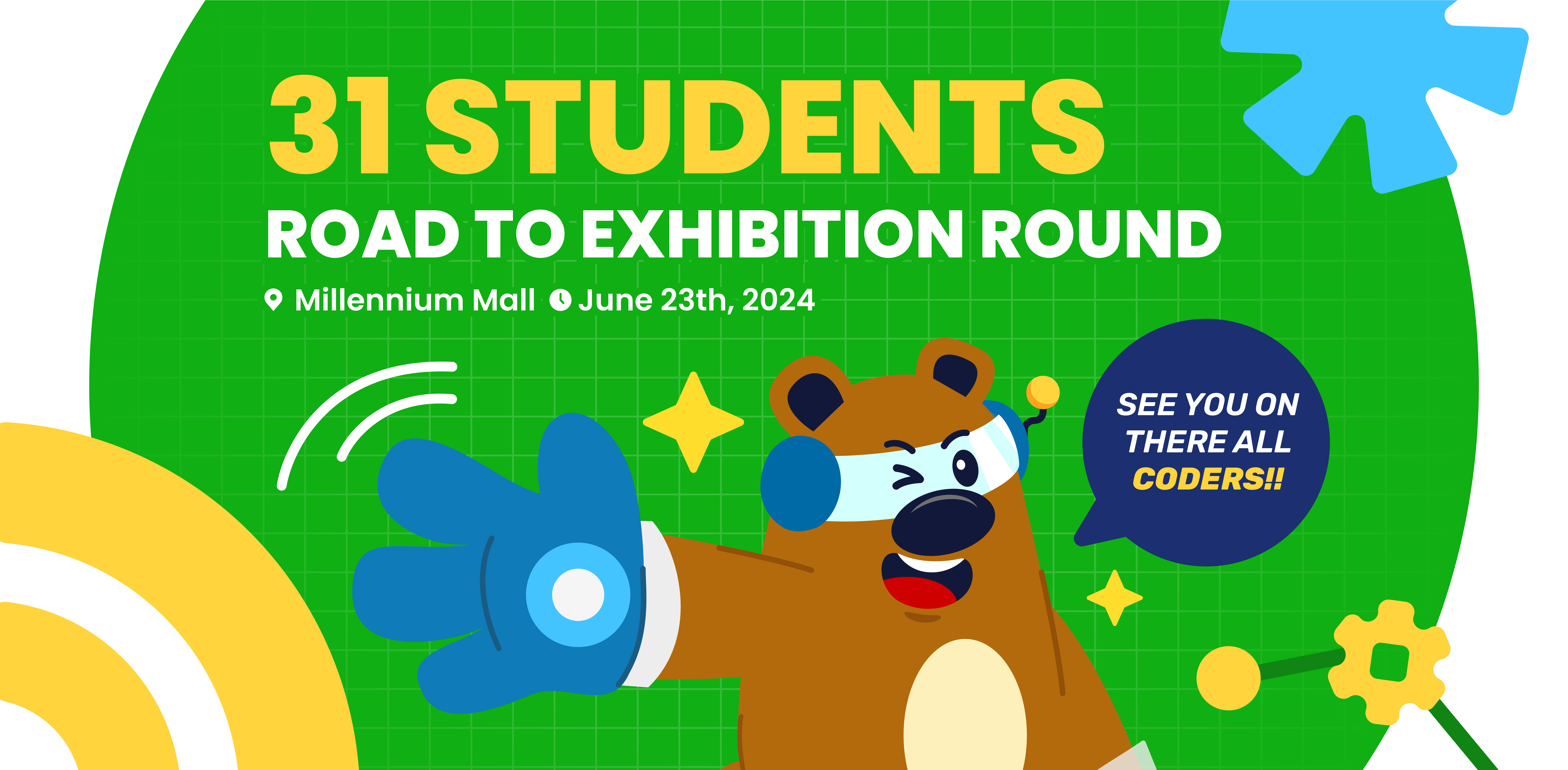
Timedoor Academy Tech Festival Coding Competition and Exhibition 2024 is an event aimed at providing a platform for all Timedoor Academy students to showcase various projects they have created, ranging from games and websites to applications. The preliminary round was participated by over 200++ participants from all over Indonesia. From these participants, an elimination stage was conducted to select 31 chosen participants for the Exhibition Round, which will be held offline at Millennium Mall Jakarta on Sunday, June 23, 2024. Today, we announce the 31 participants selected to participate in the Exhibition Round at Millennium Mall Jakarta from all categories. The list of participants who made it to the Exhibition Round can be seen below. Exhibition Finalist GAME WITH KODU STUDENT'S NAME BRANCH Albert Liandra Kurniawan Timedoor Academy Cengkareng Ida Bagus Oka Janaka Timedoor Academy Renon Jeremy Dominic Liong Timedoor Academy Cengkareng Jethro Buniardi Timedoor Academy Harapan Indah Bekasi Muhammad Ghaisan Abgari Timedoor Academy Gading Serpong GAME WITH SCRATCH 3 STUDENT'S NAME BRANCH Anak Agung Gde Axel Mahendra Timedoor Academy Online ID Anja Ruci Berlian Timedoor Academy Online ID Darrel Arana Irwanto Timedoor Academy Cikarang Emilie Kierra Rinaldy Timedoor Academy Kelapa Gading I Putu Theodore Wira Pradana Timedoor Academy Jimbaran GAME WITH CONSTRUCT 3 STUDENT'S NAME BRANCH Gabriel Veriano Timedoor Academy Cikarang Glenys Salsabila Kyeshi Parlina Timedoor Academy Gatsu Barat Bali Michael Mahardika Wijaya Timedoor Academy Online ID Putu Dimas Graha Wardhana Timedoor Academy Renon Yehezkiel Kennard Alvaro La Beneamata Timedoor Academy Gatsu Barat Bali GAME WITH ROBLOX STUDENT'S NAME BRANCH Clairine Elise Lei Timedoor Academy Online ID Julio Miguel Setiawan Timedoor Academy Cikarang Keigan Noel Hamdany Timedoor Academy Online ID Peter Luciano Kencana Timedoor Academy Gading Serpong Ryan Kenzie Tanady Timedoor Academy Cengkareng GAME WITH PHASER 3 STUDENT'S NAME BRANCH Demas Firjatulloh Janitro Timedoor Academy Online ID I Gede Raditya Ananda Putra Timedoor Academy Renon I Kadek Arya Raditya Timedoor Academy Renon Made Anantawijaya Giriwidya Hantana Timedoor Academy Gatsu Barat Bali Ni Putu Bela Septiandita Rustama Timedoor Academy Gatsu Barat Bali WEBSITE STUDENT'S NAME BRANCH Ardhani Prayata Akmal Timedoor Academy Online ID I Putu Mahendra Arya Valentino Timedoor Academy Renon Komang Ayu Arista Dewi Timedoor Academy Gatsu Barat Bali Matthew Vito Santoso Timedoor Academy Online ID Ngakan Putu Satria Dewangga Timedoor Academy Gatsu Barat Bali MOBILE APPS STUDENT'S NAME BRANCH Shavonne Miguel Halim Timedoor Academy Online ID The 31 selected participants and their parents are expected to attend the online Technical Meeting for the Exhibition. The details are as follows: Day/Date: Saturday, June 15, 2023 Time: 3:00 PM WIB / 4:00 PM WITA Place: Online Meeting ID: 839 547 7948 Passcode: 12345 Link : https://bit.ly/zoomEgypt Participants and parents are also advised to review the exhibition round information in the Guidebook. You can download the Guidebook here: Download Guidebook.   Special Recognition We also want to recognize the other 10 most creative projects (Phaser only 5), which will receive a medal. These medals will be sent to the recipients' addresses as a token of our appreciation for their outstanding work. Game with Kodu: Arga Riviandra Zamara - Houbii Bogor Firdhah Atiqah - Harapan Indah Bekasi Gavin Immanuel Hosada - Bandung Gede Kaivan Azkaradipta Manumesha Mataram - Renon Bali Hanif Abhicandra Zafran - Gayungan Surabaya Ida Bagus Bumi Prana - Renon Bali Komang Cakradev - Renon Bali Marc Daryl Mahadana - Houbii Bogor Muhammad Malvino Putera Mulia - Gading Serpong Skye Ansel Chen - Cengkareng Game with Scratch 3: Anindya Filia Susanto - Houbii Bogor Azka Virendra Darmawan - Houbii Bogor Gandewa Arjuna Gelar - Online ID Levin Elnathan - Harapan Indah Bekasi Maverick Archer Yeriel - Kelapa Gading Mikhayla Leandra Krisbayu - Online ID Owen Hiroshi Lie - Batam Quinza Haziqah - Online ID Theodorus Giovanni Daniswara - Gayungan Surabaya Yehuda Matthew Muradsanobar Sihaloho - Cikarang Game with Construct 3: Cut Zara Tashanita - Online ID I Gede Reva Awidya Kayana - Karangasem Bali I Nyoman Aditya Basudeva Mahaputra - Gatsu Barat Bali I Putu Aryasatya Mahendra Mahaputra - Renon Bali I Putu Raditya Hendra Saputra - Karangasem Bali Jonathan Isaac Santoso - Citraland Surabaya Mas Maulana Ubaydillah Mukhayan - Renon Bali Muhammad Fadhil - Kelapa Gading Muhammad Laa Rayba Fiihi - Online ID Ryan Alvaro Emmyson - Cengkareng  Game with Roblox: Altair Harry Janssena - Online ID Arinathan Martuah Saragih - Online ID Ida Bagus Agung Janar Wibawa - Renon Bali Jillian Davyne Suyono - Online ID Khalil Ezra Allegradana - Online ID Muhammad Al Fatih - Online ID Reflita Marsha Setiawan - Cikarang Reigaara Endea Yustisia - Kelapa Gading Rizky Arkananta Mahardika - Cengkareng Zineddin Alkhawarizmi - Houbii Bogor Game with Phaser: Felix Mahendra Putra Bangun - Cikarang Hanif Fausta Syafif - Online ID I Gusti Ngurah Prama Wedanta - Tabanan Bali Ida Bagus Pradnyana Wedhanta - Renon Bali Richard Christopher Bono - Renon Bali Website: Bonaventura Silitonga - Online ID Breza Artha Medico - Online ID Darren Clementius Leonard - Kelapa Gading Daven Bryan Suyono - Online ID Erland Pramana - Houbii Bogor Gede Divka Bramanta Devadatta Putra - Renon Bali Kadek Pramana Kenzo Widia Poetra - Renon Bali Made Calysta Maheswari - Online ID Muhammad Ihsan Nadhif - Kelapa Gading Regina Joan Medea Jati Laksono - Online ID We thank all the students, parents, and mentors for their hard work and dedication. Let's make the Timedoor Academy Tech Festival Coding Competition and Exhibition 2024 a memorable and inspiring experience for everyone involved!
Free Coding Class for Children in Orphanage
Introduction Timedoor Academy has proudly launched a free educational initiative dedicated to the children of the "Rumah Impian" orphanage. As part of our commitment to fostering skill development in underserved communities, we are offering comprehensive coding classes at no cost. Additionally, to facilitate this learning, we are providing them with computers. This endeavor aims to equip these children with valuable digital skills, paving the way for broader job opportunities in their future.   Background Children in orphanages don't have parents and live a limited simple life. They often face limited money and opportunities. Upon completing their high schooling, they might encounter challenges in securing rewarding employment due to a lack of specialized skills, knowledge, and educational background.   Message from CEO Our CEO, Yutaka, emphasizes the significance of coding in today's world. He mentions, "Coding is everywhere in your game, mobile app, etc. it's a tool for innovation and creativity." Yutaka envisions these children not just as users of digital platforms but as creators, shaping their own destinies. He believes this skill will help them get better jobs in the future.   What We Teach Children and teenagers, ranging from 6 to 19 years, are all welcome in our program. We have tailored coding lessons suitable for each age bracket. The younger ones might begin with foundational coding concepts through engaging game activities, while the older participants delve into more advanced tasks like text coding game development. The enthusiasm and rapid progress of these students have been truly inspiring.   What's Next? Our dedication to this cause doesn't end with a few lessons. We intend to consistently teach and mentor these children on a weekly basis. By instilling coding knowledge now, we are optimistic about expanding their future employment prospects. Through this initiative, Timedoor Academy aims to empower these children, ensuring they have the skills and confidence to navigate the digital future ahead.     This is part of our CSR Project "Tech for Leap". If you are interested in supporting our project, please kindly contact us. https://timedooracademy.com/csr
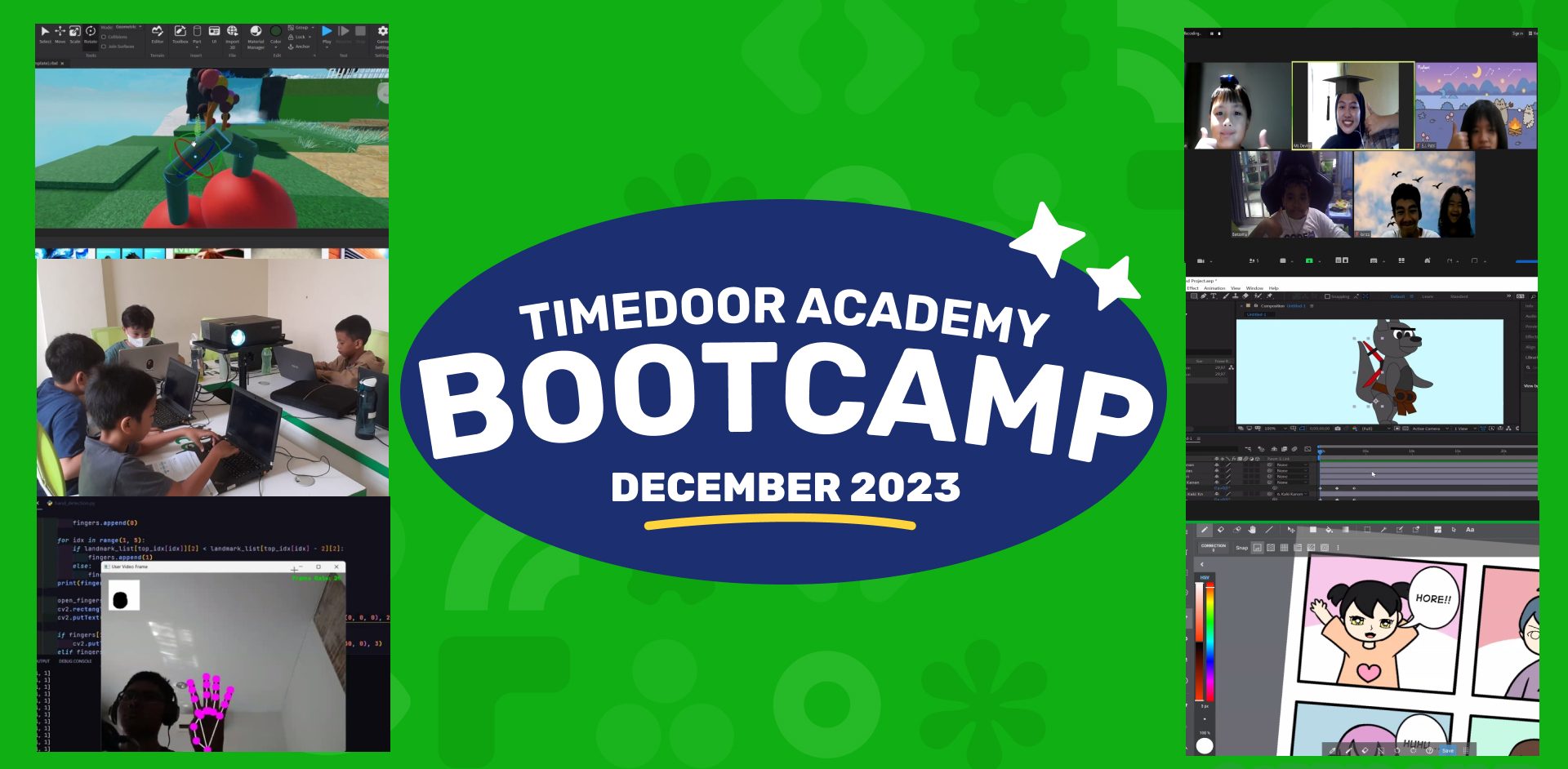
Timedoor Academy Bootcamp December 2023 Awardee Announcement
Timedoor Academy BootCamp 2023 Batch 1 and Batch 2 was held from 11 - 22 December 2023. With more than 200++ participants from Online Classes and Offline Classes in several areas including Jakarta, Bogor, Tangerang, Bandung, Surabaya, Bali, Batam and Medan. We also launched our new programs, UI/UX Design and Internet of Thing (IOT) which were held online and offline in several regions. Timedoor Academy holds Programming and Multimedia Design classes for 5 days with various programs that students can choose according to their interests. Coding Camp offers many programs including Game Developer, Website Developer, Python Developer, Roblox Developer, Artificial Intelligence Development, and Internet of Thing (IOT). As before, we are offers Design Camp with a learning program that focuses on children's creativity including Making Animations, Design Branding, UI/UX Design and Comic Making. Timedoor Academy sets a goal for students to become programmers, designers and comic artists in just 5 days by creating the best projects using the chosen platform that challenges them to be able to become digital experts in the present and the future! Today we announced the 2 best award recipients from each program category. Award recipients consist of Best Project and Best Participant. Please check below :   JUNIOR ANIMATOR CATEGORY PARTICIPANT'S NAME Best Project  I Gusti Agung Gde Nathan Iswara Dwipayana Best Participant  Luh Putu Derian Dharma JUNIOR DEVELOPER CATEGORY PARTICIPANT'S NAME Best Project  Khalid izzudin Best Participant  Darren Gavriel JUNIOR ADVANCE GAME DEV CATEGORY PARTICIPANT'S NAME Best Project  Benjamin Othniel Sianturi Best Participant  Alaric Dante Miranda KIDS CONSTRUCT BEGINNER + WEB CATEGORY PARTICIPANT'S NAME Best Project  Araya Khanti Devi Best Participant  Irdana Halwa KIDS ROBLOX CATEGORY PARTICIPANT'S NAME Best Project  Dave Michael Timothy Panjaitan Best Participant  Ryan Kenzie Tanady KIDS PYTHON CATEGORY PARTICIPANT'S NAME Best Project  Laurencia Clio Setiadi Best Participant  Maxwell Oscario Tan KIDS IOT CATEGORY PARTICIPANT'S NAME Best Project  Kadek Vedhanta Asahi Wijaya Best Participant  Dewa Gede Narayana Satria Daton Putra KIDS COMIC CATEGORY PARTICIPANT'S NAME Best Project  Aiesha Naiaputri Nugroho Best Participant  Hilwa Fathiya Qurrata'ain TEENS PHASER CATEGORY PARTICIPANT'S NAME Best Project  Andrian Wurich Best Participant  Miguel Aipassa TEENS WEB DEVELOPER CATEGORY PARTICIPANT'S NAME Best Project  Keila Kusuma Best Participant  Gilberto Rafael Effendie TEENS APP DEVELOPER CATEGORY PARTICIPANT'S NAME Best Project  Raisha Afiqah Khairunnisa Best Participant  Rafael Davin TEENS ROBLOX CATEGORY PARTICIPANT'S NAME Best Project  Julio Miguel Setiawan Best Participant  Samuel Lovenno Sadana TEENS PYTHON CATEGORY PARTICIPANT'S NAME Best Project  Hendry Hermawan Best Participant  Arka Pradipa Dwi Santoso TEENS IOT CATEGORY PARTICIPANT'S NAME Best Project  Fathi Rafi Ismail Priambodo Best Participant  Ryu Garren Siarta  TEENS ARTIFICIAL INTELLIGENCE CATEGORY PARTICIPANT'S NAME Best Project  Reagan Dathan Mula Best Participant  Cornelius Rafanala Maheswara TEENS COMIC CATEGORY PARTICIPANT'S NAME Best Project  Rajwa Nurul Dzihni Best Participant  Ida Ayu Dhama Parwati Astuti DESIGN ANIMATION CATEGORY PARTICIPANT'S NAME Best Project  Emerentia Jessica Putri Best Participant  Cedric Franklin Chandra UI/UX Design CATEGORY PARTICIPANT'S NAME Best Project  Eleanora Kalyca Fayola Siregar Best Participant  Vanessa Althea Aditya All awardee will receive medals, exclusive T-shirts and merchandise from Timedoor Academy. Send your address to Timedoor Academy Admin to claim your prize.
Coding Camp July 2023 Awardee Announcement
Timedoor Academy Coding Camp 2023 Batch 1 and Batch 2 has been held from 26 June - 7 July 2023. With 300++ participants from our Online and Offline Classes in several areas including Jakarta, Bogor, Bekasi, Tangerang, Surabaya, and Bali. We also launched our new programs, Design Camp and Artificial Intelligence which were held online and offline in several regions. Timedoor Academy offers 5 days of coding and design classes with a variety of programs that students can choose according to their interests. Coding Camp offers many courses, including Game Development, Website Development, App Development, Roblox, Python, and Artificial Intelligence Development. Design Camp program focus on student’s creativity which is divided into 3 programs including Animation Making, Design Branding, and Comic Making. Timedoor Academy sets a goal for students to become programmers, designers, and comic artists in 5 days by creating projects and challenge them to become digital experts! Today we are announcing the 2 best award from each program. It is the Best Project and the Best Participant. Please check below. JUNIOR SCRATCH KATEGORI NAMA PESERTA Best Project  Akhtar Kamal Priandi Best Participant  Kevin Hansel Wibowo JUNIOR CONSTRUCT KATEGORI NAMA PESERTA Best Project  Made Bagasditya Prabawa Mahaputra Best Participant  Nararsatya JUNIOR KODU KATEGORI NAMA PESERTA Best Project  Gian Best Participant  Shanette Areille Setiawan KIDS CONSTRUCT BEGINNER + WEB KATEGORI NAMA PESERTA Best Project  Atiqah Faiza Tobing Best Participant  Sheera KIDS ROBLOX KATEGORI NAMA PESERTA Best Project  Bradley Aritonang Best Participant  Muhammad Ibrahim Alkais KIDS PYTHON KATEGORI NAMA PESERTA Best Project  Alvaro Gavriel Barlianta Best Participant  Khairunnisa KIDS ARTIFICIAL INTELLIGENCE KATEGORI NAMA PESERTA Best Project  M. Fathan Ghani Zaidan Best Participant  Benzema Malik Asyam TEENS PHASER KATEGORI NAMA PESERTA Best Project  Caisar Islamy Abelardo Hermanto Best Participant  I Gede Raditya Putra TEENS WEB DEVELOPER KATEGORI NAMA PESERTA Best Project  Dewa Bagas Best Participant  Mikha TEENS ROBLOX BEGINNER KATEGORI NAMA PESERTA Best Project  Melvern Best Participant  Levi William Greatly TEENS PYTHON KATEGORI NAMA PESERTA Best Project  Michelle Lucky Karunia Best Participant  Regina Charlene Martiana Sentosa TEENS APP DEVELOPER KATEGORI NAMA PESERTA Best Project  Ngakan Putu Satria Dewangga  Putu Dylan Pryana  TEENS ARTIFICIAL INTELLIGENCE KATEGORI NAMA PESERTA Best Project  Gabriel Marcel Danandjaja Best Participant  M. Faza Al Banna COMIC CAMP KATEGORI NAMA PESERTA Best Project  Made Sambu Gunaswara Best Participant  Dominic Owen Manuel  DESIGN BRANDING KATEGORI NAMA PESERTA Best Project  Muhammad Haidar Alfarezel Best Participant  Hiromi DESIGN ANIMATION KATEGORI NAMA PESERTA Best Project  Laurencia Clio Setiadi Best Participant  I Gustu Putu Darma Pradnya All awardee will receive medals, exclusive T-shirts and merchandise from Timedoor Academy. Send your address to Timedoor Academy Admin to claim your prize.
Timedoor Academy Competition and Exhibition 2023 Update!
Congrats For All the Winners! Timedoor Academy Coding Competition and Exhibition 2023 is an event that aims to provide a platform for all Timedoor Academy students to show projects that have been made, ranging from games, and websites to applications. The preliminary round was attended by 100++ participants from all over Indonesia. From this number of participants, an elimination stage will then be carried out until 30 Selected Participants are selected to take part in the Exhibition Round which will be held directly at Trans Studio Mall Bali on Sunday, June 25 2023. The 30 best participants from each category took part in the Exhibition Round at Trans Studio Mall Bali and this exhibition was attended by approximately 500 ++ visitors who were interested in seeing the participant's projects. Visitors also had the opportunity to give star labels to the participants who would later be awarded as Most Favorite Project By Visitor. Here is the following list of winners at the 2023 Timedoor Academy Competition and Exhibition divided by category: MOST FAVORITE PROJECT STUDENT'S NAME PROJECT'S NAME ORIGIN Hugo Alexander Kusuma Game in Kodu Bali JUNIOR CATEGORY WINNER STUDENT'S NAME  PROJECT'S NAME ORIGIN I Gede Kelvin Narendra Van Veggel Mario Cycle Bali KIDS CATEGORY WINNER STUDENT'S NAME  PROJECT'S NAME ORIGIN Gandewa Arjuna Gelar Fallen Region Tangerang TEENS GAME CATEGORY WINNER STUDENT'S NAME  PROJECT'S NAME ORIGIN Ni Putu Bella Septiandita Rustama Robot With Their Future Bali TEENS WEBSITE CATEGORY WINNER STUDENT'S NAME  PROJECT'S NAME ORIGIN Edgar Davey Tanibulie Website Doraemon Makassar Congratulations to all the winners in each category. Thank you to all participants who have participated in Timedoor Competition & Exhibition 2023 this time. Hopefully, this will be a good start for all of us to introduce learning coding to children.
float button